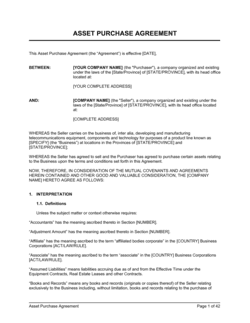
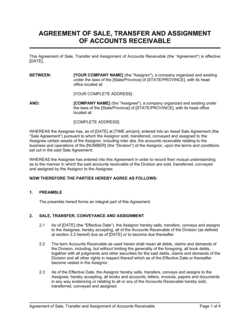
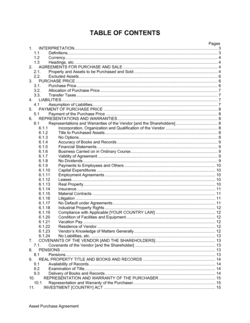
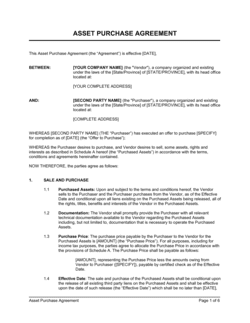
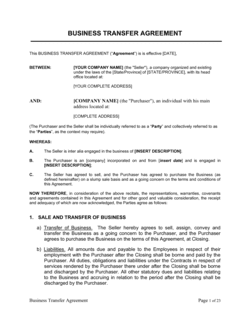
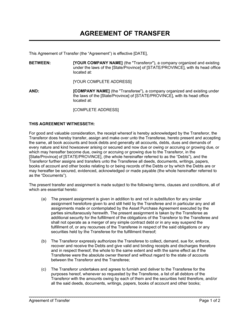
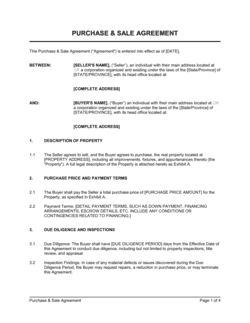
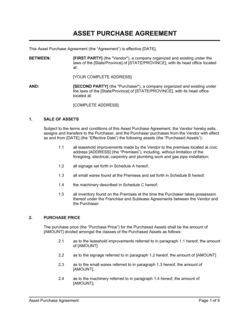
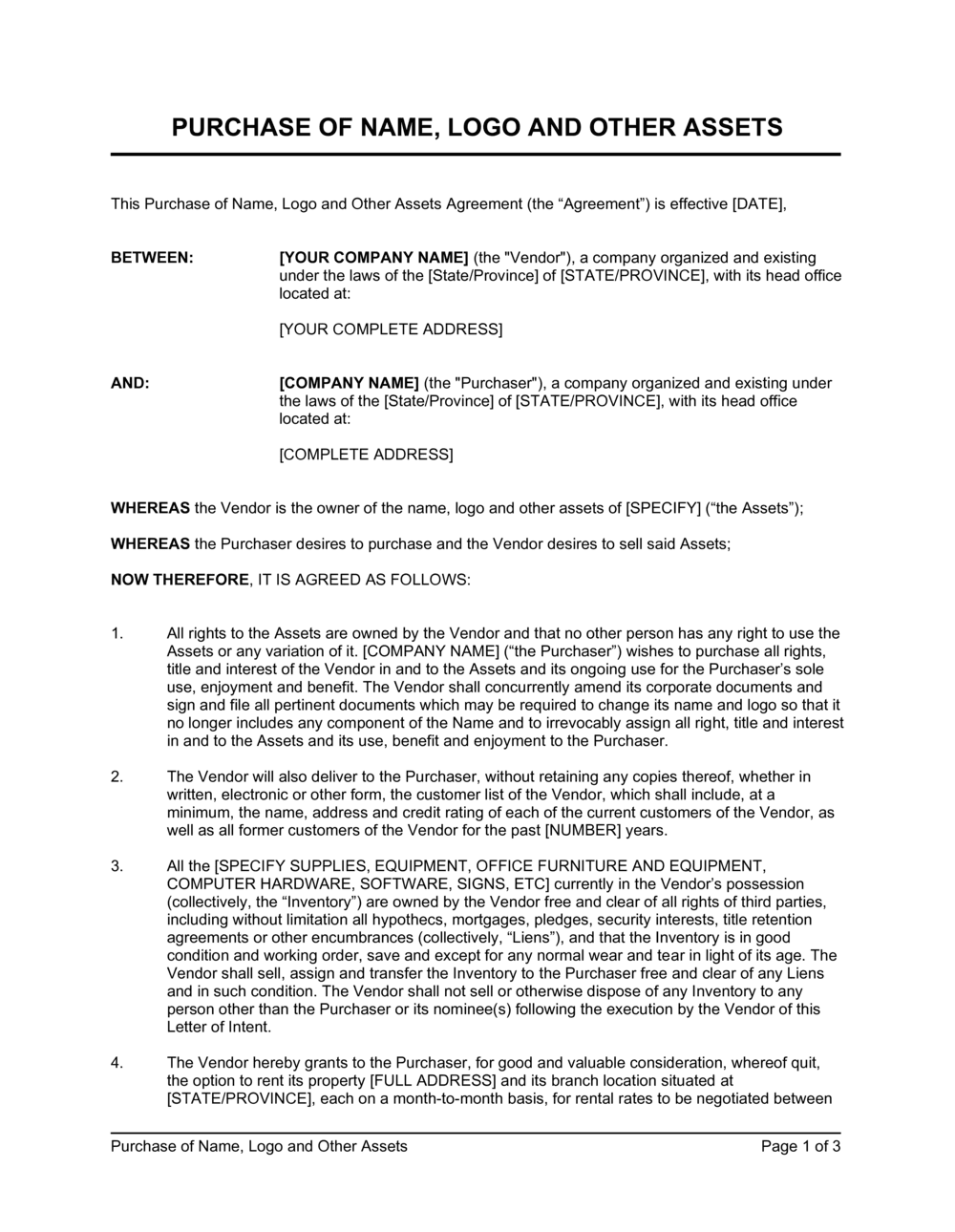
Asset Transfer and Sale Agreement Brand Template

Free Word download • Edit online • Save & share with Drive • Export to PDF

3 pages25–30 min to fillDifficulty: ComplexSignature requiredLegal review recommended
Learn more ↓
FreeAsset Transfer and Sale Agreement Brand Template

At a glance

What it is
A Brand Asset Transfer and Sale Agreement is a legally binding contract between a seller and a buyer that documents the sale and transfer of a brand and all associated intellectual property — including trademarks, trade names, logos, domain names, social media accounts, and associated goodwill. This free Word download gives you a structured, attorney-ready starting point you can edit online and export as PDF to execute a clean brand transaction.
When you need it
Use it when selling or acquiring a brand outright, spinning off a product line under a distinct brand identity, or transferring brand assets as part of a broader business sale where IP ownership must be clearly documented and separated from other transaction components.
What's inside
Definitions of transferred brand assets, purchase price and payment terms, representations and warranties by both parties, IP and trademark assignment obligations, transition assistance provisions, confidentiality, indemnification, and governing law.

What is a Brand Asset Transfer and Sale Agreement?

A Brand Asset Transfer and Sale Agreement is a legally binding contract between a seller and a buyer that permanently transfers ownership of a brand and all of its associated intellectual property — including registered and unregistered trademarks, trade names, logos, domain names, social media accounts, brand guidelines, and the goodwill built up around the brand in its market. Unlike a license, which grants permission to use a brand while the original owner retains title, this agreement effects a complete and irrevocable change of ownership. It documents the purchase price, the conditions of closing, each party's representations about the validity and encumbrance-free status of the assets, and the seller's post-closing obligations — including cooperation with IP registry recordal and compliance with a non-compete covenant.

Why You Need This Document

Without a properly executed brand asset transfer agreement, a brand acquisition is legally incomplete and practically unenforceable. A handshake deal or a simple invoice does not transfer trademark rights — only a signed assignment document, paired with registry recordal, creates ownership that can be enforced against infringers and competing claimants. If the seller transfers digital credentials without a written agreement, they retain the legal right to reclaim the brand or grant a license to a competitor. Missing representations about ownership and encumbrances leave the buyer exposed to pre-existing infringement claims that surface after money has changed hands. And without a non-compete clause, the seller can immediately build a confusingly similar brand and compete for the same customers. This template gives buyers and sellers a clear, structured framework for a clean transfer — reducing the risk of post-closing disputes and giving both parties enforceable rights from day one.

Which variant fits your situation?

If your situation is…Use this template
Selling an entire operating business including its brandAsset Purchase Agreement
Licensing brand use to a third party without transferring ownershipTrademark License Agreement
Assigning a single registered trademark to a new ownerTrademark Assignment Agreement
Transferring a domain name only, without the full brandDomain Name Transfer Agreement
Spinning off a product line with its own brand into a new entityBusiness Transfer Agreement
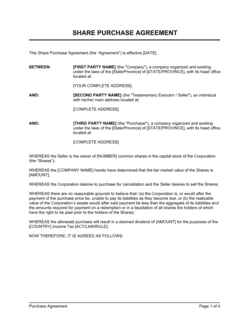
Acquiring brand assets through a stock purchase rather than asset purchaseShare Purchase Agreement
Franchising the brand rather than selling it outrightFranchise Agreement

Common mistakes to avoid

❌ Incomplete brand asset schedule

Why it matters: Assets omitted from the schedule — social media accounts, unregistered marks, brand guideline files — may remain legally owned by the seller, leaving the buyer with an incomplete brand and potential competing use by the original owner.

Fix: Conduct a full inventory of all brand touchpoints before drafting the schedule, and attach representative specimens of each mark to confirm scope. Have both parties initial the schedules separately at signing.

❌ Transferring without recording the assignment at IP registries

Why it matters: In most jurisdictions, a trademark assignment is not enforceable against third parties — including future infringers or competing claimants — until it is recorded with the relevant registry. An unrecorded assignment can be challenged or defeated.

Fix: Include a specific obligation and timeline for registry recordal in the transition assistance clause, and confirm filing receipts with the USPTO, CIPO, UKIPO, or EUIPO within 30 days of closing.

❌ No non-compete or one with an overbroad geographic scope

Why it matters: Without a non-compete, the seller can immediately launch a confusingly similar brand and compete directly for the same customers. An overbroad clause may be struck down entirely, leaving the buyer with no protection.

Fix: Draft a geographically and temporally proportionate non-compete tied specifically to the brand's market and the seller's competitive knowledge, and confirm its enforceability in the governing jurisdiction before execution.

❌ Omitting indemnification caps and baskets

Why it matters: Without a cap, the seller faces theoretically unlimited post-closing liability; without a basket, buyers can bring minor claims that cost more to defend than they are worth, creating friction and litigation risk on both sides.

Fix: Negotiate and document a maximum indemnification liability — typically 50–100% of the purchase price — and a minimum claim threshold, with explicit carve-outs for fraud and willful misrepresentation.

❌ Using license language in the operative transfer clause

Why it matters: If the operative clause grants a license rather than an assignment, the seller retains legal ownership of the brand and can revoke the arrangement or grant competing licenses to third parties — defeating the entire purpose of the transaction.

Fix: Review the operative clause to confirm it uses irrevocable assignment language — 'assigns, transfers, and conveys all right, title, and interest' — and not license or permission language.

❌ No disclosure schedule for known IP issues

Why it matters: If the seller knows of an opposition proceeding, co-ownership arrangement, or infringement claim and fails to disclose it, the buyer discovers the issue post-closing with no clean contractual remedy because representations were qualified by 'knowledge.'

Fix: Require a formal disclosure schedule identifying all known IP encumbrances, proceedings, and third-party claims. Representations made with knowledge qualifiers must be accompanied by a populated, not blank, disclosure schedule.

The 10 key clauses, explained

Recitals and defined terms

In plain language: Sets out the background of the transaction, identifies the parties by their legal names, and defines all capitalized terms used throughout the agreement.

Sample language
WHEREAS, Seller is the owner of the Brand Assets described herein and desires to sell, assign, and transfer the Brand Assets to Buyer; and WHEREAS, Buyer desires to acquire the Brand Assets from Seller on the terms and conditions set out in this Agreement.

Common mistake: Defining 'Brand Assets' too narrowly in this clause and failing to include a comprehensive schedule. Assets left off the definition — such as social media handles or unregistered trade names — may not transfer, creating ownership gaps the seller can later exploit.

Description and schedule of brand assets

In plain language: Enumerates every asset being transferred — trademark registrations with registration numbers, unregistered marks, logos, domain names, social media accounts, brand guidelines, and associated goodwill.

Sample language
The Brand Assets transferred hereunder include: (a) the trademark '[BRAND NAME]' (USPTO Reg. No. [XXXXXXX]); (b) the domain name [DOMAIN.COM]; (c) the social media accounts listed in Schedule A; (d) all brand guidelines and creative files listed in Schedule B; and (e) all goodwill associated with the foregoing.

Common mistake: Referencing schedules that are never attached. Courts have found that an agreement referencing a blank or missing schedule is incomplete, and buyers may have difficulty establishing what was actually purchased.

Purchase price and payment terms

In plain language: States the total consideration, the payment structure (lump sum, installments, or earnout), the payment method, and the account or mechanism for delivery of funds.

Sample language
In consideration of the sale and transfer of the Brand Assets, Buyer agrees to pay Seller a total purchase price of $[AMOUNT] USD, payable as follows: (a) $[DEPOSIT] on execution of this Agreement; (b) $[BALANCE] on the Closing Date via wire transfer to Seller's account detailed in Schedule C.

Common mistake: Omitting an earnout formula when part of the price is contingent. Without specific metrics, measurement periods, and calculation methodology in writing, earnout disputes are among the most litigated issues in brand acquisition transactions.

Assignment and transfer of IP

In plain language: The operative clause by which the seller legally assigns all rights, title, and interest in the brand's intellectual property to the buyer, effective at closing.

Sample language
Effective as of the Closing Date, Seller hereby irrevocably assigns, transfers, and conveys to Buyer all right, title, and interest — including all registrations, applications, and renewals — in and to the Brand Assets, together with the goodwill of the business symbolized thereby.

Common mistake: Using 'license' language instead of 'assign' language in the operative clause. A license does not transfer ownership — if the seller retains rights, they can revoke or grant competing licenses, undermining the entire transaction.

Seller representations and warranties

In plain language: The seller's binding factual statements that they own the brand assets free and clear, that no registrations are lapsed or subject to cancellation, and that there are no pending infringement claims or third-party liens.

Sample language
Seller represents and warrants that: (a) Seller has full legal right and authority to sell and transfer the Brand Assets; (b) the Brand Assets are free and clear of all liens, encumbrances, and third-party claims; (c) no trademark registration is lapsed, expired, or subject to a pending cancellation proceeding; and (d) Seller has no knowledge of any claims of infringement by or against the Brand Assets.

Common mistake: Sellers agreeing to 'knowledge-only' qualifiers across all representations. Buyers should insist that representations about ownership, liens, and pending claims be made without a knowledge qualifier — the seller is in the best position to know these facts.

Buyer representations and warranties

In plain language: The buyer's statements confirming they have authority to enter the agreement, adequate funds to close, and are not acquiring the brand in connection with any unlawful purpose.

Sample language
Buyer represents and warrants that: (a) Buyer has full legal authority to enter into and perform this Agreement; (b) Buyer has sufficient funds to pay the Purchase Price on the Closing Date; and (c) the execution of this Agreement does not violate any law, regulation, or agreement to which Buyer is a party.

Common mistake: Omitting buyer representations entirely. Without them, the seller has no contractual basis to seek damages if the buyer misrepresents their authority or financial capacity and the deal collapses at closing.

Transition assistance

In plain language: Obligates the seller to cooperate with the buyer for a defined post-closing period to execute IP registry recordal documents, transfer digital account credentials, and facilitate a smooth handover of brand operations.

Sample language
Following the Closing Date, Seller shall, at Buyer's reasonable request and expense, execute such additional documents and take such further actions as are necessary to record the assignment of the Brand Assets with applicable IP registries, including the USPTO, CIPO, UKIPO, and EUIPO, within [60] days of Closing.

Common mistake: No defined timeline or cost allocation for transition assistance. Without both, sellers have little incentive to cooperate promptly — leaving the buyer unable to enforce trademark rights against infringers while recordal is delayed.

Non-compete and non-use covenant

In plain language: Prevents the seller from using the transferred brand name, creating a confusingly similar brand, or competing directly with the sold brand for a specified period and within a defined market.

Sample language
For a period of [24] months following the Closing Date, Seller shall not, directly or indirectly: (a) use the Brand Assets or any mark confusingly similar thereto; (b) operate a business under the [BRAND NAME] brand or any derivative thereof; or (c) assist any third party in doing the foregoing within [GEOGRAPHIC SCOPE].

Common mistake: Setting the non-compete duration at more than two to three years without industry-specific justification. Courts in many jurisdictions apply a reasonableness standard and will reduce or void overly long restrictions, potentially leaving the buyer with no protection at all.

Indemnification

In plain language: Allocates responsibility between the parties for losses arising from breaches of representations, pre-closing IP claims, or actions taken by the seller before the closing date.

Sample language
Seller shall indemnify, defend, and hold harmless Buyer from any losses, damages, or claims arising from: (a) any breach of Seller's representations or warranties; (b) any infringement claim relating to the Brand Assets arising from Seller's use prior to the Closing Date; or (c) any lien or encumbrance on the Brand Assets not disclosed prior to signing.

Common mistake: No indemnification cap or basket. Without a cap, the seller faces unlimited liability for any post-closing claim; without a minimum basket, buyers can make frivolous small claims. Both mechanics should be negotiated and documented.

Governing law and dispute resolution

In plain language: Specifies which jurisdiction's law governs the agreement and the mechanism — arbitration, mediation, or litigation — for resolving disputes.

Sample language
This Agreement shall be governed by the laws of the State of [STATE], without regard to conflict of law principles. Any dispute arising under this Agreement shall be resolved by binding arbitration administered by [AAA / JAMS] in [CITY, STATE], except that either party may seek injunctive relief in any court of competent jurisdiction.

Common mistake: Selecting a governing law state with no connection to either party or the brand's market. Courts occasionally decline to apply foreign governing law if it produces a result that violates the forum state's public policy, creating unpredictable outcomes.

How to fill it out

  1. 1

    Identify and list all brand assets in Schedule A

    Inventory every asset being transferred: registered trademarks with registration numbers and jurisdictions, unregistered marks, domain names, social media handles, logos and creative files, and brand guidelines. Do not leave anything off the schedule.

    💡 Pull the official status of each trademark from the USPTO TSDR, CIPO, or EUIPO database before completing the schedule — lapsed or expired registrations must be disclosed and their status addressed in the representations.

  2. 2

    Enter the parties' full legal names and entity details

    Use each party's registered legal name — not a trade name — along with their jurisdiction of formation and principal place of business. Verify entity names against corporate registry filings.

    💡 For sellers that are individuals rather than entities, include government ID type and number in the signature block to prevent impersonation claims after closing.

  3. 3

    Define and document the purchase price structure

    Enter the total consideration, the payment schedule (lump sum or installments), the wire transfer or payment details in Schedule C, and any earnout formula with specific metrics and measurement periods.

    💡 If any portion of the price is deferred or contingent, state explicitly what happens if the buyer defaults on an installment — whether the brand assets revert or the seller must pursue litigation to collect.

  4. 4

    Complete the seller representations and warranties

    Work through each representation systematically. Confirm trademark registration status, run a lien search, identify any third-party co-ownership arrangements, and disclose any pending or threatened infringement claims before executing.

    💡 Attach a disclosure schedule to the representations rather than inserting qualifications into the body — this keeps the agreement clean and makes due diligence exceptions traceable.

  5. 5

    Set the transition assistance timeline and responsibilities

    Specify how many days after closing the seller must cooperate with IP recordal, who bears the recordal fees, and what digital credentials must be transferred and by when.

    💡 Require credential transfer within 48–72 hours of closing for social media accounts and domain names — delays here expose the buyer to unauthorized access or impersonation before they control the brand.

  6. 6

    Calibrate the non-compete scope to the brand's market

    Define the geographic scope and duration proportionate to where the brand currently operates and the competitive threat the seller poses. For a nationally distributed consumer brand, 24 months nationally is typical; for a local services brand, restrict geographically.

    💡 Include a liquidated damages clause for non-compete breach — proving actual damages from brand confusion is difficult, and a defined amount removes litigation uncertainty for both sides.

  7. 7

    Negotiate indemnification caps and baskets

    Agree on a maximum indemnification liability for each party (commonly 50–100% of the purchase price) and a minimum threshold below which neither party can make a claim (commonly 0.5–1% of the purchase price).

    💡 Carve out fraud and willful misrepresentation from indemnification caps — courts expect that deliberate bad actors cannot shelter behind a contractual ceiling.

  8. 8

    Execute before transferring any credentials or funds

    Both parties must sign the agreement before any payment is made or digital credentials are transferred. Use a dated, witnessed signature process and retain fully executed copies in a secure location.

    💡 File the trademark assignment documents with the relevant IP registries within 30 days of closing — most registries require recordal to make the transfer effective against third parties.

Frequently asked questions

What is a brand asset transfer and sale agreement?

A brand asset transfer and sale agreement is a legally binding contract that documents the sale and transfer of a brand's intellectual property from a seller to a buyer. It covers registered and unregistered trademarks, trade names, logos, domain names, social media accounts, and associated goodwill. Unlike a general asset purchase agreement, it is specifically structured around the intangible IP components that define a brand's identity and market value.

What brand assets are typically included in this agreement?

A complete brand transfer typically covers registered trademarks (with registration numbers and jurisdictions), unregistered common-law marks, logos and creative files, domain names, social media account handles, brand guidelines, packaging designs, and the goodwill associated with all of the foregoing. The scope is defined by a detailed schedule attached to the agreement — any asset not listed may remain with the seller.

Do I need to record the trademark assignment with a government registry?

Yes, in virtually all major jurisdictions. A trademark assignment signed by the parties is effective between them from the date of execution, but it is generally not enforceable against third parties — including future infringers — until it is recorded with the relevant registry. In the US, recordal is filed with the USPTO; in Canada with CIPO; in the UK with the UKIPO; and in the EU with the EUIPO. Recording fees and timelines vary by registry.

What is the difference between a brand sale agreement and a trademark license agreement?

A brand sale agreement permanently transfers ownership of the brand and its IP from the seller to the buyer — the seller retains no rights after closing. A trademark license agreement grants permission to use the brand for a defined period and purpose while the original owner retains ownership. Use a sale agreement when you want full and irrevocable ownership; use a license when you want ongoing control over how the brand is used and the ability to terminate the arrangement.

What representations should a seller make in a brand sale agreement?

A seller should represent that they own the brand assets free and clear of liens and third-party claims, that all trademark registrations are current and not subject to cancellation, that no infringement claims are pending or threatened, that no third party has been granted a license to use the brand, and that the seller has full authority to enter the agreement. These representations give the buyer a contractual basis to seek indemnification if any statement turns out to be false post-closing.

What is an earnout and when should it be used in a brand sale?

An earnout is a portion of the purchase price paid after closing based on whether the brand meets defined revenue or performance milestones. It is typically used when the buyer and seller disagree on the brand's current value — the seller believes future revenue will be strong, while the buyer is uncertain. Earnouts require precise documentation of metrics, measurement periods, and calculation methodology to be enforceable and to avoid post-closing disputes.

Is a non-compete clause enforceable in a brand sale agreement?

In most jurisdictions, post-sale non-compete clauses in commercial transactions are more readily enforced than employment non-competes, because the seller has received consideration for giving up the right to compete. Enforceability depends on the reasonableness of the duration and geographic scope. In California, even commercial non-competes face restrictions — consider consulting a lawyer when the seller operates or has customers there. Most courts enforce 18–24 month restrictions tied to the brand's specific market.

What is the difference between a brand sale agreement and a full business asset purchase agreement?

A brand sale agreement is narrowly focused on the IP and intangible assets that constitute the brand identity — trademarks, trade names, domains, and goodwill. A business asset purchase agreement covers the full range of business assets, including equipment, inventory, customer contracts, and employee arrangements, in addition to IP. Use a brand sale agreement when the brand is being sold independently of the underlying business operations.

Do I need a lawyer to complete a brand asset transfer agreement?

For straightforward transactions between domestic parties involving a single registered trademark and clear ownership, a high-quality template with careful completion is generally sufficient. Engage a lawyer when the brand includes multiple international trademark registrations, when there are known IP disputes or co-ownership arrangements to resolve, when the purchase price exceeds $100,000, or when any earnout provisions are involved. Trademark recordal filings can typically be handled by a trademark attorney at a fixed fee of $300–$600 per jurisdiction.

How this compares to alternatives

vs Asset Purchase Agreement

An asset purchase agreement covers the full range of business assets — equipment, inventory, customer contracts, employee arrangements, and IP. A brand asset transfer agreement is narrowly scoped to the intangible IP components of a brand. Use the broader asset purchase agreement when acquiring an operating business; use the brand-specific agreement when the brand is being sold independently of the underlying operations.

vs Trademark Assignment Agreement

A trademark assignment agreement transfers ownership of one or more specific registered trademarks. A brand asset transfer agreement is broader — it covers the full brand identity including unregistered marks, domain names, social media accounts, brand guidelines, and goodwill, plus transaction mechanics like purchase price, representations, and non-compete covenants. Use the trademark assignment as a standalone document for single-mark transfers; use the brand agreement for full brand transactions.

vs Trademark License Agreement

A trademark license grants permission to use a brand for a defined period and purpose while the licensor retains ownership. A brand sale agreement transfers ownership permanently. If you want control over how the brand is used and the ability to terminate, license it. If you want full and irrevocable ownership with no ongoing relationship with the original owner, purchase it outright under a sale agreement.

vs Share Purchase Agreement

A share purchase agreement transfers ownership of the entity that holds the brand assets, rather than the assets themselves. The buyer acquires both the brand and the entity's liabilities. A brand asset transfer agreement moves the IP assets out of the entity cleanly, leaving its liabilities behind. Asset purchases are generally preferred by buyers for brand-specific transactions where liability isolation is a priority.

Industry-specific considerations

Consumer Goods and Retail

Brand transfers frequently accompany product line divestitures; packaging design files and retailer co-op agreements must be enumerated in the asset schedule.

Technology and SaaS

Brand sales often bundle domain names, app store listings, and social handles alongside the trademark; account transfer procedures for each platform must be specified in the transition assistance clause.

Food and Beverage

Goodwill is tied heavily to trade dress and packaging; trade dress protection should be explicitly included in the transferred assets schedule alongside word and logo marks.

Professional Services

Brand value is often inseparable from the founding principal's reputation; the non-compete and transition assistance clauses require careful drafting to preserve brand continuity for the buyer.

Jurisdictional notes

United States

Trademark assignments must be recorded with the USPTO to be enforceable against subsequent purchasers and infringers; the filing fee is $40 per mark. Non-compete clauses in commercial transactions are generally enforceable nationwide but face significant restrictions in California, where even business-sale non-competes are limited. Goodwill must transfer with the mark for the assignment to be valid under the Lanham Act — a 'naked' trademark assignment without goodwill is void.

Canada

Trademark assignments are registered with the Canadian Intellectual Property Office (CIPO); unrecorded assignments are valid between parties but not against third-party claimants. The Trademarks Act requires goodwill to accompany the trademark for a valid assignment. In Quebec, contracts must comply with the Civil Code of Quebec, and French-language versions may be required for certain consumer-facing transactions. Post-sale non-competes are generally enforceable if reasonable in scope and duration.

United Kingdom

Trademark assignments must be registered with the UK Intellectual Property Office (UKIPO) to be effective against third parties; unregistered assignments are valid between the parties from the date of execution. Post-Brexit, UK and EU trademark registrations are separate rights requiring separate assignment and recordal. Non-compete covenants in commercial sales are enforceable if reasonable under common law, with UK courts showing greater deference to business sale restrictions than employment restrictions.

European Union

EU Intellectual Property Office (EUIPO) trademark assignments must be recorded to be enforceable against third parties; the recordal fee is EUR 200 per mark. Member states have independent national trademark registries requiring separate recordal for national marks. Post-sale non-compete restrictions are generally permissible in commercial transactions under EU competition law for up to two years, provided they are ancillary to a legitimate business sale. GDPR implications arise if customer data is transferred alongside brand assets.

Template vs lawyer — what fits your deal?

PathBest forCostTime
Use the templateDomestic brand sales involving a single registered trademark, clear ownership, and a straightforward lump-sum purchase price under $50,000Free1–3 hours
Template + legal reviewTransactions involving multiple trademarks, earnout provisions, or buyers and sellers in different jurisdictions$500–$1,500 for a trademark attorney review and registry recordal filing3–7 days
Custom draftedComplex brand acquisitions over $100,000, international trademark portfolios, known IP disputes, or transactions embedded in a broader M&A deal$2,500–$10,000+2–6 weeks

Glossary

Brand Assets
The collective intellectual property constituting a brand identity — trademarks, trade names, logos, domain names, social media accounts, and associated goodwill.
Goodwill
The intangible value of a brand's reputation, customer recognition, and market position — the premium a buyer pays above the fair market value of identifiable assets.
Trademark Assignment
The legal transfer of registered or unregistered trademark rights from one party (the assignor) to another (the assignee), typically recorded with the relevant IP registry.
Representations and Warranties
Factual statements made by each party that are true as of the signing date — and sometimes as of closing — that, if false, give the other party a basis to claim breach or seek indemnification.
Indemnification
A contractual obligation by one party to compensate the other for specified losses, damages, or liabilities that arise after closing — most often tied to breaches of representations and warranties.
Closing
The date on which all conditions precedent are satisfied, funds are transferred, and ownership of the brand assets legally passes from the seller to the buyer.
Conditions Precedent
Specified events or actions that must occur before either party is obligated to complete the transaction — such as regulatory approval or delivery of trademark assignment documents.
Non-Compete Clause
A post-closing restriction preventing the seller from operating under, or building, a brand that competes directly with the brand sold to the buyer within a defined time and geography.
Consideration
The price or value exchanged for the brand assets — typically a cash payment, but may include deferred payments, earnouts, or equity instruments.
Earnout
A portion of the purchase price contingent on the brand meeting defined revenue or performance milestones after closing, used to bridge valuation gaps between buyer and seller.
IP Registry Recordal
The formal recording of a trademark or IP assignment with the relevant government registry (USPTO, CIPO, UKIPO, EUIPO) to make the transfer enforceable against third parties.

Part of your Business Operating System

This document is one of 3,000+ business & legal templates included in Business in a Box.

  • Fill-in-the-blanks — ready in minutes
  • 100% customizable Word document
  • Compatible with all office suites
  • Export to PDF and share electronically

Create your document in 3 simple steps.

From template to signed document — all inside one Business Operating System.
1
Download or open template

Access over 3,000+ business and legal templates for any business task, project or initiative.

2
Edit and fill in the blanks with AI

Customize your ready-made business document template and save it in the cloud.

3
Save, Share, Send, Sign

Share your files and folders with your team. Create a space of seamless collaboration.

Save time, save money, and create top-quality documents.

★★★★★

"Fantastic value! I'm not sure how I'd do without it. It's worth its weight in gold and paid back for itself many times."

Managing Director · Mall Farm
Robert Whalley
Managing Director, Mall Farm Proprietary Limited
★★★★★

"I have been using Business in a Box for years. It has been the most useful source of templates I have encountered. I recommend it to anyone."

Business Owner · 4+ years
Dr Michael John Freestone
Business Owner
★★★★★

"It has been a life saver so many times I have lost count. Business in a Box has saved me so much time and as you know, time is money."

Owner · Upstate Web
David G. Moore Jr.
Owner, Upstate Web

Run your business with a system — not scattered tools

Stop downloading documents. Start operating with clarity. Business in a Box gives you the Business Operating System used by over 250,000 companies worldwide to structure, run, and grow their business.

Start free · No credit card required