1
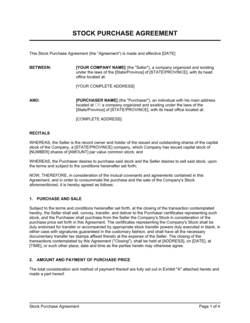
Identify and name the legal entities
Enter the full registered legal names of both buyer and seller — not trade names or DBAs. Confirm entity type (LLC, corporation, partnership) and the state or country of formation for each.
💡 Pull the exact entity name from your state's corporate registry before execution — a name mismatch between the agreement and title documents can delay or void the asset transfer.
2
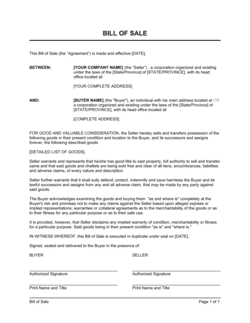
Build the purchased-assets schedule
Create a comprehensive list of every asset being sold, organized by category: tangible personal property, real property interests, intellectual property, contracts, permits, inventory, and goodwill. Attach as numbered exhibits.
💡 Walk through the seller's balance sheet line by line to ensure no asset is accidentally omitted — courts will not add assets to the schedule after execution.
3
Draft the excluded-assets and excluded-liabilities lists
Explicitly name everything the seller is keeping — cash, pre-closing receivables, tax refunds, corporate records, and personal assets. List all liabilities not being assumed, including any contingent or disputed obligations.
💡 In asset deals, silence is not exclusion. If an asset or liability is not explicitly addressed, courts in many jurisdictions will use extrinsic evidence to determine intent — which creates litigation risk.
4
Set the purchase price and payment structure
State the total consideration and how it breaks down: cash at closing, seller note, earnout formula, and escrow holdback amount and release conditions. Attach a purchase price allocation schedule by asset class.
💡 In the US, buyer and seller must file IRS Form 8594 with consistent purchase price allocations. Agree on the allocation in the contract itself to avoid a post-closing disagreement that triggers an IRS inquiry.
5
Negotiate and draft representations and warranties
Seller's reps should cover title, absence of liens, no material litigation, accuracy of financials, and compliance with law. Define 'knowledge' precisely — e.g., 'the actual knowledge of [NAME] and [NAME] after reasonable inquiry.'
💡 Buyers should request a disclosure schedule for each rep, requiring the seller to list all known exceptions. Undisclosed exceptions are breaches; disclosed ones are negotiated risk allocations.
6
Define closing conditions and required consents
List every third-party consent needed — landlord, key customers, government licenses, and financing commitments. Each should be a condition to the buyer's obligation to close, with a termination right if not obtained by a specified outside date.
💡 Identify consent requirements early in diligence, not at closing. Critical customer or landlord consents that surface late can kill a deal or force a price reduction.
7
Set indemnification caps, deductibles, and survival periods
Negotiate a cap (typically 10–100% of purchase price depending on deal size and risk), a deductible or basket (often 0.5–1% of purchase price), and survival periods by rep category — fundamental reps often survive indefinitely; operational reps typically 18–36 months.
💡 For deals over $2M, consider representations and warranties insurance as an alternative to a large escrow holdback — it transfers breach risk to an insurer and can speed up closing negotiations.
8
Execute before transfer of any assets or payment
Both parties and any required guarantors must sign before any assets are transferred or any funds change hands. Use a closing checklist to confirm all exhibits are attached and all conditions are satisfied.
💡 Date the agreement the same day all parties sign. Backdating creates enforceability risk and potential tax issues if the asset transfer date and agreement date are inconsistent.