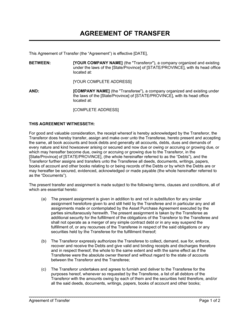
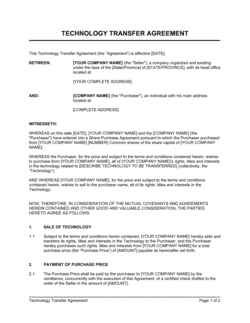
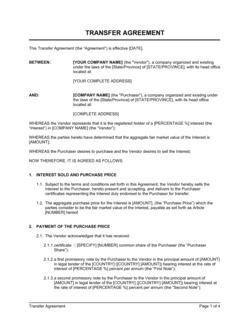
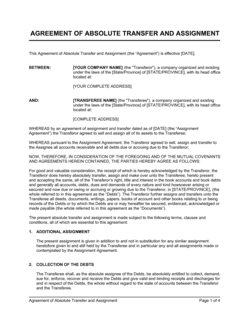
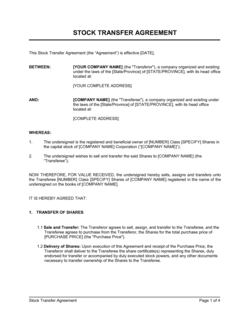
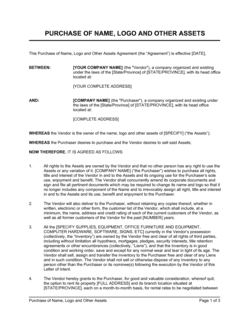
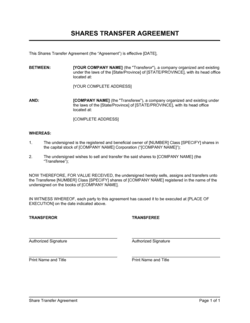
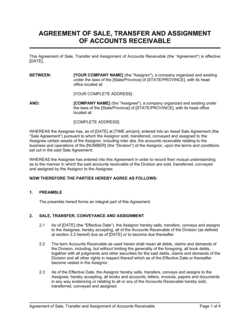
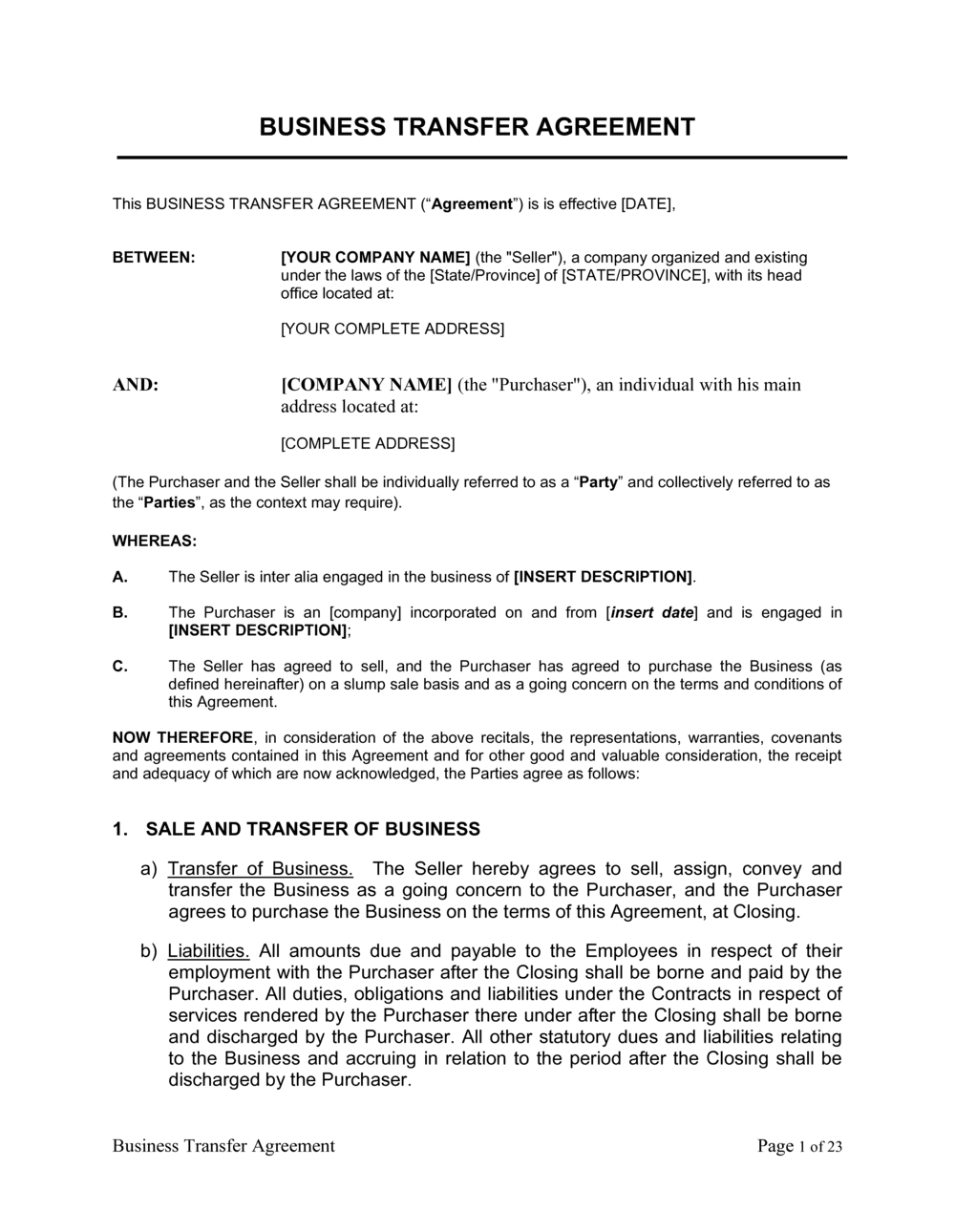
Business Transfer Agreement Template

Free Word download • Edit online • Save & share with Drive • Export to PDF

19 pages35–45 min to fillDifficulty: ComplexSignature requiredLegal review recommended
Learn more ↓
FreeBusiness Transfer Agreement Template

At a glance

What it is
A Business Transfer Agreement is a legally binding contract that transfers complete ownership of a business — including its assets, liabilities, contracts, intellectual property, and employees — from a seller to a buyer for an agreed price. This free Word download gives you a structured, attorney-ready starting point you can edit online and export as PDF to govern every stage of the deal from execution through closing.
When you need it
Use it when selling or purchasing an entire business, whether structured as an asset sale or a share sale, whenever the transaction includes employees, ongoing contracts, or material liabilities that carry over to the buyer.
What's inside
Purchase price and payment terms, a full description of transferred assets and assumed liabilities, seller representations and warranties, buyer indemnities, conditions precedent to closing, employee transfer provisions, post-sale non-compete restrictions, and governing law.

What is a Business Transfer Agreement?

A Business Transfer Agreement is a legally binding contract that transfers complete ownership of a business — including its tangible assets, intellectual property, contracts, goodwill, employees, and agreed liabilities — from a seller to a buyer for an agreed purchase price. Unlike a narrow asset purchase that picks up only selected items, a business transfer agreement is designed to move the entire going concern: the buyer steps into the seller's operational shoes from the closing date forward. The document governs not just what transfers but how — through representations and warranties that protect the buyer against hidden problems, indemnity obligations that allocate post-closing risk, conditions that must be satisfied before either party is bound to complete, and post-sale restrictions that prevent the seller from immediately competing against the business they just sold.

Why You Need This Document

Transferring a business on a handshake or a simple bill of sale exposes both parties to serious, quantifiable risk. Without a warranty and indemnity framework, a buyer who discovers an undisclosed tax debt or a broken supplier contract after closing has no contractual basis to recover losses from the seller. Without a working-capital adjustment clause, a seller can strip cash from the business between signing and closing and the buyer receives something worth materially less than the agreed price. Without explicit employee transfer provisions, pre-closing wage arrears, accrued vacation, and termination claims can land on the buyer's balance sheet without warning. And without a properly scoped non-compete, the seller can open a competing business across the street the week after closing — taking clients and staff built on the goodwill the buyer just paid for. A fully documented Business Transfer Agreement, executed before closing, eliminates each of these gaps and gives both parties a clear, enforceable record of exactly what was bought, sold, warranted, and restricted.

Which variant fits your situation?

If your situation is…Use this template
Buying or selling specific assets without assuming all liabilitiesAsset Purchase Agreement
Acquiring a company by purchasing all of its sharesShare Purchase Agreement
Transferring a franchise location to a new franchiseeFranchise Transfer Agreement
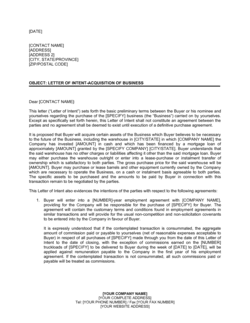
Binding both parties before due diligence is completeLetter of Intent (Business Acquisition)
Keeping transaction terms confidential during negotiationsNon-Disclosure Agreement
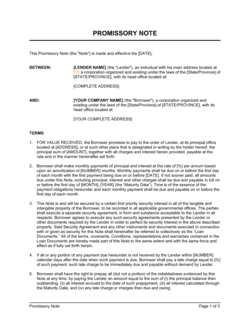
Seller financing a portion of the purchase pricePromissory Note
Transferring real property included in the business saleReal Estate Purchase Agreement

Common mistakes to avoid

❌ No explicit excluded liabilities schedule

Why it matters: Without a clear list of what the buyer is not assuming, successor liability doctrine in several jurisdictions may hold the buyer responsible for the seller's pre-closing tax debts, warranty claims, and employment disputes.

Fix: Attach Schedule 4 listing every category of excluded liability — tax obligations pre-closing date, pending litigation, and employment claims — and confirm it is incorporated by reference in the agreement body.

❌ Omitting a working-capital adjustment mechanism

Why it matters: A seller who strips cash, delays receivables collection, or increases payables between signing and closing can deliver a business worth materially less than the agreed price with no contractual remedy for the buyer.

Fix: Define a target working-capital figure, agree on the calculation methodology, and include a dollar-for-dollar adjustment clause with a post-closing true-up period of 30–60 days.

❌ Signing after due diligence is waived under time pressure

Why it matters: Undisclosed liabilities, encumbered assets, or broken key contracts surface after closing with no contractual recourse if the buyer signed without completing diligence and the warranties were heavily qualified.

Fix: Never waive due diligence entirely. At minimum, require audited financial statements, a clear title search on key assets, and a full IP ownership confirmation before committing to the purchase price.

❌ Using a short non-compete duration borrowed from an employment context

Why it matters: A one-year non-compete that would be acceptable for an employee is routinely insufficient in a business sale — the seller has received significant consideration for goodwill and courts expect proportionately longer restrictions.

Fix: For business transfers, use a non-compete of 2–5 years scoped to the specific industry and territory of the sold business. Tie the geographic scope to the areas where the business actually operates.

❌ Failing to obtain third-party consent for assigned contracts

Why it matters: Many commercial contracts — leases, supplier agreements, software licenses — contain anti-assignment clauses requiring counterparty consent. Transferring them without consent can trigger automatic termination of the contract.

Fix: Audit all material contracts for assignment restrictions before signing and list required consents in the conditions precedent. Make closing conditional on obtaining consent from counterparties to key contracts.

❌ No material adverse change clause

Why it matters: Without a MAC clause, the buyer is contractually obligated to close even if the business loses a major customer, faces regulatory action, or suffers a significant revenue drop between signing and completion.

Fix: Include a MAC definition covering revenue decline above a stated threshold, loss of key contracts, and material regulatory changes. Make the absence of a MAC a condition precedent to the buyer's obligation to close.

The 10 key clauses, explained

Parties, recitals, and defined terms

In plain language: Identifies the seller and buyer as legal entities, states the background of the deal, and defines every capitalized term used throughout the agreement.

Sample language
This Business Transfer Agreement is entered into on [DATE] between [SELLER LEGAL NAME], a [ENTITY TYPE] registered in [JURISDICTION] ('Seller'), and [BUYER LEGAL NAME], a [ENTITY TYPE] registered in [JURISDICTION] ('Buyer'). The Seller wishes to sell, and the Buyer wishes to purchase, the Business as a going concern on the terms set out below.

Common mistake: Using trade names instead of registered legal entity names. If the contracting party differs from the entity that holds the assets or employs the staff, the transfer may not be legally effective.

Description of transferred assets and excluded assets

In plain language: Lists every asset included in the sale — tangible property, inventory, IP, contracts, goodwill, and customer lists — and explicitly carves out anything the seller is retaining.

Sample language
The Transferred Assets comprise all assets of the Business as listed in Schedule 1, including but not limited to: fixed assets, inventory as at the Closing Date, the Business IP, the Assigned Contracts, and the Goodwill. The Excluded Assets are set out in Schedule 2 and do not form part of this sale.

Common mistake: Relying on 'all assets used in the business' without a specific schedule. Disputes arise immediately when the seller retains equipment or IP the buyer assumed was included.

Assumed and excluded liabilities

In plain language: Specifies which of the seller's existing obligations the buyer agrees to take on and which remain with the seller after closing.

Sample language
The Buyer assumes only the Assumed Liabilities set out in Schedule 3. All other liabilities of the Business arising before the Closing Date, including the Excluded Liabilities listed in Schedule 4, remain the sole obligation of the Seller.

Common mistake: No explicit excluded liabilities schedule. Without one, courts in several jurisdictions apply successor liability doctrine and hold the buyer responsible for pre-closing obligations — including tax debts, warranty claims, and employment disputes.

Purchase price, payment terms, and adjustments

In plain language: States the total consideration, how and when it is paid (cash at closing, deferred installments, earn-out, or seller financing), and the mechanism for post-closing price adjustments based on working capital or net asset value.

Sample language
The Purchase Price is $[AMOUNT], payable as follows: $[X] in cash at Closing, $[Y] by way of a Seller Note bearing interest at [RATE]% per annum, maturing [DATE]. The Purchase Price shall be adjusted upward or downward dollar-for-dollar to the extent Closing Working Capital deviates from the Target Working Capital of $[AMOUNT].

Common mistake: Omitting a working-capital adjustment mechanism. Sellers can strip cash or increase payables between signing and closing; without an adjustment clause, the buyer absorbs the shortfall.

Seller representations and warranties

In plain language: A comprehensive set of factual statements by the seller about the business — ownership of assets, accuracy of financial statements, no undisclosed liabilities, compliance with laws, and condition of IP and contracts.

Sample language
The Seller represents and warrants to the Buyer, as of the date hereof and as of the Closing Date, that: (a) the Seller has full legal authority to enter into and perform this Agreement; (b) the Financial Statements present a true and fair view of the Business as at [DATE]; (c) the Seller is the sole legal and beneficial owner of the Transferred Assets, free of all Encumbrances.

Common mistake: Seller's warranties limited to 'to the best of the seller's knowledge.' Qualified knowledge warranties shift risk to the buyer. Negotiate clear, unqualified warranties for material items such as title, financial statements, and undisclosed liabilities.

Indemnification

In plain language: Obligates the seller to compensate the buyer for losses arising from warranty breaches or undisclosed pre-closing liabilities, and caps the seller's maximum exposure.

Sample language
The Seller shall indemnify, defend, and hold harmless the Buyer from and against any Losses arising out of: (a) any breach of the Seller's Representations and Warranties; (b) any Excluded Liability; or (c) any claim relating to the Business arising before the Closing Date. The Seller's aggregate liability under this clause shall not exceed [X]% of the Purchase Price.

Common mistake: No cap on indemnity exposure and no time-limited survival period for warranties. Without both, the seller faces open-ended liability for years; with a survival period of 12–24 months and an indemnity cap, risk is quantifiable for both sides.

Employee transfer provisions

In plain language: Addresses the transfer of employees from seller to buyer — which employees are included, on what terms, and which party bears liability for pre-closing employment claims.

Sample language
The Buyer shall offer employment to each Transferring Employee listed in Schedule 5 on terms no less favorable than those in effect at the Closing Date. The Seller shall be solely responsible for all employment-related claims arising prior to the Closing Date, including accrued wages, benefits, and termination entitlements.

Common mistake: No Schedule listing transferring employees by name and role. An open-ended obligation to 'all employees of the business' exposes the buyer to unexpected headcount and legacy employment claims.

Conditions precedent to closing

In plain language: Lists the events that must occur before either party is legally required to complete the transaction — regulatory approvals, lender consents, third-party contract assignments, and satisfactory due diligence.

Sample language
The obligations of the Buyer to complete are conditional on: (a) receipt of all Required Regulatory Approvals; (b) consent of the Key Contract Counterparties listed in Schedule 6; (c) no Material Adverse Change having occurred between the date of this Agreement and the Closing Date; and (d) the Seller's Representations and Warranties remaining accurate in all material respects.

Common mistake: No material adverse change (MAC) clause. Without one, the buyer is obligated to close even if the business deteriorates significantly between signing and completion — a critical gap in multi-month transactions.

Non-compete and non-solicitation covenants

In plain language: Prevents the seller from competing with the transferred business or soliciting its customers and employees for a defined period and geography after closing.

Sample language
For a period of [X] years following the Closing Date, the Seller shall not, within [GEOGRAPHIC AREA], directly or indirectly: (a) carry on a Competing Business; (b) solicit or accept business from any customer of the Business as at the Closing Date; or (c) solicit or induce any Transferring Employee to leave the Buyer's employment.

Common mistake: Using a one-year non-compete for a business sale. Courts interpret non-competes in business acquisition contexts far more liberally than employment non-competes — durations of 2–5 years with regional scope are routinely enforced when tied to genuine goodwill.

Governing law, notices, and entire agreement

In plain language: Specifies which jurisdiction's law governs, how formal notices must be delivered, and confirms the written agreement supersedes all prior negotiations and term sheets.

Sample language
This Agreement is governed by and construed in accordance with the laws of [JURISDICTION]. Any dispute shall be referred to [ARBITRATION / COURTS OF JURISDICTION]. This Agreement constitutes the entire agreement between the parties and supersedes all prior representations, term sheets, and letters of intent.

Common mistake: Failing to confirm the agreement supersedes the letter of intent. If the LOI contains terms not carried into the final agreement, parties sometimes argue those terms survive — an entire-agreement clause eliminates that ambiguity.

How to fill it out

  1. 1

    Identify both parties by their full legal entity names

    Enter the seller's and buyer's registered legal names exactly as they appear on corporate registry filings. Include entity type (LLC, Inc., Ltd.) and jurisdiction of incorporation.

    💡 Cross-check the entity name against the business registration certificate — trade names and registered names differ more often than people expect.

  2. 2

    Build detailed asset and liability schedules

    List every transferred asset in Schedule 1 (equipment, inventory, IP, contracts, customer lists, goodwill) and every excluded asset in Schedule 2. Mirror this structure for assumed liabilities in Schedule 3 and excluded liabilities in Schedule 4.

    💡 A physical walkthrough of the business premises with both parties present — before signing — catches omissions in the asset schedule that become expensive disputes after closing.

  3. 3

    Set the purchase price and payment structure

    Enter the total consideration, the cash-at-closing amount, any seller note terms (principal, interest rate, maturity), and the earn-out formula if applicable. Define the working-capital target and the adjustment mechanism.

    💡 Agree on the accounting method (GAAP or IFRS) used to calculate working capital before signing — different methods can produce a six-figure adjustment swing on the same set of books.

  4. 4

    Review and negotiate the seller's representations and warranties

    Go through each warranty clause line by line. The seller should disclose any exceptions in a disclosure letter attached to the agreement. Material items — title, financial statement accuracy, undisclosed liabilities — should remain unqualified.

    💡 The disclosure letter is as important as the warranty clause itself. Prepare it in parallel with the agreement and treat it as a negotiated document, not a formality.

  5. 5

    Set the indemnity cap and survival periods

    Agree on the maximum aggregate liability for warranty breaches (typically 20–100% of purchase price depending on risk profile) and the time window during which claims can be made (commonly 12–24 months for general warranties, longer for tax and title).

    💡 Consider a basket (de minimis threshold) below which no indemnity claim is payable — $5,000–$25,000 is typical for SME transactions — to filter out nuisance claims.

  6. 6

    Complete the employee transfer schedule

    List every transferring employee by name, role, and current compensation in Schedule 5. Confirm which party is responsible for accrued vacation, severance entitlements, and any pre-closing employment claims.

    💡 In the UK and EU, consult an employment lawyer before signing — TUPE obligations require advance consultation with employees and cannot be contracted away.

  7. 7

    Confirm conditions precedent and target a closing date

    List every regulatory approval, lender consent, and third-party contract assignment required before closing. Set a long-stop date — the date on which either party may walk away if conditions remain unsatisfied.

    💡 Build at least 30 days of buffer into the long-stop date beyond your expected regulatory timeline. Approvals routinely take longer than projected.

  8. 8

    Execute before closing and retain executed copies

    Both parties must sign the agreement with witnessed signatures where required by jurisdiction. Date the agreement accurately — backdating creates enforceability risk. Store the fully executed copy alongside all schedules.

    💡 Use a digital signature platform that timestamps execution and stores an audit trail. Physical signatures on scanned copies create chain-of-custody questions in disputes.

Frequently asked questions

What is a business transfer agreement?

A business transfer agreement is a legally binding contract that transfers ownership of an entire business — including its assets, liabilities, contracts, employees, and goodwill — from a seller to a buyer for an agreed purchase price. It governs every aspect of the transaction from execution through closing, including warranties, indemnities, conditions precedent, and post-sale restrictions on the seller. It differs from a simple asset purchase in that it is designed to transfer the business as a going concern.

What is the difference between an asset sale and a share sale?

In an asset sale, the buyer purchases specific assets and assumes only selected liabilities — the seller retains the legal entity. In a share sale, the buyer acquires the seller's ownership interest in the company itself, inheriting all assets and liabilities by operation of law. Asset sales give buyers more control over what they take on; share sales are simpler to execute when the business holds contracts or licenses that cannot be assigned. Tax treatment differs significantly between the two structures, so advice from a tax professional is essential before choosing.

Do I need a lawyer to complete a business transfer agreement?

For any transaction involving significant assets, employees, or ongoing liabilities, legal review is strongly recommended. A lawyer will tailor the warranty and indemnity clauses to the specific risk profile of the deal, ensure compliance with employment transfer regulations, and confirm that regulatory approvals are properly addressed. Using a quality template as a starting point reduces drafting time and cost, but the transaction- specific negotiation typically requires professional legal guidance.

What should the purchase price clause include?

The purchase price clause should state the total consideration, the payment schedule (cash at closing, seller note, earn-out installments), the currency, and the working-capital adjustment mechanism. It should also address how any deposit or escrow amount is applied at closing and what happens to escrowed funds if closing does not occur. Omitting a working- capital adjustment is one of the most common and costly oversights in SME business transfers.

What are representations and warranties in a business sale?

Representations and warranties are factual statements the seller makes about the condition, ownership, and legal status of the business — covering accuracy of financial statements, ownership of assets free of encumbrances, compliance with applicable laws, absence of undisclosed liabilities, and validity of key contracts. If a warranty proves false after closing, the buyer can typically claim indemnification for resulting losses. The scope and qualification of warranties are the most heavily negotiated aspect of most business transfer agreements.

What is an earn-out and when should I use one?

An earn-out is a deferred payment mechanism in which part of the purchase price is paid to the seller only if the business meets agreed performance targets — such as revenue or EBITDA thresholds — after closing. Earn-outs are useful when buyer and seller disagree on the business's value or when the seller's continued involvement is needed to preserve key relationships. They are also a source of post-closing disputes if the targets and calculation methodology are not defined with precision in the agreement.

Are non-compete clauses enforceable in a business sale?

Non-compete covenants in the context of a business sale are generally enforced more broadly than post-employment restrictions, because the seller has received consideration specifically for the goodwill being protected. In most US states, UK courts, Canadian provinces, and EU member states, a non-compete of 2–5 years scoped to the business's actual operating territory is considered reasonable. The clause should be tailored to the specific industry and geography of the sold business to maximize enforceability.

What happens to employees when a business is transferred?

Employee transfer rules vary significantly by jurisdiction. In the UK and EU, TUPE and equivalent regulations automatically transfer employees to the buyer on their existing terms and require advance consultation with employee representatives — these obligations cannot be contracted away. In the US and Canada, there is no automatic transfer obligation, but the buyer typically offers employment to key staff as a condition of the deal. The agreement should include a schedule listing transferring employees and clearly allocate responsibility for pre-closing employment claims.

What are conditions precedent and why do they matter?

Conditions precedent are specific events that must occur before either party is legally required to complete the transaction. Common examples include regulatory approval (competition authority clearance, licensing transfers), lender consent, third-party contract assignment, and satisfactory completion of due diligence. If a condition is not satisfied by the long-stop date, the agreement typically allows either party to terminate without penalty. Omitting a MAC clause from the conditions precedent is a significant buyer-side risk in transactions with a long gap between signing and closing.

How long does it take to close a business transfer?

A straightforward SME transfer with no regulatory approvals typically closes in 4–8 weeks from signing. Transactions requiring competition authority clearance, liquor license transfers, or third-party consent for multiple contracts typically take 3–6 months. The timeline is driven primarily by the complexity of the conditions precedent, the thoroughness of due diligence, and the speed of regulatory bodies. Setting a realistic long-stop date — with buffer — avoids pressure to close before conditions are properly satisfied.

How this compares to alternatives

vs Asset Purchase Agreement

An asset purchase agreement transfers specific named assets and selected liabilities only — the buyer does not acquire the seller's legal entity. A business transfer agreement is designed to move the entire going concern, including employees, goodwill, and ongoing contracts. Asset purchases offer cleaner liability separation; business transfers are simpler when contracts and licenses cannot be easily assigned.

vs Share Purchase Agreement

A share purchase agreement transfers ownership of a company by buying the seller's equity stake — the entity itself (with all its liabilities) passes to the buyer. A business transfer agreement moves the business operations and assets across entities, allowing the seller's corporate shell to remain. Share sales are common for larger entities; business transfers are typical in sole-trader or partnership-to-company transactions.

vs Letter of Intent (Business Acquisition)

A letter of intent records the preliminary agreed terms — price, structure, exclusivity period — before the full agreement is drafted. It is generally non-binding on the transaction itself, though exclusivity and confidentiality clauses within it typically are enforceable. The business transfer agreement is the binding governing document that supersedes and replaces the LOI at signing.

vs Non-Disclosure Agreement

An NDA protects confidential business information shared during pre-sale due diligence before any binding commitment is made. It is signed at the outset of negotiations, well before the business transfer agreement. Once the transfer agreement is executed, the NDA's confidentiality obligations are typically superseded or reinforced by the confidentiality provisions inside the transfer agreement itself.

Industry-specific considerations

Retail and hospitality

Lease assignment, liquor or food service license transfers, and inventory valuation at closing are the most deal-critical items in retail and hospitality transfers.

Professional services

Client and referral relationships constitute the primary goodwill; non-solicitation of clients and key staff is often as commercially important as the non-compete covenant.

Technology and SaaS

IP ownership confirmation, software license assignability, data privacy obligations on customer data transfer, and key developer retention are critical diligence and warranty items.

Manufacturing

Equipment valuations, environmental liability exclusions, supplier contract continuity, and union agreement interaction are the highest-risk elements in manufacturing business transfers.

Jurisdictional notes

United States

Business transfers in the US are governed by state law; there is no single federal framework. Asset sales require UCC bulk transfer compliance in states that have retained those provisions, and state-specific licensing (liquor, healthcare, contractor) must be transferred or reissued separately. Non-compete enforceability varies sharply by state — California bars most post-sale non-competes even in business acquisition contexts, while New York and Texas enforce them with reasonable scope. Tax structure (stock vs. asset sale) has significant federal and state income tax consequences and should be reviewed by a CPA before signing.

Canada

Each Canadian province governs business sales independently. Ontario's Business Corporations Act and equivalent provincial statutes require specific formalities for share transfers. Employment transfer obligations follow provincial employment standards legislation — there is no automatic TUPE-style transfer, but buyers may inherit constructive dismissal liability if they alter terms of employment. Quebec transactions require French-language contracts for provincially regulated activities. HST/GST treatment of a going-concern sale can qualify for an elected zero-rated supply under the Excise Tax Act if both parties are registrants — CRA guidance should be confirmed in advance.

United Kingdom

The Transfer of Undertakings (Protection of Employment) Regulations 2006 (TUPE) automatically transfer employees to the buyer on their existing terms and require advance information and consultation with employee representatives — penalties for non-compliance can reach 13 weeks' pay per affected employee. Stamp Duty Land Tax applies to real property included in the transfer. Competition and Markets Authority clearance is required if the combined turnover exceeds £70M or the target's UK turnover exceeds £70M. Post-Brexit, transfers involving both UK and EU assets require separate legal analysis under each regime.

European Union

The EU Acquired Rights Directive (2001/23/EC), implemented in each member state, mandates automatic employee transfer on existing terms and requires consultation obligations equivalent to or stricter than UK TUPE. GDPR imposes specific requirements on the transfer of personal data — including customer and employee data — as part of a business sale; a data transfer impact assessment is typically required. Competition clearance thresholds under EU Merger Regulation apply when combined worldwide turnover exceeds €5B or EU-wide turnover of each of the two parties exceeds €250M. Member states including France, Germany, and the Netherlands impose additional local formalities for business transfers.

Template vs lawyer — what fits your deal?

PathBest forCostTime
Use the templateSmall business transfers between known parties with straightforward assets, no employees, and a simple cash-at-closing priceFree2–4 hours to complete the template
Template + legal reviewTransfers involving employees, ongoing contracts, earn-outs, or a business valued up to $500K$1,000–$3,000 for a lawyer review and negotiation session1–2 weeks
Custom draftedTransactions above $500K, regulatory approvals required, multi-jurisdiction assets, or complex IP and liability structures$5,000–$25,000+ depending on deal complexity4–12 weeks

Glossary

Asset Sale
A transaction structure in which the buyer purchases specific assets and assumes selected liabilities of a business rather than acquiring the entity itself.
Share Sale
A transaction in which the buyer acquires the seller's ownership interest in the legal entity, inheriting all assets and liabilities by operation of law.
Purchase Price Adjustment
A mechanism that modifies the agreed price after closing based on changes in working capital, net assets, or other financial metrics between signing and completion.
Representations and Warranties
Factual statements made by each party — typically the seller — about the condition, ownership, and legal status of the business being transferred.
Indemnity
A contractual obligation for one party to compensate the other for specified losses, typically used to protect the buyer against undisclosed pre-closing liabilities.
Conditions Precedent
Events or approvals that must occur before either party is obligated to complete the transaction — such as regulatory clearance or lender consent.
Earn-Out
A deferred payment structure in which a portion of the purchase price is paid to the seller only if the business meets agreed revenue or profit targets after closing.
Due Diligence
The structured investigation a buyer conducts into a target business's financials, contracts, IP, liabilities, and legal standing before committing to a purchase price.
Non-Compete Covenant
A post-closing restriction preventing the seller from starting or joining a competing business within a defined geography and time period.
Closing
The date and process by which all conditions precedent are satisfied, documents are executed, consideration is paid, and ownership legally transfers from seller to buyer.
TUPE / Successor Employer Rules
Regulations in the UK, EU, and some other jurisdictions requiring that employees automatically transfer to the buyer on their existing terms when a business changes hands.
Escrow
Funds held by a neutral third party pending satisfaction of post-closing conditions, most commonly to secure indemnity claims against the seller.

Part of your Business Operating System

This document is one of 3,000+ business & legal templates included in Business in a Box.

  • Fill-in-the-blanks — ready in minutes
  • 100% customizable Word document
  • Compatible with all office suites
  • Export to PDF and share electronically

Create your document in 3 simple steps.

From template to signed document — all inside one Business Operating System.
1
Download or open template

Access over 3,000+ business and legal templates for any business task, project or initiative.

2
Edit and fill in the blanks with AI

Customize your ready-made business document template and save it in the cloud.

3
Save, Share, Send, Sign

Share your files and folders with your team. Create a space of seamless collaboration.

Save time, save money, and create top-quality documents.

★★★★★

"Fantastic value! I'm not sure how I'd do without it. It's worth its weight in gold and paid back for itself many times."

Managing Director · Mall Farm
Robert Whalley
Managing Director, Mall Farm Proprietary Limited
★★★★★

"I have been using Business in a Box for years. It has been the most useful source of templates I have encountered. I recommend it to anyone."

Business Owner · 4+ years
Dr Michael John Freestone
Business Owner
★★★★★

"It has been a life saver so many times I have lost count. Business in a Box has saved me so much time and as you know, time is money."

Owner · Upstate Web
David G. Moore Jr.
Owner, Upstate Web

Run your business with a system — not scattered tools

Stop downloading documents. Start operating with clarity. Business in a Box gives you the Business Operating System used by over 250,000 companies worldwide to structure, run, and grow their business.

Start free · No credit card required