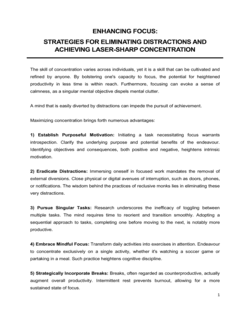
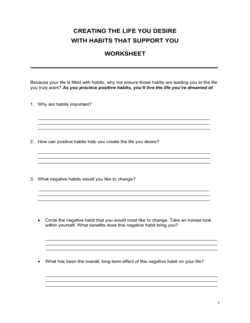
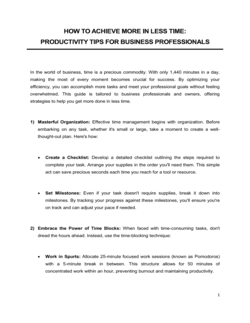
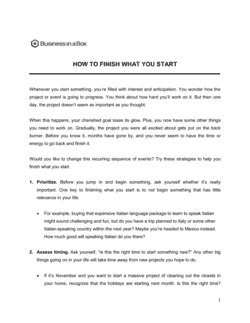
Productivity and Time Management Templates
★★★★★4.7from 280+ reviews· Trusted by 20M+ businesses
Plan, track, and protect working hours with ready-to-use templates for every role and situation.
WordEditable onlinePDF31+ productivity and time management templates
Other Administration categories
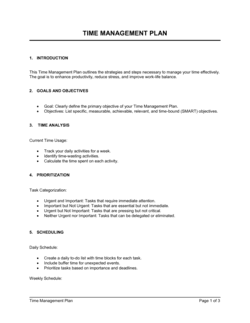
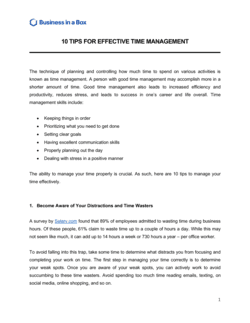
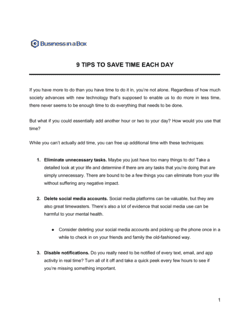
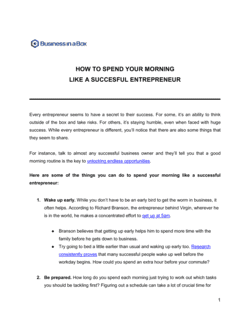
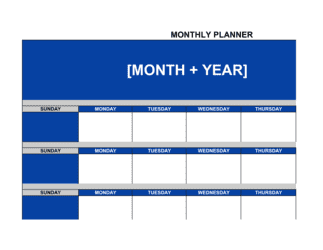
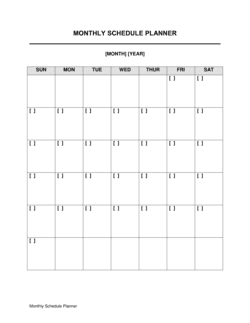
Time management plans and guides
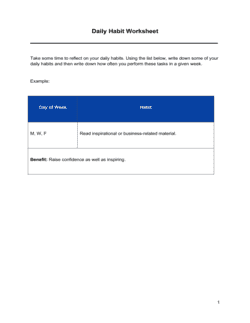
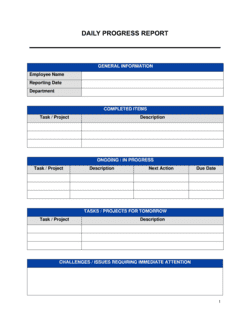
Time tracking and records
Time off and attendance policies
Management policies and procedures
Business management and operations
More productivity and time management templates
250K+Clients
20M+Free users
20+Years
190+Countries
10,000+Law firms
50M+Downloads
Trusted across review platforms
- Capterra★★★★☆4.649 reviews
- G2★★★★☆4.713 reviews
- GetApp★★★★☆4.649 reviews
- Google Play★★★★☆4.6179 ratings
- Google Reviews★★★★☆4.567 reviews
Frequently asked questions
What is a time management plan and why do businesses need one?
A time management plan is a structured document that maps how individuals or teams will spend their working hours to meet specific goals. Businesses need one because unplanned time consistently migrates toward low-value tasks — meetings, email, and reactive work — at the expense of strategic priorities. A written plan makes time allocation visible and correctable.
How do time sheets and employee time records differ from each other?
A time sheet records total daily and weekly hours and is used primarily for payroll. An employee time record captures detailed start, end, and break times per shift and is used when labor regulations require more granular proof of hours worked. Many businesses use both: the detailed record as the source, and the time sheet as the payroll summary.
What should a paid-time-off policy include?
A PTO policy should cover eligibility criteria, accrual rate, maximum balance, carryover rules, payout on termination, blackout periods, the request and approval process, and the consequences of taking unapproved leave. Clear policies reduce disputes and help HR answer questions consistently without case-by-case judgment.
Can productivity templates replace dedicated project management software?
For small teams or straightforward projects, a well-structured template in Word or Excel handles most planning and tracking needs without licensing costs. As team size, project complexity, or reporting requirements grow, dedicated software typically becomes more efficient. Templates and software are not mutually exclusive — many teams use templates for planning and software for live tracking.
How often should a time management plan be updated?
Most plans work well on a weekly or monthly review cycle. After each review, compare planned time against actual time spent, identify recurring gaps, and adjust the next period's allocations. Quarterly full reviews are useful to realign the plan with shifting business priorities or team changes.
What is hour blocking and when is it useful?
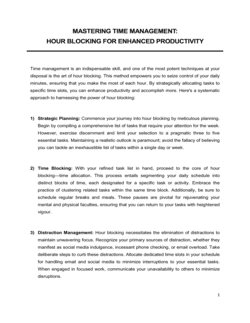
Hour blocking — sometimes called time blocking — divides the workday into dedicated chunks assigned to specific tasks or task types. It is most useful for roles with high cognitive demands (writing, analysis, coding) where context-switching has a measurable cost. It is less effective for roles that are inherently reactive, such as frontline customer service, without adjustment for response-time expectations.
Are overtime and PTO policies legally required?
In most jurisdictions, employers are required to have some form of documented overtime policy that complies with local labor law, and failure to pay overtime correctly is a common source of wage claims. PTO policies are typically not legally mandated, but once established in writing they are generally enforceable as part of the employment contract. Consult a local employment lawyer to confirm the requirements that apply to your location and industry.
How do I choose between a task management template and a project management template?
Use a task management template for recurring workflows, individual accountability tracking, or short-term to-do lists. Use a project management template when work spans multiple weeks, involves several contributors, requires milestone tracking, or has a formal deliverable at the end. When in doubt, start with the project template — it can always be simplified, while the task template often can't scale up.
Productivity And Time Management vs. related documents
A time sheet summarizes total hours worked per day and week — typically used for payroll submission. An employee time record logs granular start, end, and break times for each shift. Use the time sheet for routine payroll; use the time record when labor regulations require detailed proof of hours or when disputes arise.
A time management plan focuses on how an individual or team allocates time across goals and priorities over days or weeks. A task management template focuses on tracking specific deliverables, owners, and due dates. Use the plan for strategic scheduling; use the task template for day-to-day execution and accountability.
A paid-time-off (PTO) policy governs leave that employees are compensated for — vacation, personal days, and sometimes sick leave pooled together. A time off policy is broader and may cover both paid and unpaid leave categories. For most small and mid-size businesses, a single PTO policy is simpler to administer and easier for employees to understand.
A project management template covers the full lifecycle of a project: scope, milestones, resources, risks, and status. A task management template focuses narrowly on individual to-dos within a project or workstream. Use the project template when coordinating multi-person efforts over weeks or months; use the task template for shorter, repeatable workflows.
Key clauses every Productivity And Time Management contains
Most productivity and time management documents share a common set of structural elements, regardless of whether they are plans, policies, or tracking forms.
- Scope and purpose. Defines who the document applies to and what problem it is designed to solve.
- Roles and responsibilities. Identifies who owns, approves, and complies with the document — manager, employee, or HR.
- Time period covered. States whether the document covers a day, week, pay period, quarter, or ongoing operations.
- Measurement and tracking method. Specifies how time, tasks, or productivity will be recorded — manual log, digital tool, or both.
- Approval and sign-off process. Outlines who reviews and authorizes time records, leave requests, or policy changes before action is taken.
- Non-compliance consequences. Describes what happens when policies are not followed — typically escalating from warning to formal discipline.
- Review and update schedule. Sets how often the document is revisited to reflect changes in team size, regulation, or business needs.
- Confidentiality of records. Notes that time and productivity data is personal employment information handled in line with privacy policy.
How to write a time management plan
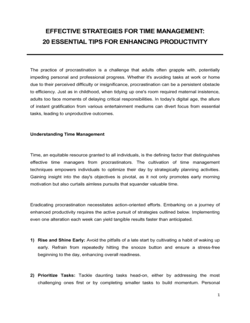
A time management plan is only useful if it reflects how work actually gets done — here is how to build one that your team will actually follow.
1
Define your objectives
Start with the 3–5 outcomes the plan needs to support — quarterly targets, project milestones, or daily output goals.
2
Audit current time use
Log how time is actually spent for one week before drafting the plan so you allocate realistically, not aspirationally.
3
Categorize work types
Group tasks into deep work, meetings, administrative tasks, and reactive work to see where time is being lost.
4
Assign time blocks
Allocate specific hours or time blocks to each category, protecting the highest-value work from interruption.
5
Set priorities and deadlines
Rank tasks by urgency and importance so that the most critical work gets done first when time runs short.
6
Identify dependencies and handoffs
Note where one task relies on another person's output so delays can be anticipated and scheduled around.
7
Build in review checkpoints
Schedule a weekly or bi-weekly review to compare planned time against actual time and adjust the next period.
8
Document and share the plan
Write the plan in a shared format so managers and team members are aligned on priorities and availability.
At a glance
- What it is
- Productivity and time management templates are pre-structured documents that help individuals and teams plan work, track hours, set policies, and eliminate time wasted on routine decisions. They cover everything from personal time-blocking guides to company-wide policies on paid time off, overtime, and records retention.
- When you need one
- Any time a team is missing deadlines, tracking hours inconsistently, or operating without clear policies around time off and work schedules, a structured template gives everyone a shared framework to work from.
Which Productivity And Time Management do I need?
The right template depends on whether you need to plan your own time, track hours for payroll, or set company-wide policies. Find your situation below.
Your situation
Recommended template
Building a personal or team plan to meet quarterly goals
Structures priorities, deadlines, and daily time blocks in one place.Logging hours for payroll processing or client billing
Standard weekly format accepted by payroll systems and auditors.Recording individual employee start, end, and break times
Detailed per-employee log for compliance with labor record-keeping rules.Setting company rules for vacation, sick leave, and personal days
Covers accrual, carryover, approval process, and blackout periods.Tracking tasks and deadlines across a team or project
Organizes tasks by owner, priority, and due date for team visibility.Establishing rules for overtime and compensatory time
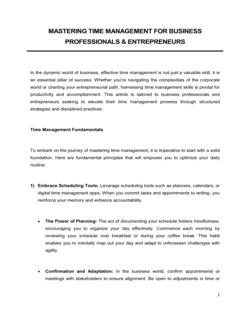
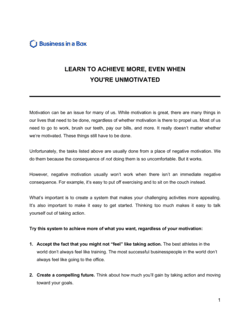
Defines eligibility, approval process, and comp-time accrual limits.Improving individual time management skills and daily routines
Provides actionable frameworks professionals can apply immediately.Coordinating a project from kick-off through delivery
Covers scope, milestones, resources, and status tracking in one document.Glossary
- Time blocking
- A scheduling method that reserves specific calendar periods for defined tasks or types of work.
- PTO accrual
- The process by which employees earn paid time off incrementally, typically per pay period or per hour worked.
- Overtime
- Hours worked beyond a standard threshold — usually 40 hours per week — that trigger a higher rate of pay under labor law.
- Compensatory time
- Paid time off given in lieu of overtime pay, typically used in public-sector employment where cash overtime is restricted.
- Time sheet
- A document that summarizes total hours worked by an employee in a given pay period, used as input to payroll.
- Task management
- The process of capturing, assigning, prioritizing, and tracking individual to-dos through to completion.
- Deep work
- Focused, uninterrupted cognitive work that produces high-value output and is difficult to sustain without deliberate scheduling.
- Change management procedure
- A documented process for requesting, evaluating, approving, and implementing changes to systems, processes, or policies.
- Records retention policy
- A written policy that specifies how long different categories of business documents must be kept before they can be destroyed.
- Productivity audit
- A structured review of how working time is currently spent, used to identify inefficiencies before designing a new plan.
What is a productivity and time management template?
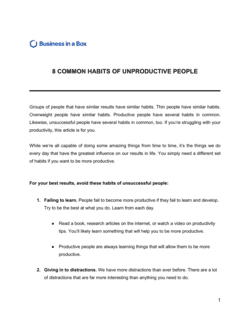
A productivity and time management template is a pre-structured document that helps individuals, managers, and organizations plan how time is used, track hours accurately, and establish clear rules around leave, overtime, and task accountability. These documents range from personal planning frameworks — like time management plans and hour-blocking guides — to formal company policies that govern paid time off, overtime compensation, and records retention.
The category covers two distinct but related needs. The first is personal and team productivity: deciding what to work on, when, and in what order. The second is organizational time governance: setting enforceable policies that define how hours are recorded, how leave is requested, and how deviations from standard schedules are handled. Both are necessary for a business to operate efficiently and stay compliant with labor regulations.
Well-designed time management documents eliminate the recurring cost of undocumented decisions. When a company has no PTO policy, HR answers the same questions individually hundreds of times per year. When a team has no task management framework, priorities shift with every new email. Templates solve both problems by capturing the decision once and making it reusable.
When you need a productivity or time management template
Any time time-related decisions are being made verbally, inconsistently, or from memory, a written template replaces ambiguity with a shared standard. Common triggers:
- A new employee asks how PTO accrues and no written policy exists
- Payroll is delayed because time sheets are submitted in inconsistent formats
- A team is missing deadlines because task ownership and due dates are not tracked
- A manager needs to document overtime approvals to comply with a labor audit
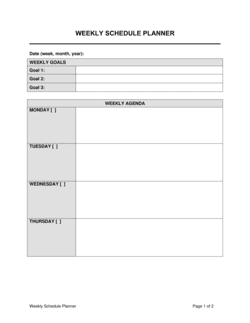
- An individual contributor wants a structured weekly plan to reduce context-switching
- A business is scaling and needs formal management policies before its next hire
- A project is starting and the team needs a single document to track scope, tasks, and milestones
Without written time management documents, small inconsistencies compound into larger problems: payroll disputes, missed deadlines, policy violations, and teams that operate on different assumptions about what is expected of them. A single well-chosen template prevents most of these issues before they start.
Award-winning platform
- Great Place to Work 2025
- BIG Award — Product of the Year 2025
- Smartest Companies 2025
- Global 100 Excellence 2026
- Best of the Best 2025