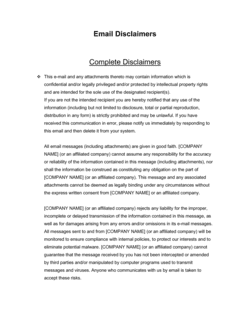
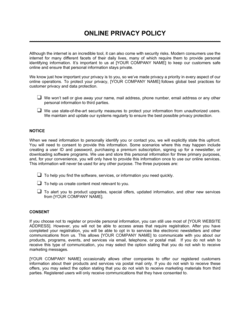
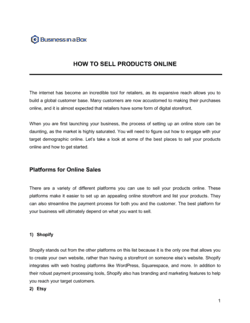
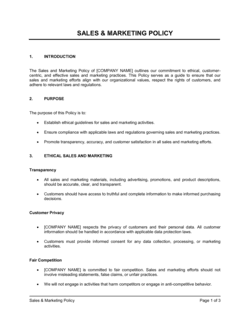
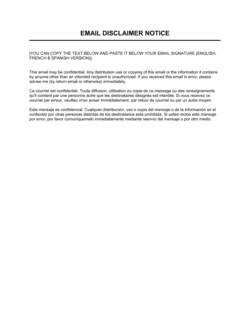
Online Sales Disclaimer Template

Free Word download • Edit online • Save & share with Drive • Export to PDF

3 pages25–30 min to fillDifficulty: StandardSignature requiredLegal review recommended
Learn more ↓
FreeOnline Sales Disclaimer Template

At a glance

What it is
An Online Sales Disclaimer is a legally binding document that an e-commerce seller posts on their website to limit liability, define the terms under which products or services are sold, and disclose important limitations to buyers before a purchase is completed. This free Word download gives you a structured, attorney-modeled starting point you can edit online and deploy as a standalone page or embed within your checkout flow, then export as PDF.
When you need it
Use it before launching any online store, digital product shop, or service marketplace where customers transact without a signed individual contract. It is especially critical when selling physical goods subject to return disputes, digital products that cannot be refunded, or internationally to buyers in multiple jurisdictions.
What's inside
Product accuracy and description limitations, pricing and availability disclaimers, liability exclusions, return and refund policy references, shipping and delivery terms, intellectual property notices, dispute resolution provisions, and governing law. Together these clauses establish the legal baseline for every transaction completed through your online store.

What is an Online Sales Disclaimer?

An Online Sales Disclaimer is a legally binding document that an e-commerce seller presents to buyers — typically at checkout and in the website footer — to limit the seller's liability, disclose material limitations on product descriptions and warranties, and define the terms under which goods or digital products are sold. Unlike a full terms and conditions document, which governs the entire buyer-seller relationship, an online sales disclaimer is focused specifically on transactional risk: what the seller does and does not guarantee about product accuracy, availability, delivery, and quality. When properly presented and accepted by the buyer before purchase, it generally forms an enforceable part of the sale agreement in most jurisdictions.

Why You Need This Document

Without an online sales disclaimer, every product listing you publish is a potential implied warranty, every estimated delivery date is a contractual commitment, and every pricing error is your legal problem to absorb. A buyer who receives a product that differs slightly from its listing can dispute the charge, initiate a chargeback, or file a consumer protection complaint — and without documented disclaimer language, the seller has little to stand on. For digital product sellers, the absence of an explicit no-refund notice makes it nearly impossible to defend against refund demands or payment processor disputes. This template gives you a professionally structured, jurisdiction-aware disclaimer that closes the four most common liability gaps — product accuracy, warranty exposure, delivery risk, and returns — in a single document you can deploy in under an hour.

Which variant fits your situation?

If your situation is…Use this template
Running a general product e-commerce storeOnline Sales Disclaimer
Selling downloadable or digital-only productsDigital Product Sales Disclaimer
Providing comprehensive transactional terms including payment and deliveryTerms and Conditions of Sale
Publishing a standalone return and refund policyReturn and Refund Policy
Collecting personal data through the store checkoutPrivacy Policy
Operating a subscription or recurring billing serviceSubscription Agreement
Selling internationally with cross-border shipping complexityInternational Sales Agreement

Common mistakes to avoid

❌ Burying the disclaimer in a footer without a click-to-accept mechanism

Why it matters: A disclaimer the buyer never actively acknowledged is difficult to enforce. Courts in most jurisdictions require evidence that the buyer had notice of the terms before transacting.

Fix: Add a checkbox at checkout — 'I agree to the Online Sales Disclaimer' — linked to the full document. Your e-commerce platform (Shopify, WooCommerce) supports this natively.

❌ Attempting to waive all statutory consumer rights

Why it matters: In the EU, UK, Canada, and several US states, consumers have minimum statutory rights that cannot be contractually waived. A blanket waiver clause signals legal inexperience and may void the entire disclaimer.

Fix: Include the standard carve-out language: 'Nothing in this Disclaimer excludes or limits any rights you have under applicable consumer protection law that cannot be lawfully excluded or limited.'

❌ Promising specific delivery dates without a shipping disclaimer

Why it matters: A product listing that states 'Arrives in 3–5 business days' without a disclaimer creates a contractual obligation. Carrier delays become the seller's legal problem.

Fix: Pair all delivery estimates with the disclaimer language stating they are estimates only, and that risk of loss passes to the buyer upon carrier handover.

❌ Using a disclaimer copied from a competitor's site without customization

Why it matters: A competitor's disclaimer may reference their specific policies, jurisdiction, arbitration body, or product categories — none of which apply to your business, creating internal contradictions and legal gaps.

Fix: Use this template as a customizable baseline and complete every bracketed placeholder. Delete any clause that does not apply to your product type or jurisdiction.

❌ Not updating the disclaimer when adding new product categories

Why it matters: A disclaimer written for physical goods does not automatically cover digital downloads, subscriptions, or perishables added to the store later — creating unintended warranty exposure for new categories.

Fix: Review the disclaimer every time you add a materially different product type or enter a new market, and update the return, warranty, and shipping clauses accordingly.

❌ Omitting intellectual property notices for stores selling creative or digital products

Why it matters: Without an explicit IP ownership statement, buyers of templates, photos, or branded merchandise may claim the right to redistribute or resell, and enforcement becomes substantially harder.

Fix: Include a specific IP notice clause and, for digital products, add a separate end-user license agreement (EULA) that defines permitted and prohibited uses.

The 10 key clauses, explained

Accuracy of product descriptions

In plain language: States that while the seller makes reasonable efforts to display accurate product images, descriptions, and specifications, errors may occur and the seller is not liable for inaccuracies.

Sample language
[COMPANY NAME] makes every reasonable effort to display accurate product descriptions, images, and pricing on [WEBSITE URL]. However, we do not warrant that product descriptions or other content are accurate, complete, or error-free. In the event of an error, [COMPANY NAME] reserves the right to correct it and cancel any orders placed based on inaccurate information.

Common mistake: Omitting this clause and relying on implied accuracy — leaving the seller exposed to claims that a product was materially different from its listing, which can trigger chargebacks and consumer protection complaints.

Pricing and availability disclaimer

In plain language: Reserves the seller's right to change prices, discontinue products, or reject orders when a pricing error occurs before the order is fulfilled.

Sample language
All prices listed on [WEBSITE URL] are subject to change without notice. [COMPANY NAME] reserves the right to refuse or cancel any order where a pricing error has occurred, whether or not the order has been confirmed or payment processed. A full refund will be issued for any cancelled order where payment was collected.

Common mistake: Failing to specify what happens to the customer's payment when an order is cancelled due to a pricing error — leaving the refund process undefined and creating a consumer protection risk.

Limitation of liability

In plain language: Caps the seller's total financial exposure to the amount the buyer actually paid for the product, and excludes liability for indirect, consequential, or incidental damages.

Sample language
To the maximum extent permitted by applicable law, [COMPANY NAME]'s total liability to you for any claim arising from or related to a purchase shall not exceed the amount paid by you for the product in question. [COMPANY NAME] shall not be liable for any indirect, incidental, special, or consequential damages, including lost profits or data, even if advised of the possibility of such damages.

Common mistake: Using language that attempts to exclude all liability without acknowledging statutory consumer rights. Courts in the UK, EU, and Canadian provinces routinely void blanket liability exclusions — the clause must acknowledge that statutory rights are unaffected.

Warranty disclaimer

In plain language: Disclaims implied warranties of merchantability and fitness for a particular purpose to the extent permitted by law, and limits any express warranty to what is explicitly stated.

Sample language
Except as expressly stated in a written product warranty, all products sold by [COMPANY NAME] are provided 'as is' and 'as available' without warranty of any kind, express or implied, including but not limited to implied warranties of merchantability and fitness for a particular purpose, to the fullest extent permitted by applicable law.

Common mistake: Disclaiming all warranties without carving out statutory guarantees. In consumer transactions in the EU, UK, and Canada, minimum statutory warranties cannot be waived — failing to acknowledge them can make the entire warranty section unenforceable.

Returns, refunds, and exchanges

In plain language: References the seller's return and refund policy, states the conditions under which returns are accepted, and disclaims refund eligibility for digital goods and opened perishables.

Sample language
Returns are accepted within [X] days of delivery for unused, unopened physical products in original condition, subject to [COMPANY NAME]'s Return Policy available at [URL]. Digital products, downloadable files, and personalized items are non-returnable and non-refundable once access has been granted or the item has been opened.

Common mistake: Not linking to the full return policy from the disclaimer. Keeping return terms in one place and citing them from the disclaimer protects the seller if the policy is updated — and courts expect consistency between the two documents.

Shipping, delivery, and risk of loss

In plain language: States when ownership and risk of loss transfer to the buyer (typically upon handover to the carrier), and limits seller liability for carrier-caused delays or damage.

Sample language
Risk of loss and title to products purchased from [COMPANY NAME] pass to you upon delivery to the carrier. [COMPANY NAME] is not responsible for delays, damage, or loss caused by the carrier after handover. Estimated delivery dates are provided for guidance only and are not guaranteed.

Common mistake: Promising specific delivery dates in product listings without this disclaimer — creating a contractual obligation to deliver by that date and exposing the seller to claims for any carrier delay.

Intellectual property notice

In plain language: Asserts the seller's ownership of all content, images, trademarks, and product designs on the site, and prohibits reproduction without written consent.

Sample language
All content on [WEBSITE URL], including product images, descriptions, logos, and graphics, is the property of [COMPANY NAME] or its licensors and is protected by applicable copyright and trademark law. Reproduction, redistribution, or commercial use of any content without prior written consent of [COMPANY NAME] is strictly prohibited.

Common mistake: Omitting an IP notice for digital product stores — buyers of templates, photos, or software sometimes resell or redistribute them, and without this clause the seller has weaker grounds to pursue infringement.

Force majeure

In plain language: Excuses the seller from fulfillment obligations caused by events outside their reasonable control — natural disasters, supply chain disruptions, government actions, or carrier failures.

Sample language
[COMPANY NAME] shall not be liable for any delay or failure to fulfill an order resulting from circumstances beyond its reasonable control, including but not limited to natural disasters, pandemics, labor disputes, supply shortages, carrier failures, or government-imposed restrictions. Affected orders will be fulfilled as soon as reasonably practicable or cancelled with a full refund.

Common mistake: Drafting the force majeure clause so broadly that routine supplier delays qualify — courts have held that foreseeable commercial risks (e.g., common shipping delays) do not trigger force majeure and overly broad language can undermine the whole clause.

Governing law and dispute resolution

In plain language: Specifies which jurisdiction's law governs the disclaimer and how disputes are resolved — through arbitration, small claims court, or the courts of a named jurisdiction.

Sample language
This Disclaimer and any dispute arising from a purchase made through [WEBSITE URL] shall be governed by the laws of [STATE/PROVINCE/COUNTRY], without regard to its conflict-of-law provisions. Any dispute not resolved informally within [30] days shall be submitted to binding arbitration in [CITY], administered by [ARBITRATION BODY], except where prohibited by applicable consumer protection law.

Common mistake: Selecting a governing law that has no connection to where the business operates or the customer is located. Consumer protection laws in the UK, EU, and several US states apply regardless of a contrary choice-of-law clause, making the provision misleading and unenforceable in those jurisdictions.

Acceptance and entire agreement

In plain language: States that completing a purchase constitutes acceptance of the disclaimer's terms and that the disclaimer, together with referenced policies, forms the entire agreement for the transaction.

Sample language
By completing a purchase on [WEBSITE URL], you acknowledge that you have read, understood, and agreed to this Online Sales Disclaimer and all policies incorporated by reference, including the Return Policy and Privacy Policy. This Disclaimer, together with those policies, constitutes the entire agreement between you and [COMPANY NAME] with respect to your purchase.

Common mistake: Not presenting the disclaimer at the point of purchase — having it buried in a footer link without a checkbox or click-to-accept mechanism means the seller cannot prove the buyer accepted the terms, weakening enforceability significantly.

How to fill it out

  1. 1

    Enter your company name and website URL

    Replace every instance of [COMPANY NAME] with your registered legal entity name and [WEBSITE URL] with your store's full domain. Using the legal entity name — not a brand name — is important if you ever need to enforce the disclaimer in court.

    💡 Cross-check the entity name against your business registration to ensure an exact match with the name on your payment processor account.

  2. 2

    Set your return window and conditions

    Fill in the number of days buyers have to initiate a return and the conditions — unused, original packaging, with receipt. If you sell digital products, confirm whether they are explicitly listed as non-refundable.

    💡 Link to your full Return Policy by URL rather than duplicating the terms here — if the policy changes, the disclaimer automatically points to the current version.

  3. 3

    Define the scope of your warranty disclaimer

    Choose whether you are disclaiming implied warranties only, all warranties, or providing a limited written warranty on specific products. Note any product categories (e.g., food, software) that require different treatment.

    💡 If you sell in the EU, UK, or Canada, retain the language acknowledging that statutory consumer rights are unaffected — removing it can void the entire warranty section.

  4. 4

    Set the liability cap

    Confirm that your limitation of liability clause caps exposure at the purchase price paid for the specific product. If you sell high-ticket items, consider whether a higher cap or insurance coverage is warranted.

    💡 Your payment processor's chargeback policy typically caps your exposure at the transaction amount anyway — align your contract language with that reality.

  5. 5

    Complete the governing law and dispute resolution fields

    Enter the state, province, or country whose laws govern the disclaimer, the city where arbitration will take place, and the arbitration body (e.g., AAA, JAMS, or a local equivalent).

    💡 Choose the jurisdiction where your business is incorporated or primarily operates — avoid picking a jurisdiction solely for convenience if you have no physical or operational presence there.

  6. 6

    Add the force majeure trigger list

    Review the list of qualifying force majeure events and add or remove items relevant to your supply chain. Drop events that are foreseeable risks in your industry — courts treat those as ordinary commercial risk, not force majeure.

    💡 If you rely on a single international supplier, name supply-chain disruption explicitly but pair it with a commitment to notify customers within a defined number of days.

  7. 7

    Embed the disclaimer at checkout and in your footer

    Place the disclaimer — or a checkbox linking to it — on the checkout page so customers encounter it before completing a purchase. Also link to the full disclaimer from your website footer and order confirmation emails.

    💡 A checkbox with the text 'I have read and agree to the Online Sales Disclaimer' creates a timestamped acceptance record that is far stronger evidence than a passive footer link.

  8. 8

    Have the disclaimer reviewed before going live

    Have a lawyer familiar with consumer protection law in your primary selling jurisdiction review the disclaimer before publishing, particularly the liability limitation and warranty disclaimer sections.

    💡 A single-hour review by a commercial lawyer ($150–$400) is typically sufficient for a standard e-commerce disclaimer and can prevent chargebacks, regulator complaints, and costly disputes.

Frequently asked questions

What is an online sales disclaimer?

An online sales disclaimer is a legal document posted by an e-commerce seller that limits the seller's liability, defines the terms under which products are sold, and discloses important limitations to buyers before they complete a purchase. It typically covers product description accuracy, pricing errors, warranty exclusions, return conditions, shipping risk, and governing law. When presented at checkout and accepted by the buyer, it generally forms part of the binding sale agreement.

Is an online sales disclaimer legally required?

No single law universally mandates a standalone online sales disclaimer, but e-commerce sellers are subject to consumer protection, warranty, and distance-selling regulations in every jurisdiction where they sell. In the EU, the Consumer Rights Directive requires specific pre-purchase disclosures. In the UK, the Consumer Rights Act 2015 imposes mandatory implied terms. In the US, the FTC's Mail Order Rule and state consumer protection statutes create disclosure obligations. A well-drafted disclaimer is the practical mechanism for meeting all of these requirements simultaneously.

What is the difference between an online sales disclaimer and terms and conditions?

An online sales disclaimer focuses specifically on limiting the seller's liability for product descriptions, pricing errors, warranties, and delivery outcomes. Terms and conditions of sale are broader — they cover payment methods, account creation, intellectual property, dispute resolution, and the full contractual framework for all transactions on the site. Many e-commerce businesses use both: the disclaimer handles the liability-limiting disclosures, while the terms and conditions govern the overall relationship.

Can I disclaim all warranties on products I sell online?

In most jurisdictions, you can disclaim implied warranties to the extent permitted by law, but you cannot disclaim statutory consumer rights. In the EU, consumers are entitled by law to a two-year minimum guarantee on physical goods — this cannot be waived by contract. In the UK, the Consumer Rights Act 2015 implies terms of satisfactory quality and fitness for purpose that cannot be excluded in consumer contracts. In Canada, provincial sale of goods legislation imposes similar protections. Always include a carve-out acknowledging that statutory rights are unaffected.

Do I need a separate disclaimer for digital products?

Not necessarily a separate document, but your online sales disclaimer must explicitly address digital goods. Key distinctions include: digital products are typically non-refundable once access is granted, no shipping risk of loss clause applies, and an end-user license agreement (EULA) should govern what the buyer may do with the file. If digital products represent a significant part of your catalog, a dedicated digital product disclaimer or EULA is worth adding alongside the general disclaimer.

How do I make my online sales disclaimer enforceable?

Enforceability rests on two requirements: notice and acceptance. The buyer must have a genuine opportunity to read the disclaimer before completing the purchase, and must take some affirmative action to accept it — typically checking a box at checkout. Passive acceptance through a footer link alone is often insufficient. Courts in the US, UK, and EU have declined to enforce disclaimer terms that buyers had no real opportunity to review and accept before transacting.

Does an online sales disclaimer protect me from chargebacks?

A disclaimer helps but does not guarantee chargeback protection. Payment networks like Visa and Mastercard have their own dispute rules that operate independently of your legal disclaimers. A clear, accepted disclaimer supports your chargeback representment by demonstrating the buyer agreed to your return and refund terms. For digital products, proof of delivery and an accepted no-refund disclaimer are the two strongest defenses in a chargeback dispute.

Can I copy an online sales disclaimer from another website?

Copying a competitor's disclaimer is inadvisable for three reasons: their disclaimer may be poorly drafted and legally ineffective; it references their specific jurisdiction, policies, and product categories rather than yours; and reproducing their content without permission may itself infringe their copyright. Use a professional template as a customizable baseline — this ensures the structure is legally sound and every clause applies to your specific business.

How often should I update my online sales disclaimer?

Review and update the disclaimer whenever you add a materially new product category, enter a new selling jurisdiction, change your return or shipping policies, or when consumer protection law changes in a market where you sell. At a minimum, an annual review is good practice. Date the disclaimer clearly so buyers and regulators can confirm they are reading the current version.

How this compares to alternatives

vs Terms and Conditions of Sale

Terms and conditions of sale cover the full contractual framework for all transactions on a site — payment methods, account rules, dispute resolution, and the entire buyer-seller relationship. An online sales disclaimer is narrower, focused specifically on limiting liability for product accuracy, warranties, shipping, and returns. Most e-commerce businesses benefit from having both, with the disclaimer embedded at checkout and the terms and conditions governing the overall site relationship.

vs Return and Refund Policy

A return and refund policy is a detailed operational document that tells customers exactly how to initiate a return, what conditions qualify, and when they will receive a refund. An online sales disclaimer references and incorporates those terms but focuses on disclaiming liability rather than explaining process. The disclaimer should always link to the full return policy rather than duplicate it.

vs Privacy Policy

A privacy policy governs how the seller collects, uses, and protects personal data — it is legally required in virtually every jurisdiction where consumer data is processed. An online sales disclaimer addresses transactional liability, not data practices. Both documents are required for a legally compliant e-commerce site, and the disclaimer should reference the privacy policy where data collection at checkout is relevant.

vs End-User License Agreement (EULA)

A EULA governs what a buyer is permitted to do with a digital product after purchase — copy, modify, redistribute, or sublicense. An online sales disclaimer covers the sale transaction itself: price accuracy, refund eligibility, and delivery risk. Sellers of digital products typically need both: the disclaimer to govern the sale, and the EULA to govern the use of the product after delivery.

Industry-specific considerations

Retail and e-commerce

High volume of consumer transactions requires a disclaimer that explicitly addresses return windows, condition requirements, and carrier risk of loss to reduce chargeback rates.

Digital products and creative content

No-refund provisions for downloadable files and IP ownership clauses protecting templates, photos, and courses are the critical additions for this sector.

Food and beverage

Allergen disclaimers, perishability notices, and temperature-controlled shipping caveats must be layered on top of the standard sales disclaimer to meet food safety and labeling obligations.

Consumer electronics and technology

Compatibility disclaimers ('not warranted for use with [THIRD-PARTY PLATFORM]'), firmware update exclusions, and manufacturer warranty pass-through notices are sector-specific additions.

Health and wellness

Supplements, medical devices, and wellness products require FDA or equivalent regulatory disclaimers alongside the sales disclaimer — 'not intended to diagnose, treat, cure, or prevent any disease.'

SaaS and software

Subscription auto-renewal disclosures, uptime and availability disclaimers, and explicit exclusions for consequential damages from software failures are essential additions for software sellers.

Jurisdictional notes

United States

The FTC's Mail Order Rule requires sellers to ship within the stated time or notify buyers of delays and offer cancellations. The Uniform Commercial Code (UCC) Article 2 governs sales of goods in all states; warranty disclaimers must be conspicuous (typically in bold or caps) to be enforceable. California's consumer protection laws are among the strictest — CLRA and UCL claims can arise from misleading product descriptions even when a disclaimer exists. Check state-specific auto-renewal laws if you offer subscriptions.

Canada

Each province has its own Sale of Goods Act and Consumer Protection Act imposing implied warranties of merchantability and fitness for purpose that cannot be disclaimed in consumer contracts. Ontario's Consumer Protection Act 2002 requires specific distance-selling disclosures before purchase and a 7-day cancellation right for internet agreements. Quebec's Consumer Protection Act is particularly strict and requires French-language contracts for consumers in Quebec. Always retain the statutory rights carve-out language.

United Kingdom

The Consumer Rights Act 2015 implies terms of satisfactory quality, fitness for purpose, and description accuracy into all consumer contracts — these cannot be excluded. The Consumer Contracts (Information, Cancellation and Additional Charges) Regulations 2013 require specific pre-contract disclosures and a 14-day cancellation right for distance sales. Liability exclusion clauses are subject to a reasonableness test under the Unfair Contract Terms Act 1977. Post-Brexit, UK and EU rules diverge — separate treatment is advisable for cross-border UK and EU sales.

European Union

The EU Consumer Rights Directive requires pre-contract disclosure of total price, delivery costs, seller identity, and a 14-day right of withdrawal for distance sales — digital goods delivered by immediate download require explicit buyer consent to waive withdrawal. The Sale of Goods Directive (2019/771) mandates a minimum two-year legal guarantee on physical goods, which cannot be waived. GDPR requires a clear link to your privacy policy at checkout. The Digital Services Act imposes additional transparency obligations on larger online marketplaces from 2024.

Template vs lawyer — what fits your deal?

PathBest forCostTime
Use the templateSmall e-commerce stores selling physical goods domestically to consumers in a single jurisdictionFree30–45 minutes
Template + legal reviewStores selling internationally, digital products, subscriptions, or health and food products in regulated categories$150–$400 for a one-hour commercial lawyer review1–3 days
Custom draftedHigh-volume retailers, marketplace operators, or sellers in heavily regulated categories (medical devices, financial products, supplements) with significant liability exposure$800–$3,000+1–2 weeks

Glossary

Disclaimer
A statement that denies responsibility or limits legal obligation, typically posted by a seller to reduce exposure to claims from buyers.
Limitation of Liability
A clause capping the maximum amount a seller can be held responsible for in damages, often limited to the purchase price of the product.
As-Is
A condition of sale meaning the product is sold in its current state without warranty, and the buyer accepts the risk of any defects.
Implied Warranty
An unwritten guarantee that a product is fit for its ordinary purpose, imposed by law in most jurisdictions unless expressly disclaimed.
Merchantability
An implied warranty that goods sold by a merchant meet a basic standard of quality and are fit for their ordinary intended use.
Consequential Damages
Indirect losses suffered by a buyer as a result of a product defect or failed delivery — such as lost profits — which sellers typically disclaim in online sales.
Governing Law Clause
A contract provision specifying which jurisdiction's laws apply to interpret and enforce the agreement.
Chargeback
A forced reversal of a credit card transaction initiated by the buyer's bank, often triggered by disputes over product quality, non-delivery, or unauthorized charges.
Digital Goods
Electronically delivered products — software, e-books, templates, video courses — that cannot be physically returned, warranting a distinct no-refund disclaimer.
Force Majeure
A clause excusing a party from performance obligations when prevented by events beyond their control, such as natural disasters, pandemics, or carrier strikes.
Acceptance by Conduct
The legal principle that a buyer who completes a purchase after being presented with a disclaimer has accepted its terms, even without a manual signature.

Part of your Business Operating System

This document is one of 3,000+ business & legal templates included in Business in a Box.

  • Fill-in-the-blanks — ready in minutes
  • 100% customizable Word document
  • Compatible with all office suites
  • Export to PDF and share electronically

Create your document in 3 simple steps.

From template to signed document — all inside one Business Operating System.
1
Download or open template

Access over 3,000+ business and legal templates for any business task, project or initiative.

2
Edit and fill in the blanks with AI

Customize your ready-made business document template and save it in the cloud.

3
Save, Share, Send, Sign

Share your files and folders with your team. Create a space of seamless collaboration.

Save time, save money, and create top-quality documents.

★★★★★

"Fantastic value! I'm not sure how I'd do without it. It's worth its weight in gold and paid back for itself many times."

Managing Director · Mall Farm
Robert Whalley
Managing Director, Mall Farm Proprietary Limited
★★★★★

"I have been using Business in a Box for years. It has been the most useful source of templates I have encountered. I recommend it to anyone."

Business Owner · 4+ years
Dr Michael John Freestone
Business Owner
★★★★★

"It has been a life saver so many times I have lost count. Business in a Box has saved me so much time and as you know, time is money."

Owner · Upstate Web
David G. Moore Jr.
Owner, Upstate Web

Run your business with a system — not scattered tools

Stop downloading documents. Start operating with clarity. Business in a Box gives you the Business Operating System used by over 250,000 companies worldwide to structure, run, and grow their business.

Start free · No credit card required