Voluntary Service Agreement Template

Free Word download β€’ Edit online β€’ Save & share with Drive β€’ Export to PDF

6 pagesβ€’25–35 min to fillβ€’Difficulty: Complexβ€’Signature requiredβ€’Legal review recommended
Learn more ↓
FreeVoluntary Service Agreement Template

At a glance

What it is
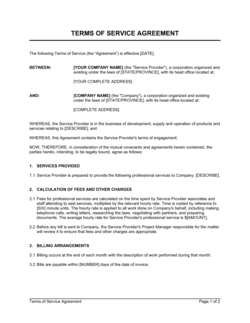
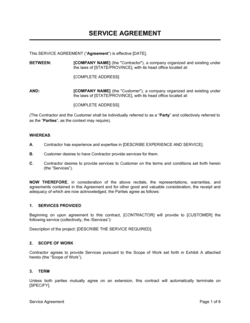
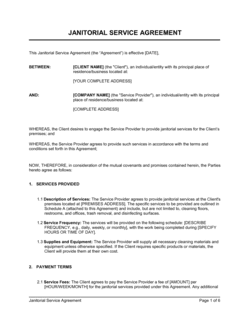
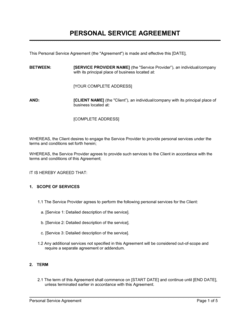
A Voluntary Service Agreement is a binding document between an organization and a volunteer that sets out the terms under which unpaid services are provided. This free Word download covers role description, supervision, confidentiality, insurance, liability waiver, and termination in a single clear document you can edit online and export as PDF before a volunteer's first shift.
When you need it
Use it before any volunteer begins work for your nonprofit, charity, event, or community program. It is equally relevant when a business or government body engages unpaid interns, community service workers, or pro bono contributors under a structured arrangement.
What's inside
Parties and role description, service schedule, supervision and reporting, confidentiality obligations, intellectual property ownership, health and safety responsibilities, liability waiver and insurance coverage, expense reimbursement, and termination provisions.

What is a Voluntary Service Agreement?

A Voluntary Service Agreement is a binding document between an organization and an individual volunteer that formally sets out the terms under which unpaid services are provided. It identifies both parties, describes the volunteer role and expected service schedule, establishes supervision and reporting lines, and records the volunteer's obligations around confidentiality, intellectual property, health and safety, and safeguarding. Unlike an employment contract, it explicitly acknowledges that no employment relationship is created and that the volunteer is not entitled to wages, benefits, or statutory employment protections. The agreement protects both sides: the organization gains enforceable confidentiality and IP provisions, and the volunteer gains clarity on what insurance coverage applies and how expenses will be reimbursed.

Why You Need This Document

Operating without a signed voluntary service agreement exposes your organization to four concrete risks. First, a volunteer who creates content, builds a website, or photographs your events retains the copyright to that work by default β€” without an IP assignment clause, your organization may not legally own the materials it commissioned. Second, without a non-employment acknowledgment, a volunteer who was consistently supervised and given set hours may successfully claim worker or employee status, triggering minimum wage liability and benefit entitlements. Third, if your standard liability insurance policy does not explicitly cover unpaid volunteers β€” and many do not β€” an injured volunteer has a direct claim against your organization with no insurance backstop. Fourth, for roles involving vulnerable beneficiaries, the absence of a documented safeguarding clause and background check requirement can disqualify your organization from statutory funding and breach regulatory obligations. This template closes all four gaps in under 30 minutes, before your next volunteer walks through the door.

Which variant fits your situation?

If your situation is…Use this template
Ongoing regular volunteer role with defined weekly hoursVoluntary Service Agreement
One-off event or single-day volunteer engagementVolunteer Release and Waiver Form
Unpaid intern placed for academic credit at a for-profit companyInternship Agreement
Professional providing pro bono consulting to a nonprofitPro Bono Service Agreement
Court-mandated community service placement with a specific hour targetCommunity Service Agreement
Volunteer taking on a leadership or board role in the organizationBoard Member Agreement
Paid part-time employee who also performs separate volunteer dutiesPart-Time Employment Contract

Common mistakes to avoid

❌ Using employer-style language throughout the agreement

Why it matters: Phrases like 'required hours,' 'performance review,' or 'unpaid staff' can lead courts to classify the volunteer as a worker or employee, triggering wage, holiday, and statutory benefit entitlements.

Fix: Use voluntary-specific language throughout: 'expected service times,' 'feedback conversation,' and 'volunteer.' Include an explicit non-employment acknowledgment clause.

❌ Omitting an IP assignment clause for creative or technical roles

Why it matters: A volunteer who designs your logo, builds your website, or produces your marketing materials retains the copyright by default under most jurisdictions' law unless it is explicitly assigned in writing.

Fix: Include a clear IP assignment clause for any role where the volunteer may create original content, code, photographs, or other protectable materials.

❌ Assuming your existing insurance covers volunteers without checking

Why it matters: Standard business public liability policies frequently exclude unpaid volunteers. An uninsured volunteer who is injured on your premises or causes third-party harm can expose the organization to direct financial liability.

Fix: Contact your insurer before the agreement is signed, obtain written confirmation of volunteer coverage, and state the coverage type explicitly in the liability clause.

❌ Setting termination notice periods equivalent to employment contracts

Why it matters: A 30-day or longer notice period implies the organization views the volunteer as a quasi-employee, which can support misclassification claims and creates a practical commitment neither party may want.

Fix: Use a short, mutual notice period of 24 to 72 hours for routine departures, with an immediate-termination right for serious conduct issues.

❌ Skipping the non-employment acknowledgment clause

Why it matters: Without an explicit acknowledgment, a volunteer who was consistently supervised, given set hours, and reimbursed for expenses may successfully argue entitlement to worker or employee status in court.

Fix: Include a standalone non-employment acknowledgment clause that both parties sign and date, confirming no employment relationship is created.

❌ Using a generic NDA instead of a tailored confidentiality clause

Why it matters: A separate NDA created for commercial relationships will often reference consideration, employment terms, or competitive restrictions that are inappropriate for a volunteer context and can confuse a volunteer's obligations.

Fix: Embed a fit-for-purpose confidentiality clause directly in the voluntary service agreement that references the specific categories of information the volunteer will encounter β€” donor data, beneficiary records, or program strategy.

The 10 key clauses, explained

Parties and role description

In plain language: Identifies the organization and the volunteer as parties, states the volunteer role title, and describes the scope of duties to be performed.

Sample language
This Voluntary Service Agreement is entered into on [DATE] between [ORGANIZATION LEGAL NAME], a [ENTITY TYPE] ('Organization'), and [VOLUNTEER FULL NAME] ('Volunteer'). Volunteer agrees to perform the role of [ROLE TITLE], carrying out the duties described in Schedule A attached hereto.

Common mistake: Using only the organization's trading name instead of its registered legal name. This can make the agreement unenforceable if the trading name is not legally registered.

Service schedule and location

In plain language: Specifies when and where the volunteer is expected to perform their duties β€” days, hours, and physical or remote location.

Sample language
Volunteer shall provide services on [DAYS OF WEEK] between [START TIME] and [END TIME] at [LOCATION / REMOTE], or at such other times and locations as agreed in writing between the parties.

Common mistake: Fixing the schedule so rigidly that any deviation requires a formal amendment. Use 'as agreed from time to time' language to allow flexible coordination without creating a new contract every time the schedule changes.

Supervision and reporting

In plain language: Names the supervisor the volunteer reports to, sets out how the volunteer will receive instruction, and clarifies the organization's duty of care during service.

Sample language
Volunteer shall report to [SUPERVISOR NAME / TITLE] ('Supervisor') and shall carry out reasonable instructions given by the Supervisor in connection with the performance of the Services.

Common mistake: Omitting a named supervisor entirely. Without a clear reporting line, disputes about whether the volunteer followed proper procedures become impossible to resolve.

Expenses and reimbursement

In plain language: States which costs the organization will reimburse, the maximum amount per claim, and the process for submitting receipts.

Sample language
Organization shall reimburse Volunteer for reasonable pre-approved out-of-pocket expenses incurred in connection with the Services, up to $[AMOUNT] per [PERIOD], upon submission of receipts within [X] days of expenditure.

Common mistake: Promising 'all reasonable expenses' without a cap or pre-approval requirement. Open-ended reimbursement language has resulted in organizations facing unexpected claims for costs they never anticipated.

Confidentiality

In plain language: Prohibits the volunteer from disclosing or misusing the organization's confidential information β€” donor records, beneficiary data, financial information, or internal strategy β€” during and after the placement.

Sample language
Volunteer shall not, during or after the term of this Agreement, disclose or use any Confidential Information of the Organization without prior written consent. 'Confidential Information' means any non-public information relating to the Organization's operations, beneficiaries, donors, or finances.

Common mistake: Failing to define what counts as confidential information. An overly broad 'everything is confidential' clause is difficult to enforce and may deter good-faith volunteers from sharing legitimate public information about the organization's work.

Intellectual property

In plain language: Assigns to the organization ownership of all materials, content, photographs, code, or other work product created by the volunteer in the course of their service.

Sample language
Any work product, content, materials, or intellectual property created by Volunteer in connection with the Services ('Work Product') shall be the sole property of Organization and is hereby irrevocably assigned to Organization upon creation.

Common mistake: Omitting an IP clause entirely in creative or technical volunteer roles. A graphic designer or web developer who contributes work without an assignment clause retains the copyright by default under most jurisdictions' laws.

Health, safety, and safeguarding

In plain language: Sets out both parties' health and safety obligations, requires the volunteer to comply with the organization's policies, and β€” where applicable β€” addresses safeguarding requirements for roles involving vulnerable people.

Sample language
Volunteer agrees to comply with the Organization's health and safety policies and procedures at all times. Where the role involves contact with children or vulnerable adults, Volunteer consents to and shall provide evidence of a satisfactory [DBS / CRIMINAL RECORD] check prior to commencing Services.

Common mistake: Skipping safeguarding language for roles that involve any contact with minors or vulnerable adults. Many funders, insurers, and regulators require documented safeguarding policies and signed acknowledgment as a condition of operation.

Liability waiver and insurance

In plain language: Describes the limits of the organization's liability for injury or loss during the volunteer's service, states what volunteer insurance coverage the organization provides, and records the volunteer's acknowledgment of inherent risks.

Sample language
Organization shall maintain [VOLUNTEER PERSONAL ACCIDENT / PUBLIC LIABILITY] insurance covering Volunteer during the performance of the Services. To the fullest extent permitted by law, Volunteer acknowledges the risks inherent in the Services and agrees that Organization shall not be liable for any personal injury, loss, or damage except where caused by Organization's negligence.

Common mistake: Stating that the organization carries insurance without checking that the policy actually covers unpaid volunteers. Many standard business liability policies exclude volunteers by default β€” verify with your insurer before signing any agreement.

Termination

In plain language: Sets out how either party may end the arrangement, the notice period required (if any), and the circumstances β€” such as misconduct or policy breach β€” that allow immediate termination.

Sample language
Either party may terminate this Agreement at any time by giving [X days'] written notice to the other. Organization may terminate this Agreement immediately and without notice if Volunteer breaches any provision of this Agreement or acts in a manner inconsistent with the Organization's values and code of conduct.

Common mistake: Setting a long mutual notice period (e.g., 30 days) for a volunteer role. Volunteers are not employees; a 24-to-48-hour notice window is typical and reflects the non-employment nature of the relationship.

Non-employment acknowledgment

In plain language: Explicitly confirms that the agreement does not create an employment relationship, that the volunteer is not entitled to wages or statutory employment benefits, and that the organization is not the volunteer's employer for legal purposes.

Sample language
The parties acknowledge that this Agreement does not constitute a contract of employment or a worker arrangement. Volunteer is not entitled to any salary, wages, holiday pay, sick pay, or other employment benefits. Nothing in this Agreement shall be construed as creating an employer-employee relationship.

Common mistake: Omitting this clause or using ambiguous language like 'unpaid staff.' Courts in several jurisdictions have found that volunteers who were consistently controlled, given set hours, and denied this explicit acknowledgment were entitled to worker or employee rights.

How to fill it out

  1. 1

    Enter the organization's legal details and the volunteer's information

    Use the organization's full registered name β€” not its trading or brand name β€” and the volunteer's full legal name as it appears on government-issued ID. State the role title.

    πŸ’‘ Cross-reference your charity or corporate registration to confirm the exact legal entity name before execution.

  2. 2

    Define the role and attach a Schedule A for detailed duties

    Describe the volunteer role at a high level in the main agreement and move granular task lists to a Schedule A. This lets you update responsibilities without amending the core contract.

    πŸ’‘ Have the volunteer initial Schedule A separately at signing to confirm they reviewed the full scope of duties.

  3. 3

    Set the service schedule and location

    Enter the expected days and hours. Use flexible language β€” 'as agreed from time to time' β€” rather than fixed shifts unless the role genuinely requires them.

    πŸ’‘ Avoid specifying a minimum weekly hour commitment. Courts in some jurisdictions have used minimum-hours language to infer a worker relationship and associated entitlements.

  4. 4

    Complete the expenses and reimbursement block

    List exactly which expenses are reimbursable (e.g., local travel, materials), set a per-claim cap, and state the receipt-submission deadline. Do not leave this open-ended.

    πŸ’‘ A pre-approval requirement for any single expense over $[THRESHOLD AMOUNT] protects the organization from unexpected claims without discouraging legitimate reimbursements.

  5. 5

    Tailor the confidentiality and IP clauses to the role

    For administrative or operational volunteers, standard confidentiality language suffices. For creative, technical, or communications roles, confirm the IP assignment clause covers all deliverables produced.

    πŸ’‘ If the volunteer will have access to personal data of beneficiaries or donors, add a data protection acknowledgment referencing your privacy policy and applicable law (e.g., GDPR or PIPEDA).

  6. 6

    Verify your insurance covers unpaid volunteers

    Contact your insurer before finalizing the agreement and confirm that your public liability or volunteer personal accident policy extends to unpaid volunteers. Insert the confirmed coverage type in the liability clause.

    πŸ’‘ Ask your insurer for written confirmation that volunteers are included β€” verbal assurances are not sufficient for this clause.

  7. 7

    Complete the safeguarding section for applicable roles

    If the volunteer will interact with children or vulnerable adults, state the type of background check required and insert the condition that services cannot commence until a satisfactory check is returned.

    πŸ’‘ Keep copies of all completed background checks on file for the duration of the volunteer's service and for at least three years afterward in most jurisdictions.

  8. 8

    Execute before the volunteer's first day

    Both parties must sign before the volunteer begins any service. Send the signed copy to the volunteer and retain the executed original in your volunteer management records.

    πŸ’‘ Use a dated cover email or eSign timestamp to establish the exact execution date β€” this protects the organization if the non-employment status of the relationship is ever challenged.

Frequently asked questions

What is a voluntary service agreement?

A voluntary service agreement is a document between an organization and an individual that sets out the terms under which unpaid services are provided. It defines the volunteer's role, expected service times, supervision arrangements, confidentiality obligations, liability parameters, and termination conditions. Crucially, it includes a non-employment acknowledgment confirming the arrangement does not create an employment or worker relationship.

Is a voluntary service agreement legally binding?

A voluntary service agreement is generally enforceable as a binding contract where it meets the basic requirements of offer, acceptance, and consideration β€” even in the absence of monetary payment, mutual promises can constitute consideration. However, enforceability of specific clauses, such as restrictive covenants or liability waivers, depends on the jurisdiction and how the clauses are drafted. Consider having a lawyer review the agreement if any clause is commercially sensitive.

Can a volunteer be classified as an employee if they sign this agreement?

Signing a voluntary service agreement does not automatically prevent a volunteer from being reclassified as a worker or employee if the practical reality of the arrangement looks like employment. Courts look at the degree of control exercised, whether set hours are enforced, and whether any financial benefit flows to the volunteer. A well-drafted non-employment clause reduces β€” but does not eliminate β€” this risk, and the agreement should be written and administered consistently with a genuinely voluntary relationship.

Do I need a voluntary service agreement for a one-time volunteer event?

For a single-day or one-off event, a lighter-touch volunteer waiver or release form is typically sufficient. A full voluntary service agreement is most valuable for ongoing roles where the volunteer will have regular access to your facilities, data, or beneficiaries, and where confidentiality, IP, and safeguarding obligations need to be documented clearly. For recurring volunteers β€” even informal ones β€” a signed agreement protects both parties.

What is the difference between a voluntary service agreement and an internship agreement?

An internship agreement typically governs an unpaid placement at a for-profit company where academic credit or structured training is provided in exchange for services. A voluntary service agreement is used in nonprofit, charity, public sector, and community contexts where no educational credit or structured training is the primary exchange. The legal risk profile is also different: for-profit unpaid internships face greater scrutiny under minimum wage laws in the US, UK, and Canada than genuine nonprofit volunteering.

Should a voluntary service agreement include a safeguarding clause?

Yes, whenever the volunteer role involves contact with children, elderly adults, or other vulnerable individuals. Many funders and regulators require organizations to document that all volunteers in such roles have completed a satisfactory criminal record check and received safeguarding training before they begin. Including this requirement in the signed agreement creates an auditable record that due diligence was performed.

What expenses can an organization reimburse a volunteer without creating an employment relationship?

Reimbursing genuine out-of-pocket expenses β€” travel, materials, or meals incurred directly in connection with the voluntary service β€” does not typically create an employment relationship in most jurisdictions, provided the amounts are reasonable and documented by receipts. Paying a flat 'expenses allowance' unconnected to actual costs, or reimbursing amounts that function as a wage substitute, increases the risk that the arrangement will be reclassified as paid work.

Who should sign a voluntary service agreement?

Both the authorized representative of the organization β€” typically the volunteer coordinator, manager, or executive director β€” and the volunteer must sign. For volunteers under 18, a parent or guardian signature is typically required in addition to the minor's own signature. Execute the agreement before the volunteer's first day of service, and retain a signed copy in your records.

Does GDPR apply to data collected through a voluntary service agreement?

Yes, if your organization operates in or targets individuals in the EU or UK. The volunteer's name, contact details, and background check results are personal data under GDPR and the UK GDPR. You must have a lawful basis for collecting and processing this data β€” typically legitimate interests or contractual necessity β€” and you should reference your privacy notice in the agreement so the volunteer is informed of how their data will be used and retained.

How this compares to alternatives

vs Internship Agreement

An internship agreement governs a structured placement β€” typically at a for-profit company β€” where the intern receives academic credit or formal training. A voluntary service agreement covers genuinely unpaid work at a nonprofit, charity, or community organization where no training exchange is involved. Using a voluntary service agreement for a for-profit unpaid internship significantly increases the risk of a minimum wage claim in most jurisdictions.

vs Independent Contractor Agreement

An independent contractor agreement engages a self-employed professional for paid project-based work. A voluntary service agreement covers unpaid, non-commercial service. Misusing a contractor agreement for volunteer arrangements adds an implied fee obligation and commercial framing that is inconsistent with a genuine volunteering relationship and may confuse a volunteer's tax position.

vs Employment Contract

An employment contract creates an employer-employee relationship with full statutory entitlements β€” wages, benefits, notice, and redundancy rights. A voluntary service agreement is explicitly non-employment in nature and carries none of those entitlements. The two documents should never be used interchangeably; using employment contract language for a volunteer role risks triggering minimum wage and statutory benefit obligations.

vs Non-Disclosure Agreement

A standalone NDA is designed for commercial contexts β€” protecting trade secrets between businesses or employees. A voluntary service agreement already contains a tailored confidentiality clause appropriate for the volunteer context. Using a commercial NDA alongside a volunteer agreement creates conflicting obligations and can confuse a volunteer about the scope and enforceability of their confidentiality duties.

Industry-specific considerations

Nonprofit and charity

Funder and regulator requirements often mandate signed volunteer agreements, particularly for roles involving beneficiary contact or access to donor data.

Healthcare and social services

Safeguarding clauses and DBS or background check conditions are mandatory for any volunteer role involving direct patient or client contact.

Education

School and university volunteer programs require parental consent for minor volunteers and background checks for adults working with students.

Events and hospitality

One-day event volunteers are typically covered by a streamlined waiver, while festival or conference production volunteers in recurring roles need a full agreement covering IP and liability.

Jurisdictional notes

United States

Federal law does not require a written volunteer agreement, but the Fair Labor Standards Act's 'economic reality' test means organizations must ensure volunteers receive no compensation or immediate advantage that resembles wages. Volunteers at for-profit companies face heightened scrutiny. State laws vary β€” California, for instance, has stricter volunteer classification rules. Liability waivers are enforceable in most states but are void in some contexts (e.g., gross negligence).

Canada

Each province defines volunteer exclusions from employment standards differently. Ontario's Employment Standards Act, 2000 excludes genuine volunteers from minimum wage and overtime provisions, but only where no wages are paid and the organization is a registered charity or nonprofit. Quebec volunteers must have agreements drafted in French for provincially-regulated organizations. Background checks for roles involving vulnerable adults are mandatory under federal and most provincial regulations.

United Kingdom

UK law does not recognize 'volunteer' as a separate legal category β€” the critical distinction is between a worker (entitled to National Minimum Wage) and a genuine volunteer. HMRC scrutinizes flat-rate expense payments that may constitute wages. Charities are required by the Charity Commission to have adequate volunteer management policies in place. DBS checks are mandatory for regulated activity with children or vulnerable adults under the Safeguarding Vulnerable Groups Act 2006.

European Union

The EU Voluntary Activities Framework encourages but does not mandate written volunteer agreements at the member state level. GDPR compliance is mandatory wherever volunteer personal data is collected β€” lawful basis, retention periods, and privacy notices must be documented. Several member states β€” including France, Germany, and Italy β€” have specific national legislation governing volunteer status, compensation limits, and social insurance obligations that supplement any written agreement.

Template vs lawyer β€” what fits your deal?

PathBest forCostTime
Use the templateNonprofits and community organizations onboarding standard program or event volunteers in a single jurisdictionFree15–30 minutes per agreement
Template + legal reviewOrganizations with volunteers in sensitive roles involving vulnerable people, significant IP creation, or multi-jurisdiction activities$200–$600 for a 1–2 hour lawyer review2–5 days
Custom draftedLarge charities with complex safeguarding obligations, organizations operating across multiple countries, or any arrangement where volunteer misclassification risk is material$800–$3,000+1–3 weeks

Glossary

Volunteer
An individual who freely chooses to perform services for an organization without expectation of compensation or employment benefits.
Voluntary Service
Unpaid work performed willingly for a nonprofit, charity, government body, or community program, outside of any employment relationship.
Liability Waiver
A clause in which the volunteer acknowledges risks associated with their activities and agrees not to hold the organization responsible for certain injuries or losses.
Indemnification
A contractual obligation by one party to cover losses, damages, or legal costs incurred by the other party as a result of specified actions.
Confidentiality Obligation
A requirement that the volunteer not disclose the organization's sensitive information β€” donor data, client records, financial details β€” to third parties.
IP Assignment
A clause transferring ownership of any materials, content, or work product created by the volunteer during their service to the organization.
Expense Reimbursement
A provision stating which out-of-pocket costs the organization will repay to the volunteer, such as travel or materials, and the process for claiming them.
Safeguarding
Policies and procedures designed to protect vulnerable individuals β€” children, elderly adults, or those with disabilities β€” with whom a volunteer may interact.
DBS / Background Check
A criminal record check required in many jurisdictions before a volunteer works with children or vulnerable adults; called a DBS check in the UK and a vulnerable sector check in Canada.
At-Will Termination
A provision allowing either party to end the voluntary arrangement at any time without cause or advance notice, distinct from the employment at-will doctrine.
Volunteer Insurance
Coverage arranged by the organization to protect volunteers against personal accident, public liability, or third-party claims arising from their service activities.

Part of your Business Operating System

This document is one of 3,000+ business & legal templates included in Business in a Box.

  • Fill-in-the-blanks β€” ready in minutes
  • 100% customizable Word document
  • Compatible with all office suites
  • Export to PDF and share electronically

Create your document in 3 simple steps.

From template to signed document β€” all inside one Business Operating System.
1
Download or open template

Access over 3,000+ business and legal templates for any business task, project or initiative.

2
Edit and fill in the blanks with AI

Customize your ready-made business document template and save it in the cloud.

3
Save, Share, Send, Sign

Share your files and folders with your team. Create a space of seamless collaboration.

Save time, save money, and create top-quality documents.

β˜…β˜…β˜…β˜…β˜…

"Fantastic value! I'm not sure how I'd do without it. It's worth its weight in gold and paid back for itself many times."

Managing Director Β· Mall Farm
Robert Whalley
Managing Director, Mall Farm Proprietary Limited
β˜…β˜…β˜…β˜…β˜…

"I have been using Business in a Box for years. It has been the most useful source of templates I have encountered. I recommend it to anyone."

Business Owner Β· 4+ years
Dr Michael John Freestone
Business Owner
β˜…β˜…β˜…β˜…β˜…

"It has been a life saver so many times I have lost count. Business in a Box has saved me so much time and as you know, time is money."

Owner Β· Upstate Web
David G. Moore Jr.
Owner, Upstate Web

Run your business with a system β€” not scattered tools

Stop downloading documents. Start operating with clarity. Business in a Box gives you the Business Operating System used by over 250,000 companies worldwide to structure, run, and grow their business.

Free Forever PlanΒ Β·Β No credit card required