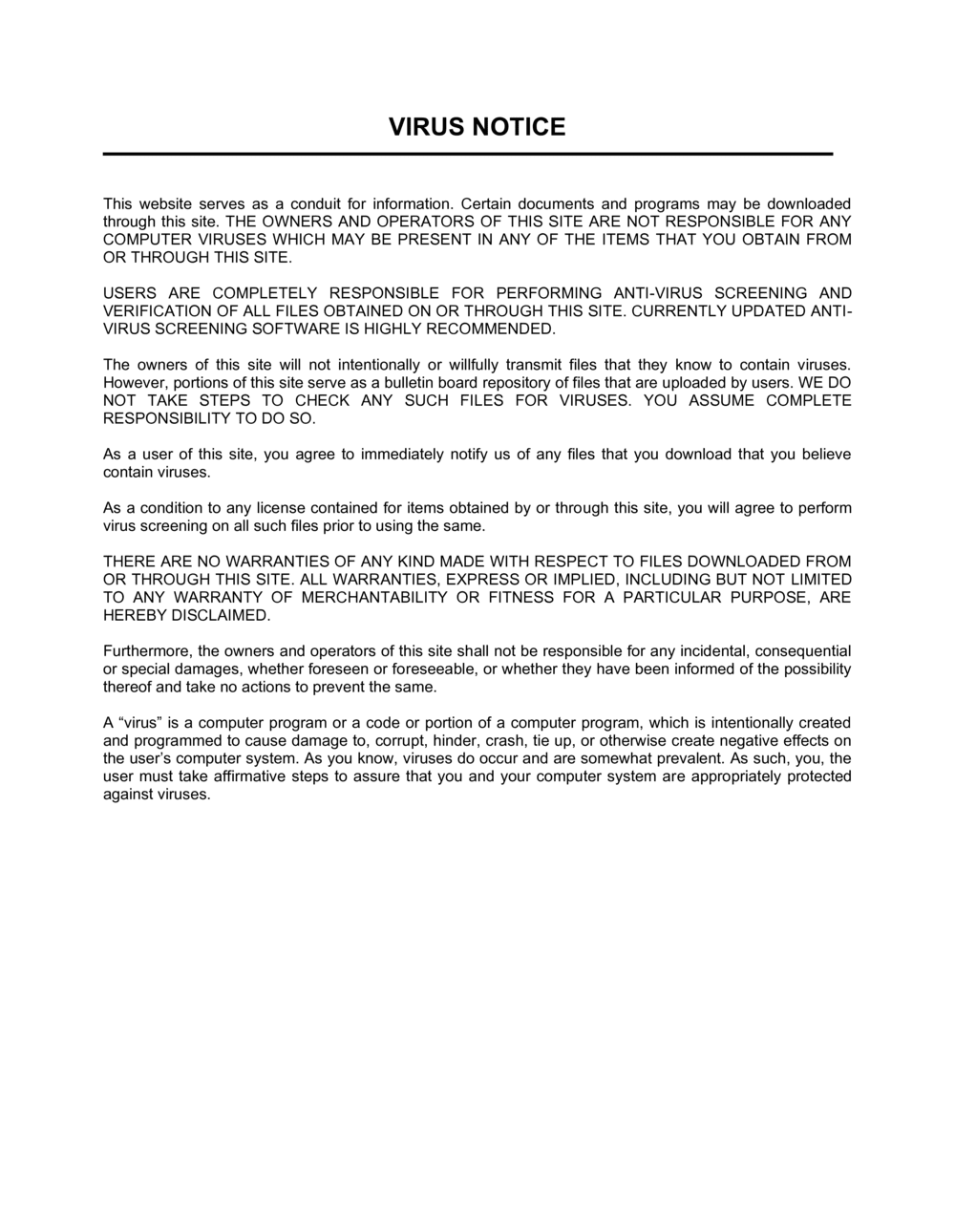
Virus Notice Template

Free Word download β€’ Edit online β€’ Save & share with Drive β€’ Export to PDF

1 pageβ€’15–20 min to fillβ€’Difficulty: Standard
Learn more ↓
FreeVirus Notice Template

At a glance

What it is
A Virus Notice is a formal business letter issued by an employer or organization to notify staff, clients, or visitors of a confirmed or suspected viral infection risk in the workplace or premises. This free Word download lets you customize the key details β€” nature of the virus, affected area, protective measures, and guidance steps β€” and distribute it immediately by print or email.
When you need it
Use it as soon as a confirmed or suspected viral illness is identified that may have exposed people in your workplace, facility, or event space. Early, clear notification limits spread, demonstrates duty of care, and helps recipients take timely protective action.
What's inside
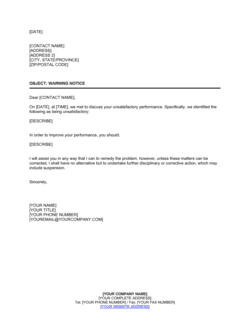
A date and recipient block, a clear statement of the virus or illness identified, details of the exposure risk and affected area, recommended actions for recipients, and a contact point for further questions. The letter is concise, factual, and free of unnecessary alarm.

What is a Virus Notice?

A Virus Notice is a formal written communication issued by an employer, building manager, school, or organization to inform staff, clients, visitors, or other affected parties that a confirmed or suspected viral illness has been identified on shared premises. It states the nature of the illness, the affected area, the approximate exposure window, recommended protective actions, and who to contact for further guidance. Unlike a general health and safety policy, a virus notice is a time-sensitive, reactive document triggered by a specific identified case β€” its job is to get accurate, actionable information to the right people quickly and without unnecessary alarm.

Why You Need This Document

Failing to notify people of a known exposure risk is not just a missed communication β€” it extends the potential spread of illness, undermines trust, and can expose your organization to liability for breach of duty of care. Staff or visitors who later discover they were in an exposed area without being told typically respond with far more alarm and resentment than those who received a calm, factual notice at the time. A well-drafted virus notice documents that you acted promptly, communicates exactly what steps have been taken, and gives recipients the specific guidance they need to protect themselves. This template gives you a professionally structured starting point you can complete and distribute in under 20 minutes β€” the fastest way to meet your obligation to inform and demonstrate that your organization responded responsibly.

Which variant fits your situation?

If your situation is…Use this template
Notifying all staff of a confirmed case in the officeVirus Notice (Internal Staff)
Alerting clients or customers who visited affected premisesClient Health Alert Letter
Communicating a broader public health or pandemic policy updateHealth and Safety Policy Update Letter
Temporarily closing the workplace due to a virus outbreakTemporary Business Closure Notice
Updating staff on remote-work arrangements triggered by illnessRemote Work Policy Letter
Notifying a landlord or building management of a reported caseFormal Business Notification Letter

Common mistakes to avoid

❌ Identifying the infected individual

Why it matters: Naming or clearly implying who the person is breaches health privacy expectations and can expose the organization to a formal complaint or legal claim.

Fix: Refer only to the affected area and date range. Confirm in the notice itself that individual identity will not be disclosed.
❌ Delaying the notice while waiting for certainty

Why it matters: Waiting for a confirmed lab result before notifying can extend the window of potential exposure for others who may have already spread the illness further.

Fix: Issue the notice at the suspected-case stage using qualifying language β€” 'reported case' or 'suspected illness' β€” and update it when confirmation arrives.

❌ Generic symptom advice without a specific monitoring window

Why it matters: Telling people to 'watch for symptoms' without stating how long to monitor is not actionable and may cause some recipients to stop monitoring too early.

Fix: State the relevant incubation period for the specific virus β€” e.g., 'monitor for symptoms for up to 5 days following potential exposure' β€” based on current public health guidance.

❌ No description of corrective actions taken

Why it matters: Recipients who read only that a virus case was found β€” with no mention of what the organization has done β€” will assume nothing was done, damaging trust and potentially triggering unnecessary escalation.

Fix: Always include at least one concrete step the organization has already taken, with a date.

The 8 key clauses, explained

Date and recipient block

In plain language: Identifies when the notice was issued and who it is addressed to β€” all staff, specific department, clients, or building occupants.

Sample language
[DATE] | To: All Staff / Residents of [LOCATION] | From: [SENDER NAME], [TITLE]

Common mistake: Omitting the date or using a vague recipient line like 'To Whom It May Concern' β€” this makes it harder to document when notification occurred and who was formally informed.

Subject line

In plain language: A clear, factual heading that states the purpose of the letter without causing unnecessary alarm.

Sample language
Subject: Health Notice β€” Reported [VIRUS / ILLNESS NAME] Case at [LOCATION]

Common mistake: Using alarmist language like 'URGENT OUTBREAK ALERT' in the subject line. Measured, specific language prompts action without triggering panic.

Opening statement

In plain language: States directly that a confirmed or suspected case of the named illness has been identified, and where.

Sample language
We are writing to inform you that a confirmed case of [VIRUS / ILLNESS] has been identified among [staff / visitors / residents] at [LOCATION / DEPARTMENT] on or around [DATE].

Common mistake: Burying the key fact in the second or third paragraph. Recipients need the core information in the first two sentences.

Exposure details

In plain language: Describes the affected area, the approximate date of potential exposure, and who may have been affected β€” without identifying the individual.

Sample language
Individuals who were present in [AFFECTED AREA] between [DATE RANGE] may have been in contact with the confirmed case. The identity of the individual will not be disclosed in keeping with privacy obligations.

Common mistake: Naming or identifying the infected individual. Doing so breaches health privacy expectations and may expose the organization to a complaint or claim.

Health guidance and recommended actions

In plain language: Tells recipients what steps to take β€” monitoring symptoms, self-isolating, getting tested, or contacting a healthcare provider.

Sample language
If you were present in the affected area during the above period, we ask that you: monitor for symptoms including [SYMPTOMS] for [X] days; stay home if you feel unwell; contact [HEALTH AUTHORITY / YOUR DOCTOR] for further guidance.

Common mistake: Providing generic advice without tailoring it to the specific virus. 'Stay safe and wash your hands' is insufficient β€” state the relevant symptom window and recommended isolation period.

Precautionary measures already taken

In plain language: Describes what the organization has done β€” cleaning, temporary closure, ventilation checks β€” to reduce further risk.

Sample language
As a precaution, [AFFECTED AREA] has been professionally cleaned and disinfected as of [DATE]. We are [continuing / temporarily suspending] operations in that area pending [CONDITION].

Common mistake: Omitting this section entirely. Without it, recipients assume nothing has been done, which undermines confidence and may prompt unnecessary escalation.

Ongoing precautions and policy reminders

In plain language: Reminds recipients of hygiene measures and workplace health policies that remain in effect.

Sample language
We remind all staff to follow our standard hygiene protocols: regular handwashing, use of provided hand sanitizer stations, and staying home when symptomatic. Full details are available in our [HEALTH AND SAFETY POLICY / EMPLOYEE HANDBOOK].

Common mistake: Referencing a policy document that recipients cannot easily locate. Include a direct link or state where to find it.

Point of contact and closing

In plain language: Names the person or team to contact with questions and closes the letter professionally.

Sample language
If you have any questions or concerns, please contact [NAME] at [EMAIL / PHONE]. We are committed to the health and safety of everyone in our workplace and will provide updates as the situation develops. [SIGNATURE BLOCK]

Common mistake: Closing without a named contact. A generic 'contact HR' without a name or direct email leaves recipients without a clear next step and increases inbound confusion.

How to fill it out

  1. 1

    Enter the date and recipient details

    Add today's date and specify exactly who the notice is addressed to β€” all staff, a specific department, clients who visited on particular dates, or building occupants.

    πŸ’‘ Date-stamping the notice precisely is important for documentation β€” if a dispute arises later about when people were informed, the date on the letter is your evidence.

  2. 2

    Write a clear, factual subject line

    Name the virus or illness and the location in the subject line. Avoid vague headings like 'Health Update' β€” specificity helps recipients assess relevance and urgency immediately.

    πŸ’‘ If the illness is not yet confirmed but is strongly suspected, use 'Reported' or 'Suspected' rather than 'Confirmed' to stay accurate.

  3. 3

    State the confirmed case in the opening paragraph

    In the first two sentences, name the illness, the general location, and the approximate date of exposure. Do not name the individual.

    πŸ’‘ Lead with facts, not reassurances. 'We want to assure you...' in the opening signals that bad news is coming and erodes trust. State the fact first.

  4. 4

    Describe the exposure details without identifying the individual

    State the affected area and the date range during which exposure may have occurred. Confirm that individual identity will be kept confidential.

    πŸ’‘ Check your jurisdiction's health privacy laws before including any identifying details β€” even indirect identifiers like a specific role or team can effectively identify someone in a small office.

  5. 5

    List specific recommended actions

    Provide the symptom monitoring window, the specific symptoms to watch for, and the correct channel for further health guidance β€” local health authority, GP, or occupational health provider.

    πŸ’‘ Link to official public health guidance where possible β€” it lends credibility and ensures the clinical advice is accurate.

  6. 6

    Describe what the organization has already done

    Name the specific precautionary steps taken β€” deep cleaning, temporary area closure, ventilation checks β€” and the dates those actions occurred.

    πŸ’‘ Concrete actions with dates reassure recipients far more than general statements of intent. 'The affected area was disinfected on [DATE]' beats 'steps are being taken.'

  7. 7

    Name a specific point of contact and sign off

    Include a named individual, their role, direct email, and phone number. Close with a brief commitment to provide updates and add the sender's signature block.

    πŸ’‘ If you expect high inbound volume, add a specific FAQ page link or a shared inbox address rather than routing all queries to one person's direct line.

Frequently asked questions

What is a virus notice?

A virus notice is a formal letter issued by an employer, school, building manager, or organization to inform staff, clients, or visitors that a confirmed or suspected viral illness has been identified on the premises. It states the exposure risk, the affected area, recommended protective steps, and who to contact for further guidance. Its purpose is to enable recipients to take timely action while keeping communication factual and measured.

When should a virus notice be sent?

A virus notice should be sent as soon as a confirmed or strongly suspected case of a transmissible illness is identified that may have exposed others in a shared space. Waiting for absolute clinical confirmation before notifying can extend the exposure window unnecessarily. Use qualified language β€” 'reported' or 'suspected' β€” if confirmation is still pending, and update the notice once confirmed.

Can I name the person who is sick in the notice?

No. Naming or effectively identifying the individual through details such as their role, team, or specific location breaches widely held health privacy expectations and may violate employment, privacy, or health information laws depending on your jurisdiction. The notice should reference only the affected area and the date range of potential exposure.

Does a virus notice need to be signed?

A formal signature is not legally required for a virus notice to be valid, but including a named sender with a title and contact details adds credibility and gives recipients a clear point of contact. An unsigned or generically attributed notice is more likely to be dismissed or treated as unofficial.

Who should receive a virus notice?

Anyone who was physically present in the affected area during the identified exposure window should receive the notice. This may include employees, contractors, clients or customers who visited, and building or facility co-occupants. If the affected area is shared with other tenants, notify building management so they can issue their own communications to other occupants.

Should I send a virus notice by email or printed letter?

Email is the fastest and most practical channel for reaching current staff and regular contacts. A printed notice posted at the entrance to the affected area is useful for visitors or contractors who may not be on a distribution list. For high-stakes situations β€” healthcare settings, schools, or large facilities β€” use both channels and keep a distribution record for documentation purposes.

What should I do if the situation changes after the notice is sent?

Issue a follow-up notice promptly. If a suspected case is confirmed, update the notice to reflect confirmed status and revise the guidance if public health recommendations change. If additional cases are identified, issue a new notice covering the updated exposure details. Keeping recipients informed as facts develop maintains trust and reduces speculation.

Is a virus notice the same as a workplace health and safety notice?

They overlap but serve different purposes. A virus notice is a time-sensitive reactive communication addressing a specific identified case or exposure event. A workplace health and safety notice is typically a standing document that sets out general policies and procedures. A virus notice may reference the relevant health and safety policy but focuses on a specific incident rather than ongoing standards.

How this compares to alternatives

vs Health and Safety Policy

A health and safety policy is a standing document that defines an organization's ongoing procedures and obligations for maintaining a safe workplace. A virus notice is a reactive, time-specific communication about a single identified case or exposure event. The policy sets the rules; the notice activates the response.

vs Employee Warning Letter

An employee warning letter addresses a specific individual's conduct or performance failure. A virus notice is not directed at any individual β€” it informs a group of a health risk affecting shared premises. Using a warning letter framework for a health notification would be both inappropriate in tone and legally risky.

vs Business Closure Notice

A business closure notice announces a temporary or permanent cessation of operations. A virus notice may lead to a closure but is a distinct prior step β€” it informs about the risk and protective measures rather than announcing an operational change. A closure notice is issued if the situation warrants shutting the facility.

vs Incident Report

An incident report is an internal documentation tool recording what happened, when, and how β€” used for liability, insurance, and compliance purposes. A virus notice is an external or internal communication to affected parties. Both should be produced in a significant outbreak, but they serve entirely different audiences and purposes.

Industry-specific considerations

Healthcare and medical practices

Virus notices in clinical settings must comply with patient and staff confidentiality requirements and often reference specific public health authority protocols.

Education (schools and childcare)

Notices are sent to parents and guardians as well as staff, and often must follow local education authority or public health department notification guidelines.

Hospitality and food service

Restaurants and hotels face reputational sensitivity around illness outbreaks and must balance transparency with guest communication that avoids unnecessary business disruption.

Corporate offices and professional services

Multi-floor or open-plan offices require careful identification of the affected zone to avoid over-notifying the entire building when only one area was exposed.

Template vs pro β€” what fits your needs?

PathBest forCostTime
Use the templateSmall to mid-size businesses, schools, or offices issuing a standard workplace virus notificationFree15–20 minutes
Template + professional reviewHealthcare providers, childcare operators, or organizations in regulated industries where specific disclosure rules apply$100–$300 for an HR consultant or employment advisor review1–2 hours
Custom draftedLarge employers with legal obligations under occupational health regulations, or following a serious multi-case outbreak requiring coordinated public health response$300–$800+1–2 days

Glossary

Virus Notice
A formal written communication from an employer or organization informing recipients of a confirmed or suspected viral illness risk on shared premises.
Exposure Risk
The possibility that a person has come into contact with an infected individual or contaminated surface in a way that could result in illness.
Duty of Care
A legal and ethical obligation requiring employers and organizations to take reasonable steps to protect the health and safety of people in their care.
Incubation Period
The time between initial exposure to a virus and the appearance of symptoms, which varies by illness and determines how long recipients should monitor themselves.
Precautionary Measures
Steps recommended or required to reduce the risk of viral transmission, such as hand hygiene, mask wearing, physical distancing, or self-isolation.
Self-Isolation
The practice of staying away from others β€” typically at home β€” to prevent spreading a virus while symptomatic or following a confirmed exposure.
Point of Contact
The named individual or department designated to answer questions and provide further guidance following a notice.
Affected Area
The specific location, floor, department, or space where the exposure risk is concentrated, as identified in the notice.

Part of your Business Operating System

This document is one of 3,000+ business & legal templates included in Business in a Box.

  • Fill-in-the-blanks β€” ready in minutes
  • 100% customizable Word document
  • Compatible with all office suites
  • Export to PDF and share electronically

Create your document in 3 simple steps.

From template to signed document β€” all inside one Business Operating System.
1
Download or open template

Access over 3,000+ business and legal templates for any business task, project or initiative.

2
Edit and fill in the blanks with AI

Customize your ready-made business document template and save it in the cloud.

3
Save, Share, Send, Sign

Share your files and folders with your team. Create a space of seamless collaboration.

Save time, save money, and create top-quality documents.

β˜…β˜…β˜…β˜…β˜…

"Fantastic value! I'm not sure how I'd do without it. It's worth its weight in gold and paid back for itself many times."

Managing Director Β· Mall Farm
Robert Whalley
Managing Director, Mall Farm Proprietary Limited
β˜…β˜…β˜…β˜…β˜…

"I have been using Business in a Box for years. It has been the most useful source of templates I have encountered. I recommend it to anyone."

Business Owner Β· 4+ years
Dr Michael John Freestone
Business Owner
β˜…β˜…β˜…β˜…β˜…

"It has been a life saver so many times I have lost count. Business in a Box has saved me so much time and as you know, time is money."

Owner Β· Upstate Web
David G. Moore Jr.
Owner, Upstate Web

Run your business with a system β€” not scattered tools

Stop downloading documents. Start operating with clarity. Business in a Box gives you the Business Operating System used by over 250,000 companies worldwide to structure, run, and grow their business.

Free Forever PlanΒ Β·Β No credit card required