1
Verify your right to rescind before sending
Confirm that a statutory cooling-off window, a contractual rescission clause, or a recognized legal ground (misrepresentation, duress, mistake) applies to your situation. Check the deadline carefully — most statutory windows are 3 business days from signing or receipt of required disclosures.
💡 If you are unsure whether your situation qualifies, check the specific statute cited in the original contract's disclosure notice before drafting.
2
Identify both parties and the original contract
Enter the full legal names and addresses of the sender and recipient, and reference the original agreement by its exact title, date, and any contract or account number.
💡 Match the party names exactly to those in the original contract — even minor discrepancies can create disputes about whether the correct agreement is being rescinded.
3
State your intent clearly and unambiguously
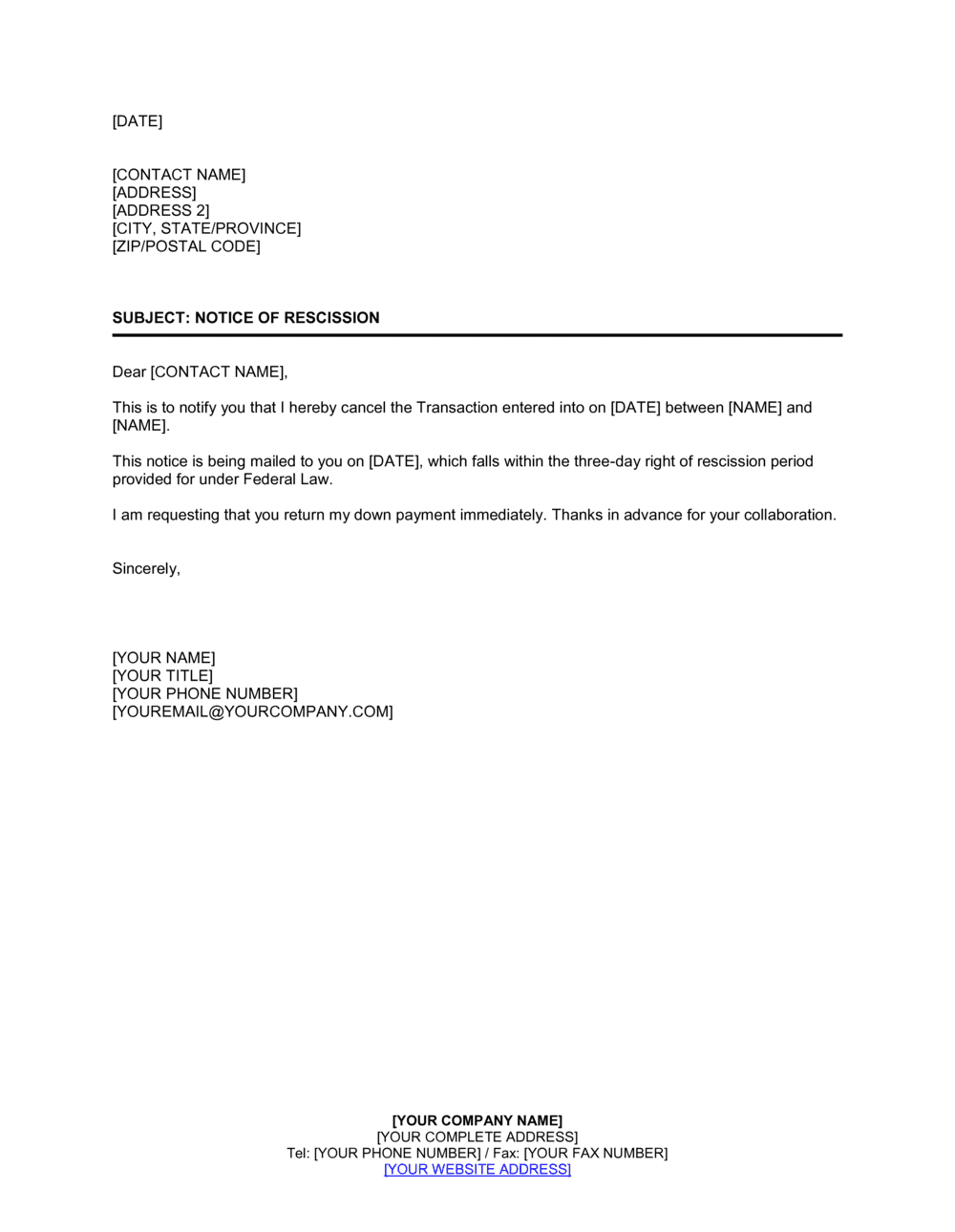
Write a direct declaration that you are exercising your rescission right, effective as of the notice date. Avoid hedging language — the statement must leave no doubt that rescission is intended.
💡 Use the word 'rescind' explicitly rather than synonyms like 'cancel' or 'withdraw,' which may carry different legal meanings in some contexts.
4
Cite the specific legal or contractual basis
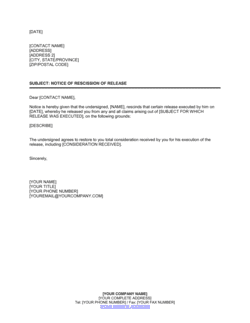
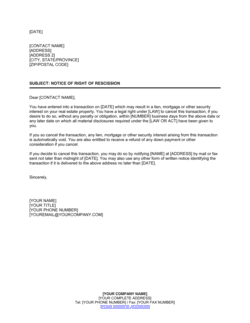
Name the statute, regulation, or contract clause that gives you the right to rescind. If the basis is misrepresentation or fraud, describe the false statement briefly without including extensive factual argument in the letter.
💡 For cooling-off rescissions, cite the exact statute (e.g., the FTC Cooling-Off Rule, 16 C.F.R. Part 429) to prevent the recipient from disputing the right on technical grounds.
5
Address the return of consideration
Identify what money or goods you paid or received and state your commitment to return any items in your possession within a specified number of business days. Request return of your payment by the same deadline.
💡 Specify a concrete deadline — such as 10 business days — rather than 'promptly.' Vague timeframes are harder to enforce if you need to escalate.
6
Send by a trackable delivery method and retain proof
Send the completed notice by certified mail with return receipt, or by email with a read receipt and a follow-up phone call. Keep the mailing receipt, delivery confirmation, or email timestamp in your records.
💡 For statutory rescissions, the notice is typically effective on the postmark date — certified mail is the safest method for meeting a tight deadline.
7
Follow up if no confirmation is received
If the recipient does not confirm rescission within your stated deadline, send a follow-up letter referencing the original notice date and delivery confirmation, and note that you will pursue available remedies if the matter is not resolved.
💡 Document every follow-up attempt with a timestamp — this record becomes critical if you need to escalate to a consumer protection agency or small claims court.