1
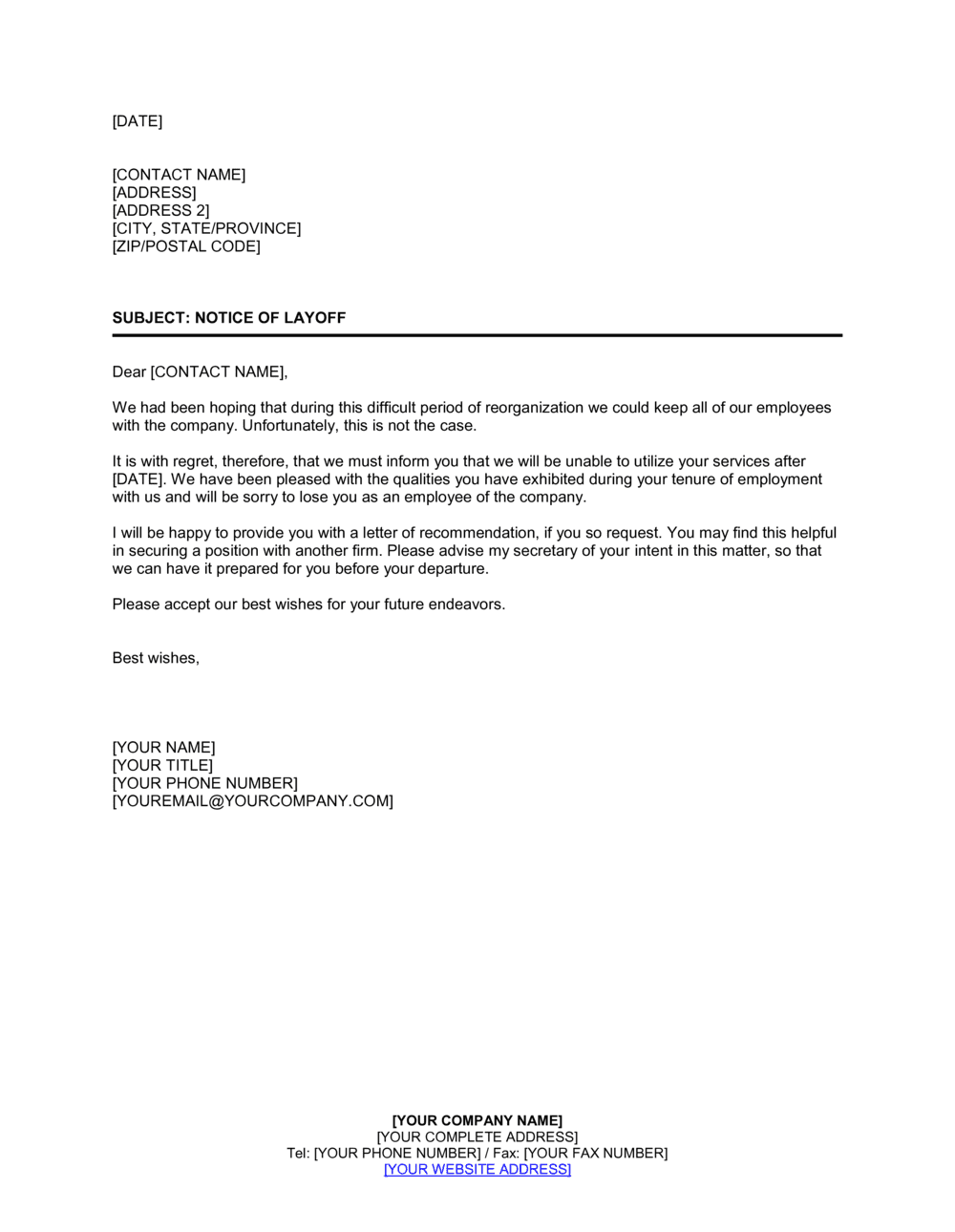
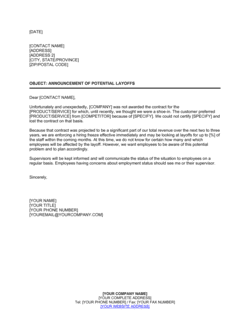
Enter the letter date and employee details
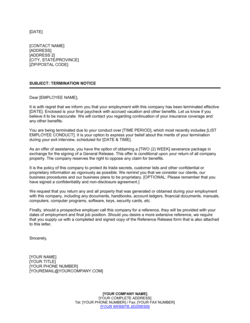
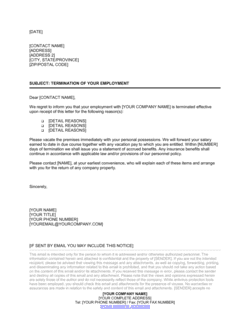
Add today's date at the top, followed by the employee's full legal name, their current address on file, and the correct salutation. The date is legally significant — it starts the clock on notice periods and statutory timelines.
💡 Confirm the employee's mailing address in your HR system before printing — a letter sent to a wrong address creates a documentation gap.
2
State the position elimination clearly in the opening paragraph
Use plain, direct language in the first sentence: the job title is being eliminated and the effective date. Avoid euphemisms like 'transitioning out' or 'moving on' — clarity protects both parties.
💡 Include the phrase 'this decision is not a reflection of your individual performance' to reduce the risk of the employee conflating the layoff with a dismissal for cause.
3
Describe the business rationale briefly
Name the business reason — restructuring, budget reduction, site closure — in one to two sentences. You do not need to share confidential financials; a high-level explanation is sufficient and legally useful.
💡 Keep the rationale consistent across all layoff letters issued in the same RIF event — inconsistent explanations fuel discrimination claims.
4
Set the last day and clarify reporting expectations
Enter the exact final date of employment and specify whether the employee works through it or is relieved of duties immediately. If relieving them early, confirm that pay continues through the notice period end date.
💡 For employees with system or data access, 'pay in lieu of notice with immediate relief of duties' is standard practice — it limits data-exfiltration risk.
5
Fill in final pay and accrued vacation details
Calculate accrued but unused PTO as of the last day and include the dollar amount or days in the letter. State the exact payment date and delivery method.
💡 Check the applicable state or provincial law for final pay timing — California requires immediate payment on the last day; most other US states allow 3–5 business days.
6
Add severance terms and reference the release agreement
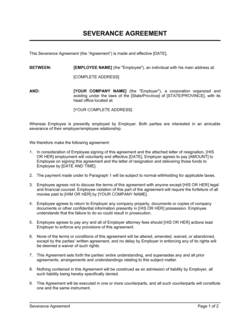
If offering severance, state the amount and payment date, then reference the separate Separation and Release Agreement the employee must sign to receive it. Do not detail release terms inside the letter itself.
💡 Under the Older Workers Benefit Protection Act in the US, employees 40 and over must receive at least 21 days to consider a release and 7 days to revoke after signing — factor this into your payment timeline.
7
Confirm benefits end date and COBRA notification
State the exact date benefits coverage ends and confirm that COBRA (or equivalent) information will follow from the benefits administrator. Double-check the date against your benefits plan's actual coverage period.
💡 In most US plans, coverage ends on the last day of the month in which employment ends — not the last day of employment itself.
8
List company property to be returned and provide a follow-up contact
Itemize specific devices, credentials, and documents the employee must return, set a return deadline, and close the letter with a named HR contact for questions. Sign with the issuing manager's full name and title.
💡 Send the letter via a method that creates a delivery record — email with read receipt, certified mail, or in-person delivery with a signed acknowledgment — so you can document that the employee received it.