Notice of Layoff_1 Template

Free Word download β€’ Edit online β€’ Save & share with Drive β€’ Export to PDF

1 pageβ€’15–25 min to fillβ€’Difficulty: Standard
Learn more ↓
FreeNotice of Layoff_1 Template

At a glance

What it is
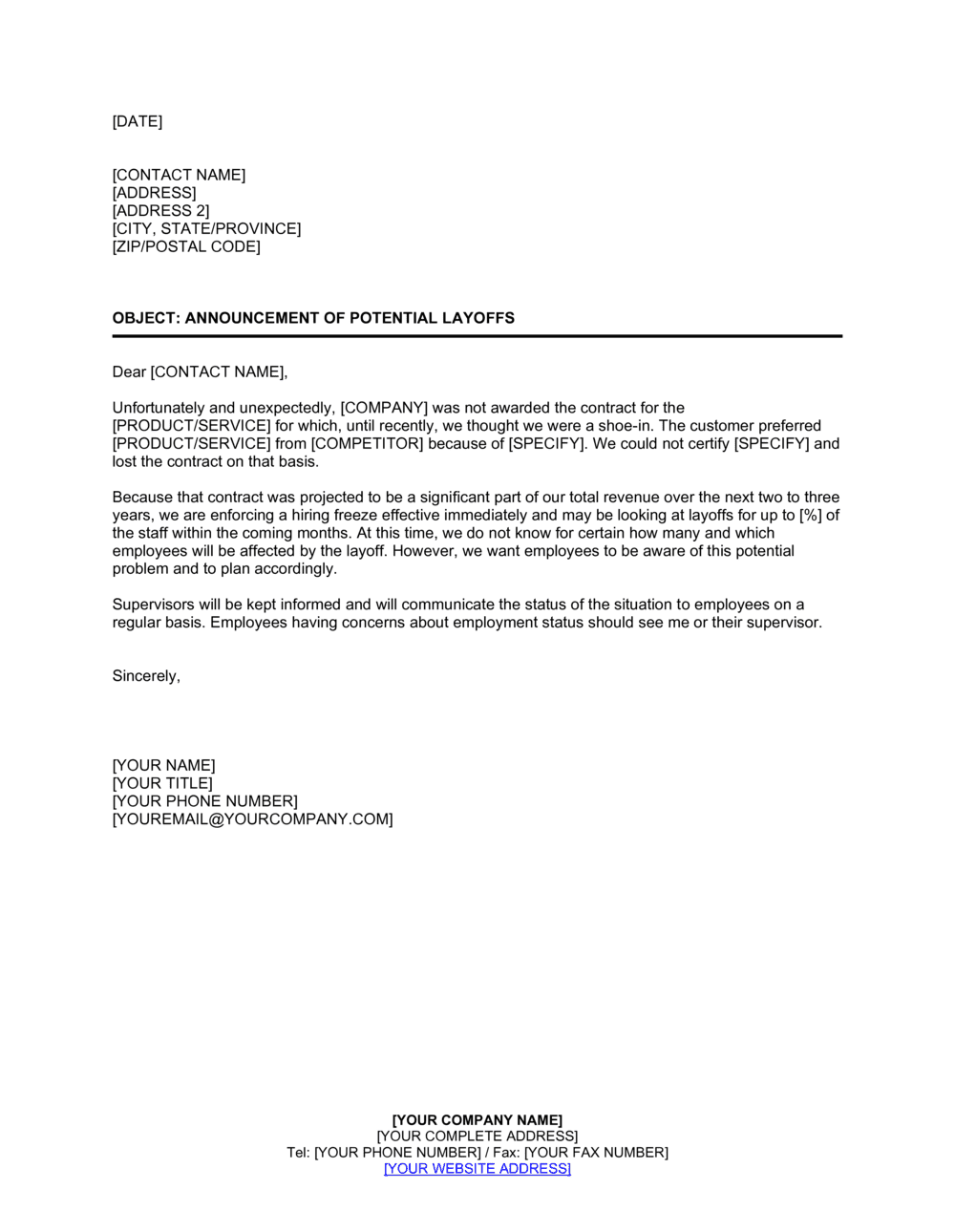
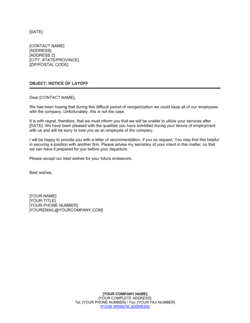
A Notice of Layoff is a formal written letter an employer sends to an employee to communicate that their position is being eliminated due to business reasons β€” not performance. This free Word download gives you a professionally structured letter you can edit online in minutes and export as PDF to deliver in person or by mail.
When you need it
Use it whenever a position is being eliminated due to restructuring, downsizing, budget cuts, or a reduction in force, and you need to formally document the separation for HR and legal records.
What's inside
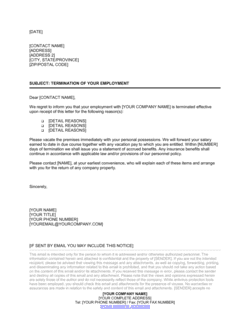
Date and recipient details, a clear statement of the layoff and effective date, explanation of the business reason, severance and benefits continuation information, and next-step instructions for the employee.

What is a Notice of Layoff?

A Notice of Layoff is a formal written letter an employer issues to an employee to communicate that their position is being permanently eliminated for business reasons β€” restructuring, budget reductions, or a reduction in force β€” rather than for any fault or performance issue on the employee's part. It formally documents the effective date of separation, severance entitlements, benefits continuation, and any surviving obligations such as confidentiality. Unlike a verbal conversation alone, a written notice creates a clear, timestamped HR record that protects both parties and establishes the starting point for any severance or continuation benefits that follow.

Why You Need This Document

Delivering a layoff verbally without a written notice leaves your organization exposed on multiple fronts. Without a dated, signed letter on file, disputes about the effective date, severance terms, or benefits end date become a credibility contest rather than a documented fact. In jurisdictions with statutory notice requirements β€” including most Canadian provinces and the United Kingdom β€” the absence of written notice can restart the notice-period clock entirely, creating additional wage liability. A professionally worded letter that clearly attributes the separation to business reasons, not performance, also significantly reduces the likelihood of a wrongful dismissal or discrimination claim. This template gives you a complete, ready-to-edit notice you can personalize in minutes, ensuring every layoff is handled with the clarity and documentation the situation requires.

Which variant fits your situation?

If your situation is…Use this template
Laying off a group of employees simultaneously under WARN Act thresholdsNotice of Layoff (Mass Layoff)
Terminating an employee for performance or conduct reasonsEmployee Dismissal Letter
Offering a separation package alongside the layoff noticeSeverance Agreement
Notifying an employee that their temporary or fixed-term contract will not be renewedContract Non-Renewal Notice
Placing an employee on temporary furlough rather than permanent layoffFurlough Notice Letter
Confirming layoff terms in a formal separation agreementEmployee Separation Agreement

Common mistakes to avoid

❌ Indirect or ambiguous opening language

Why it matters: Phrases like 'we need to discuss your role' or 'your position may be affected' do not constitute formal notice and can restart notice-period clocks or undermine legal enforceability.

Fix: Open with a direct statement: the position is eliminated, the employee is laid off, and the effective date is [DATE]. No softening language in the first sentence.

❌ No stated business reason

Why it matters: A notice with no explanation of why the position was eliminated makes it easier for an employee to argue the layoff was pretextual β€” covering a discriminatory or retaliatory motivation.

Fix: Include one to two sentences stating the factual business reason β€” restructuring, cost reduction, or business closure β€” and confirm it is unrelated to performance.

❌ Omitting benefits and final pay details

Why it matters: Employees who don't know when coverage ends or when to expect their final paycheck often file wage claims or complaints with labor boards, creating avoidable administrative burden.

Fix: Confirm benefits end date, COBRA notice timing, and final paycheck date in the letter. If exact amounts are not yet confirmed, state when they will be communicated.

❌ Delivering the letter without a personal conversation first

Why it matters: An employee who receives a layoff letter without a prior verbal conversation β€” even a brief one β€” is more likely to feel blindsided, increasing the risk of emotional escalation or legal action.

Fix: Conduct a brief, private in-person or video meeting to communicate the layoff verbally before or simultaneously with delivering the written notice.

The 9 key clauses, explained

Date, sender, and recipient block

In plain language: The formal header identifying the date the letter is issued, the employer's name and address, and the employee's full name, title, and address.

Sample language
[DATE] | [COMPANY NAME] | [COMPANY ADDRESS] | To: [EMPLOYEE FULL NAME], [JOB TITLE] | [EMPLOYEE ADDRESS]

Common mistake: Using only the employee's first name or an informal email-style header. A formal letter requires the employee's full legal name and job title to create an unambiguous HR record.

Opening statement of purpose

In plain language: A direct, clear first sentence informing the employee that their position is being eliminated and this letter constitutes formal notice.

Sample language
We regret to inform you that your position of [JOB TITLE] at [COMPANY NAME] is being eliminated effective [EFFECTIVE DATE].

Common mistake: Burying the layoff news several paragraphs in. Leading with indirect language causes confusion and can create legal ambiguity about whether formal notice was actually given.

Business reason for the layoff

In plain language: A brief, factual explanation of the organizational or economic reason for the position elimination β€” without referencing performance.

Sample language
This decision is the result of [RESTRUCTURING / REDUCTION IN FORCE / ECONOMIC CONDITIONS] and is in no way a reflection of your performance or contributions to the company.

Common mistake: Omitting this clause entirely. Without a stated business reason, the letter can appear arbitrary, increasing the risk of the employee filing a wrongful dismissal or discrimination claim.

Effective date and final working day

In plain language: Specifies the exact date employment ends and, if different, the last day the employee is expected to report to work.

Sample language
Your last day of employment with [COMPANY NAME] will be [DATE]. You are [required / not required] to report to work after [DATE].

Common mistake: Stating only the effective date without clarifying whether the employee is expected to work through it. Ambiguity about presence in the workplace creates operational and security complications.

Severance and final pay details

In plain language: States the severance amount or formula, when the final paycheck will be issued, and how accrued vacation or PTO will be handled.

Sample language
You will receive a severance payment of [AMOUNT / X WEEKS' PAY], paid on [DATE]. Your final paycheck, including all earned wages and [X] hours of accrued PTO, will be issued no later than [DATE].

Common mistake: Referencing a separate severance agreement without confirming when it will be provided. Employees need to know what they are receiving and when, at the time of notice.

Benefits continuation information

In plain language: Explains when employer-provided health, dental, and other benefits will end and what continuation options are available, such as COBRA.

Sample language
Your current health and dental benefits will remain in effect through [DATE]. You will receive a separate notice regarding your rights to continue coverage under COBRA / [PROVINCIAL HEALTH CONTINUATION PLAN].

Common mistake: Omitting benefits information from the letter. Employees who don't know when coverage ends may incur unexpected medical costs and attribute liability to the employer.

Return of company property

In plain language: Instructs the employee to return all company-owned equipment, keys, access cards, and documents by a specified date.

Sample language
Please return all company property β€” including [LAPTOP / ACCESS BADGE / KEYS / DOCUMENTS] β€” to [NAME / DEPARTMENT] by [DATE].

Common mistake: Using vague language like 'return company items when possible.' Specificity about what must be returned and by when is essential for security and asset tracking.

Confidentiality reminder

In plain language: Reminds the employee that any confidentiality, non-disclosure, or IP obligations from their employment agreement survive the layoff.

Sample language
Please note that your obligations under the confidentiality and non-disclosure provisions of your Employment Agreement dated [DATE] remain in full effect following your separation.

Common mistake: Skipping the confidentiality reminder when the employee had access to sensitive information. Without the reminder, departing employees may inadvertently β€” or intentionally β€” disclose proprietary information.

Contact for questions and closing

In plain language: Provides a named HR or management contact the employee can reach for questions, and closes with a professional acknowledgment of the employee's contributions.

Sample language
If you have any questions, please contact [HR CONTACT NAME] at [EMAIL / PHONE]. We sincerely appreciate your contributions to [COMPANY NAME] and wish you well in your next endeavors.

Common mistake: Closing with generic language and no named contact. Employees who cannot reach a specific person for follow-up questions escalate to legal counsel or labor boards unnecessarily.

How to fill it out

  1. 1

    Enter the date and party details

    Fill in today's date, your company's legal name and address, and the employee's full legal name, job title, and address in the header block.

    πŸ’‘ Use the employee's legal name as it appears on their employment contract, not a preferred name or nickname, to ensure the letter is unambiguous as an HR record.

  2. 2

    State the effective date and last working day

    Insert the specific date employment ends. If the employee is not expected to work through the notice period, state their last physical workday separately.

    πŸ’‘ Confirm the effective date complies with any contractual notice period or applicable statutory minimum before inserting it.

  3. 3

    Write the business reason

    Briefly describe the organizational or financial reason for the position elimination β€” restructuring, budget reduction, or reduction in force. Keep it factual and impersonal.

    πŸ’‘ Explicitly state that the decision is not performance-related. This single sentence significantly reduces the likelihood of a wrongful dismissal claim.

  4. 4

    Complete the severance and final pay section

    Enter the severance amount or formula, the final paycheck date, and how accrued PTO will be handled. Reference any separate severance agreement if one will be provided.

    πŸ’‘ Check your jurisdiction's final-pay timing laws before completing this section β€” many states and provinces require final wages within 24–72 hours of termination.

  5. 5

    Add benefits continuation details

    State the date benefits coverage ends and confirm that a COBRA or continuation notice will follow. Do not promise specific coverage terms β€” reference the plan documents.

    πŸ’‘ Set a reminder to send the COBRA election notice within the legally required window (14 days of coverage end in the US) immediately after issuing this letter.

  6. 6

    List company property to be returned

    Itemize the specific assets the employee must return β€” laptop, phone, access badge, keys, client files β€” and the deadline for returning them.

    πŸ’‘ Coordinate with IT to disable system access on or before the effective date, regardless of when physical equipment is returned.

  7. 7

    Include the confidentiality reminder and contact details

    Reference the original employment agreement date for surviving confidentiality obligations, and provide a named HR contact with direct email or phone number.

    πŸ’‘ If no written employment agreement exists, still include a general reminder that trade secrets and client information remain confidential under applicable law.

Frequently asked questions

What is a notice of layoff?

A notice of layoff is a formal written letter from an employer to an employee informing them that their position is being eliminated for business reasons β€” restructuring, budget cuts, or a reduction in force. It is distinct from a termination for cause. The letter documents the effective date, severance, benefits continuation, and any obligations that survive the separation.

Is a written layoff notice legally required?

In the US, no federal law requires a written notice for individual layoffs, but the WARN Act mandates 60 days' written notice for mass layoffs affecting 50 or more employees at a single site. Many states have their own WARN-equivalent laws with lower thresholds. In Canada and the UK, written notice or pay in lieu is required by statute. A written notice is best practice in all cases regardless of legal mandate.

What is the difference between a layoff and a termination?

A layoff is a separation initiated by the employer for business reasons unrelated to the employee's conduct or performance β€” the position itself is eliminated. A termination typically refers to a separation for cause, such as misconduct or poor performance. The distinction matters for unemployment insurance eligibility, severance obligations, and the risk of wrongful dismissal claims.

How much notice is required before a layoff?

Notice requirements vary by jurisdiction. In the US, individual layoffs have no federal notice requirement, though employment contracts or company policy may create one. Canada's provincial Employment Standards Acts require 1–8 weeks' notice depending on tenure. The UK requires statutory minimum notice of 1 week per year of service after 2 years, up to 12 weeks. Always check the applicable statute and any contractual notice provision before setting the effective date.

Should the notice of layoff be delivered in person or in writing?

Best practice is to deliver the news verbally in a private meeting first, then provide the written letter simultaneously or immediately after. Handing the letter to the employee in person during the meeting creates a clear record of delivery. If the employee is remote, a video call followed by emailed and mailed copies is the accepted approach.

Does a notice of layoff need to include severance details?

Including severance information in the notice letter is strongly recommended. It reduces employee uncertainty, minimizes follow-up questions, and demonstrates good faith. If the exact severance amount is subject to a separate agreement that the employee must sign, state the amount and confirm when the severance agreement will be provided.

Can a laid-off employee be rehired later?

Yes. A layoff does not permanently close the door to rehire β€” in fact, many employers explicitly note in the letter that the employee may be considered for future openings as business conditions change. If rehire is a genuine possibility, stating it professionally in the letter reduces the likelihood of the employee taking legal action and preserves the relationship.

What happens to benefits after a layoff notice is issued?

Benefits typically continue through the end of the month in which the effective date falls, or through the effective date itself, depending on the employer's plan terms. In the US, the employer must send a COBRA election notice within 14 days of the coverage end date. In Canada, provincial health plans may require specific continuation notifications. The layoff letter should state the benefits end date and confirm that a separate continuation notice will follow.

How this compares to alternatives

vs Employee Dismissal Letter

A dismissal letter terminates employment for cause β€” misconduct, performance failure, or policy violation. A notice of layoff eliminates a position for business reasons with no fault attributed to the employee. The distinction directly affects the employee's eligibility for unemployment benefits and the employer's severance obligations. Using a dismissal letter for a layoff, or vice versa, creates significant legal exposure.

vs Severance Agreement

A notice of layoff communicates the fact and terms of the separation. A severance agreement is a bilateral contract the employee signs to receive severance in exchange for releasing legal claims. The two documents are complementary β€” the notice informs, and the severance agreement settles. A notice alone does not waive the employee's right to sue.

vs Furlough Notice Letter

A furlough notice places an employee on temporary unpaid leave while preserving the employment relationship β€” the employee retains their position and may be recalled. A layoff notice permanently eliminates the position. The choice between the two has significant implications for benefits continuation, unemployment eligibility, and recall rights.

vs Employment Contract Termination Letter

A contract termination letter ends a fixed-term or project-based employment or services agreement according to its own termination clause. A notice of layoff is used for indefinite employment relationships where a position is eliminated mid-term. The applicable document depends on whether an underlying contract governs the relationship and how it defines separation rights.

Industry-specific considerations

Technology / SaaS

Layoff notices frequently accompany funding-related headcount reductions and must address equipment return for remote employees and access revocation across cloud systems.

Retail

Seasonal or volume-driven layoffs are common; notices must address final paycheck timing, uniform and equipment return, and store-access revocation on the effective date.

Manufacturing

Plant closings and production slowdowns often trigger WARN Act obligations; layoff notices must be coordinated with union agreements and collective bargaining requirements where applicable.

Professional Services

Client confidentiality and non-solicitation obligations are particularly important to reinforce in notices for client-facing roles such as consultants and account managers.

Template vs pro β€” what fits your needs?

PathBest forCostTime
Use the templateHR managers and business owners issuing individual or small-group layoff notices in a straightforward business contextFree10–15 minutes per letter
Template + professional reviewLayoffs involving employees with employment contracts, non-compete clauses, or equity grants, or in jurisdictions with strict notice requirements$150–$400 for an HR consultant or employment lawyer review1–2 days
Custom draftedMass layoffs triggering WARN Act obligations, unionized workforces, or executives with complex separation terms$500–$2,500+ for employment counsel3–10 days

Glossary

Layoff
A temporary or permanent separation from employment initiated by the employer due to business conditions, not the employee's performance or conduct.
Reduction in Force (RIF)
A planned elimination of one or more positions to reduce headcount, typically driven by budget constraints, restructuring, or changes in business strategy.
Effective Date
The specific calendar date on which the employee's separation from the company takes effect and employment officially ends.
Severance Pay
Compensation paid by the employer to a laid-off employee beyond their final paycheck, often calculated as a number of weeks' pay per year of service.
WARN Act
The US federal Worker Adjustment and Retraining Notification Act, which requires employers with 100 or more employees to give 60 days' written notice before mass layoffs or plant closings.
COBRA
A US federal law that allows employees who lose health coverage due to separation to continue their employer-sponsored health insurance at their own expense for a defined period.
Furlough
A temporary, unpaid leave of absence initiated by the employer, distinct from a permanent layoff β€” the employee retains their position and may be recalled.
Final Paycheck
The last wage payment owed to an employee upon separation, which must include all earned but unpaid wages and, in many jurisdictions, accrued but unused paid time off.
Outplacement Services
Career transition support β€” such as resume coaching, job-search assistance, and interview training β€” provided by an employer to help laid-off employees find new positions.

Part of your Business Operating System

This document is one of 3,000+ business & legal templates included in Business in a Box.

  • Fill-in-the-blanks β€” ready in minutes
  • 100% customizable Word document
  • Compatible with all office suites
  • Export to PDF and share electronically

Create your document in 3 simple steps.

From template to signed document β€” all inside one Business Operating System.
1
Download or open template

Access over 3,000+ business and legal templates for any business task, project or initiative.

2
Edit and fill in the blanks with AI

Customize your ready-made business document template and save it in the cloud.

3
Save, Share, Send, Sign

Share your files and folders with your team. Create a space of seamless collaboration.

Save time, save money, and create top-quality documents.

β˜…β˜…β˜…β˜…β˜…

"Fantastic value! I'm not sure how I'd do without it. It's worth its weight in gold and paid back for itself many times."

Managing Director Β· Mall Farm
Robert Whalley
Managing Director, Mall Farm Proprietary Limited
β˜…β˜…β˜…β˜…β˜…

"I have been using Business in a Box for years. It has been the most useful source of templates I have encountered. I recommend it to anyone."

Business Owner Β· 4+ years
Dr Michael John Freestone
Business Owner
β˜…β˜…β˜…β˜…β˜…

"It has been a life saver so many times I have lost count. Business in a Box has saved me so much time and as you know, time is money."

Owner Β· Upstate Web
David G. Moore Jr.
Owner, Upstate Web

Run your business with a system β€” not scattered tools

Stop downloading documents. Start operating with clarity. Business in a Box gives you the Business Operating System used by over 250,000 companies worldwide to structure, run, and grow their business.

Free Forever PlanΒ Β·Β No credit card required