Share Subscription Agreement Private_Long Form Template

Free Word download β€’ Edit online β€’ Save & share with Drive β€’ Export to PDF

23 pagesβ€’35–45 min to fillβ€’Difficulty: Complex
Learn more ↓
FreeShare Subscription Agreement Private_Long Form Template

At a glance

What it is
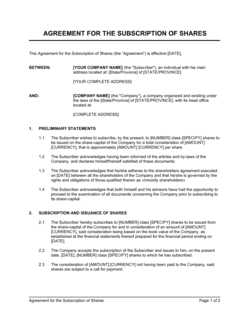
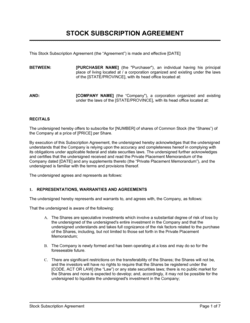
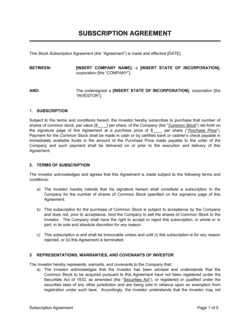
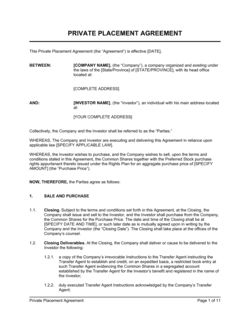
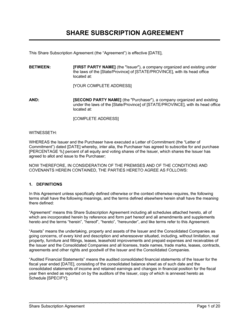
A Share Subscription Agreement (Private Long Form) is a structured form used by private companies to collect and record all information required from an investor subscribing for newly issued shares. This free Word download captures subscriber identity, share class, subscription amount, payment details, investor representations, and closing conditions in a single organized document you can edit online and export as PDF.
When you need it
Use it when a private company is issuing new shares to an investor β€” whether in a seed round, a friends-and-family raise, or a later private placement β€” and needs a complete, organized record of the subscription before shares are formally allotted.
What's inside
Subscriber identification, share class and number of shares subscribed, subscription price per share and total consideration, payment instructions, investor representations and warranties, closing conditions, and acknowledgment of risk disclosures.

What is a Share Subscription Agreement (Private Long Form)?

A Share Subscription Agreement (Private Long Form) is a structured form used by private companies to record and formalize an investor's commitment to purchase newly issued shares directly from the company. It captures every detail required to complete the transaction β€” subscriber identity, share class, number of shares, subscription price, payment instructions, investor representations, closing conditions, and execution blocks β€” in a single organized document. Unlike a share purchase agreement, which records the transfer of existing shares between shareholders, a subscription agreement governs the creation and issuance of new equity, making it the primary record for any private placement or capital raise.

Why You Need This Document

Issuing shares without a completed subscription form leaves the company exposed on multiple fronts: there is no signed record of the investor's eligibility representations, no documented agreement on price or share class, and no clear closing condition tying allotment to receipt of cleared funds. These gaps create disputes over what was agreed, complicate cap table reconciliation, and can attract regulatory scrutiny if the company later raises institutional capital or prepares for an acquisition. A properly completed long-form subscription agreement gives both parties a clear, enforceable record of the transaction β€” and gives future investors and acquirers the documentation they need to confirm that prior share issuances were conducted correctly.

Which variant fits your situation?

If your situation is…Use this template
Simple seed round with a single investor and standard termsShare Subscription Agreement (Short Form)
Investor purchasing existing shares from a current shareholderShare Purchase Agreement
Convertible instrument that may become equity at a future roundConvertible Note Agreement
Subscription paired with a formal shareholders' agreementShareholders Agreement
Employee or advisor receiving equity under a stock option planStock Option Agreement
Issuing shares under a SAFE instrumentSimple Agreement for Future Equity (SAFE)
Public offering or prospectus-based subscriptionProspectus Subscription Form

Common mistakes to avoid

❌ Using informal names instead of registered legal names

Why it matters: A mismatch between the subscription form and the company's share register can make the allotment legally defective and require a corrective corporate resolution to fix.

Fix: Verify both the company's and the subscriber's exact legal names against official registration documents before completing the form.

❌ Omitting investor eligibility documentation

Why it matters: Accepting a subscription without confirming accredited investor status exposes the company to securities law violations, even if the subscription form was fully completed.

Fix: Attach or separately collect supporting documentation β€” tax returns, financial statements, or a professional certification β€” confirming the subscriber meets applicable eligibility thresholds.

❌ Countersigning before funds clear

Why it matters: Accepting a subscription before cleared funds arrive creates an enforceable obligation to allot shares even if the payment ultimately fails.

Fix: Make company countersignature β€” or at minimum allotment β€” conditional on confirmed cleared funds, and state this explicitly in the closing conditions field.

❌ Failing to update the share register after closing

Why it matters: A completed subscription form with no corresponding share register update leaves the investor without formal legal title to the shares and creates discrepancies in corporate records.

Fix: Set a post-closing checklist that includes share register update, cap table reconciliation, and share certificate issuance within 30 days of allotment.

The 9 key fields, explained

Subscriber identification

Share class and number of shares

Subscription price per share and total consideration

Payment method and instructions

Investor representations and warranties

Risk acknowledgment

Closing conditions

Governing law

Signature and date

How to fill it out

  1. 1

    Enter the company's legal name and incorporation details

    Complete the header with the company's full registered legal name, jurisdiction of incorporation, and company number. This establishes the issuing entity unambiguously.

    πŸ’‘ Pull the exact legal name from your certificate of incorporation β€” even a minor spelling variation can create a title discrepancy in the share register.

  2. 2

    Record the subscriber's legal identity and address

    Enter the subscriber's full legal name and address exactly as they appear on government-issued ID or corporate registration documents. Note whether they are an individual, corporation, or trust.

    πŸ’‘ For corporate subscribers, request a copy of the signing officer's authorization resolution before completing this field.

  3. 3

    Specify the share class, number, and price

    Enter the exact share class, the number of shares being subscribed, the board-approved price per share, and the resulting total consideration. Confirm these figures against the board resolution authorizing the issuance.

    πŸ’‘ Cross-check the subscription price against your most recent 409A valuation or board-approved pricing memo before sending the form to the investor.

  4. 4

    Add complete payment instructions

    Fill in all bank transfer details β€” account name, account number, routing or SWIFT/IBAN number, and bank address. Add a unique reference field tied to the subscriber's name or a subscription number.

    πŸ’‘ Confirm wire details directly with your bank rather than copying from a prior form β€” account details occasionally change and an error delays closing.

  5. 5

    Confirm investor representations are complete

    Walk through each representation with the investor before they sign. Confirm accredited investor status with supporting documentation (income verification, net worth statement) where required by applicable securities law.

    πŸ’‘ Keep copies of supporting documentation on file alongside the executed agreement β€” regulators may request evidence of investor eligibility in a future review.

  6. 6

    Review and complete the closing conditions

    Confirm that the stated closing conditions reflect the actual board approval process and expected funds-clearing timeline. Adjust the conditions if the company requires additional steps such as a shareholder vote.

    πŸ’‘ Set a realistic funds-clearing window β€” 3–5 business days for domestic wires, 5–10 for international β€” to avoid allotting shares before funds clear.

  7. 7

    Execute and countersign before allotting shares

    Obtain the subscriber's signature first, then have an authorized officer countersign on behalf of the company. Date both execution blocks on the day of actual signing.

    πŸ’‘ Do not countersign until cleared funds have been confirmed β€” the company's signature constitutes acceptance of the subscription.

  8. 8

    Update the cap table and share register

    Once all closing conditions are met, record the allotment in the company's share register and update the cap table with the new shareholder's details, share class, and number of shares.

    πŸ’‘ Issue a share certificate or electronic equivalent to the investor within the timeframe required by your jurisdiction's corporate statutes β€” typically 30–60 days after allotment.
Frequently asked questions

What is a share subscription agreement?

A share subscription agreement is a form a private company uses to record an investor's binding commitment to purchase newly issued shares at an agreed price. It captures the investor's identity, share class, number of shares, total consideration, payment details, and representations confirming eligibility to invest. Once both parties sign and closing conditions are met, the company allots the shares and updates its share register.

What is the difference between a share subscription agreement and a share purchase agreement?

A share subscription agreement covers the issuance of new shares directly from the company to an investor β€” the company receives the proceeds and the share count increases. A share purchase agreement covers the transfer of existing shares from one shareholder to another β€” the company is not a party to the transaction and receives no proceeds. The correct document depends on whether the company is creating new shares or an existing holder is selling.

Does a share subscription agreement need to be signed to be valid?

Yes. Both the subscriber and an authorized officer of the company must sign the agreement for it to constitute a binding subscription. A completed form signed only by the investor is an offer, not an accepted subscription. The company's countersignature β€” ideally after cleared funds are confirmed β€” completes the binding agreement.

What is an accredited investor and why does it matter on this form?

An accredited investor is an individual or entity meeting minimum income, net worth, or professional-knowledge thresholds set by securities regulators β€” for example, a net worth exceeding $1M (excluding primary residence) or annual income above $200,000 in the US. Private placements typically rely on an exemption from registration that requires all investors to qualify. Confirming and documenting accredited investor status on the subscription form protects the company if regulators later review the offering.

What happens after a subscription agreement is signed?

Once both parties sign and all closing conditions are satisfied β€” typically receipt of cleared funds and board approval β€” the company's board formally allots the shares, updates the share register, and issues a share certificate or electronic equivalent to the investor. The investor should also receive a copy of the executed agreement and any updated cap table or shareholder notice required by the company's articles.

Can I use this form for multiple investors in the same round?

Yes. Each investor completes and signs a separate subscription form capturing their individual details, share allocation, and representations. Using a separate form per investor creates a clean, individual record for each subscription and simplifies the allotment and share register update process. The company then allots all subscriptions in a single board resolution after the round closes.

Is a long-form subscription agreement necessary for a small private placement?

For a friends-and-family raise involving one or two investors with a combined total under $50,000, a short-form agreement may be sufficient. The long form is recommended when the amount is material, when investors are not known to the founders personally, or when future fundraising rounds will involve institutional investors who will conduct diligence on prior subscription documentation.

What is the difference between subscription price and par value?

Par value is the nominal minimum value assigned to each share in the company's articles of incorporation β€” often as low as $0.0001 per share. Subscription price is the actual amount the investor pays, set by the board based on the company's current valuation. The difference between the two is recorded as additional paid-in capital on the balance sheet. Entering par value as the subscription price is a common and material error.

How this compares to alternatives

vs Share Purchase Agreement

A share purchase agreement records the transfer of existing shares between a seller and a buyer β€” the company is not a party and issues no new shares. A subscription agreement records the issuance of new shares directly from the company to an investor. Use a purchase agreement when an existing shareholder is selling; use a subscription agreement when the company is raising new capital.

vs Shareholders Agreement

A shareholders agreement governs the ongoing relationship among all shareholders β€” voting rights, transfer restrictions, drag-along, and tag-along provisions. A subscription agreement is a one-time transaction document recording a single investor's purchase of new shares. The two documents are complementary: the subscription form closes the investment; the shareholders agreement governs what happens afterward.

vs Stock Option Agreement

A stock option agreement grants an employee or advisor the right to purchase shares at a fixed price after a vesting period β€” no shares are issued at signing and no immediate payment is made. A subscription agreement records an investor's immediate purchase of shares for cash consideration. Options are for incentive compensation; subscriptions are for capital raises.

vs Convertible Note Agreement

A convertible note is a debt instrument that converts into equity at a future financing round, typically at a discount. A subscription agreement issues equity immediately at a fixed price. Convertible notes defer valuation to the next round; subscription agreements require a valuation at the time of signing. Startups at early stages often prefer convertible notes to avoid premature valuation debates.

Industry-specific considerations

Technology / SaaS

Seed and Series A subscription forms typically reference a concurrent term sheet or SAFE conversion, with investor representations covering participation in prior rounds.

Real Estate

Subscription forms for real estate holding companies often include additional representations on source of funds and beneficial ownership to satisfy anti-money-laundering requirements.

Financial Services

Regulated financial entities require enhanced investor eligibility documentation and may need to retain subscription forms as part of regulatory compliance records.

Professional Services

Law and accounting firms issuing equity to incoming partners use subscription forms to formalize the capital contribution and record the new partner's share class and ownership percentage.

Template vs pro β€” what fits your needs?

PathBest forCostTime
Use the templatePrivate companies issuing shares to a small number of known investors in a straightforward seed or friends-and-family roundFree15–30 minutes per subscriber
Template + professional reviewRounds involving multiple investors, material amounts, or first-time founders unfamiliar with share issuance mechanics$300–$800 for a corporate lawyer or accountant review1–3 days
Custom draftedInstitutional rounds, regulated industries, cross-border investors, or complex share class structures with preference stacks$1,500–$5,000+1–2 weeks

Glossary

Subscription
A binding commitment by an investor to purchase a specified number of newly issued shares at an agreed price.
Allotment
The formal act by the company's board of directors of issuing and assigning subscribed shares to the investor after closing conditions are met.
Share Class
A category of shares β€” such as common, preferred Series A, or Class B β€” carrying specific voting, dividend, and liquidation rights.
Subscription Price
The price per share the investor agrees to pay, which may differ from par value and is typically set by a board resolution or cap table valuation.
Closing Conditions
Prerequisites that must be satisfied before the company is obligated to allot shares β€” such as receipt of cleared funds or board approval.
Representations and Warranties
Factual statements made by the subscriber β€” such as being an accredited investor or having the legal authority to invest β€” that the company relies on when accepting the subscription.
Accredited Investor
An individual or entity meeting minimum income, net worth, or professional-knowledge thresholds that allow participation in unregistered securities offerings under applicable securities law.
Par Value
The nominal minimum value assigned to each share in the company's articles of incorporation β€” often $0.0001 or $1.00 β€” distinct from the actual subscription price.
Cap Table
A spreadsheet recording all shareholders, their share classes, number of shares held, and ownership percentage after each issuance.
Private Placement
A securities offering made directly to a limited number of selected investors without a public prospectus, relying on an exemption from securities registration requirements.

Part of your Business Operating System

This document is one of 3,000+ business & legal templates included in Business in a Box.

  • Fill-in-the-blanks β€” ready in minutes
  • 100% customizable Word document
  • Compatible with all office suites
  • Export to PDF and share electronically

Create your document in 3 simple steps.

From template to signed document β€” all inside one Business Operating System.
1
Download or open template

Access over 3,000+ business and legal templates for any business task, project or initiative.

2
Edit and fill in the blanks with AI

Customize your ready-made business document template and save it in the cloud.

3
Save, Share, Send, Sign

Share your files and folders with your team. Create a space of seamless collaboration.

Save time, save money, and create top-quality documents.

β˜…β˜…β˜…β˜…β˜…

"Fantastic value! I'm not sure how I'd do without it. It's worth its weight in gold and paid back for itself many times."

Managing Director Β· Mall Farm
Robert Whalley
Managing Director, Mall Farm Proprietary Limited
β˜…β˜…β˜…β˜…β˜…

"I have been using Business in a Box for years. It has been the most useful source of templates I have encountered. I recommend it to anyone."

Business Owner Β· 4+ years
Dr Michael John Freestone
Business Owner
β˜…β˜…β˜…β˜…β˜…

"It has been a life saver so many times I have lost count. Business in a Box has saved me so much time and as you know, time is money."

Owner Β· Upstate Web
David G. Moore Jr.
Owner, Upstate Web

Run your business with a system β€” not scattered tools

Stop downloading documents. Start operating with clarity. Business in a Box gives you the Business Operating System used by over 250,000 companies worldwide to structure, run, and grow their business.

Free Forever PlanΒ Β·Β No credit card required