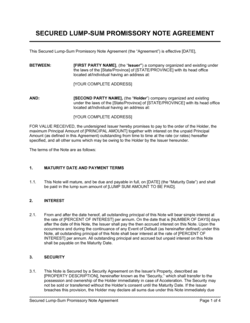
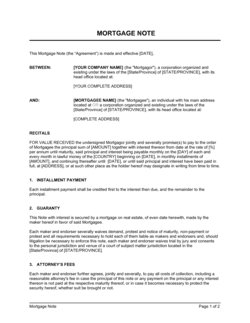
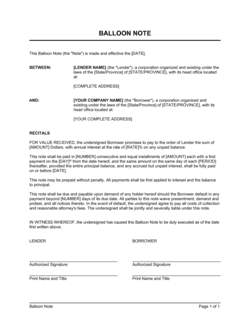
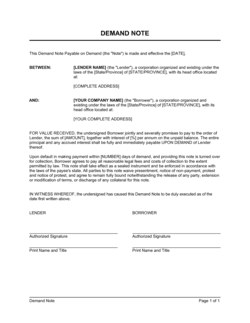
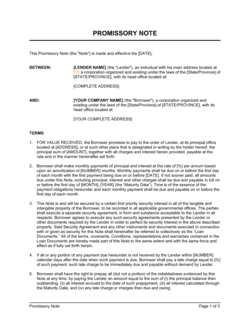
Convertible Note Agreement Template

Free Word download • Edit online • Save & share with Drive • Export to PDF

6 pages25–35 min to fillDifficulty: ComplexSignature requiredLegal review recommended
Learn more ↓
FreeConvertible Note Agreement Template

At a glance

What it is
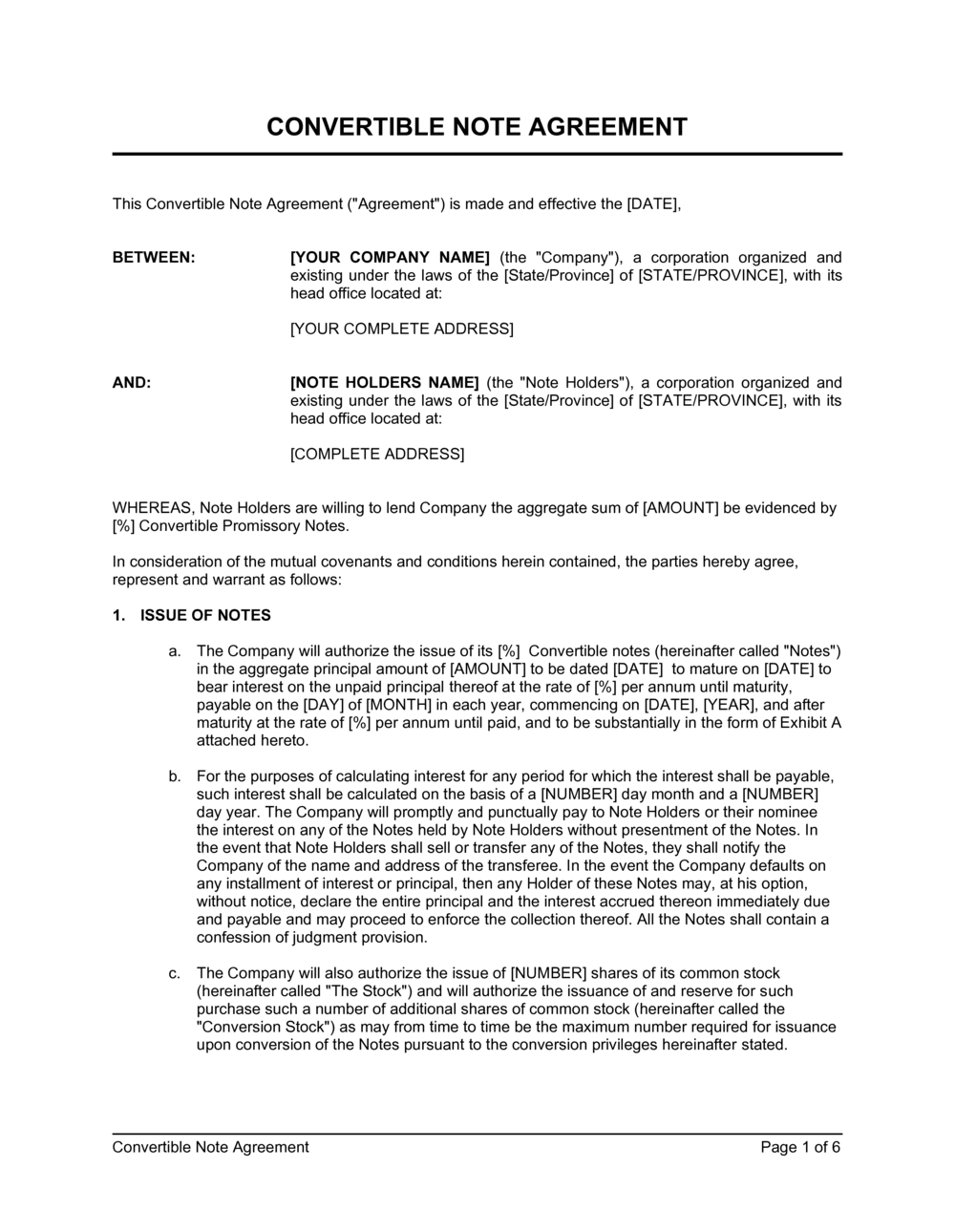
A Convertible Note Agreement is a legally binding debt instrument that lets a startup borrow money from an investor with the understanding that the loan will convert into equity — typically preferred stock — at a future financing round rather than being repaid in cash. This free Word download covers all standard terms, including principal, interest rate, maturity date, discount rate, valuation cap, and conversion mechanics, in a single editable document you can export as PDF and execute with investors at the seed or pre-seed stage.
When you need it
Use it when raising a seed or bridge round from angel investors or early-stage VCs before your company has a priced valuation, or when you need to close capital quickly without the cost and time of a full equity round. It is also appropriate when existing investors want to extend runway between priced rounds via a bridge note.
What's inside
Principal amount, interest rate and accrual mechanics, maturity date and repayment terms, discount rate on conversion, valuation cap, qualified financing threshold, automatic and optional conversion triggers, change-of-control provisions, representations and warranties, and governing law.

What is a Convertible Note Agreement?

A Convertible Note Agreement is a legally binding debt instrument a startup issues to an early investor in exchange for capital, with the agreed understanding that the loan will convert into equity — typically preferred stock — at a future priced financing round rather than being repaid in cash. The note accrues interest over its term, carries a maturity date as a backstop, and rewards the investor for early risk through two key mechanisms: a valuation cap (the maximum company valuation at which their shares will be priced) and a discount rate (a percentage reduction off the share price paid by later investors). Because it defers the need to agree on a company valuation at the time of investment, the convertible note is the most widely used instrument for pre-seed and seed rounds, allowing founders and investors to close capital quickly and cheaply before the company has the traction to support a priced equity round.

Why You Need This Document

Raising capital on a handshake or informal email chain — even from friends and family — creates serious legal, tax, and securities law exposure for both the company and the investor. Without a signed convertible note, there is no documented agreement on the conversion price, valuation cap, maturity date, or what happens in an acquisition, leaving every material term open to dispute at exactly the moment it matters most: a Series A closing or an exit. Convertible notes are also securities, meaning an undocumented issuance can constitute an unregistered securities offering, exposing the company to rescission liability and regulatory action. A properly drafted and executed convertible note protects the investor's right to convert at favorable terms, protects the company from unlimited repayment demands at maturity, and gives both parties a clean, documented record that integrates directly into the cap table and due diligence package when the next round closes. This template gives you a complete, attorney-reviewed starting point in minutes — significantly reducing drafting time and legal cost for standard seed-stage raises.

Which variant fits your situation?

If your situation is…Use this template
Raising a pre-seed round from angels with a target valuation capConvertible Note Agreement (Standard)
Using a simpler, non-debt instrument with no maturity date or interestSAFE (Simple Agreement for Future Equity)
Issuing equity directly in a priced seed roundStock Purchase Agreement
Bridging existing investors between Series A and Series BBridge Loan Agreement
Investing in a company via revenue-based repayment rather than equityRevenue-Based Financing Agreement
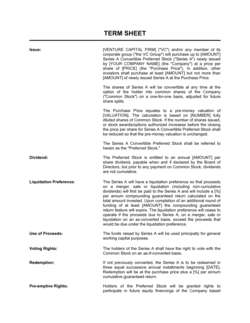
Documenting angel investment terms before the full note is draftedTerm Sheet (Seed Round)
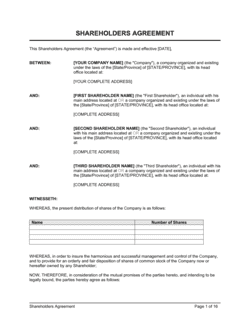
Structuring a group of investors into a single entity before issuing a noteInvestor Syndicate Agreement

Common mistakes to avoid

❌ No valuation cap and no discount rate

Why it matters: Without either mechanism, the noteholder converts at the same price as the new lead investor, receiving no benefit for taking on earlier, higher-risk capital. This is effectively a zero-return loan on the upside.

Fix: Include at minimum a discount rate of 15–20% and ideally a valuation cap. Combine them with 'lower of the two' language so the investor always benefits from whichever is more favorable.

❌ Setting the maturity date too short

Why it matters: A 12-month maturity on a pre-seed note often expires before the company reaches a priced round, forcing renegotiation under time pressure or creating a technical default that damages investor relationships.

Fix: Set the maturity at 18–24 months and include a 6-month extension option the company can exercise unilaterally by written notice, avoiding the need to renegotiate.

❌ Omitting the change-of-control clause

Why it matters: If the company is acquired for a modest sum before a financing round, noteholders may receive only their principal back — or less — with no participation in the upside that justified the risk.

Fix: Add a change-of-control clause granting noteholders the right to receive either a cash premium (1.25–2× principal) or conversion at the cap price, whichever is more favorable.

❌ Issuing one note to multiple co-investors

Why it matters: A single note with multiple holders requires unanimous or majority consent for any amendment, and creates complications when investors have different wire amounts, conversion dates, or negotiated terms.

Fix: Issue a separate, individually executed note to each investor with the specific principal amount for their investment. This keeps each relationship clean and independently administrable.

❌ Failing to obtain board authorization before issuance

Why it matters: Issuing debt without proper corporate authorization — typically a board resolution or written consent — can make the note voidable and creates a securities law compliance problem.

Fix: Pass a board resolution or written consent authorizing the note issuance, specifying the aggregate amount, key terms, and authorized signatory, before any note is executed.

❌ Using a personal name instead of a corporate entity as the issuer

Why it matters: A note issued in a founder's name rather than the company's legal entity name is personal debt, not corporate debt. The founder becomes personally liable for repayment.

Fix: Confirm the issuing entity is the registered corporation or LLC, signed by an authorized officer in their corporate capacity. The signature block should read '[Name], [Title], on behalf of [Company Legal Name].'

The 10 key clauses, explained

Parties, principal amount, and issuance date

In plain language: Identifies the company and the investor as legal entities, states the exact dollar amount being lent, and records the date the note is issued.

Sample language
This Convertible Promissory Note is issued as of [DATE] by [COMPANY LEGAL NAME], a [STATE] [ENTITY TYPE] ('Company'), to [INVESTOR LEGAL NAME OR ENTITY] ('Holder') in the principal amount of $[AMOUNT].

Common mistake: Using a founder's personal name instead of the registered corporate entity as the issuer. If the company and issuer don't match, the note may be treated as personal debt rather than a corporate obligation.

Interest rate and accrual

In plain language: States the annual interest rate, how interest accrues (simple or compound), and whether it is paid in cash or added to the conversion amount.

Sample language
This Note shall bear interest at a rate of [X]% per annum, accruing daily on the basis of a 365-day year, compounding annually. Accrued interest shall not be paid in cash but shall be added to the outstanding principal for purposes of conversion.

Common mistake: Setting interest too high or too low without checking IRS Applicable Federal Rate (AFR) minimums. Notes below the AFR floor are treated as having imputed interest, creating unexpected tax consequences for both parties.

Maturity date and repayment

In plain language: Sets the date the note expires if a qualified financing hasn't occurred, and states what happens — repayment in cash or optional conversion at the investor's election.

Sample language
Unless earlier converted or repaid, the outstanding principal and accrued interest shall be due and payable on [DATE] ('Maturity Date'). At maturity, at the Holder's election, the Note may be (a) repaid in full in cash, or (b) converted into [shares / equity] at a price per share equal to [FORMULA].

Common mistake: Setting a maturity date that is too short — typically under 18 months — without a realistic path to a qualified financing by that date. A premature maturity forces renegotiation or creates a technical default.

Valuation cap

In plain language: Sets the maximum company valuation at which the note converts into equity, ensuring early investors receive a better price per share than later-round investors regardless of how high the valuation grows.

Sample language
Notwithstanding the conversion price applicable to the Qualified Financing, the price per share used to convert this Note shall not exceed the price derived by dividing the Valuation Cap of $[CAP AMOUNT] by the Company's fully diluted capitalization immediately prior to such financing.

Common mistake: Omitting the valuation cap entirely and relying only on a discount rate. Without a cap, a high-valuation Series A can result in the noteholder receiving a negligible ownership stake relative to their investment risk.

Discount rate

In plain language: Gives the noteholder a percentage reduction off the price per share paid by new investors at the qualified financing, rewarding them for their earlier, higher-risk capital.

Sample language
In the event of a Qualified Financing, the Note shall convert at a price per share equal to [X]% of the price per share paid by new investors in such financing (i.e., a [Y]% discount). If a Valuation Cap also applies, the Holder shall receive whichever calculation results in a lower conversion price.

Common mistake: Applying the discount to the post-money valuation rather than the price per share paid by new investors. The discount should apply to the new-money price, not the company's aggregate post-round value.

Qualified financing threshold

In plain language: Defines the minimum size and type of future equity raise that will automatically trigger conversion of the note, preventing conversion into a small or informal round.

Sample language
A 'Qualified Financing' means the next sale of preferred stock (or equivalent) by the Company in a transaction or series of transactions resulting in gross proceeds of at least $[THRESHOLD AMOUNT], not including any amounts converted from outstanding convertible notes.

Common mistake: Setting the qualified financing threshold too low — e.g., $250,000 — so that a small friends-and-family round accidentally triggers conversion before a meaningful priced round occurs.

Conversion mechanics and optional conversion

In plain language: Describes exactly how and when the note converts into shares — automatically on a qualified financing, optionally at maturity, and what class of stock the investor receives.

Sample language
Upon the closing of a Qualified Financing, the outstanding principal and accrued interest shall automatically convert into shares of the same class and series sold in such financing at the applicable conversion price. The Holder shall execute any documents required to complete conversion within [5] business days of the Company's request.

Common mistake: Failing to specify whether the investor receives the same preferred stock class as the new lead investor or a separate shadow series. This ambiguity can delay closing of the priced round as counsel works to resolve it.

Change-of-control and acquisition

In plain language: States what happens to the note if the company is acquired before a qualified financing — typically the investor can elect accelerated repayment at a premium or conversion at the cap price.

Sample language
In the event of a Change of Control prior to conversion, the Holder may elect (a) repayment of the outstanding principal and accrued interest plus a [X]% acquisition premium, or (b) conversion of the Note into the Company's most senior class of equity at the Valuation Cap price immediately prior to closing.

Common mistake: No change-of-control clause at all. Without one, a company acquired for a modest sum may return nothing to noteholders beyond nominal par value, effectively wiping out the investment.

Representations, warranties, and covenants

In plain language: Statements of fact the company makes at the time of issuance — corporate authority, no conflicting obligations, valid issuance — and any ongoing obligations like information rights.

Sample language
The Company represents that it is duly organized and in good standing under the laws of [STATE], that the issuance of this Note has been duly authorized, and that it does not conflict with any existing agreement. The Company shall provide the Holder with annual unaudited financial statements within [90] days of each fiscal year end.

Common mistake: Granting broad information rights without carving out commercially sensitive data. Investors holding notes alongside a competitor's fund can inadvertently gain access to pricing, customer, or product roadmap data.

Governing law, amendments, and entire agreement

In plain language: Specifies which jurisdiction's law governs the note, how amendments must be made (typically in writing with both parties' signatures), and confirms the note supersedes all prior discussions.

Sample language
This Note shall be governed by the laws of the State of [STATE], without regard to conflict-of-laws principles. This Note may not be amended without the written consent of the Company and a majority in interest of the outstanding principal. This Note constitutes the entire agreement between the parties with respect to its subject matter.

Common mistake: Allowing amendments by a simple majority of noteholders without requiring company consent. This can let a group of investors unilaterally modify material terms — such as the maturity date or conversion price — against the company's interests.

How to fill it out

  1. 1

    Enter the company and investor legal details

    Use the company's full registered legal name — not a trade name — and the investor's legal name or entity name exactly as it appears on their formation documents. Include state of incorporation and entity type for both parties.

    💡 Ask your investor to confirm the exact legal entity name they want on the note before drafting. Correcting this after signatures requires a formal amendment.

  2. 2

    Set the principal amount and issuance date

    Enter the exact dollar amount being invested and the date the note will be executed. If the investment is being funded in tranches, note that here and attach a funding schedule as an exhibit.

    💡 If multiple investors are participating, issue a separate note to each rather than listing all investors on one instrument. Co-investor notes create amendment and consent complications later.

  3. 3

    Define the interest rate and accrual method

    Set the annual interest rate — typically 4–8% for seed notes — and confirm whether it accrues as simple or compound interest. State explicitly that accrued interest converts alongside principal rather than being paid in cash.

    💡 Check the current IRS Applicable Federal Rate (AFR) before finalizing the rate. For 2024–2025, the short-term AFR is approximately 4–5%. Setting the note rate below AFR triggers imputed interest rules.

  4. 4

    Set the valuation cap and discount rate

    Enter the valuation cap — the maximum pre-money valuation at which the note converts — and the discount rate (typically 10–25%). Include language stating the investor receives whichever calculation produces the lower conversion price.

    💡 A valuation cap of 1.5–2× your anticipated Series A valuation is a common negotiation anchor. Cap too low and you give away too much equity; cap too high and the note loses its investor incentive.

  5. 5

    Define the qualified financing threshold

    Set the minimum equity raise size — typically $500,000 to $1,500,000 for seed-stage companies — that will trigger automatic conversion. Confirm this amount excludes the note proceeds themselves from the calculation.

    💡 Align the threshold with your planned Series A or next priced round size, not your current raise. Setting it too low creates conversion risk in unintended small rounds.

  6. 6

    Set the maturity date and repayment terms

    Enter a maturity date 18–24 months from issuance — enough time to reach a priced round. State clearly whether the investor can demand cash repayment at maturity or must accept conversion. Include an optional conversion right for the investor at maturity.

    💡 Build in an extension option — e.g., a 6-month extension at the company's election — so that a delayed financing round doesn't trigger a technical default.

  7. 7

    Add the change-of-control provision

    Specify what the investor receives in an acquisition — cash repayment at a premium (e.g., 1.5× principal), or conversion at the cap price. This clause protects investors from receiving nothing in a low-value exit.

    💡 Negotiate the acquisition premium at the same time as the cap and discount — investors view all three as a package and will trade between them.

  8. 8

    Execute before funds are transferred

    Both parties must sign the note before or on the same day the investment amount is wired. Obtain a board or written consent authorizing the note issuance from the company, and file the note in your capitalization records.

    💡 Use a cap table management tool to record the note immediately — including the principal, cap, and discount — so it is reflected in your fully diluted share count for future financing discussions.

Frequently asked questions

What is a convertible note agreement?

A convertible note agreement is a short-term debt instrument a startup issues to early investors in exchange for capital. Rather than being repaid in cash, the loan converts into equity — typically preferred stock — at a future financing round. It allows a startup to raise seed money quickly without needing to agree on a company valuation at the time of investment, deferring that conversation to the priced round.

What is the difference between a convertible note and a SAFE?

Both instruments defer valuation to a future equity round, but a convertible note is a debt instrument — it carries an interest rate, a maturity date, and a formal repayment obligation if conversion doesn't occur. A SAFE (Simple Agreement for Future Equity) is not debt: it has no interest rate, no maturity date, and no repayment obligation. SAFEs are simpler and faster to close but offer investors less structural protection. Most institutional angels prefer notes; YC-affiliated founders often use SAFEs for their standardized terms.

What is a valuation cap and why does it matter?

A valuation cap is the maximum pre-money valuation at which a convertible note will convert into equity, regardless of how high the company's Series A valuation actually is. It protects early investors from being diluted out of a meaningful ownership stake if the company's value grows significantly between the note and the priced round. For example, an investor with a $4M cap who converts in a $10M Series A receives shares priced as if the company was worth $4M — a much lower price per share than new investors pay.

What interest rate should a convertible note carry?

Seed convertible notes typically carry an annual interest rate of 4–8%. The rate must equal or exceed the IRS Applicable Federal Rate (AFR) for the note's term — failing to meet this floor creates imputed interest tax consequences for both the issuer and the investor. Interest on seed notes almost always accrues and converts alongside principal rather than being paid in cash, so the practical impact on the company's cash flow is minimal until conversion.

What happens if the company is acquired before the note converts?

Without a change-of-control clause, noteholders typically receive only their principal back — plus accrued interest — in a cash acquisition, with no participation in the acquisition premium. A well-drafted note includes a change-of-control provision giving investors the right to elect either a cash payout at a multiple (e.g., 1.5× principal) or conversion into equity at the valuation cap price immediately before closing, whichever produces a higher return.

When does a convertible note automatically convert?

Automatic conversion is triggered when the company closes a Qualified Financing — typically an equity round meeting a minimum size threshold defined in the note, often $500,000 to $1,500,000. At that point, the outstanding principal and all accrued interest convert into shares of the same class sold in the financing, at the lower of the discount- adjusted price or the valuation-cap price. No action is required from the investor — conversion is automatic at closing.

What happens if the note reaches maturity without a financing round?

At maturity, the company is technically obligated to repay the note in cash unless the note provides an alternative. Most well-drafted notes give the investor the option to either demand cash repayment or elect to convert at an agreed price — often the most recent 409A valuation or the cap price. Companies that cannot repay must renegotiate the maturity date or face a default, which can give investors the right to demand immediate repayment and potentially trigger a wind-down.

Do convertible notes require SEC registration?

Convertible notes issued in private placements are typically exempt from SEC registration under Rule 506(b) of Regulation D, provided the company files a Form D within 15 days of the first sale and the investors qualify as accredited investors. The note must not be offered through general solicitation under 506(b). Companies should confirm the applicable exemption with counsel before closing any note round, as securities law violations can result in rescission rights for investors.

Can a convertible note be used for friends-and-family investment?

Yes, convertible notes are commonly used for friends-and-family rounds, but securities law still applies regardless of the investor's relationship to the founder. Each investor must meet accredited investor requirements or fall under a limited non-accredited investor allowance. Even in informal rounds, using a properly drafted note — rather than a verbal agreement or email — protects both the company and the investor by documenting the agreed terms, conversion mechanics, and repayment rights.

Do I need a lawyer to issue a convertible note?

For straightforward seed rounds with standard terms, a high-quality template reviewed by a startup attorney is typically sufficient and significantly reduces cost compared to a fully custom draft. Engage a lawyer directly when the raise exceeds $500,000, when institutional investors or VCs are participating with negotiated terms, when the company operates in a regulated industry, or when notes are being issued across multiple jurisdictions with differing securities laws.

How this compares to alternatives

vs SAFE (Simple Agreement for Future Equity)

A SAFE converts into equity at a future round using the same cap and discount mechanics as a convertible note, but it carries no interest rate, no maturity date, and no debt obligation. SAFEs are simpler and faster to close but provide investors with less structural protection. Convertible notes are preferred when investors require a maturity backstop or when the company needs the instrument classified as debt on its balance sheet.

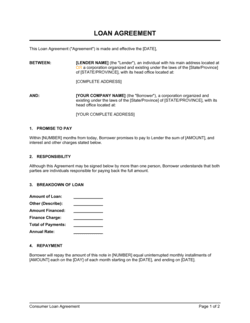
vs Loan Agreement

A standard loan agreement is a pure debt instrument intended to be repaid in cash with interest — there is no conversion mechanism or equity component. A convertible note is also debt, but its primary intended exit is conversion into equity rather than cash repayment. Use a loan agreement for traditional financing from banks or when the lender has no interest in equity participation.

vs Term Sheet (Seed Round)

A term sheet is a non-binding summary of the proposed investment terms — cap, discount, maturity, and investor rights — negotiated before the formal note is drafted. The convertible note agreement is the binding legal instrument that documents and enforces those terms. A term sheet precedes the note; it does not replace it.

vs Stock Purchase Agreement

A stock purchase agreement issues equity directly to the investor at a negotiated price in a priced round, requiring agreement on a company valuation at the time of investment. A convertible note defers valuation to a later date, making it faster and cheaper to close. Once a company reaches Series A, most investors prefer the clarity of a priced round and a stock purchase agreement over continued note issuance.

Industry-specific considerations

SaaS / Technology

Convertible notes are the dominant seed instrument in SaaS; valuation caps are set relative to ARR multiples, and pro rata rights protect early angels when Series A rounds close at high valuations.

Biotech / Life Sciences

Notes are used to bridge between grant funding and Series A; longer maturities of 24–36 months are standard given the extended clinical or regulatory timelines before a priced round is feasible.

Consumer / E-commerce

Friends-and-family rounds in consumer startups frequently use convertible notes with lower caps and higher discounts to reflect the higher execution risk at pre-revenue stages.

Fintech

Regulatory licensing requirements and longer go-to-market timelines mean fintech founders often need bridge notes between seed and Series A; change-of-control provisions are heavily negotiated given frequent acquisition activity.

Jurisdictional notes

United States

Convertible notes are securities under federal and state law. Most issuances rely on the Regulation D Rule 506(b) exemption, requiring a Form D filing with the SEC within 15 days of the first sale and limiting participation to accredited investors. State blue sky laws vary — some states, including New York and California, require separate notice filings. Interest rates must meet or exceed the IRS Applicable Federal Rate to avoid imputed interest treatment.

Canada

Convertible notes are regulated as securities under provincial securities legislation administered by the CSA. Most early-stage issuances rely on the accredited investor exemption or the offering memorandum exemption. Each province has its own filing requirements; Ontario, British Columbia, and Alberta have the most active startup ecosystems with established exemption frameworks. Quebec instruments must be compliant with the Autorité des marchés financiers (AMF) requirements.

United Kingdom

Convertible notes in the UK are typically structured as convertible loan notes and are subject to FCA financial promotions rules. Most early-stage issuances rely on the high-net-worth individual or sophisticated investor exemptions under the Financial Services and Markets Act 2000. SEIS/EIS tax relief schemes are widely used for early-stage UK investment but apply to equity instruments, not convertible notes — conversion timing may affect relief eligibility.

European Union

Convertible note structures are less standardized across EU member states than in the US or UK. Germany uses a Wandeldarlehen (convertible loan), France uses obligations convertibles, and the Netherlands uses a converteerbare lening — each with jurisdiction-specific formality and notarization requirements. The EU Prospectus Regulation exempts private placements to fewer than 150 investors per member state from full prospectus requirements. GDPR considerations apply to any investor data processed in connection with the agreement.

Template vs lawyer — what fits your deal?

PathBest forCostTime
Use the templatePre-seed founders raising under $250,000 from accredited angel investors on standard termsFree30–60 minutes per note
Template + legal reviewSeed rounds up to $500,000, notes with negotiated caps and discounts, or first-time founders$500–$1,500 for attorney review and markup2–5 business days
Custom draftedRaises over $500,000, institutional or VC participation, multi-jurisdiction issuance, or complex pro rata and information rights$2,000–$8,000+1–3 weeks

Glossary

Convertible Note
A short-term debt instrument that converts into equity at a future financing round rather than being repaid in cash.
Principal
The original loan amount the investor provides to the company under the note.
Valuation Cap
The maximum company valuation at which the note will convert into equity, giving early investors a lower price per share than later investors in the same round.
Discount Rate
A percentage reduction on the price per share at conversion, rewarding the noteholder for investing earlier than equity investors — typically 10–25%.
Qualified Financing
A future equity financing that meets a minimum size threshold defined in the note, triggering automatic conversion of the outstanding principal and accrued interest.
Maturity Date
The date by which the note must convert, be repaid, or be renegotiated if a qualified financing has not occurred.
Accrued Interest
Interest that accumulates on the principal over time and is typically added to the conversion amount rather than paid in cash.
Pre-Money Valuation
The company's agreed value immediately before a new investment round, used as the basis for calculating price per share at conversion.
Pro Rata Rights
A noteholder's contractual right to invest in subsequent financing rounds in proportion to their existing ownership, preventing dilution.
Change of Control
A transaction in which ownership or control of the company shifts — typically a merger, acquisition, or asset sale — that may trigger early repayment or conversion.
SAFE
Simple Agreement for Future Equity — a non-debt alternative to a convertible note that also defers valuation, but carries no interest rate or maturity date.

Part of your Business Operating System

This document is one of 3,000+ business & legal templates included in Business in a Box.

  • Fill-in-the-blanks — ready in minutes
  • 100% customizable Word document
  • Compatible with all office suites
  • Export to PDF and share electronically

Create your document in 3 simple steps.

From template to signed document — all inside one Business Operating System.
1
Download or open template

Access over 3,000+ business and legal templates for any business task, project or initiative.

2
Edit and fill in the blanks with AI

Customize your ready-made business document template and save it in the cloud.

3
Save, Share, Send, Sign

Share your files and folders with your team. Create a space of seamless collaboration.

Save time, save money, and create top-quality documents.

★★★★★

"Fantastic value! I'm not sure how I'd do without it. It's worth its weight in gold and paid back for itself many times."

Managing Director · Mall Farm
Robert Whalley
Managing Director, Mall Farm Proprietary Limited
★★★★★

"I have been using Business in a Box for years. It has been the most useful source of templates I have encountered. I recommend it to anyone."

Business Owner · 4+ years
Dr Michael John Freestone
Business Owner
★★★★★

"It has been a life saver so many times I have lost count. Business in a Box has saved me so much time and as you know, time is money."

Owner · Upstate Web
David G. Moore Jr.
Owner, Upstate Web

Run your business with a system — not scattered tools

Stop downloading documents. Start operating with clarity. Business in a Box gives you the Business Operating System used by over 250,000 companies worldwide to structure, run, and grow their business.

Free Forever Plan · No credit card required