1
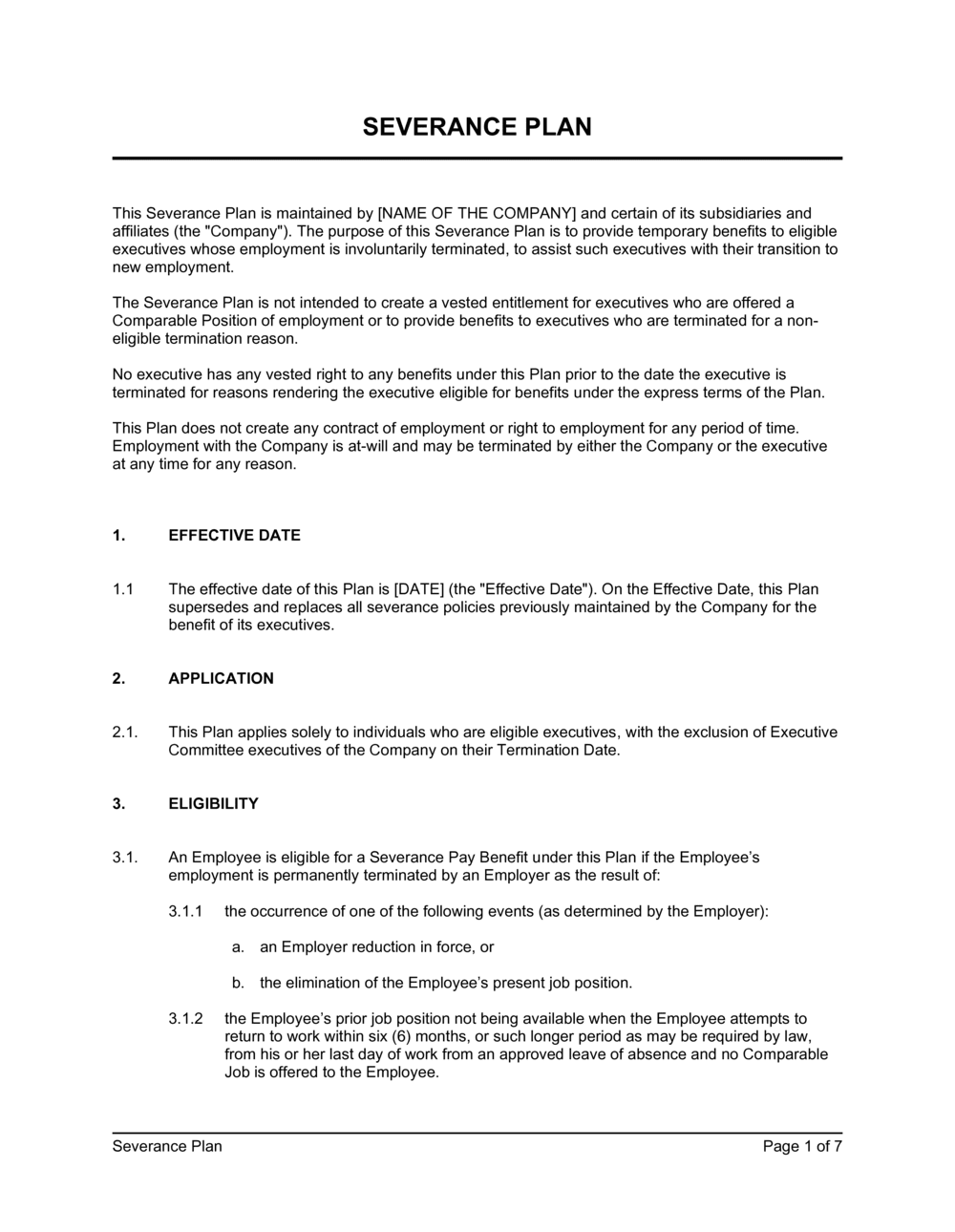
Define the plan's scope and effective date
Enter the company's legal name, the effective date of the plan, and the specific employee populations covered — full-time, part-time, or both. Explicitly list any groups excluded, such as contractors, interns, or employees with individual severance agreements.
💡 Add a version number and date to the document header so HR can track which version was in effect during any given separation event.
2
Set eligibility criteria and tenure minimums
Choose a minimum continuous service threshold — 90 days or 6 months is typical — and list all disqualifying termination types: for cause, resignation, retirement, and death. Cross-check against your employment agreements to avoid conflicting terms.
💡 If your company has multiple employee classifications, create a simple eligibility table by tier rather than lengthy prose — it reduces ambiguity and speeds up HR administration.
3
Write the severance benefit formula
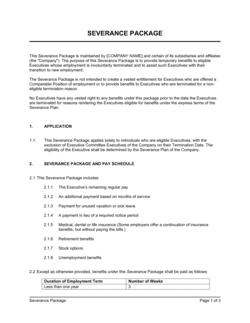
Choose a formula — weeks of base salary per year of service is most common — and set a floor and ceiling. Typical ranges: 1–2 weeks per year of service, minimum 2 weeks, maximum 26 weeks for non-executives.
💡 Define 'Base Salary' explicitly and exclude variable pay, benefits, and equity value. Ambiguity in this definition is the single most common source of severance disputes.
4
Specify the release requirement and timing
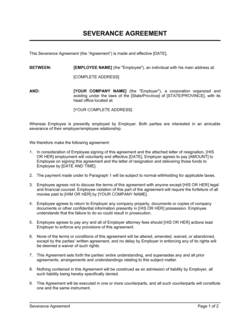
State that severance is conditioned on a signed release, the deadline for signing (21 days for individual separations, 45 days for group RIFs under the ADEA), and the 7-day revocation window for employees 40 and older.
💡 Reference your standard separation agreement template by name here so HR always uses the correct release form and doesn't draft one from scratch under time pressure.
5
Choose lump sum or salary continuation
Lump sums simplify administration and are preferred by most employees. Salary continuation preserves the company's ability to suspend payments if post-separation obligations are breached. Select one method and apply it consistently.
💡 If your plan covers executives separately, note that executive agreements often use salary continuation to maintain leverage over non-compete compliance.
6
Address benefits continuation and COBRA
Specify the last day of coverage for each benefit type, whether the company subsidizes COBRA premiums and for how long, and how retirement plan balances are handled. Confirm your COBRA administrator can operationalize the subsidy before including it.
💡 A 3-month COBRA subsidy is a low-cost benefit that significantly improves employee perception of the separation process and reduces the likelihood of litigation.
7
Document equity and bonus treatment
State explicitly what happens to unvested equity, any earned-but-unpaid bonus for a completed fiscal year, and pro-rated bonuses. Confirm these provisions are consistent with the language in your equity plan and offer letters.
💡 If you have multiple equity award types — RSUs, options, performance shares — address each one separately to avoid interpretation disputes.
8
Reserve amendment rights with a notice period
Include a provision that the company may amend or terminate the plan with at least 30 days' written notice, but that no amendment reduces benefits for employees already notified of their separation. Name the plan administrator.
💡 Store the executed plan in a central HR system with an annual review reminder — benefit formulas that were generous when written can become unintended liabilities as the workforce grows.