Severance Letter Template

Free Word download β€’ Edit online β€’ Save & share with Drive β€’ Export to PDF

1 pageβ€’20–25 min to fillβ€’Difficulty: Standard
Learn more ↓
FreeSeverance Letter Template

At a glance

What it is
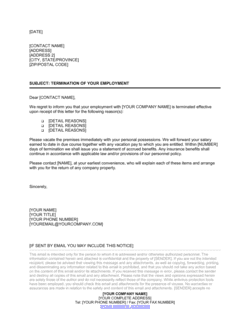
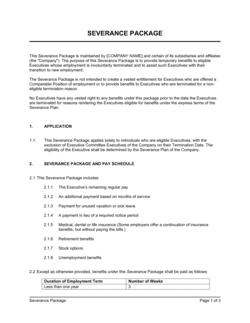
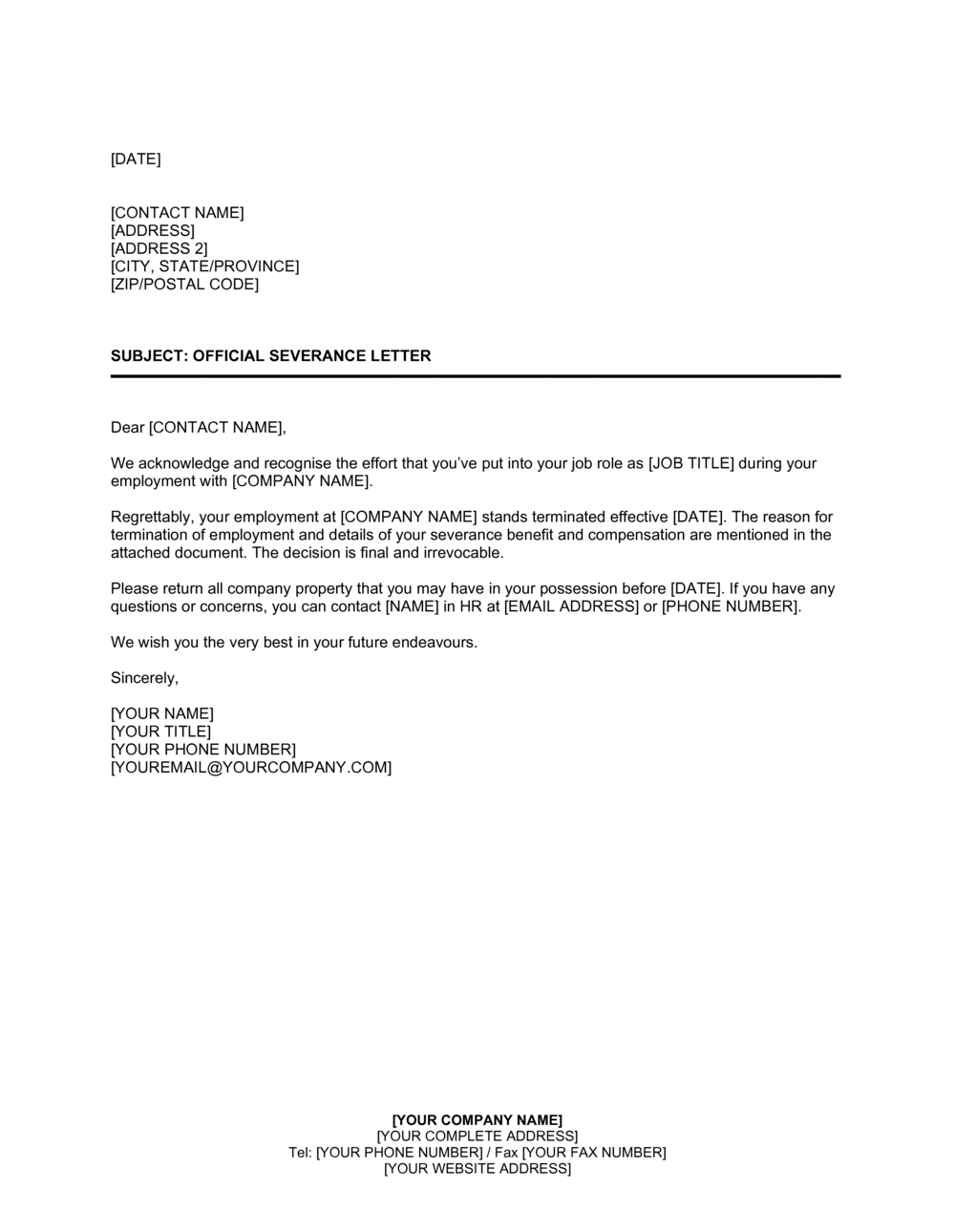
A Severance Letter is a formal written notice an employer sends to an employee being terminated, summarizing the severance package and the conditions attached to it. This free Word download gives you a structured, professionally worded template you can edit online and export as PDF to deliver to departing employees in a consistent, documented way.
When you need it
Use it any time you terminate an employee without cause β€” through a layoff, restructuring, or position elimination β€” and offer severance pay or benefits continuation in exchange. It is also appropriate when closing out a fixed-term role early with a negotiated settlement.
What's inside
Date and recipient details, a clear statement of termination and effective date, severance pay formula and total amount, benefits continuation terms, return-of-property instructions, a reference to any release agreement required to receive payment, and signature block.

What is a Severance Letter?

A Severance Letter is a formal written notice issued by an employer to an employee being terminated without cause β€” typically through a layoff, position elimination, or organizational restructuring β€” that summarizes the severance package the company is offering and the conditions attached to it. It identifies the termination date, states the severance pay amount and formula, describes benefits continuation, and references any release of claims the employee must sign to receive payment. Unlike a bare termination notice, a severance letter creates a clear, documented record of what was offered, reducing the likelihood of disputes about the terms of departure.

Why You Need This Document

Ending an employment relationship without a written severance letter leaves both parties exposed. Employees who receive only a verbal offer frequently misremember the terms β€” or dispute them entirely β€” once the emotion of the meeting has passed. Employers who cannot produce a written record of what was offered and when have no reliable basis to enforce a release of claims or defend against a wrongful termination complaint. A properly drafted severance letter also ensures that time-sensitive legal requirements β€” such as the 21-day ADEA review period for employees aged 40 and over β€” are documented and met, protecting the validity of any waiver the employee signs. This template gives you a professionally structured starting point that covers every material component of the severance notice, so you can focus on managing the conversation rather than constructing the paperwork from scratch.

Which variant fits your situation?

If your situation is…Use this template
Terminating an employee as part of a mass layoffLayoff Termination Letter
Dismissing an employee for cause with no severance offeredEmployee Dismissal Letter
Formalizing the full legal release tied to the severance paymentSeverance Agreement
Notifying the employee of their last working day during notice periodTermination Notice Letter
Accepting a voluntary resignation while offering a severance incentiveVoluntary Separation Agreement
Issuing a final pay summary with accrued PTO and deductionsFinal Paycheck Letter
Confirming post-employment reference and recommendation termsEmployment Reference Letter

Common mistakes to avoid

❌ Paying severance before the release is signed

Why it matters: Once the money is paid, the employee has little incentive to sign the release β€” and the employer has lost all leverage to obtain a waiver of claims.

Fix: State clearly in the letter that severance is contingent on execution of the release, and hold payment until the revocation period (typically 7 days) has expired.

❌ Omitting accrued PTO from the final pay statement

Why it matters: In many US states and Canadian provinces, accrued vacation is treated as earned wages β€” failing to pay it is a wage violation that a release of claims cannot waive.

Fix: Calculate the exact PTO balance as of the termination date, state the dollar amount in the letter, and include it in the final paycheck regardless of whether it is mentioned in the release.

❌ Mixing termination-for-cause language with a severance offer

Why it matters: Including performance issues or misconduct references alongside a severance offer creates contradictory documentation that undermines both the business reason for termination and the validity of the release.

Fix: Use a clean position-elimination or restructuring rationale in the severance letter. If there are performance concerns, address them in a separate documented process β€” not here.

❌ Setting a release deadline that violates the ADEA review period

Why it matters: Employees aged 40 and over are entitled to 21 days to review a release under the Older Workers Benefit Protection Act, and 45 days in a group reduction. A shorter deadline voids the age-discrimination waiver.

Fix: Default to 21 days for individual separations and 45 days for any group termination that includes employees 40 or older, and state the deadline explicitly in the letter.

The 10 key clauses, explained

Date, sender, and recipient block

In plain language: States the date the letter is issued, the employer's name and address, and the employee's full name, job title, and address.

Sample language
[DATE] | [COMPANY NAME] | [ADDRESS] | Dear [EMPLOYEE FULL NAME],

Common mistake: Using the employee's informal nickname instead of their legal name as it appears on payroll records β€” this creates a mismatch with the release agreement signed later.

Statement of termination and effective date

In plain language: Clearly states that employment is ending, the reason category (position elimination, restructuring, or layoff β€” not cause), and the exact last day.

Sample language
This letter confirms that your employment with [COMPANY NAME] as [JOB TITLE] will end effective [DATE] due to [position elimination / restructuring].

Common mistake: Using ambiguous language like 'we are parting ways' instead of explicitly stating termination. Vague language creates disputes about whether the separation was voluntary or involuntary.

Severance pay amount and payment schedule

In plain language: States the total severance amount, how it was calculated, and when and how it will be paid β€” lump sum or installments.

Sample language
You will receive a severance payment of $[AMOUNT], equivalent to [X] weeks of your base salary of $[WEEKLY RATE], paid as a [lump sum on DATE / bi-weekly over X weeks].

Common mistake: Omitting the calculation basis. If the employee later disputes the amount, a letter that states only the total β€” not the formula β€” is harder to defend.

Benefits continuation terms

In plain language: Describes what happens to health, dental, vision, and any other benefits after the termination date, including COBRA election instructions if applicable.

Sample language
Your health benefits will continue through [DATE]. You will receive COBRA election paperwork from [CARRIER / ADMINISTRATOR] within 14 days of your termination date.

Common mistake: Promising to pay COBRA premiums in the letter without confirming the financial commitment in the release agreement β€” creating an untracked obligation.

Accrued PTO and final pay

In plain language: Confirms the payout of any unused vacation or PTO balance owed at termination and when the final paycheck will be issued.

Sample language
Your final paycheck, including [X] hours of accrued, unused vacation valued at $[AMOUNT], will be issued on [DATE] via [direct deposit / mail].

Common mistake: Omitting the accrued PTO payout in states or provinces where it is legally required β€” exposing the company to a wage claim even after the release is signed.

Return of company property

In plain language: Lists items the employee must return β€” laptop, access cards, documents, and credentials β€” and the deadline for returning them.

Sample language
Please return all company property, including your laptop ([SERIAL NUMBER]), access badge, and any confidential documents, to [CONTACT NAME] by [DATE].

Common mistake: Not specifying a return deadline or method. Without one, employees retain equipment indefinitely and the employer has no documented basis to withhold the final paycheck in states that permit it.

Confidentiality and non-disparagement reminder

In plain language: Reminds the employee that existing confidentiality and non-disparagement obligations survive termination, referencing the original employment agreement.

Sample language
Your confidentiality and non-disparagement obligations under your [Employment Agreement / Offer Letter] dated [DATE] remain in full force following your separation.

Common mistake: Attempting to introduce new confidentiality obligations in the severance letter that were not in the original agreement β€” these are unenforceable without fresh consideration.

Release agreement requirement

In plain language: States that receipt of the severance payment is contingent on the employee signing a separate release of claims, and sets the deadline for doing so.

Sample language
Payment of the above severance is contingent upon your execution of the attached Separation and Release Agreement no later than [DATE], which is [21 / 45] days from the date of this letter.

Common mistake: Paying severance before the release is signed and the revocation period has passed β€” making it nearly impossible to enforce the release if the employee later files a claim.

Outplacement and transition support

In plain language: Describes any career transition assistance the company is offering β€” resume coaching, job search support, or LinkedIn recommendation β€” as part of the package.

Sample language
As part of your severance package, [COMPANY NAME] will provide [X months] of outplacement services through [PROVIDER NAME] at no cost to you.

Common mistake: Offering outplacement verbally but not including it in the letter. Verbal commitments made during a termination meeting are frequently disputed and difficult to enforce without written confirmation.

Closing and signature block

In plain language: A professional closing statement wishing the employee well, followed by the authorized signatory's name, title, and signature.

Sample language
We thank you for your contributions to [COMPANY NAME] and wish you every success. | Sincerely, | [AUTHORIZED SIGNATORY NAME] | [TITLE] | [COMPANY NAME]

Common mistake: Having an unauthorized person sign the letter β€” such as a direct manager instead of an HR director or executive β€” which can expose the company to arguments that the terms were not formally authorized.

How to fill it out

  1. 1

    Enter the date and both parties' details

    Add today's date, the company's legal name and address, and the employee's full legal name, job title, and address at the top of the letter.

    πŸ’‘ Use the employee's name exactly as it appears in their employment file β€” this ensures it matches the release agreement they will sign.

  2. 2

    State the termination reason and effective date

    Clearly identify the reason category β€” position elimination, restructuring, or workforce reduction β€” and enter the exact last day of employment.

    πŸ’‘ Avoid blending performance language into a position-elimination letter. Mixing reasons creates legal ambiguity and can undermine a release of claims.

  3. 3

    Calculate and confirm the severance amount

    Enter the total severance figure, the formula used (e.g., 2 weeks per year of service), and whether it will be paid as a lump sum or in installments aligned to regular payroll.

    πŸ’‘ Check your employment agreement or company policy first β€” a contractual severance obligation supersedes whatever you enter here.

  4. 4

    Describe benefits continuation and COBRA

    State the exact date benefits end and whether the company will cover any portion of COBRA premiums. Reference the COBRA election packet the employee will receive.

    πŸ’‘ Confirm with your benefits administrator the exact benefits end date before drafting β€” it is often the last day of the month in which termination occurs, not the termination date itself.

  5. 5

    List accrued PTO and final paycheck details

    Calculate any unused PTO balance, state the dollar value, and confirm the date and method of the final paycheck delivery.

    πŸ’‘ Verify your state or province's rules on PTO payout β€” some jurisdictions require it regardless of company policy; omitting it creates a wage claim risk.

  6. 6

    Specify property return requirements and deadline

    List each item of company property the employee must return, the name of the person to return it to, and the return deadline.

    πŸ’‘ Include device serial numbers or asset tags where possible β€” this removes any dispute about which specific items were covered.

  7. 7

    Set the release agreement deadline and attach it

    State the number of days the employee has to review and sign the release (21 days for most employees; 45 days for ADEA group reductions), and attach the release as a separate document.

    πŸ’‘ Do not staple or merge the release into the severance letter itself β€” they serve different legal functions and should be signed separately.

  8. 8

    Have an authorized signatory sign the letter

    Confirm that the HR director, CEO, or another officer with authority to bind the company signs the letter before delivery.

    πŸ’‘ Deliver the letter in person where possible, and follow up immediately with an emailed PDF copy to create a documented delivery timestamp.

Frequently asked questions

What is a severance letter?

A severance letter is a formal written notice from an employer to a terminated employee that summarizes the severance package being offered β€” including pay amount, benefits continuation, and any conditions such as signing a release of claims. It creates a written record of the terms and serves as a reference document throughout the offboarding process.

Is a severance letter the same as a severance agreement?

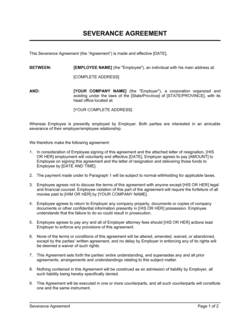
No. A severance letter describes the package and the conditions attached to it; a severance agreement is the binding legal document the employee signs to waive claims in exchange for the payment. The letter typically accompanies the agreement as a plain-language summary. Both documents are usually delivered at the same time, but they serve different functions.

Does an employer have to offer severance?

In the US, there is no federal law requiring severance pay. However, if an employment contract, offer letter, or company policy promises severance, those terms are legally binding. In Canada and the UK, statutory notice or termination pay is required by law regardless of whether a written severance offer is made. Always check the applicable employment standards legislation for the employee's work location.

What is a typical severance formula?

The most common formula in North America is one to two weeks of base salary per year of service, with a floor of two to four weeks for shorter-tenure employees. Executives and senior managers often negotiate one to three months per year of service. The formula should be stated explicitly in the letter alongside the total dollar amount to prevent disputes.

Does the employee need to sign the severance letter?

The severance letter itself does not typically require the employee's signature β€” it is a notice, not a contract. The employee's signature is collected on the separate release of claims agreement, which is the legally binding document. Some employers include an acknowledgment line on the letter for receipt confirmation, but this does not constitute acceptance of terms.

How long does an employee have to review a severance offer?

Under US federal law (ADEA/OWBPA), employees aged 40 and over must be given at least 21 days to review an individual severance offer, and 45 days when the offer is part of a group reduction. Employees also have 7 days after signing to revoke their acceptance. Shorter review periods void the waiver of age-discrimination claims. There is no mandated review period for employees under 40, though 5 to 10 business days is standard practice.

Can a severance letter include a non-compete clause?

A severance letter can reference an existing non-compete from the employee's original employment agreement, reminding them the obligation survives termination. It should not attempt to introduce a new non-compete β€” that requires fresh consideration and a signed agreement, not a unilateral notice. In jurisdictions that ban or limit post-employment non-competes, even reminder language should be reviewed carefully.

What happens if the employee refuses to sign the release?

If the release is not signed within the stated deadline, the employer is generally not obligated to pay the discretionary severance amount. Any wages earned, accrued PTO owed by law, and statutory notice pay must still be paid regardless. The employer should document the refusal and confirm in writing that the severance offer has lapsed.

Should the severance letter mention COBRA?

Yes. Employees often have immediate questions about health coverage after receiving a termination notice. Including a brief statement of the benefits end date and confirming that COBRA election paperwork will arrive within 14 days reduces follow-up questions and demonstrates good-faith administration of the termination process.

How this compares to alternatives

vs Severance Agreement

A severance agreement is the binding legal contract the employee signs to waive claims in exchange for the severance payment. A severance letter is the plain-language notice that describes what is being offered and under what conditions. The two documents are typically delivered together β€” the letter summarizes terms the agreement formalizes.

vs Employee Dismissal Letter

A dismissal letter terminates employment for cause β€” misconduct, gross negligence, or a serious policy violation β€” with no severance obligation. A severance letter applies to involuntary separations without cause, such as layoffs or position eliminations, where a payment is offered. Using a dismissal letter format when severance is being offered sends contradictory signals to the employee and their counsel.

vs Layoff Termination Letter

A layoff termination letter notifies the employee that their position is being eliminated and their employment is ending. A severance letter goes further by detailing the specific financial package attached to that separation. In many offboardings, both documents are issued together β€” the layoff letter announces the decision, the severance letter describes the terms.

vs Termination Letter

A general termination letter closes the employment relationship but does not specify any post-separation payment. A severance letter is used specifically when the employer is offering compensation beyond final wages β€” creating a documented record of the offer and the conditions (typically a signed release) required to receive it.

Industry-specific considerations

Technology / SaaS

Layoffs during funding gaps or post-acquisition restructuring often involve simultaneous batch severance letters with equity vesting acceleration referenced separately.

Financial Services

Regulatory licensing and FINRA registration obligations must be addressed at termination, and the severance letter often coordinates the U5 filing timeline with the offboarding notice.

Retail / Hospitality

High-volume seasonal workforce reductions require standardized severance letters that can be issued at scale while still meeting state-specific final-pay timing requirements.

Professional Services

Client non-solicitation reminders are particularly important in professional services severance letters, where departing employees have direct relationships with billable clients.

Template vs pro β€” what fits your needs?

PathBest forCostTime
Use the templateHR teams and small business owners issuing standard layoff or restructuring severance noticesFree15–20 minutes per letter
Template + professional reviewCompanies conducting group reductions involving employees aged 40 or over, or any termination with non-compete or IP concerns$200–$500 for an employment attorney review1–2 days
Custom draftedExecutive separations with equity, golden parachute provisions, or material litigation risk$1,000–$3,000+3–7 days

Glossary

Severance Pay
A lump sum or series of payments made by an employer to a terminated employee, typically calculated as a number of weeks' salary per year of service.
Effective Termination Date
The specific calendar date on which the employment relationship legally ends and the employee's duties and access cease.
COBRA Continuation
A US federal provision allowing terminated employees to continue employer-sponsored health insurance coverage at their own expense for up to 18 months.
Mutual Release
A legal provision in which both employer and employee agree to waive all claims against each other as a condition of receiving the severance payment.
WARN Act
The US Worker Adjustment and Retraining Notification Act, which requires employers with 100+ employees to give 60 days' advance notice of mass layoffs or plant closings.
Garden Leave
A notice period during which the terminated employee is paid but excused from performing duties and prohibited from starting new employment.
Non-Disparagement Clause
A provision prohibiting either party from making negative public statements about the other following the termination.
Accrued PTO Payout
Payment of unused paid time off owed to the employee at termination, which is legally required in many US states and Canadian provinces.
Outplacement Services
Career transition support β€” such as resume coaching, job search assistance, and interview preparation β€” offered as part of a severance package.
Release of Claims
A written agreement in which the employee surrenders the right to sue the employer for claims arising from the employment or its termination, in exchange for the severance benefit.

Part of your Business Operating System

This document is one of 3,000+ business & legal templates included in Business in a Box.

  • Fill-in-the-blanks β€” ready in minutes
  • 100% customizable Word document
  • Compatible with all office suites
  • Export to PDF and share electronically

Create your document in 3 simple steps.

From template to signed document β€” all inside one Business Operating System.
1
Download or open template

Access over 3,000+ business and legal templates for any business task, project or initiative.

2
Edit and fill in the blanks with AI

Customize your ready-made business document template and save it in the cloud.

3
Save, Share, Send, Sign

Share your files and folders with your team. Create a space of seamless collaboration.

Save time, save money, and create top-quality documents.

β˜…β˜…β˜…β˜…β˜…

"Fantastic value! I'm not sure how I'd do without it. It's worth its weight in gold and paid back for itself many times."

Managing Director Β· Mall Farm
Robert Whalley
Managing Director, Mall Farm Proprietary Limited
β˜…β˜…β˜…β˜…β˜…

"I have been using Business in a Box for years. It has been the most useful source of templates I have encountered. I recommend it to anyone."

Business Owner Β· 4+ years
Dr Michael John Freestone
Business Owner
β˜…β˜…β˜…β˜…β˜…

"It has been a life saver so many times I have lost count. Business in a Box has saved me so much time and as you know, time is money."

Owner Β· Upstate Web
David G. Moore Jr.
Owner, Upstate Web

Run your business with a system β€” not scattered tools

Stop downloading documents. Start operating with clarity. Business in a Box gives you the Business Operating System used by over 250,000 companies worldwide to structure, run, and grow their business.

Start freeΒ Β·Β No credit card required