How to Create a Performance Improvement Plan

Free Word download β€’ Edit online β€’ Save & share with Drive β€’ Export to PDF

2 pagesβ€’20–25 min to fillβ€’Difficulty: Standard
Learn more ↓
FreeHow to Create a Performance Improvement Plan Template

At a glance

What it is
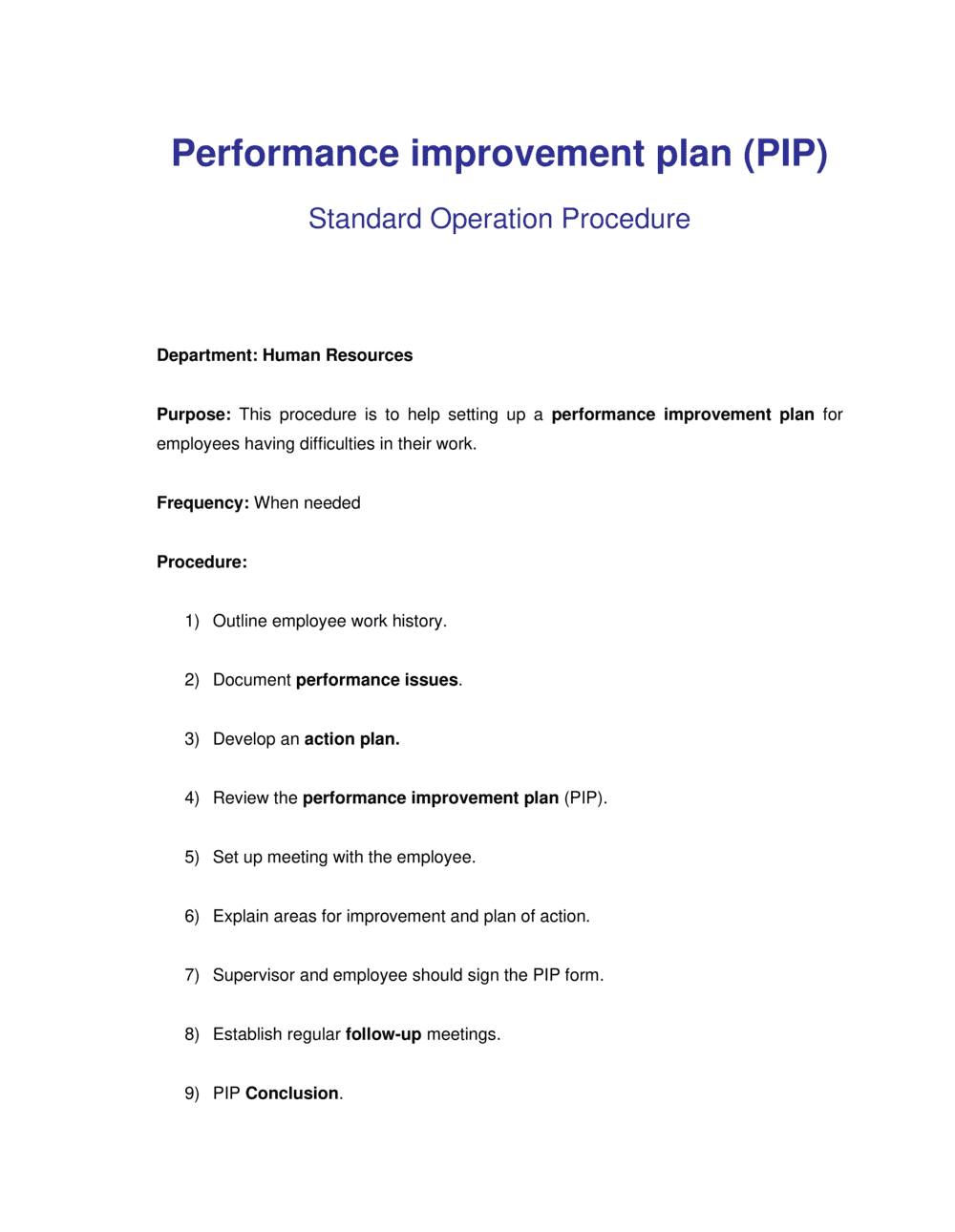
A Performance Improvement Plan (PIP) is a formal operational document that defines specific performance gaps for an employee, sets measurable goals to close those gaps, establishes a defined timeline, and records the support and resources the employer will provide. This free Word download gives managers and HR teams a structured starting point they can edit online and export as PDF for documentation and employee acknowledgment.
When you need it
Use it when an employee is consistently missing performance expectations and informal coaching has not produced the required improvement. A PIP is also appropriate before initiating a termination process where documented corrective action is expected.
What's inside
Employee and role details, a description of the performance issue, specific measurable improvement goals, a timeline with checkpoint dates, available support and resources, consequences of non-compliance, and an acknowledgment signature block.

What is a Performance Improvement Plan?

A Performance Improvement Plan (PIP) is a formal operational document that identifies specific, measurable gaps between an employee's current performance and the expectations of their role, sets time-bound goals to close those gaps, and commits the employer to providing defined support and resources during a structured review period. Unlike an informal coaching conversation or a routine performance review, a PIP creates a written record of the performance issue, the corrective path, and the consequences of non-compliance β€” making it both a management tool and a legal document. Most PIPs run 30, 60, or 90 days, depending on the complexity of the improvement required.

Why You Need This Document

Addressing underperformance without a written plan exposes the business to two simultaneous risks: the performance issue goes unresolved because expectations were never made explicit, and any resulting termination lacks the documented corrective-action record that courts, tribunals, and HR audits expect to see. A properly completed PIP closes both gaps. It gives the employee a fair, unambiguous opportunity to succeed by converting vague dissatisfaction into specific, measurable goals β€” and it gives the employer a dated, signed record demonstrating that the performance issue was identified, communicated, and managed through a structured process before any adverse employment decision was made. This template provides the structure managers need to move from frustration to documented action in under an hour.

Which variant fits your situation?

If your situation is…Use this template
Addressing a sales representative missing quota targetsSales Performance Improvement Plan
Improving attendance and punctuality issuesAttendance Improvement Plan
Coaching a new hire struggling in their first 90 days30-60-90 Day Plan
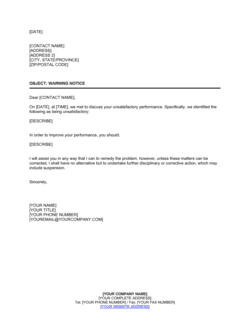
Documenting an informal verbal warning before escalating to a PIPEmployee Warning Notice
Conducting the review meeting that precedes the PIPPerformance Review Form
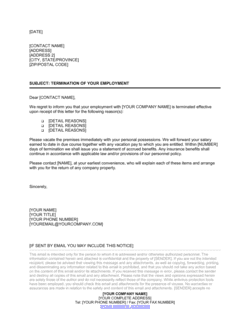
Closing the PIP with a formal outcome decisionEmployee Termination Letter
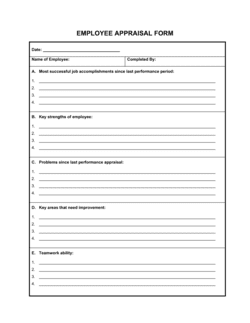
Managing team-wide performance expectations proactivelyPerformance Appraisal Form

Common mistakes to avoid

❌ Using subjective language in the performance description

Why it matters: Phrases like 'bad attitude' or 'poor teamwork' cannot be measured or verified, and they expose the employer to claims of bias or pretextual discipline.

Fix: Replace every characterization with a specific, dated, observable behavior β€” for example, 'missed 4 of 6 project deadlines between January and March' instead of 'does not manage time well.'

❌ Issuing the PIP without prior informal coaching on record

Why it matters: A PIP that arrives without any prior documented feedback appears punitive rather than corrective, and reduces the employee's realistic chance of success.

Fix: Document at least two informal coaching conversations in the employee's file before issuing a formal PIP, noting dates, topics discussed, and agreed next steps.

❌ Setting unmeasurable improvement goals

Why it matters: Goals like 'improve communication' or 'be more proactive' have no clear success threshold, making it impossible to determine objectively whether the PIP was completed.

Fix: Rewrite every goal using the SMART framework β€” include a specific metric, a target number or observable outcome, and a deadline.

❌ Skipping the employer support section

Why it matters: A PIP that demands improvement without offering any resources appears designed to fail, and employment tribunals in many jurisdictions have voided terminations on this basis.

Fix: List at least two concrete support commitments β€” a training course, coaching sessions with specific frequency, or access to a named resource β€” and follow through on each one.

❌ Failing to document checkpoint meetings

Why it matters: Undocumented checkpoints leave no evidence that the employer actively managed the improvement process, weakening the corrective-action record significantly.

Fix: Write a brief summary note after every checkpoint meeting and email it to yourself and HR the same day, then file it with the original PIP.

❌ Presenting the PIP as a surprise with no prior performance conversation

Why it matters: An employee who has never received feedback on the issue being addressed is unlikely to succeed on the PIP, and may successfully argue the process was procedurally unfair.

Fix: Ensure the performance issue has been raised in at least one prior formal review or documented coaching session before the PIP is issued.

The 8 key sections, explained

Employee and Role Information

Description of Performance Issues

Improvement Goals and Success Criteria

Timeline and Duration

Support and Resources Provided

Checkpoint Schedule

Consequences of Non-Compliance

Employee Acknowledgment

How to fill it out

  1. 1

    Gather documented evidence of the performance gap

    Before opening the template, compile all supporting documentation β€” performance reviews, output data, missed deadlines, attendance records, or prior coaching notes. The PIP must reference specific, dated incidents.

    πŸ’‘ If you cannot point to at least two documented instances of the performance issue, the PIP may be premature β€” continue informal coaching and document those conversations first.

  2. 2

    Complete the employee and role information block

    Enter the employee's full legal name, exact job title, department, your name as manager, and today's date as the issue date. These fields anchor the document to a specific employment record.

    πŸ’‘ Use the same name and title format that appears on the employee's employment contract or most recent performance review to avoid discrepancies.

  3. 3

    Write the performance issue description using observable facts

    Describe the gap between expected and actual performance using measurable data. Reference specific dates, output numbers, and incidents. Avoid opinion, characterizations, or comparisons to other employees.

    πŸ’‘ Read the description aloud and ask: 'Could this sentence be challenged as subjective?' If yes, replace it with a specific, documented fact.

  4. 4

    Set two to four SMART improvement goals

    Write each goal as a specific, measurable outcome with a clear success threshold and a deadline within the PIP period. Goals should address the root of the performance issue, not peripheral symptoms.

    πŸ’‘ Align goals directly to the job description or role scorecard β€” this makes it harder to dispute that the expectations are fair or relevant.

  5. 5

    Define the timeline and checkpoint dates

    Choose a PIP duration of 30, 60, or 90 days based on how complex the required improvement is. Set at least two formal checkpoint dates within the period and record them on the form.

    πŸ’‘ Schedule checkpoints in calendar invites at the same time you issue the PIP so they cannot be overlooked or deprioritized.

  6. 6

    List the specific support resources the employer will provide

    Enter every concrete commitment you are making β€” training program names, coaching frequency, tool access, or workload adjustments. Be specific enough that a third party could verify whether each commitment was fulfilled.

    πŸ’‘ Providing meaningful support is not only fair β€” it is the single most important factor in defending a termination if the PIP outcome is challenged.

  7. 7

    Deliver the plan in a private meeting and allow time for questions

    Present the PIP in a private, in-person or video meeting with HR present. Walk through each section, allow the employee to ask questions, and offer them time to review before signing.

    πŸ’‘ Document the delivery meeting date, attendees, and the employee's initial response in a brief follow-up email to yourself for the personnel file.

  8. 8

    Document each checkpoint and the final outcome

    After each checkpoint meeting, write a brief summary of what was discussed, the employee's current progress against each goal, and any changes to support. At the end of the PIP period, record the formal outcome β€” met, partially met, or not met.

    πŸ’‘ File checkpoint notes and the outcome decision in the employee's personnel file alongside the signed PIP. This package is your complete record if the decision is later reviewed.

Frequently asked questions

What is a performance improvement plan?

A performance improvement plan (PIP) is a formal written document that identifies specific performance deficiencies for an employee, sets measurable goals for improvement, defines a timeline β€” typically 30, 60, or 90 days β€” and records the support the employer will provide. It serves as both a corrective tool for genuine improvement and a documented record that the employer followed a fair process before making a termination decision.

When should a manager issue a performance improvement plan?

Issue a PIP when an employee is consistently missing clear, documented performance expectations and informal coaching has not produced the required change. A PIP is not appropriate as a first response to a single incident β€” it follows a pattern of underperformance that has been raised with the employee at least once before. It is also used before initiating a termination where documented corrective action is expected by HR or legal counsel.

Does a performance improvement plan always lead to termination?

No β€” a well-designed PIP is a genuine opportunity for the employee to improve and retain their position. Many employees successfully complete PIPs and go on to meet role expectations. However, if the employee does not meet the defined goals by the end of the PIP period, the documented outcome supports a termination decision that is procedurally defensible. The purpose of the plan determines the outcome.

How long should a performance improvement plan last?

Most PIPs run 30, 60, or 90 days. A 30-day plan suits straightforward, measurable issues β€” such as missing a clear output target. A 60- or 90-day plan is appropriate for skill gaps that require training or behavior changes that take time to demonstrate. Setting a timeline that is too short for the improvement to realistically occur signals that the plan is not a genuine corrective effort.

Does the employee have to sign the performance improvement plan?

The employee's signature confirms receipt and understanding of the document β€” it does not mean they agree with the assessment. If an employee refuses to sign, note the refusal in writing, have a witness present, and file the unsigned plan with a note recording the refusal. The document is still valid as part of the personnel record.

What should I do if the employee claims the PIP is unfair?

Listen to the employee's concerns in the delivery meeting and document what they said. If they raise factual errors, investigate and correct them before finalizing the plan. If they dispute the assessment but the documentation supports it, note their objection, provide a copy of the supporting evidence, and proceed. Encourage them to submit a written response to be filed alongside the PIP in their personnel record.

What happens at the end of the performance improvement plan period?

At the final checkpoint, review the employee's performance against each goal's success criteria and make a formal decision: the plan was met (employee returns to standard performance management), partially met (plan extended with revised goals), or not met (further disciplinary action, up to termination). Document the outcome in writing and file it with the original PIP and all checkpoint notes.

Can a PIP be used for remote employees?

Yes β€” the structure is identical for remote workers. Use output-based metrics (deliverables completed, response times, quality scores) rather than presence-based ones. Schedule checkpoint meetings by video with camera on, and send a written summary of each meeting to the employee's work email immediately afterward to create a timestamped record.

Is a performance improvement plan legally required before termination?

In the US, no federal law mandates a PIP before termination for at-will employees. However, company policy, collective bargaining agreements, or specific state laws may require it. In Canada and the UK, courts and tribunals weigh whether the employer followed a fair process β€” a documented PIP is strong evidence that they did. Always check your employee handbook and applicable jurisdiction before skipping the process.

How this compares to alternatives

vs Employee Warning Notice

A warning notice is a shorter, less structured document that formally records a single performance or conduct incident. A PIP is a multi-week corrective plan with goals, timelines, and support commitments. A warning notice typically precedes a PIP in a progressive discipline sequence β€” the notice raises the issue formally; the PIP structures the path to resolution.

vs Performance Review Form

A performance review is a periodic assessment of an employee's overall contribution across all dimensions of their role. A PIP is a focused corrective document addressing a specific, documented gap. A performance review may identify the gap that triggers a PIP, but the two documents serve different functions and are filed separately.

vs Employee Termination Letter

A termination letter closes the employment relationship and documents the reason for separation. A PIP precedes termination as the corrective step β€” the termination letter is issued only if the PIP goals are not met. Issuing a termination letter without a prior PIP (where policy or law requires one) creates procedural and legal exposure.

vs 30-60-90 Day Plan

A 30-60-90 day plan is a proactive onboarding and ramp-up tool used when a new hire joins or a role changes β€” it sets expectations, not corrective goals. A PIP is reactive, addressing an established underperformance pattern. Using a 30-60-90 plan for a struggling new hire in their first 90 days is appropriate; once the probationary period ends and the gap persists, a PIP is the correct instrument.

Industry-specific considerations

Technology / SaaS

PIPs for engineers focus on code-review scores, ticket close rates, and sprint completion percentages rather than subjective quality assessments.

Retail / Hospitality

High employee turnover means PIPs must be completed quickly β€” 30-day plans are standard, with goals tied to customer satisfaction scores, upsell rates, or attendance records.

Financial Services

Regulated roles require that PIP documentation meets compliance recordkeeping standards, and HR must coordinate with legal before issuing plans to licensed staff.

Professional Services

Billable utilization rates, client feedback scores, and deadline adherence provide objective metrics that make PIP goals concrete and defensible.

Template vs pro β€” what fits your needs?

PathBest forCostTime
Use the templateManagers and HR teams issuing standard PIPs for non-executive employees in straightforward underperformance situationsFree30–60 minutes to complete per employee
Template + professional reviewPIPs for senior employees, roles with employment contracts, or situations with prior discrimination or harassment complaints on file$200–$500 for an HR consultant or employment lawyer review1–2 days
Custom draftedExecutive-level PIPs, unionized workforces, or complex cross-jurisdictional employment situations$500–$2,000 for employment counsel3–7 days

Glossary

Performance Improvement Plan (PIP)
A formal written document that identifies an employee's performance deficiencies, sets measurable improvement goals, and defines a timeline and support structure for achieving them.
Performance Gap
The measurable difference between the level of performance expected in a role and the actual level the employee is currently delivering.
SMART Goals
Goals that are Specific, Measurable, Achievable, Relevant, and Time-bound β€” the standard framework for writing PIP objectives.
Checkpoint Meeting
A scheduled progress review between the manager and employee during the PIP period to assess improvement and provide feedback.
At-Cause Termination
Ending employment for documented reasons such as sustained underperformance or policy violations β€” a completed PIP provides supporting documentation.
Corrective Action
A structured employer response to employee performance or conduct issues, ranging from verbal warnings to formal PIPs to termination.
Acknowledgment Signature
The employee's signature confirming they have received and understood the PIP β€” it does not mean they agree with the assessment.
Performance Metrics
Quantifiable indicators used to measure whether an employee's performance meets role expectations, such as output volume, error rate, or sales quota attainment.
Probationary Period
A defined initial period of employment during which performance is closely monitored β€” a PIP during probation typically has a shorter timeline.
Progressive Discipline
A graduated approach to employee conduct or performance issues, escalating from informal coaching to written warning, PIP, and ultimately termination if improvement does not occur.

Part of your Business Operating System

This document is one of 3,000+ business & legal templates included in Business in a Box.

  • Fill-in-the-blanks β€” ready in minutes
  • 100% customizable Word document
  • Compatible with all office suites
  • Export to PDF and share electronically

Create your document in 3 simple steps.

From template to signed document β€” all inside one Business Operating System.
1
Download or open template

Access over 3,000+ business and legal templates for any business task, project or initiative.

2
Edit and fill in the blanks with AI

Customize your ready-made business document template and save it in the cloud.

3
Save, Share, Send, Sign

Share your files and folders with your team. Create a space of seamless collaboration.

Save time, save money, and create top-quality documents.

β˜…β˜…β˜…β˜…β˜…

"Fantastic value! I'm not sure how I'd do without it. It's worth its weight in gold and paid back for itself many times."

Managing Director Β· Mall Farm
Robert Whalley
Managing Director, Mall Farm Proprietary Limited
β˜…β˜…β˜…β˜…β˜…

"I have been using Business in a Box for years. It has been the most useful source of templates I have encountered. I recommend it to anyone."

Business Owner Β· 4+ years
Dr Michael John Freestone
Business Owner
β˜…β˜…β˜…β˜…β˜…

"It has been a life saver so many times I have lost count. Business in a Box has saved me so much time and as you know, time is money."

Owner Β· Upstate Web
David G. Moore Jr.
Owner, Upstate Web

Run your business with a system β€” not scattered tools

Stop downloading documents. Start operating with clarity. Business in a Box gives you the Business Operating System used by over 250,000 companies worldwide to structure, run, and grow their business.

Free Forever PlanΒ Β·Β No credit card required