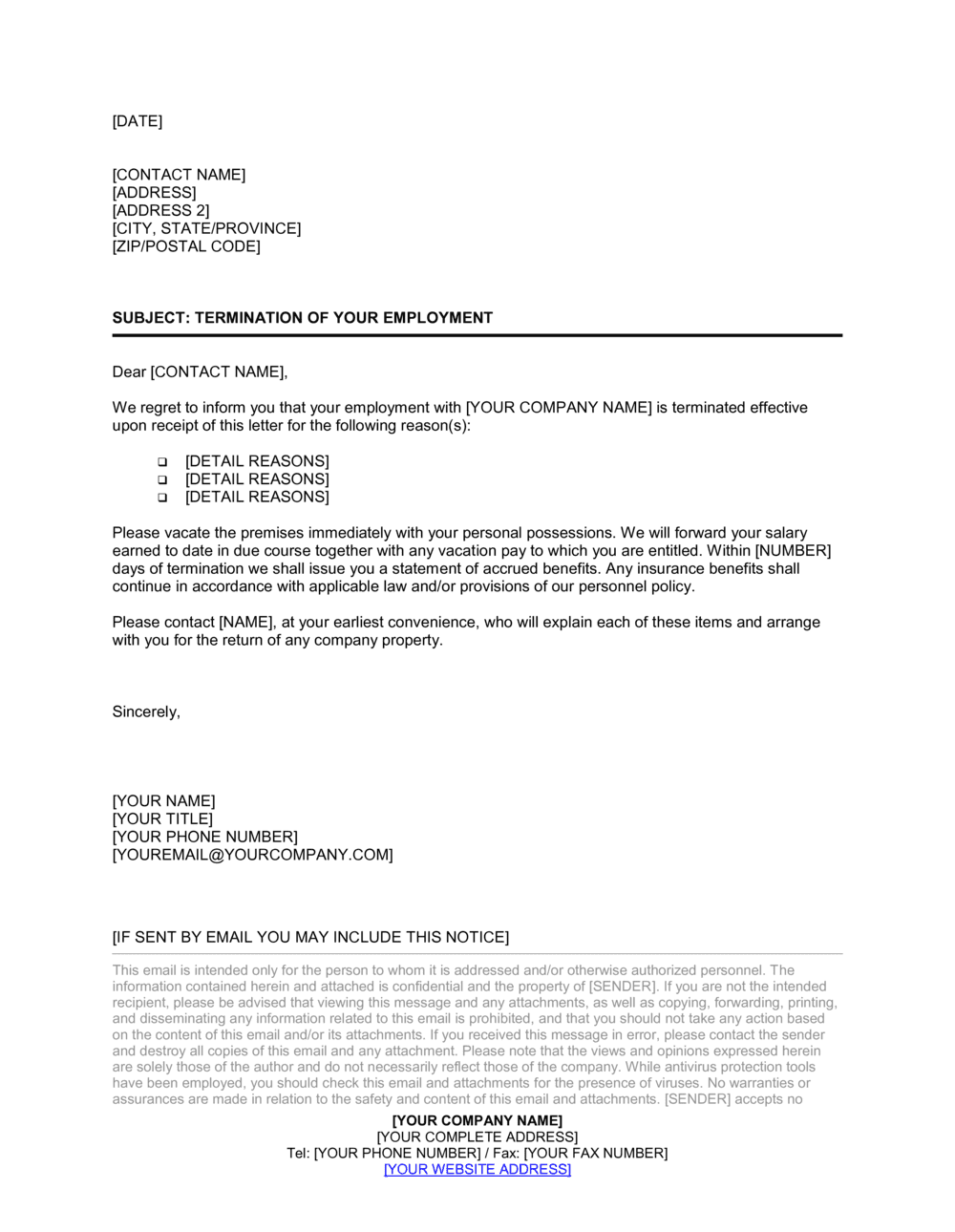
- Dismissal for Cause
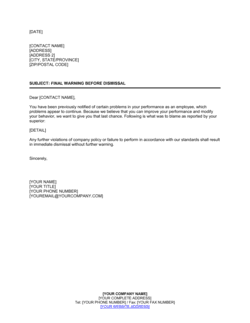
- Termination based on specific documented misconduct, negligence, or a serious policy violation that justifies ending employment without severance.
- Effective Date of Termination
- The specific calendar date on which employment officially ends and the employee's access, obligations, and entitlements cease.
- Notice Period
- The span of time between delivering the dismissal letter and the effective termination date, during which the employee may still be required to work or be paid in lieu.
- Pay in Lieu of Notice
- A lump-sum payment made to the employee instead of requiring them to work through their notice period, ending employment immediately.
- Final Pay
- All compensation owed to the employee at termination — including outstanding salary, unused vacation accrual, and any agreed severance.
- Return of Property
- The formal requirement for a departing employee to hand back all company assets — laptops, access cards, documents, and credentials — on or before the termination date.
- Severance
- Compensation paid to an employee upon termination, typically expressed as a number of weeks' pay per year of service, and often conditioned on signing a release.
- Constructive Dismissal
- A situation where an employer significantly worsens employment conditions — reducing pay, changing location, or demoting the employee — to the point where resignation is effectively forced.
- At-Will Employment
- Employment that either party may end at any time, for any lawful reason, without advance notice or cause — the default in most US states.
- COBRA Notification
- A federally required notice (in the US) informing terminated employees of their right to continue employer-sponsored health insurance coverage at their own expense for up to 18 months.