Sales Agreement Template

Free Word download β€’ Edit online β€’ Save & share with Drive β€’ Export to PDF

4 pagesβ€’25–30 min to fillβ€’Difficulty: Complexβ€’Signature requiredβ€’Legal review recommended
Learn more ↓
FreeSales Agreement Template

At a glance

What it is
A Sales Agreement is a legally binding contract between a seller and a buyer that sets out the terms governing the sale of goods, assets, or property. This free Word download lets you edit all core terms online β€” price, payment schedule, delivery conditions, warranties, and risk of loss β€” then export as PDF and execute with both parties' signatures.
When you need it
Use it whenever you are selling or purchasing goods, equipment, inventory, or business assets and need an enforceable written record of the agreed terms. It is especially critical for high-value transactions, instalment payment arrangements, or any sale where delivery and payment do not happen simultaneously.
What's inside
Identification of the parties and a precise description of the goods or assets being sold, purchase price and payment terms, delivery obligations and transfer of risk, representations and warranties, and default and dispute resolution provisions. Optional sections cover title retention, inspections, and indemnification.

What is a Sales Agreement?

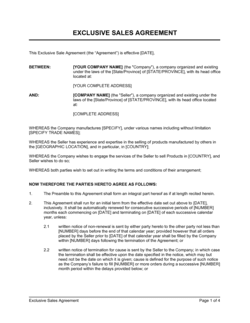
A Sales Agreement is a legally binding contract between a Seller and a Buyer that sets out every material term governing the sale of goods, equipment, inventory, or tangible assets β€” including price, payment schedule, delivery conditions, warranties, transfer of title, and what happens if either party fails to perform. Unlike an invoice, which requests payment after the fact, a sales agreement creates enforceable obligations on both sides before the transaction closes, providing a written record that protects against disputes over what was agreed, what was delivered, and who bears the risk if something goes wrong. It is the foundational document for any commercial goods transaction where delivery and payment do not happen simultaneously in a single cash exchange.

Why You Need This Document

Without a written sales agreement, a goods transaction rests entirely on oral representations and jurisdiction-specific statutory defaults β€” which rarely align with what either party actually negotiated. If the buyer claims the goods were defective, the seller has no documented inspection period to point to. If the buyer pays in instalments and becomes insolvent, the seller has no registered security interest and joins the queue of unsecured creditors. If the contract is silent on risk of loss, courts apply UCC or Sale of Goods Act defaults that may place the risk on whichever party can least afford it. A properly executed sales agreement eliminates all four of these exposures, gives both parties a clear enforcement path in the event of default, and satisfies the written-contract requirements that most jurisdictions impose on goods sales above $500. This template gives you a professionally structured starting point you can tailor and execute in under 30 minutes β€” without starting from a blank page.

Which variant fits your situation?

If your situation is…Use this template
Selling physical goods between two businessesSales Agreement (B2B)
Selling the entirety of a business including goodwill and IPBusiness Sale Agreement
Selling a motor vehicle or titled assetVehicle Sale Agreement
Buyer paying in multiple instalments over timeInstalment Sale Agreement
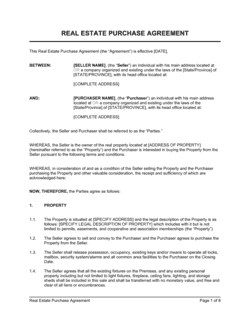
Selling real property or commercial premisesReal Estate Purchase Agreement
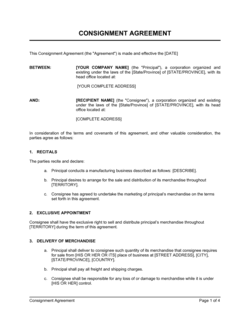
Documenting a consignment or sale-or-return arrangementConsignment Agreement
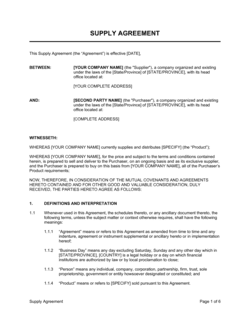
Providing goods on a recurring basis under standing termsSupply Agreement

Common mistakes to avoid

❌ Vague goods description with no schedule

Why it matters: Post-delivery disputes almost always trace back to an ambiguous description β€” if the contract says 'industrial equipment' instead of specifying model, quantity, and condition, the buyer can claim the wrong goods were delivered.

Fix: Always attach a Schedule A that itemizes every unit with model numbers, serial numbers where available, quantity, and condition at time of sale.

❌ No inspection or acceptance period

Why it matters: Without a defined window, buyers may raise defect claims months after delivery, long after the seller has no practical ability to verify or remedy the issue.

Fix: Include a 5-business-day inspection period with a written rejection procedure β€” goods not rejected within the period are deemed accepted.

❌ Retention-of-title clause not registered as a security interest

Why it matters: In the US (UCC Article 9) and Canada (provincial PPSA), an unregistered seller's interest in delivered goods is subordinate to a perfected security interest held by the buyer's lender β€” the seller loses priority in the buyer's insolvency.

Fix: File a UCC-1 financing statement (US) or PPSA financing statement (Canada) promptly after signing to perfect the security interest.

❌ Missing or inconsistent warranty and as-is provisions

Why it matters: A contract that contains both a 90-day workmanship warranty and an 'as-is, no warranty' disclaimer in the same document creates a direct conflict that courts resolve against the drafter β€” typically the seller.

Fix: Decide on a single warranty approach before drafting and ensure every warranty-related clause in the agreement is internally consistent.

❌ No specific payment due date

Why it matters: Terms like 'due upon delivery' become indefinite when delivery is delayed, making the payment obligation practically unenforceable until a court determines when delivery occurred.

Fix: Always state a specific calendar date for each payment β€” or, for delivery-linked payments, define 'delivery' with a precise trigger event (e.g., 'the date the carrier's delivery receipt is signed by Buyer').

❌ Governing law chosen with no connection to either party

Why it matters: A tactical choice of a seller-friendly jurisdiction that has no connection to either party, the goods, or the place of delivery can be struck down as a matter of public policy, leaving the contract's dispute resolution mechanism unclear.

Fix: Choose the governing law of the state or country where the seller is incorporated, the goods are located, or the buyer operates β€” courts consistently uphold these choices.

The 10 key clauses, explained

Parties and recitals

In plain language: Identifies the seller and buyer by their full legal names and entity types, and describes the commercial background of the transaction.

Sample language
This Sales Agreement ('Agreement') is entered into as of [DATE] between [SELLER LEGAL NAME], a [STATE] [ENTITY TYPE] ('Seller'), and [BUYER LEGAL NAME], a [STATE] [ENTITY TYPE] ('Buyer').

Common mistake: Using trade names or doing-business-as names instead of registered legal entity names β€” this creates ambiguity about which legal entity is bound and can complicate enforcement.

Description of goods

In plain language: Precisely describes what is being sold β€” including quantity, specifications, condition, and any identifying serial or model numbers.

Sample language
Seller agrees to sell and Buyer agrees to purchase [QUANTITY] units of [PRODUCT NAME / DESCRIPTION], Model No. [MODEL], in [NEW / USED / AS-IS] condition, as further described in Schedule A attached hereto.

Common mistake: Using a generic product description without attaching specifications or a schedule β€” vague descriptions are the leading cause of post-closing disputes about whether the correct goods were delivered.

Purchase price and payment terms

In plain language: States the total price, any deposit, the payment schedule or due date, accepted payment methods, and consequences of late payment.

Sample language
The total purchase price is $[AMOUNT] USD. Buyer shall pay a deposit of $[DEPOSIT] upon execution, with the balance of $[BALANCE] due on or before [DATE] by [WIRE TRANSFER / CHECK / ACH]. Late payments accrue interest at [X]% per month.

Common mistake: Omitting a specific due date and relying on 'upon delivery' β€” delivery dates slip, making the payment date indefinite and unenforceable as written.

Delivery, risk of loss, and title transfer

In plain language: Specifies where and when delivery occurs, which Incoterm or delivery condition applies, and the precise moment title and risk of loss pass to the buyer.

Sample language
Delivery shall occur [FOB SELLER'S FACILITY / CIF BUYER'S ADDRESS] on or before [DATE]. Title and risk of loss shall pass to Buyer upon [DELIVERY / PAYMENT IN FULL / LOADING ONTO CARRIER].

Common mistake: Leaving the risk-of-loss transfer point undefined β€” if goods are damaged in transit and the contract is silent, courts apply UCC default rules that may not reflect the parties' intentions.

Inspection and acceptance

In plain language: Gives the buyer a defined window to inspect the goods after delivery and sets out the process for rejecting non-conforming goods.

Sample language
Buyer shall have [5] business days following delivery to inspect the goods. If Buyer does not provide written notice of rejection within such period, the goods shall be deemed accepted. Rejected goods must be returned at [BUYER'S / SELLER'S] expense.

Common mistake: No inspection period at all β€” without it, buyers may claim latent defects months after delivery, and the seller has no contractual basis to bar the claim.

Representations and warranties

In plain language: Contains the seller's formal promises about the goods β€” that the seller has good title, that the goods conform to specifications, and that they are free from known defects.

Sample language
Seller represents and warrants that: (a) Seller has full legal title to the goods, free and clear of all liens and encumbrances; (b) the goods conform to the specifications in Schedule A; and (c) the goods are free from material defects in materials and workmanship for [90] days from delivery.

Common mistake: Copying boilerplate warranty language that conflicts with an 'as-is' clause elsewhere in the agreement β€” conflicting provisions create ambiguity courts resolve against the drafter.

Retention of title

In plain language: Allows the seller to retain legal ownership of the goods until the buyer pays in full, protecting against buyer insolvency during an instalment payment period.

Sample language
Notwithstanding delivery, title to the goods shall remain with Seller until Buyer has paid the full purchase price. Until title passes, Buyer shall store the goods separately, identifiable as Seller's property, and shall not encumber or transfer them.

Common mistake: Including a retention-of-title clause but failing to register it as required β€” in Canada (PPSA) and the UK (HMRC), unregistered ROT clauses may be unenforceable against third parties, including the buyer's creditors.

Default and remedies

In plain language: Defines what constitutes a breach by either party and the remedies available β€” cure periods, contract termination, right to recover the goods, and damages.

Sample language
If Buyer fails to pay any amount when due and such failure continues for [10] business days after written notice, Seller may (a) declare all outstanding amounts immediately due, (b) retake possession of unencumbered goods, and (c) pursue all remedies available at law or equity.

Common mistake: No cure period before declaring default β€” courts in many jurisdictions read in a reasonable cure right regardless, and an aggressive default clause without one can be construed as a penalty.

Indemnification

In plain language: Requires each party to compensate the other for losses arising from that party's breach, negligence, or misrepresentation in connection with the transaction.

Sample language
Each party ('Indemnifying Party') shall defend, indemnify, and hold harmless the other party from and against any claims, damages, and costs arising from the Indemnifying Party's breach of this Agreement or its gross negligence or wilful misconduct.

Common mistake: One-sided indemnification that only protects the seller β€” buyers may refuse to sign, or courts may void an indemnity that is unconscionably one-sided.

Governing law and dispute resolution

In plain language: Specifies the jurisdiction whose law governs the contract and how disputes are resolved β€” litigation, arbitration, or mediation β€” including the venue.

Sample language
This Agreement is governed by the laws of [STATE / PROVINCE / COUNTRY], without regard to its conflict-of-laws principles. Any dispute shall be resolved by binding arbitration in [CITY] under the rules of [AAA / JAMS / ICC], except that either party may seek injunctive relief in any court of competent jurisdiction.

Common mistake: Choosing a governing law with no connection to either party or the goods β€” courts in several jurisdictions will disregard a purely tactical choice of law and apply local law instead.

How to fill it out

  1. 1

    Identify the parties using full legal names

    Enter the seller's and buyer's registered legal entity names, not trade names or DBA names. Include entity type (LLC, Inc., Corp.) and state or country of formation.

    πŸ’‘ Look up both parties in the relevant corporate registry to confirm the exact legal name before inserting it β€” a misspelled entity name can create a gap in enforceability.

  2. 2

    Describe the goods precisely in Schedule A

    List every item being sold with quantity, description, model or serial numbers, and condition. Move detailed specifications to a Schedule A rather than the agreement body so you can update them without amending the main contract.

    πŸ’‘ For custom-manufactured goods, attach technical drawings or a specification sheet as Schedule A and have both parties initial it separately at signing.

  3. 3

    Set the purchase price and payment schedule

    State the total price in a specific currency, the deposit amount due on signing, the balance due date, and accepted payment methods. If paying in instalments, list each instalment with its due date and amount.

    πŸ’‘ Add a late-payment interest rate (typically 1–1.5% per month) to incentivize timely payment β€” courts are far more likely to enforce a pre-agreed rate than a retroactive claim for damages.

  4. 4

    Define delivery terms and risk-of-loss transfer

    Choose an Incoterm or plain-language equivalent (e.g., 'FOB Seller's warehouse in [CITY]') and state the date or window. Then specify exactly when title and risk of loss pass β€” on delivery, on loading, or on full payment.

    πŸ’‘ If you are shipping internationally, use the correct ICC Incoterm 2020 (FOB, CIF, DAP) rather than generic language β€” carriers and customs authorities recognize these terms and disputes are resolved faster.

  5. 5

    Choose and tailor the warranty approach

    Decide whether to sell with full warranties, limited warranties (e.g., 90 days on workmanship), or on an as-is basis. Ensure the warranty clause and any disclaimer are consistent β€” conflicting provisions invite litigation.

    πŸ’‘ For used equipment or distressed inventory, an explicit as-is clause with a buyer acknowledgment sign-off provides the clearest protection β€” but confirm whether implied warranties can be waived under the governing jurisdiction's consumer or commercial law.

  6. 6

    Include a retention-of-title clause for instalment sales

    If the buyer is paying in instalments, add the retention-of-title clause and instruct the buyer to store goods separately and identifiably. Check whether you need to register the security interest under the applicable PPSA or UCC Article 9 filing.

    πŸ’‘ A retention-of-title clause without a PPSA or UCC filing is effectively unenforceable against the buyer's secured creditors in Canada and the US β€” register within the prescribed window after signing.

  7. 7

    State the default, remedies, and cure period

    Define the specific events of default (non-payment, non-delivery, insolvency), a cure period of 5–15 business days, and the seller's remedies β€” repossession, acceleration of instalments, and damages. Mirror-image obligations for the buyer.

    πŸ’‘ A 10-business-day cure period is standard for commercial transactions β€” shorter periods are often challenged as commercially unreasonable in US and Canadian courts.

  8. 8

    Execute before delivery or payment

    Both parties must sign the agreement before goods change hands or money is transferred. For high-value transactions, use a witnessed or notarized signature block, even where not legally required.

    πŸ’‘ Use Business in a Box eSign to timestamp execution electronically and store the fully executed agreement automatically β€” email chains as substitutes for signed contracts are rejected in most commercial disputes.

Frequently asked questions

What is a sales agreement?

A sales agreement is a legally binding contract between a seller and a buyer that governs the sale of goods, assets, or property. It records the agreed price, payment terms, delivery conditions, warranties, and what happens if either party defaults. Unlike an invoice, which requests payment, a sales agreement creates enforceable obligations on both sides before and after the transaction closes.

What is the difference between a sales agreement and a purchase order?

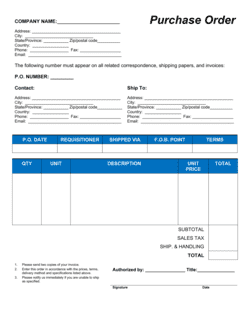
A purchase order is a buyer-issued document authorizing a specific purchase at a stated price β€” it is an offer, not a complete contract. A sales agreement is a bilaterally negotiated contract signed by both parties that comprehensively governs the transaction, including warranties, default remedies, and dispute resolution. For high-value or complex transactions, a signed sales agreement supersedes any purchase order and should be referenced in it.

Does a sales agreement need to be in writing?

In most jurisdictions, contracts for the sale of goods above a threshold value must be in writing to be enforceable. Under the US Uniform Commercial Code (UCC), contracts for goods worth $500 or more require a written record signed by the party to be charged. In Canada, the UK, and the EU, similar rules apply under domestic sale-of-goods legislation. Below the threshold, oral agreements are technically valid but extremely difficult to enforce.

When does title pass from seller to buyer?

Title passes when the parties agree it passes β€” the sales agreement should state this explicitly. Common options are: upon signing the agreement, upon physical delivery, upon loading onto the carrier (FOB origin), or upon receipt of full payment. If the agreement is silent, the UCC and most common-law jurisdictions default to title passing on delivery. Instalment-payment sellers should always specify that title passes only on full payment and register a security interest accordingly.

What warranties should a sales agreement include?

The appropriate warranty depends on the nature of the goods and the negotiation. For new goods, a 90-day or one-year warranty against defects in materials and workmanship is standard. For used or surplus goods, an as-is disclaimer is common β€” but must be conspicuous and acknowledged by the buyer to be enforceable under the UCC and most provincial sale-of-goods acts. Always ensure the warranty clause and any disclaimer are internally consistent within the same document.

What is a retention-of-title clause and when should I use it?

A retention-of-title (ROT) clause allows the seller to retain legal ownership of goods after delivery until the buyer pays in full. It is most useful for instalment-payment sales or sales to buyers whose creditworthiness is uncertain. In the US and Canada, an ROT clause must be perfected by filing a UCC-1 or PPSA financing statement to be enforceable against the buyer's other creditors. Without registration, the seller's interest is subordinate to any perfected security interest held by the buyer's lender.

Can a sales agreement be used for selling a business?

A standard sales agreement covers the sale of goods or specific assets β€” it is not designed for the sale of a business as a going concern, which involves the transfer of goodwill, IP, customer contracts, liabilities, and often employees. A business sale requires a dedicated Business Purchase Agreement (or Asset Purchase Agreement) with additional due diligence schedules, representations about liabilities assumed, and transition provisions. Using a goods-only sales agreement for a business sale creates material gaps in protection for both parties.

What happens if the buyer defaults on payment?

If the agreement includes a default clause, the seller typically has the right to declare all outstanding amounts immediately due, charge interest on the overdue balance, retake possession of undelivered or retained-title goods, and pursue damages in court or arbitration. Courts generally require a reasonable cure period β€” typically 5–15 business days of written notice β€” before a seller can exercise remedies. Without a written default clause, the seller must rely on jurisdiction-specific statutory remedies, which vary significantly.

Do I need a lawyer to draft a sales agreement?

For standard commercial goods transactions between businesses, a high-quality template typically provides sufficient protection. Engage a lawyer when the transaction value exceeds $100,000, involves complex custom-manufactured goods, includes instalment payments requiring security registrations, spans multiple jurisdictions, or is part of a larger business sale. A one-hour template review costs $200–$400 and is often worthwhile for any single transaction above $25,000.

How this compares to alternatives

vs Purchase Order

A purchase order is a buyer-issued document that authorizes a specific purchase β€” it is an offer, not a complete bilateral contract. A sales agreement is signed by both parties and governs the full transaction including warranties, default remedies, and dispute resolution. For high-value transactions, a signed sales agreement should be executed first, with the purchase order referencing it.

vs Supply Agreement

A supply agreement governs an ongoing, recurring commercial relationship β€” setting framework pricing, ordering procedures, and quality standards for multiple future deliveries over months or years. A sales agreement covers a single discrete transaction or a defined set of goods. Use a supply agreement when you expect to order the same goods repeatedly; use a sales agreement for one-off or project-specific purchases.

vs Business Purchase Agreement

A business purchase agreement transfers ownership of an entire going-concern business β€” including goodwill, IP, contracts, and liabilities. A sales agreement transfers ownership of specific goods or assets only. Selling a business using a goods-only sales agreement leaves critical gaps in the transfer of liabilities assumed, employee obligations, and representations about the business's financial condition.

vs Consignment Agreement

A consignment agreement places goods with a third party for sale on the owner's behalf β€” title does not transfer until the goods are sold to an end buyer, and unsold goods are returned. A sales agreement transfers ownership outright on agreed terms. Use consignment when you want to test a market without committing to a sale; use a sales agreement when the transaction is definitive.

Industry-specific considerations

Manufacturing

Custom-order specifications, deposit and milestone payment schedules, acceptance testing procedures, and retention-of-title clauses for extended production runs.

Wholesale and Distribution

Bulk pricing with volume tiers, standing order terms, FOB delivery obligations, and return and credit policies for non-conforming goods.

Technology and Hardware

Software bundled with hardware sales, firmware warranty disclaimers, export control compliance representations, and end-of-life support obligations.

Professional Services and Consulting

Sale of physical deliverables or licensed toolkits alongside service engagements, with clear delineation of what the goods and services components each cover.

Construction and Trades

Sale of materials and equipment with phased delivery tied to project milestones, lien-waiver coordination, and surety bond references for large-value supply contracts.

Food and Beverage

Perishable goods require precise delivery windows, temperature-control specifications, short inspection periods, and clear rejection and disposal procedures for non-conforming product.

Jurisdictional notes

United States

The sale of goods in the US is governed by Article 2 of the Uniform Commercial Code (UCC), adopted in some form in every state. Contracts for goods worth $500 or more must be evidenced in writing under UCC Section 2-201. Sellers retaining title after delivery must perfect their security interest by filing a UCC-1 financing statement in the buyer's state to maintain priority over the buyer's secured lenders. California and New York have consumer protection overlays that restrict as-is disclaimers in B2C sales.

Canada

Sale of goods in Canada is governed by provincial Sale of Goods Acts (e.g., Ontario Sale of Goods Act, BC Sale of Goods Act), which imply terms of title, fitness for purpose, and merchantable quality that cannot always be contracted out of in B2C sales. Retention-of-title sellers must register under the applicable provincial Personal Property Security Act (PPSA) to maintain priority. Quebec transactions are governed by the Civil Code of Quebec, which has distinct rules on risk transfer and seller warranties.

United Kingdom

Commercial goods sales in the UK are governed by the Sale of Goods Act 1979 and the Consumer Rights Act 2015 for B2C transactions. Implied terms of satisfactory quality and fitness for purpose cannot be excluded in consumer contracts. Retention-of-title clauses are widely used and enforceable but must be carefully drafted β€” all-monies ROT clauses covering proceeds of sub-sale require registration as a charge under the Companies Act 2006 if the seller is a company.

European Union

Cross-border goods sales within the EU may be governed by the UN Convention on Contracts for the International Sale of Goods (CISG) unless parties expressly opt out. The EU Sale of Goods Directive (2019/771) sets minimum two-year conformity guarantees for B2C sales across all member states. VAT treatment on cross-border EU goods sales depends on whether the transaction is B2B or B2C and whether the goods cross a customs border β€” agreements should include a VAT allocation clause specifying which party bears any VAT liability.

Template vs lawyer β€” what fits your deal?

PathBest forCostTime
Use the templateStandard B2B goods transactions under $50,000 between domestic parties with straightforward delivery and payment termsFree20–30 minutes
Template + legal reviewTransactions between $25,000 and $250,000, instalment-payment sales requiring security registrations, or cross-provincial transactions$200–$6001–3 days
Custom draftedHigh-value asset sales above $250,000, cross-border transactions, custom-manufactured goods with complex acceptance testing, or any transaction forming part of a broader business sale$1,500–$5,000+1–3 weeks

Glossary

Consideration
The price, payment, or value exchanged between the parties β€” an essential element for a contract to be legally binding.
Risk of Loss
The point in a transaction at which the buyer becomes responsible for damage, destruction, or loss of the goods, even if title has not yet transferred.
Title
Legal ownership of goods β€” the agreement specifies exactly when title passes from seller to buyer.
Retention of Title (ROT)
A clause allowing the seller to retain legal ownership of goods until full payment is received, even after physical delivery.
Warranty
A contractual promise about the condition, quality, or fitness of the goods sold β€” breach of warranty gives the buyer a right to remedies.
As-Is Clause
A disclaimer stating the goods are sold in their current condition with no warranties, express or implied, shifting all risk of defects to the buyer.
Delivery Terms (Incoterms)
Standardized trade terms (e.g., FOB, CIF, EXW) defining where and when the seller's delivery obligation ends and the buyer's risk begins.
Indemnification
A contractual obligation for one party to compensate the other for specified losses, claims, or damages arising from the transaction.
Force Majeure
A clause excusing a party from performance when an extraordinary event β€” natural disaster, war, pandemic β€” prevents fulfilment of contractual obligations.
Liquidated Damages
A pre-agreed sum payable upon a specified breach, designed to reflect a genuine estimate of the loss rather than a penalty.
Entire Agreement Clause
A provision stating the written contract supersedes all prior negotiations, representations, and understandings between the parties.
FOB (Free on Board)
A delivery term specifying that title and risk of loss transfer to the buyer when goods are loaded onto the carrier at the named point of origin.

Part of your Business Operating System

This document is one of 3,000+ business & legal templates included in Business in a Box.

  • Fill-in-the-blanks β€” ready in minutes
  • 100% customizable Word document
  • Compatible with all office suites
  • Export to PDF and share electronically

Create your document in 3 simple steps.

From template to signed document β€” all inside one Business Operating System.
1
Download or open template

Access over 3,000+ business and legal templates for any business task, project or initiative.

2
Edit and fill in the blanks with AI

Customize your ready-made business document template and save it in the cloud.

3
Save, Share, Send, Sign

Share your files and folders with your team. Create a space of seamless collaboration.

Save time, save money, and create top-quality documents.

β˜…β˜…β˜…β˜…β˜…

"Fantastic value! I'm not sure how I'd do without it. It's worth its weight in gold and paid back for itself many times."

Managing Director Β· Mall Farm
Robert Whalley
Managing Director, Mall Farm Proprietary Limited
β˜…β˜…β˜…β˜…β˜…

"I have been using Business in a Box for years. It has been the most useful source of templates I have encountered. I recommend it to anyone."

Business Owner Β· 4+ years
Dr Michael John Freestone
Business Owner
β˜…β˜…β˜…β˜…β˜…

"It has been a life saver so many times I have lost count. Business in a Box has saved me so much time and as you know, time is money."

Owner Β· Upstate Web
David G. Moore Jr.
Owner, Upstate Web

Run your business with a system β€” not scattered tools

Stop downloading documents. Start operating with clarity. Business in a Box gives you the Business Operating System used by over 250,000 companies worldwide to structure, run, and grow their business.

Start freeΒ Β·Β No credit card required