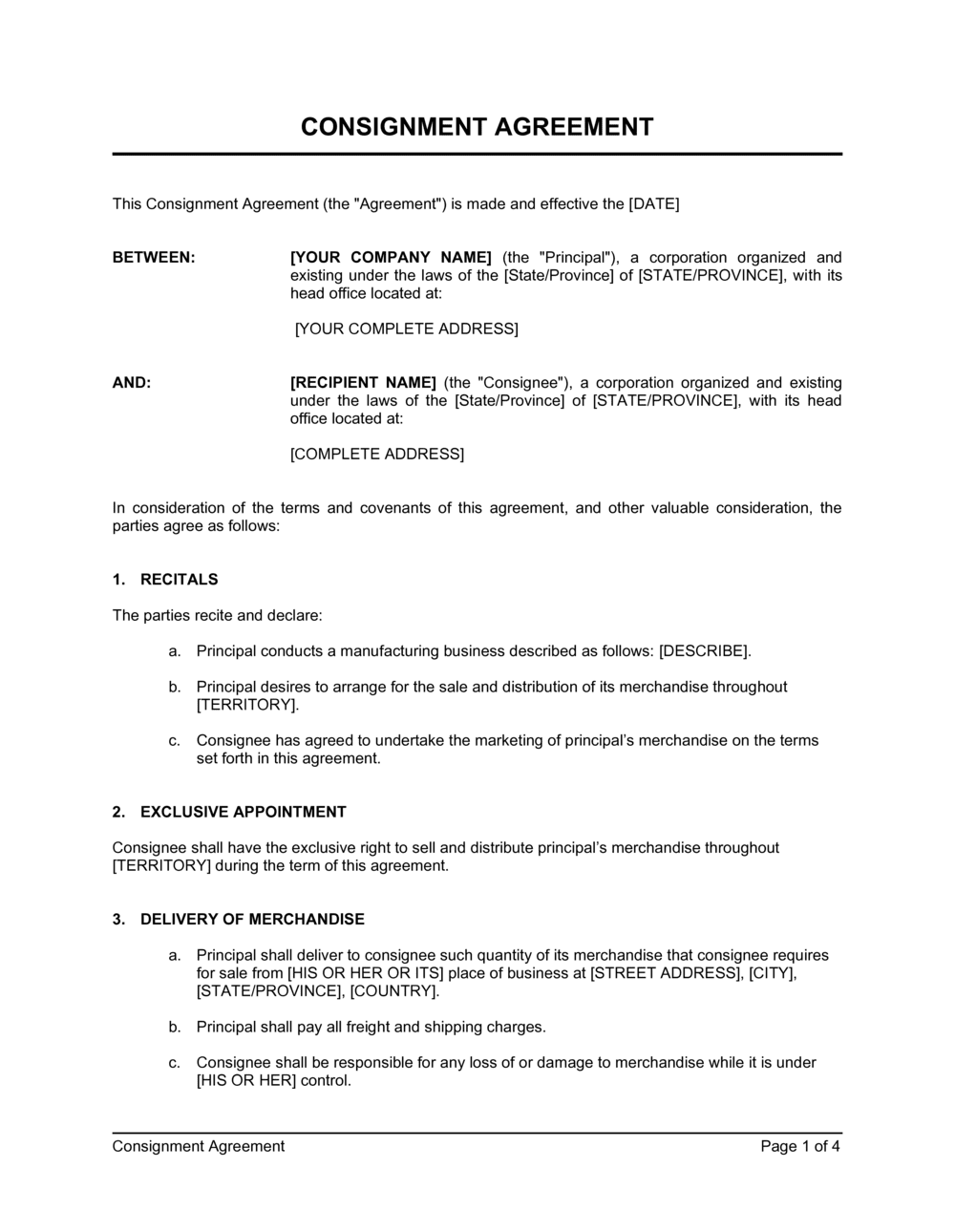
Consignment Agreement Template

Free Word download β€’ Edit online β€’ Save & share with Drive β€’ Export to PDF

4 pagesβ€’25–35 min to fillβ€’Difficulty: Complexβ€’Signature requiredβ€’Legal review recommended
Learn more ↓
FreeConsignment Agreement Template

At a glance

What it is
A Consignment Agreement is a legally binding contract between an owner of goods (the consignor) and a third party (the consignee) who agrees to sell those goods on the consignor's behalf. This free Word download covers ownership retention, pricing authority, commission structure, return obligations, insurance, and payment reconciliation β€” all in a single document you can edit online and export as PDF.
When you need it
Use it whenever you place physical goods β€” clothing, artwork, antiques, handmade products, or wholesale inventory β€” with a retailer, gallery, or dealer to sell for a commission rather than transferring ownership upfront.
What's inside
Identification of the consignor and consignee, a detailed description of the consigned goods, pricing and commission terms, payment and reconciliation schedule, insurance obligations, return and unsold-goods procedures, risk-of-loss allocation, and termination rights.

What is a Consignment Agreement?

A Consignment Agreement is a legally binding contract between a goods owner (the consignor) and a selling party (the consignee) under which the consignee agrees to offer the consignor's goods for sale on the consignor's behalf in exchange for an agreed commission. The defining legal feature is that title to the goods never transfers to the consignee β€” the consignor retains ownership until a third-party buyer completes a purchase. This structure is common in retail boutiques, art galleries, antique markets, and wholesale distribution, where a supplier wants market exposure without releasing ownership or accepting immediate discounted payment. A properly drafted consignment agreement documents every material term: the goods being placed, the floor price and commission rate, who bears the risk if goods are damaged or stolen, how and when proceeds are remitted, and when unsold goods must be returned.

Why You Need This Document

Without a written consignment agreement, the consignor has no contractual basis to enforce a minimum sale price, require insurance on their goods, or demand return of unsold inventory on a fixed schedule. If the consignee's business becomes insolvent β€” a real risk when placing goods with independent retailers β€” the consignor's ownership claim may be subordinated to secured lenders unless a UCC-1 or equivalent security filing has been made. Verbal consignment arrangements routinely produce disputes over how commission is calculated, who covers shipping for returns, and what condition goods must be in when returned. This template establishes clear, enforceable obligations on both sides, protecting the consignor's ownership interest and giving the consignee a predictable framework for pricing, remittance, and inventory management β€” without requiring either party to commission a document from scratch.

Which variant fits your situation?

If your situation is…Use this template
Placing fine art or photography with a galleryArt Consignment Agreement
Supplying a retail store with clothing or accessoriesRetail Consignment Agreement
Placing goods with an auction house for a one-time saleAuction Consignment Agreement
Consigning goods across international bordersInternational Consignment Agreement
Selling goods on behalf of an estateEstate Consignment Agreement
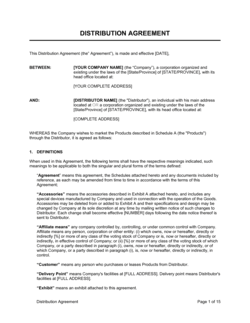
Supplier placing product with a distributor on a trial basisDistribution Agreement
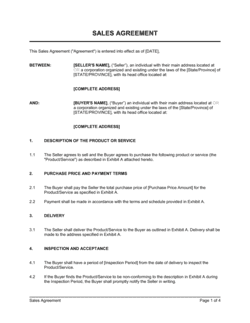
Transferring title outright rather than consigningSales Agreement

Common mistakes to avoid

❌ No UCC-1 filing for high-value US consignments

Why it matters: Without a UCC-1 financing statement, the consignee's secured creditors or bankruptcy trustee can treat the consigned goods as the consignee's assets and seize them β€” leaving the consignor with nothing but an unsecured claim.

Fix: File a UCC-1 financing statement in the state where the consignee is located before delivering goods valued above $1,000. The filing is inexpensive and publicly establishes the consignor's superior ownership interest.

❌ Omitting a floor price

Why it matters: Without a documented minimum price, a consignee can legally sell goods far below their value to move inventory quickly, and the consignor's only remedy is the agreed commission on the discounted price.

Fix: Set a specific floor price for each item in Schedule A and require written approval before any sale below that threshold.

❌ No defined consignment period or return deadline

Why it matters: Open-ended agreements leave the consignor unable to reclaim inventory, pursue other sales channels, or hold the consignee accountable for goods that have been sitting unsold for years.

Fix: State a specific end date and a return deadline β€” typically 14 to 30 days after expiry β€” with the consignee responsible for shipping costs.

❌ Skipping the insurance obligation

Why it matters: If the consignee's premises are damaged, burglarized, or flooded without a contractual insurance requirement, the consignor bears the loss of their own goods with no recourse beyond a general tort claim.

Fix: Require the consignee to maintain all-risk insurance at the agreed insured value and to provide a certificate naming the consignor as an additional insured before goods are delivered.

❌ Vague commission base definition

Why it matters: A commission stated as '30% of sales' is ambiguous β€” it could mean gross sale price, net of discounts, net of credit card fees, or net of returns. Each interpretation yields a different remittance amount.

Fix: Define the commission base precisely in the agreement: 'X% of the gross sale price actually received, excluding applicable sales tax and before any deduction for credit card processing fees.'

❌ Signing after the goods have been delivered

Why it matters: Agreements signed after goods have already changed hands create enforceability questions in common-law jurisdictions β€” particularly for clauses that impose new obligations on the consignee without fresh consideration.

Fix: Always execute the agreement before or simultaneously with delivery of the goods. Use a delivery receipt that cross-references the signed agreement date.

The 10 key clauses, explained

Parties and recitals

In plain language: Identifies the consignor and consignee by their full legal names and addresses, and states the purpose of the agreement.

Sample language
This Consignment Agreement is entered into as of [DATE] between [CONSIGNOR FULL LEGAL NAME], located at [ADDRESS] ('Consignor'), and [CONSIGNEE FULL LEGAL NAME], located at [ADDRESS] ('Consignee').

Common mistake: Using trade names instead of registered legal entity names. If the consignee's legal name differs from their shop name, disputes over insurance claims or unpaid proceeds become harder to enforce against the correct legal party.

Description of consigned goods

In plain language: Lists the specific goods being consigned β€” including quantity, description, condition, and any identifying marks or serial numbers β€” so both parties agree on what is covered.

Sample language
Consignor delivers to Consignee the following goods ('Goods'): [QUANTITY] [DESCRIPTION], each in [CONDITION] condition, as further detailed in Schedule A attached hereto and incorporated by reference.

Common mistake: Describing goods vaguely (e.g., 'assorted jewelry'). Without itemized descriptions and quantities, proving what was delivered β€” and what was lost, sold, or returned β€” becomes a credibility contest rather than a contract question.

Title retention and ownership

In plain language: Confirms that the consignor retains legal title to the goods at all times until a third-party buyer completes a purchase β€” the consignee acquires no ownership interest.

Sample language
Title to the Goods shall remain with Consignor at all times until sold to a third-party buyer. Consignee acquires no ownership interest in the Goods and holds them solely as agent of Consignor for the purpose of sale.

Common mistake: Omitting the title-retention clause entirely. Without it, a consignee's creditors may treat the goods as the consignee's assets and seize them β€” particularly in bankruptcy.

Pricing, floor price, and markdown authority

In plain language: Sets the agreed retail selling price or pricing range, the minimum price below which the consignee cannot sell without approval, and any markdown authority granted.

Sample language
Consignee shall offer the Goods for sale at the retail price(s) set out in Schedule A. Consignee shall not sell any item below the floor price of [FLOOR PRICE] without prior written consent of Consignor. Consignee may mark down items by up to [X]% after [NUMBER] days without further approval.

Common mistake: Granting unlimited markdown authority or omitting a floor price entirely. Consignors have discovered goods sold far below their value when no minimum price was documented, leaving them no contractual recourse.

Commission, fees, and net proceeds

In plain language: States the consignee's commission as a percentage of the actual sale price, defines deductible selling expenses if any, and calculates net proceeds payable to the consignor.

Sample language
Consignee shall retain [X]% of the actual sale price as its commission ('Commission'). Net Proceeds, defined as the actual sale price minus the Commission and any approved selling expenses listed in Schedule B, shall be remitted to Consignor within [NUMBER] days of each sale.

Common mistake: Agreeing on a commission percentage verbally without specifying what base it applies to β€” gross sale price, net of credit card fees, or net of returns. This ambiguity routinely reduces remittances below what the consignor expected.

Payment and reconciliation schedule

In plain language: Sets the frequency of accounting statements and remittances β€” typically monthly β€” and requires the consignee to provide a sales report with each payment.

Sample language
On or before the [NUMBER] day of each calendar month, Consignee shall provide Consignor with a written reconciliation report detailing: (a) Goods sold during the preceding month, (b) sale price for each item, (c) Commission deducted, and (d) Net Proceeds remitted. Remittance shall accompany each report.

Common mistake: Setting no reconciliation schedule at all, or stating 'payment upon request.' Consignors who rely on self-reporting without a fixed schedule frequently wait months between payments while the consignee uses their capital interest-free.

Insurance and risk of loss

In plain language: Allocates responsibility for insuring the goods while in the consignee's possession and specifies which party bears the risk if goods are damaged, stolen, or destroyed.

Sample language
Consignee shall, at its own expense, maintain all-risk insurance on the Goods in an amount not less than [INSURED VALUE] from the date of delivery until return or sale. In the event of loss, damage, or theft, Consignee shall be liable to Consignor for the insured value of the affected items.

Common mistake: Making insurance optional or leaving risk of loss unaddressed. When a consignee's premises are damaged by fire or flood with no clear contractual obligation, the consignor loses their goods and has no contractual claim β€” only a tort argument.

Consignment period and termination

In plain language: Sets the start and end date of the consignment, states what happens to unsold goods at expiry, and allows either party to terminate early with written notice.

Sample language
The consignment period shall commence on [START DATE] and expire on [END DATE] ('Consignment Period'), unless earlier terminated. Either party may terminate this Agreement upon [NUMBER] days' written notice. Upon expiry or termination, Consignee shall return all unsold Goods to Consignor within [NUMBER] days at Consignee's expense.

Common mistake: No defined end date or return obligation. Open-ended consignment agreements result in goods sitting on shelves indefinitely, making it practically impossible for the consignor to reclaim inventory or place it with another seller.

Return of unsold goods and condition

In plain language: Requires the consignee to return unsold goods in the same condition as received and to document any damage that occurred while in their possession.

Sample language
All unsold Goods shall be returned to Consignor in the same condition as delivered, reasonable display wear excepted. Consignee shall document and notify Consignor of any damage within [NUMBER] days of its occurrence. Goods returned in damaged condition shall be compensated at the agreed insured value.

Common mistake: Accepting a vague 'reasonable condition' standard with no damage-reporting obligation. Consignors receive goods back significantly deteriorated with no record of when the damage occurred and no claim to compensation.

Governing law and dispute resolution

In plain language: Specifies which jurisdiction's law governs the agreement and how disputes are resolved β€” litigation, arbitration, or mediation.

Sample language
This Agreement shall be governed by the laws of [STATE / PROVINCE / COUNTRY], without regard to conflict-of-law principles. Any dispute arising hereunder shall be resolved by binding arbitration in [CITY] under the rules of [AAA / applicable body], except that either party may seek injunctive relief in any court of competent jurisdiction.

Common mistake: Choosing a governing law with no connection to where the goods are stored or sold. Enforcing a judgment across jurisdictions is costly and slow β€” choose the law of the state or province where the consignee operates.

How to fill it out

  1. 1

    Identify both parties with their full legal names

    Enter the consignor's and consignee's registered legal names β€” not trade names or DBA names β€” along with their addresses and contact information. For businesses, confirm the entity type (LLC, corporation, sole proprietorship).

    πŸ’‘ Request a copy of the consignee's business registration or articles of incorporation before signing β€” you want to know exactly which legal entity is responsible for your goods.

  2. 2

    Complete Schedule A with an itemized goods list

    List every item being consigned with a description, quantity, condition, and any identifying features such as serial numbers, dimensions, or artist signatures. Both parties should initial Schedule A at signing.

    πŸ’‘ Photograph every item alongside a handwritten sign showing the date and the consignee's name before drop-off. The photos corroborate the condition described in Schedule A if a dispute arises later.

  3. 3

    Set the retail price, floor price, and markdown authority

    Enter the target retail price or price range for each item in Schedule A. Set a floor price below which the consignee cannot sell without your written approval, and specify any limited markdown authority as a percentage and a time trigger.

    πŸ’‘ For art and collectibles, set a floor price at no less than your replacement cost plus a margin β€” not purely based on what you hope to achieve.

  4. 4

    Agree on the commission rate and define the base

    State the commission percentage and confirm what it applies to β€” typically the gross sale price excluding applicable taxes. List any approved deductible selling expenses in Schedule B if permitted.

    πŸ’‘ Clarify in writing whether credit card processing fees (typically 2–3%) are deducted before or after commission β€” this difference compounds across many sales.

  5. 5

    Set the reconciliation schedule and payment method

    Choose a monthly reconciliation cycle and specify the day by which statements and remittances must be delivered. State the accepted payment method β€” bank transfer, check, or electronic payment β€” and the account details.

    πŸ’‘ Monthly reconciliation is the standard; anything less frequent than quarterly is a red flag in a consignment relationship.

  6. 6

    Confirm insurance obligations and insured values

    Enter the required insurance coverage amount for each item or the total lot value. Specify that the consignee must name the consignor as an additional insured and provide a certificate of insurance within 10 days of signing.

    πŸ’‘ Do not take possession-transfer for granted β€” request a copy of the consignee's current insurance policy before delivering high-value goods.

  7. 7

    Define the consignment period and return obligations

    Set a clear start date, end date, and the number of days the consignee has to return unsold goods after expiry or termination. State which party bears the shipping cost for returns.

    πŸ’‘ A 90-to-180-day consignment period is common in retail; galleries often use 6 to 12 months. Build in a 30-day early-termination notice right for both parties.

  8. 8

    Sign before delivering the goods

    Both parties must sign and date the agreement before any goods change hands. File UCC-1 financing statements in the applicable US state if the goods are high-value, to protect the consignor's interest against the consignee's creditors.

    πŸ’‘ In the US, a consignor who fails to file a UCC-1 may lose their goods to the consignee's secured lenders in bankruptcy β€” especially for consignments exceeding $1,000.

Frequently asked questions

What is a consignment agreement?

A consignment agreement is a contract between a goods owner (the consignor) and a seller (the consignee) under which the consignee agrees to sell the goods on the consignor's behalf in exchange for a commission. Title to the goods remains with the consignor until a third-party buyer completes a purchase β€” the consignee never owns the inventory. The agreement governs pricing, commission, insurance, payment reconciliation, and the return of unsold goods.

Who needs a consignment agreement?

Artists placing work with galleries, clothing designers supplying boutiques, antique dealers accepting estate goods, wholesale suppliers placing product with retailers on a trial basis, and auction houses managing estate sales all use consignment agreements. Any arrangement where goods change hands for selling purposes without a transfer of ownership should be documented with a signed agreement β€” verbal consignment arrangements leave both parties exposed on pricing, insurance, and payment obligations.

What is the difference between a consignment agreement and a sales agreement?

A sales agreement transfers ownership of goods from seller to buyer at the point of contract β€” the buyer takes title and bears risk of loss immediately. A consignment agreement does not transfer title at all; the consignor retains ownership until a third-party sale is completed. The consignee is essentially an agent, not a buyer. This distinction has major implications for tax, risk of loss, and what happens if the consignee becomes insolvent.

Does a consignment agreement need to be notarized?

Notarization is not required for a consignment agreement to be legally valid in most jurisdictions. A signed agreement executed by both parties is generally enforceable without notarization. However, for high-value goods β€” particularly fine art, jewelry, or luxury goods β€” some consignors opt for notarization to deter disputes about when or whether the agreement was signed.

What commission rate is standard in consignment agreements?

Commission rates vary significantly by industry. Art galleries typically charge 40–60% of the sale price. Retail consignment shops commonly charge 30–50%. Auction houses often charge 10–25% of the hammer price, sometimes with a buyer's premium on top. Wholesale consignment arrangements with distributors typically range from 10–30%. The right rate depends on the consignee's costs, market positioning, and the expected sale volume.

What happens to consigned goods if the consignee goes bankrupt?

In the US, a consignor who has not filed a UCC-1 financing statement risks having their goods treated as part of the consignee's bankruptcy estate β€” meaning secured creditors may have priority over the consignor's ownership claim. A timely UCC-1 filing establishes the consignor's priority interest and protects the goods or their proceeds. In Canada and the UK, similar personal property security legislation applies. Always file the required security interests before delivering high-value goods.

Who is responsible for insuring consigned goods?

The consignment agreement should explicitly assign insurance responsibility β€” it does not arise automatically. In most commercial consignment arrangements, the consignee is required to insure the goods at the agreed value and name the consignor as an additional insured. If the agreement is silent on insurance, risk-of-loss allocation is determined by the contract or default law, which may not favor the consignor. Always require a certificate of insurance before delivering goods.

Can a consignor reclaim their goods at any time?

The consignor's right to reclaim goods depends on the agreement's termination clause. A well-drafted agreement allows either party to terminate on written notice β€” typically 14 to 30 days β€” after which unsold goods must be returned. Without a termination clause, the consignor may need to wait until the consignment period expires. In some jurisdictions, consignors have statutory rights to demand return of their property, but relying on statute rather than contract is slower and costlier.

Is a consignment agreement the same as a distribution agreement?

No. A distribution agreement typically transfers title to the distributor, who buys goods outright and resells them at their own risk and profit margin. A consignment agreement never transfers title β€” the consignee sells on behalf of the consignor and remits proceeds minus commission. The financial and legal risk profiles are fundamentally different: distributors bear inventory risk; consignees do not purchase the goods and theoretically bear less financial risk, though they do bear risk of loss for goods in their care.

How this compares to alternatives

vs Sales Agreement

A sales agreement transfers full ownership of goods to the buyer at the point of contract β€” the buyer takes title, bears risk of loss, and pays the agreed price regardless of whether they resell. A consignment agreement retains title with the consignor until a third-party sale occurs; the consignee is an agent, not a buyer. Use a sales agreement when you want immediate payment and a clean transfer; use consignment when you want market exposure without releasing ownership.

vs Distribution Agreement

A distribution agreement appoints a distributor who purchases your goods outright and resells them at their own risk and margin. A consignment agreement keeps title with you β€” the consignee sells on your behalf and remits proceeds minus commission. Distributors bear inventory risk and offer faster cash; consignment preserves ownership and allows pricing control at the cost of delayed payment.

vs Agency Agreement

An agency agreement appoints an agent to enter into contracts on the principal's behalf β€” typically for services, not goods. A consignment agreement is a specialized form of agency arrangement specifically for physical goods placed for sale. If your arrangement involves intangible services or ongoing representation rather than specific inventory, an agency agreement is the more appropriate instrument.

vs Loan Agreement

A loan agreement covers the lending of money with repayment obligations. It has no relevance to goods placed for sale β€” but consignment is sometimes confused with a goods-loan arrangement (bailment for use). In consignment, the consignee's purpose is to sell, not to use the goods; proceeds flow back to the consignor. A goods-loan or bailment agreement is the appropriate instrument when goods are lent for display or use without any intent to sell.

Industry-specific considerations

Art and galleries

Galleries typically retain 40–60% commission, require exhibition-period exclusivity, and must address authentication documentation and provenance in the goods description.

Retail and fashion

Seasonal collection timelines mean consignment periods must align with selling seasons, with clear markdown-authority triggers as end-of-season approaches.

Antiques and collectibles

Precise item descriptions with condition grades, provenance references, and auction reserve prices are critical given the high variability in value and the role of condition in final sale price.

Manufacturing and wholesale

Suppliers place product lines with distributors or retailers on a consignment basis during market-entry phases, requiring inventory reconciliation systems and clear sell-through rate benchmarks before conversion to outright purchase.

Jurisdictional notes

United States

UCC Article 9 governs consignment arrangements in the US. A consignor who delivers goods worth more than $1,000 to a merchant consignee must file a UCC-1 financing statement in the consignee's state to protect ownership against the consignee's secured creditors and bankruptcy trustee. Without this filing, the consignor may be treated as an unsecured creditor. Several states also have specific consignment statutes β€” California, New York, and Oregon among them β€” that impose additional protections for artists and craftspeople, including mandatory written agreements and trust-account requirements for proceeds.

Canada

Each Canadian province has Personal Property Security Act (PPSA) legislation functionally equivalent to UCC Article 9. Consignors must register a financing statement under the applicable provincial PPSA before delivering goods to a merchant consignee to protect their priority interest. Quebec applies the Civil Code of Quebec rather than the PPSA, and consignment arrangements may be characterized differently β€” a Quebec lawyer should review agreements involving consignees in that province. French-language contract requirements apply to Quebec-regulated businesses.

United Kingdom

UK consignment arrangements are governed primarily by the Sale of Goods Act 1979 and common law agency principles. Title retention by the consignor is generally enforceable without registration, but where the consignee is a company, the consignor should consider whether the arrangement could be characterized as a charge requiring registration at Companies House under the Companies Act 2006. The Commercial Agents (Council Directive) Regulations 1993 may apply if the consignee is a self-employed agent negotiating sales β€” triggering mandatory compensation rights on termination that cannot be contracted out.

European Union

EU member states each have national legislation implementing the Commercial Agents Directive (86/653/EEC), which grants qualifying agents mandatory rights to commission and indemnity or compensation on contract termination β€” these rights cannot be waived. If the consignee qualifies as a commercial agent under the directive, the consignor's termination rights are significantly constrained. GDPR considerations arise where the reconciliation process involves personal data of buyers. VAT treatment of consignment varies by member state β€” in several EU countries, VAT becomes due at the point of consignment transfer rather than at the point of final sale, which affects pricing and invoicing obligations.

Template vs lawyer β€” what fits your deal?

PathBest forCostTime
Use the templateSmall consignment arrangements β€” boutique retail, craft goods, or art under $5,000 in total value β€” between parties with an established relationshipFree20–30 minutes
Template + legal reviewConsignments of high-value goods, multi-location retail chains, or arrangements crossing state or provincial lines$300–$7002–4 days
Custom draftedFine art, jewelry, or collectibles exceeding $10,000 in value; international consignment; or arrangements with complex insurance, exclusivity, or revenue-share structures$1,000–$3,500+1–3 weeks

Glossary

Consignor
The party who owns the goods and delivers them to the consignee for sale, retaining title until a buyer purchases them.
Consignee
The party who receives and displays the goods on behalf of the consignor and remits proceeds minus commission after a sale.
Consignment Period
The defined timeframe during which the consignee has authority to sell the goods before unsold items must be returned or the agreement renewed.
Commission Rate
The percentage of the sale price retained by the consignee as compensation for selling the goods, typically expressed as a fixed percentage agreed in advance.
Net Proceeds
The amount owed to the consignor after deducting the consignee's commission and any agreed selling expenses from the final sale price.
Title Retention
The legal principle that ownership of consigned goods remains with the consignor until a third-party buyer completes a purchase β€” the consignee never owns the goods.
Risk of Loss
The contractual allocation of responsibility for goods that are damaged, stolen, or destroyed while in the consignee's possession.
Floor Price
The minimum sale price below which the consignee may not sell the goods without the consignor's prior written consent.
Reconciliation
The periodic accounting process by which the consignee reports sales, returns unsold goods, and remits net proceeds to the consignor.
UCC Article 9
The US Uniform Commercial Code provision governing secured transactions β€” consignors in the US must often file a UCC-1 financing statement to protect their ownership interest against the consignee's creditors.
Bailment
A legal relationship in which physical possession of goods is transferred from one party to another for a specific purpose, without transferring ownership β€” consignment creates a bailment.
Markdown Authority
A clause specifying whether and to what extent the consignee may reduce the selling price without the consignor's approval, often capped at a fixed percentage below the floor price.

Part of your Business Operating System

This document is one of 3,000+ business & legal templates included in Business in a Box.

  • Fill-in-the-blanks β€” ready in minutes
  • 100% customizable Word document
  • Compatible with all office suites
  • Export to PDF and share electronically

Create your document in 3 simple steps.

From template to signed document β€” all inside one Business Operating System.
1
Download or open template

Access over 3,000+ business and legal templates for any business task, project or initiative.

2
Edit and fill in the blanks with AI

Customize your ready-made business document template and save it in the cloud.

3
Save, Share, Send, Sign

Share your files and folders with your team. Create a space of seamless collaboration.

Save time, save money, and create top-quality documents.

β˜…β˜…β˜…β˜…β˜…

"Fantastic value! I'm not sure how I'd do without it. It's worth its weight in gold and paid back for itself many times."

Managing Director Β· Mall Farm
Robert Whalley
Managing Director, Mall Farm Proprietary Limited
β˜…β˜…β˜…β˜…β˜…

"I have been using Business in a Box for years. It has been the most useful source of templates I have encountered. I recommend it to anyone."

Business Owner Β· 4+ years
Dr Michael John Freestone
Business Owner
β˜…β˜…β˜…β˜…β˜…

"It has been a life saver so many times I have lost count. Business in a Box has saved me so much time and as you know, time is money."

Owner Β· Upstate Web
David G. Moore Jr.
Owner, Upstate Web

Run your business with a system β€” not scattered tools

Stop downloading documents. Start operating with clarity. Business in a Box gives you the Business Operating System used by over 250,000 companies worldwide to structure, run, and grow their business.

Free Forever PlanΒ Β·Β No credit card required