1
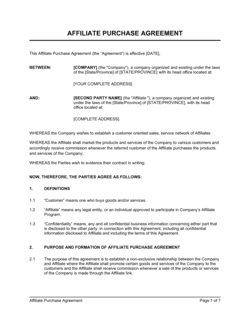
Identify both parties with full legal names
Enter the registered legal entity name (or full legal name for individuals), entity type, and address for both buyer and seller. Do not use trade names, DBAs, or abbreviations.
💡 For business sellers, cross-check the exact entity name against the applicable corporate registry filing before signing.
2
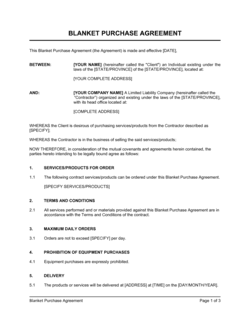
Describe the goods or assets precisely
List each item being sold with its description, quantity, model number, serial number if applicable, and condition. For bulk goods, attach a Schedule A with the full itemized list.
💡 Photographs of the goods taken on the signing date, attached as an exhibit, significantly reduce post-closing disputes about condition.
3
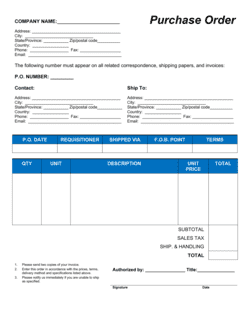
Enter the purchase price and payment structure
State the total purchase price, any deposit amount due at signing, the remaining balance, the payment due date, and the exact payment method (wire, ACH, certified check).
💡 For transactions over $5,000, always specify wire or certified funds — personal checks introduce a post-delivery reversal risk that is difficult to resolve contractually.
4
Set delivery terms and the acceptance window
Specify the delivery address or pickup location, the delivery date or deadline, and the number of business days the buyer has to inspect and reject the goods after receipt.
💡 A 3-to-5 business day inspection window is standard for goods transactions; shorter windows favor the seller, longer ones favor the buyer.
5
Allocate risk of loss and state when title transfers
Choose whether title and risk pass at seller's premises (FOB Origin), at the buyer's address (FOB Destination), or upon receipt of final payment. Align this with your insurance coverage.
💡 If you are the buyer and the seller insists on FOB Origin, confirm your own cargo insurance covers the goods in transit before signing.
6
Choose between a limited warranty and an as-is sale
If selling new or conforming goods, include a limited warranty of description conformance. For used goods sold without guarantee, include a conspicuous all-caps as-is disclaimer covering merchantability and fitness for purpose.
💡 In many US states, the UCC requires warranty disclaimers to be in a larger font or all caps to be enforceable — use the template's pre-formatted disclaimer block.
7
Complete the governing law and dispute resolution clause
Choose the jurisdiction whose law will govern the agreement — typically the state or province where the seller is located or where delivery occurs. Select arbitration for privacy and speed, or litigation if injunctive relief may be needed.
💡 Arbitration is generally faster and cheaper for disputes under $50,000; litigation preserves the right to seek emergency injunctive relief without waiting for an arbitrator to be appointed.
8
Execute before any payment or delivery occurs
Both parties must sign and date the agreement before the buyer transfers any funds or the seller releases any goods. File the executed copy with your business records.
💡 Use a digital signature platform that timestamps execution and records the signer's identity — this is critical evidence if a dispute arises over whether the agreement was signed before or after delivery.