Purchase Agreement Template

Free Word download β€’ Edit online β€’ Save & share with Drive β€’ Export to PDF

37 pagesβ€’45 min – 1h to fillβ€’Difficulty: Expertβ€’Signature requiredβ€’Legal review recommended
Learn more ↓
FreePurchase Agreement Template

At a glance

What it is
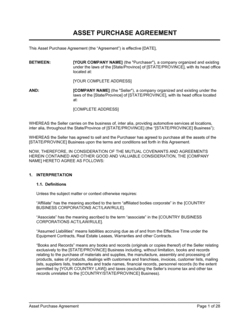
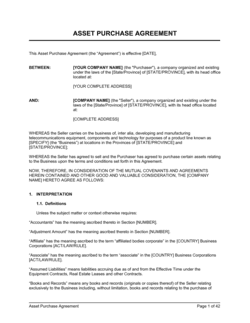
A Purchase Agreement is a legally binding contract between a buyer and a seller that documents the terms and conditions governing the transfer of goods, assets, or property in exchange for payment. This free Word download gives you a professionally structured template you can edit online and export as PDF β€” covering purchase price, payment schedule, delivery terms, warranties, representations, and closing conditions in a single document.
When you need it
Use it whenever you are buying or selling physical goods, business assets, equipment, or real property and need an enforceable written record of the agreed terms before the transaction closes. It is especially important when the value of the transaction exceeds a few hundred dollars, payment is deferred or structured in installments, or either party needs protection against misrepresentation or undisclosed liabilities.
What's inside
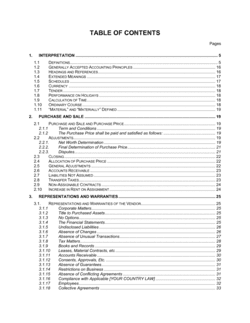
Identification of buyer and seller, description of the goods or assets being transferred, purchase price and payment terms, representations and warranties, conditions to closing, risk-of-loss provisions, default and remedies, indemnification, and governing law. A schedules section lists any assets, exceptions, or disclosures attached as exhibits.

What is a Purchase Agreement?

A Purchase Agreement is a legally binding contract between a buyer and a seller that governs the transfer of goods, assets, or property in exchange for an agreed purchase price. It identifies both parties by their legal names, precisely describes what is being sold, sets out the payment structure and timeline, and establishes the representations, warranties, conditions to closing, and remedies that protect both sides if something goes wrong before or after the transaction closes. Unlike a simple receipt or informal bill of sale, a purchase agreement creates a full contractual framework that allocates risk, caps liability, and gives both parties a clear legal foundation if a dispute arises.

Why You Need This Document

Without a signed purchase agreement, you have no enforceable basis for recouping losses if the seller misrepresents the condition of what you are buying, if the buyer walks away after you have taken the asset off the market, or if an undisclosed lien surfaces after closing. The absence of a written agreement forces both parties into common-law defaults β€” which vary by jurisdiction and rarely reflect what either party actually intended. For sellers, the risk is a buyer who defaults with no financial consequence. For buyers, the risk is purchasing assets with hidden defects, tax arrears, or pending litigation that the seller was never contractually obligated to disclose. This template gives you a professionally structured starting point that covers the terms experienced commercial lawyers negotiate on every transaction β€” purchase price, asset schedules, representations and warranties, conditions to closing, indemnification, and default remedies β€” so you can move quickly without starting from a blank page.

Which variant fits your situation?

If your situation is…Use this template
Buying or selling the assets of an operating businessAsset Purchase Agreement
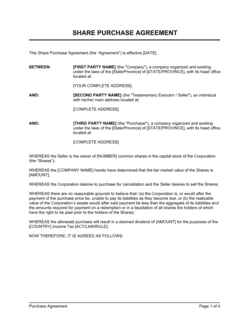
Buying or selling shares in a company rather than its assetsShare Purchase Agreement
Purchasing commercial or residential real propertyReal Estate Purchase Agreement
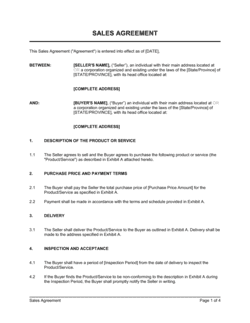
Selling physical goods or inventory between businessesSales Agreement
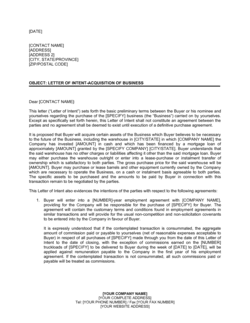
Agreeing to terms before a formal purchase agreement is draftedLetter of Intent
Purchasing software, licenses, or digital productsSoftware Purchase Agreement
Buying a vehicle from a private seller or dealerVehicle Purchase Agreement

Common mistakes to avoid

❌ Vague or incomplete asset description

Why it matters: Disputes over whether a specific piece of equipment or contract was included in the sale are among the most common post-closing conflicts and are expensive to resolve.

Fix: Attach a numbered Schedule A listing every asset by make, model, serial number, or unique identifier, and have both parties initial it at signing.

❌ No deposit or forfeiture clause

Why it matters: Without a deposit and a forfeiture provision, a buyer can walk away from a signed agreement with no financial consequence, leaving the seller to restart the sale process.

Fix: Require a deposit of 5–10% of the purchase price at signing with a clause specifying it is forfeited to the seller as liquidated damages if the buyer defaults without cause.

❌ Omitting a survival clause for representations and warranties

Why it matters: Without a survival clause, representations expire at closing β€” meaning the buyer has no post-closing recourse if a warranted fact turns out to be false.

Fix: Include an explicit survival clause stating that all representations and warranties survive closing for a defined period, typically 12–24 months.

❌ No indemnification cap or basket

Why it matters: Unlimited indemnification exposure can dwarf the deal value β€” a minor warranty breach could theoretically expose the seller to liability far exceeding the purchase price.

Fix: Negotiate a deductible basket (claims below a threshold are ignored) and a liability cap expressed as a percentage of the purchase price, typically 10–100% depending on deal size.

❌ Choosing a governing law with no connection to the transaction

Why it matters: Courts may decline to enforce a governing-law clause that is purely opportunistic, applying local law instead β€” which may include consumer protection or mandatory disclosure rules the parties tried to avoid.

Fix: Choose the jurisdiction where the seller is located, where the assets are situated, or where the buyer operates β€” and have a genuine reason for the choice.

❌ Signing after funds or assets have already transferred

Why it matters: A purchase agreement signed after the transaction has occurred may be treated as a confirmation document rather than a binding contract, weakening the enforceability of warranties and indemnities.

Fix: Execute the agreement before any payment, delivery, or transfer takes place β€” even a one-day gap between signing and closing is better than signing after the fact.

The 10 key clauses, explained

Parties and Recitals

In plain language: Identifies the buyer and seller by their full legal names and entity types, and briefly states the purpose of the agreement.

Sample language
This Purchase Agreement ('Agreement') is entered into as of [DATE] by and between [SELLER LEGAL NAME], a [STATE] [ENTITY TYPE] ('Seller'), and [BUYER LEGAL NAME], a [STATE] [ENTITY TYPE] ('Buyer').

Common mistake: Using a trade name or DBA instead of the registered legal entity name β€” this can make the agreement unenforceable against the intended party or create confusion about who owns the obligation.

Description of Goods or Assets

In plain language: Precisely identifies what is being sold β€” including any serial numbers, schedules of assets, or property descriptions β€” so there is no ambiguity about what transfers at closing.

Sample language
Seller agrees to sell and transfer to Buyer, and Buyer agrees to purchase from Seller, the assets described in Schedule A attached hereto (the 'Assets'), free and clear of all liens and encumbrances except as set forth therein.

Common mistake: Using a vague description like 'all equipment on the premises' instead of a detailed schedule β€” disputes routinely arise over whether a specific item was included in the sale.

Purchase Price and Payment Terms

In plain language: States the total amount the buyer will pay, the payment method, the payment schedule (lump sum or installments), and whether any deposit applies.

Sample language
The total purchase price for the Assets shall be [$ AMOUNT] ('Purchase Price'), payable as follows: (a) a deposit of [$ AMOUNT] due on [DATE]; (b) the balance of [$ AMOUNT] due at Closing by wire transfer to Seller's account on file.

Common mistake: Omitting the currency and payment method, leaving ambiguity about whether a check, wire, or cash payment satisfies the obligation β€” particularly in cross-border transactions.

Representations and Warranties of Seller

In plain language: The seller's binding factual statements about ownership, absence of liens, accuracy of financial information, and the condition of what is being sold.

Sample language
Seller represents and warrants that: (a) Seller has good and marketable title to the Assets, free and clear of all liens; (b) the Assets are in good working condition as of the date hereof; (c) there is no pending or threatened litigation affecting the Assets.

Common mistake: Accepting boilerplate seller warranties without tailoring them to the actual assets β€” a seller warranting 'good working condition' for equipment that has known defects creates immediate post-closing liability.

Representations and Warranties of Buyer

In plain language: The buyer's statements confirming authority to enter the agreement, financial capacity to close, and absence of conflicts that would impair the purchase.

Sample language
Buyer represents and warrants that: (a) Buyer has full legal authority to execute and perform this Agreement; (b) Buyer has, or will have at Closing, sufficient funds to pay the Purchase Price; (c) execution of this Agreement does not violate any other agreement to which Buyer is a party.

Common mistake: Omitting buyer representations entirely, which leaves the seller with no recourse if the buyer lacks authority or financing to close the deal.

Conditions to Closing

In plain language: Lists the specific conditions each party must satisfy before either is obligated to complete the transaction β€” such as due diligence completion, regulatory approvals, or financing.

Sample language
The obligations of Buyer to consummate the transactions contemplated herein are conditioned upon: (a) Seller's representations being true and correct in all material respects as of the Closing Date; (b) Buyer's completion of due diligence to Buyer's reasonable satisfaction; (c) receipt of all required regulatory approvals.

Common mistake: Drafting conditions so broadly β€” 'Buyer's satisfaction in its sole discretion' β€” that the buyer can walk away for any reason, eliminating the binding nature of the agreement for the seller.

Risk of Loss and Delivery

In plain language: Specifies when title and risk of damage or destruction pass from seller to buyer, and who is responsible for delivery costs and logistics.

Sample language
Title to and risk of loss of the Assets shall pass to Buyer at Closing. Seller shall deliver the Assets to [LOCATION / BUYER'S PREMISES] no later than [DATE], at [SELLER'S / BUYER'S] expense.

Common mistake: Leaving risk of loss undefined β€” if goods are damaged in transit and the agreement is silent on this point, courts apply UCC default rules that may not reflect the parties' intent.

Indemnification

In plain language: Requires each party to compensate the other for losses caused by a breach of their representations, warranties, or obligations under the agreement.

Sample language
Seller shall indemnify, defend, and hold harmless Buyer from and against any losses, damages, or liabilities arising from: (a) any breach of Seller's representations or warranties; (b) any undisclosed lien or encumbrance on the Assets; (c) any pre-closing liabilities of Seller.

Common mistake: No indemnification cap or survival period β€” without limits, a seller can face unlimited liability for years after closing based on a minor warranty breach.

Default and Remedies

In plain language: Defines what constitutes a breach, the notice required before declaring a default, and the available remedies β€” including deposit forfeiture, specific performance, or damages.

Sample language
If Buyer fails to close by the Closing Date without cause, Seller may retain the deposit as liquidated damages as Seller's sole remedy. If Seller defaults, Buyer may pursue specific performance or seek a full refund of the deposit plus documented expenses.

Common mistake: Stating that the deposit is the 'sole remedy' for all defaults β€” this prevents the non-defaulting party from recovering actual damages in cases where the deposit is far less than the real loss.

Governing Law and Dispute Resolution

In plain language: Specifies the jurisdiction whose law governs the agreement and how disputes will be resolved β€” litigation, arbitration, or mediation.

Sample language
This Agreement shall be governed by the laws of the State of [STATE], without regard to conflicts-of-law principles. Any dispute arising hereunder shall be resolved by binding arbitration administered by [AAA / JAMS] in [CITY, STATE], except claims for injunctive relief.

Common mistake: Choosing a governing law with no connection to either party's location or the transaction β€” courts may refuse to honor a governing-law clause that is purely forum-shopping.

How to fill it out

  1. 1

    Identify both parties with their legal entity names

    Enter the full registered legal name and entity type (LLC, corporation, individual) of both buyer and seller. Include the state or country of formation for any business entity.

    πŸ’‘ Pull the exact name from the state's corporate registry β€” a minor misspelling can create ambiguity about which entity is bound.

  2. 2

    Describe the goods or assets with precision

    List every item being transferred β€” equipment by make, model, and serial number; real property by legal description; business assets by category. Attach a Schedule A for long or complex asset lists.

    πŸ’‘ For business asset sales, organize Schedule A into categories (equipment, inventory, IP, contracts) so both parties can verify each bucket independently during due diligence.

  3. 3

    State the purchase price, deposit, and payment schedule

    Enter the total purchase price, any deposit amount and due date, and the balance payment method and deadline. Specify the currency and acceptable payment forms.

    πŸ’‘ For installment payments, include a default provision triggered by a missed payment β€” without it, the seller must sue for breach rather than repossess.

  4. 4

    Tailor the representations and warranties to the transaction

    Review each seller warranty against what you know about the assets. Carve out known issues in disclosure schedules rather than letting a warranty stand that you know is false.

    πŸ’‘ Undisclosed defects that contradict a seller warranty are the most common source of post-closing indemnification claims β€” disclose specifically rather than broadly.

  5. 5

    Set the conditions to closing and the closing date

    List every condition that must be satisfied before either party is obligated to close β€” due diligence, financing, regulatory approval. Set a specific closing date with a drop-dead outside date.

    πŸ’‘ Include a provision allowing one party to waive a condition in writing β€” this gives flexibility without requiring a full amendment.

  6. 6

    Define risk of loss and delivery terms

    Specify the exact moment title and risk pass from seller to buyer, and who bears the cost and responsibility for delivery or transfer.

    πŸ’‘ For goods shipped across state or country lines, reference standard Incoterms (e.g., FOB Origin, FOB Destination) to eliminate ambiguity on delivery risk.

  7. 7

    Set the indemnification scope and caps

    Define the categories of indemnifiable losses, the survival period for representations (typically 12–24 months post-closing), and a maximum liability cap β€” often expressed as a percentage of the purchase price.

    πŸ’‘ A 100% purchase price cap is common for small transactions; larger deals often negotiate a basket (deductible) and a cap of 10–30% of deal value.

  8. 8

    Execute before the transaction closes

    Both parties must sign the agreement before any funds are transferred or assets change hands. Use dated signature blocks and retain fully executed copies for both parties.

    πŸ’‘ For high-value transactions, use a witnessed or notarized signature block β€” some jurisdictions require notarization for real property transfers regardless of the agreement's other terms.

Frequently asked questions

What is a purchase agreement?

A purchase agreement is a legally binding contract between a buyer and a seller that sets out the terms and conditions for the transfer of goods, assets, or property in exchange for an agreed price. It identifies both parties, describes what is being sold, states the purchase price and payment terms, and includes protections such as warranties, conditions to closing, and remedies for default. A signed purchase agreement creates enforceable obligations on both sides before the transaction closes.

What is the difference between a purchase agreement and a bill of sale?

A purchase agreement governs the terms and conditions leading up to a transaction β€” payment schedule, conditions to closing, warranties, and remedies. A bill of sale is the document that actually transfers title at the moment of closing, serving as evidence that ownership has passed. The purchase agreement comes first and drives the transaction; the bill of sale is the closing document that executes the transfer.

When do I need a purchase agreement?

Use a purchase agreement whenever the transaction involves meaningful value, deferred or structured payment, undisclosed liabilities, or a gap in time between agreement and closing. For simple cash transactions involving low-value goods, a receipt may suffice. For equipment, business assets, real property, or any deal above a few hundred dollars, a signed purchase agreement is strongly advisable to protect both parties.

What is the difference between an asset purchase agreement and a share purchase agreement?

An asset purchase agreement transfers specific assets β€” equipment, inventory, IP, customer contracts β€” from the seller's business to the buyer, leaving the selling entity intact. A share purchase agreement transfers ownership of the entire company by transferring its shares, including all assets and liabilities. Buyers typically prefer asset purchases to avoid inherited liabilities; sellers often prefer share sales for tax reasons. Both require careful legal review.

Does a purchase agreement need to be notarized?

For most goods and business asset transactions, notarization is not required for a purchase agreement to be enforceable. However, real property transfers in many US states and other jurisdictions require notarized signatures β€” either on the purchase agreement itself or on the deed executed at closing. When in doubt about a specific transaction type or jurisdiction, consult a lawyer before signing.

What happens if one party breaches a purchase agreement?

The non-defaulting party is generally entitled to the remedies specified in the agreement β€” which may include retaining the deposit, seeking specific performance (a court order compelling the transaction to close), or claiming actual damages. If the agreement is silent on remedies, courts apply jurisdiction-specific contract law defaults, which vary significantly. A well-drafted default and remedies clause eliminates this uncertainty.

Can I use a purchase agreement for real estate?

Yes, a purchase agreement is the standard contract used in real estate transactions to document the agreed price, contingencies (financing, inspection, appraisal), and closing timeline before the deed transfers. However, real estate purchase agreements must typically comply with jurisdiction-specific statutory requirements β€” mandatory disclosures, form requirements, and notarization. Using a generic template without local legal review is higher risk for real property than for goods or business assets.

What are representations and warranties in a purchase agreement?

Representations and warranties are factual statements each party makes about the subject matter of the transaction. The seller typically warrants that it owns the assets free of liens, that financial statements are accurate, and that there are no undisclosed liabilities. The buyer warrants that it has authority and funds to close. A breach of a representation or warranty after closing typically triggers the indemnification clause, requiring the breaching party to compensate the other for resulting losses.

Do I need a lawyer to draft a purchase agreement?

For straightforward commercial transactions involving goods or equipment between businesses, a quality template is typically sufficient for deals under $50,000. For business acquisitions, real property, transactions with complex payment structures, or deals involving regulatory approvals, engaging a lawyer for at least a template review is advisable. Legal review typically costs $500–$2,000 and is proportionate to the risk of a deal worth tens or hundreds of thousands of dollars.

How this compares to alternatives

vs Letter of Intent

A letter of intent outlines the proposed terms of a deal in a preliminary, typically non-binding document used to signal agreement in principle before the parties invest in drafting a full contract. A purchase agreement is the binding document that follows β€” it includes full representations, conditions, indemnities, and remedies. Use an LOI to align on price and structure; use a purchase agreement to close the deal.

vs Sales Agreement

A sales agreement typically governs recurring or ongoing commercial transactions β€” supply relationships, product distribution, or service delivery β€” rather than a single transfer of ownership. A purchase agreement documents a discrete one-time transaction transferring title to specific goods or assets. Use a sales agreement for vendor relationships; use a purchase agreement for an identifiable acquisition or sale event.

vs Share Purchase Agreement

A share purchase agreement transfers ownership of a company by acquiring its shares, including all of the company's assets and liabilities. A purchase agreement transfers only the specific assets listed β€” leaving the seller's legal entity and its other obligations intact. Buyers typically prefer asset deals to control liability exposure; sellers may prefer share deals for capital gains tax treatment.

vs Bill of Sale

A bill of sale is a simple closing document that records the transfer of title at a specific moment in time. It does not include conditions to closing, representations, warranties, or remedies. A purchase agreement governs everything leading up to and through closing, while the bill of sale is the title-transfer instrument executed at the closing table. For any transaction above minimal value, a purchase agreement is needed alongside the bill of sale.

Industry-specific considerations

Manufacturing and wholesale

Bulk equipment purchases, raw material supply agreements, and production-line asset acquisitions require detailed asset schedules and risk-of-loss provisions tied to delivery milestones.

Real estate and construction

Commercial and residential property sales depend on purchase agreements that include financing contingencies, inspection periods, title search conditions, and jurisdiction-mandated disclosure schedules.

Technology and SaaS

Software asset and IP portfolio acquisitions require precise schedules of transferred licenses, source code repositories, and domain assets alongside representations on IP ownership and absence of infringement claims.

Retail and e-commerce

Inventory bulk purchases, store acquisition deals, and supplier asset transfers use purchase agreements to document SKU-level asset schedules, warranty disclaimers, and return or defect provisions.

Healthcare and life sciences

Medical equipment and practice asset acquisitions require regulatory compliance representations, FDA clearance disclosures, and patient-record transfer protocols that standard templates must be augmented to address.

Professional services

Acquiring a client book, practice, or book of business involves purchase agreements with non-solicitation carve-outs, client consent conditions, and deferred earnout payments tied to client retention post-closing.

Jurisdictional notes

United States

Article 2 of the Uniform Commercial Code (UCC) governs the sale of goods in all US states and implies warranties of merchantability and fitness that can be disclaimed only by explicit 'as-is' language in the agreement. Real property sales are governed by state law and typically require mandatory disclosure forms. Non-compete and earnout provisions in business asset sales are subject to significant variation by state β€” California limits post-sale non-competes to narrow circumstances.

Canada

Provincial sale-of-goods legislation (based on the UK Sale of Goods Act) implies quality and fitness warranties in commercial transactions. Quebec follows civil law principles rather than common law, which affects how contracts are interpreted and what default terms apply. Business asset purchases may trigger bulk sales legislation in certain provinces, requiring advance notice to creditors before assets transfer. HST and GST treatment of asset transfers varies by asset category.

United Kingdom

The Sale of Goods Act 1979 and Consumer Rights Act 2015 imply statutory terms about quality and fitness into UK sale contracts that cannot be excluded in B2C transactions. For B2B transactions, exclusion of implied warranties is permitted but must satisfy the reasonableness test under the Unfair Contract Terms Act 1977. Business asset acquisitions may trigger TUPE (Transfer of Undertakings) obligations if employees associated with the assets transfer with the business.

European Union

EU Directive 2019/771 on the sale of goods sets mandatory conformity and warranty standards for consumer transactions across member states. For B2B transactions, contract terms are governed by the national law of the applicable member state β€” France, Germany, and the Netherlands each have distinct commercial code provisions affecting asset transfers. Cross-border asset sales within the EU may also have VAT implications that should be addressed in the payment terms.

Template vs lawyer β€” what fits your deal?

PathBest forCostTime
Use the templateStandard commercial asset or goods transactions under $50,000 between businesses with no unusual liabilities or regulatory complicationsFree30–60 minutes
Template + legal reviewBusiness asset acquisitions, equipment deals above $50,000, or transactions involving deferred payment, earnouts, or IP transfer$500–$2,0002–5 days
Custom draftedFull business acquisitions, real property transactions, cross-border deals, regulated industries, or transactions above $500,000$2,500–$15,000+2–6 weeks

Glossary

Purchase Price
The total amount of money the buyer agrees to pay the seller in exchange for the goods, assets, or property being transferred.
Closing
The point at which all conditions to the transaction have been met, title or ownership transfers, and payment is made.
Representations and Warranties
Factual statements made by one or both parties about the condition, ownership, and legal status of what is being sold β€” breach of which can give rise to indemnification claims.
Conditions to Closing
Specific events or actions that must occur before either party is obligated to complete the transaction β€” such as regulatory approval or financing.
Indemnification
A clause requiring one party to compensate the other for losses, damages, or liabilities arising from a breach of the agreement or a misrepresentation.
Risk of Loss
The point in the transaction at which responsibility for damage or destruction of the goods or property shifts from seller to buyer.
Earnest Money / Deposit
A sum paid by the buyer upfront to demonstrate good faith, typically applied to the purchase price at closing or forfeited if the buyer defaults.
As-Is Clause
A provision stating the buyer accepts the goods or property in their current condition, waiving the seller's implied warranty of merchantability or fitness.
Escrow
An arrangement in which a neutral third party holds funds or documents until all closing conditions are satisfied by both parties.
Material Adverse Change (MAC)
A clause allowing the buyer to walk away from the deal if a significant negative event materially affects the value or condition of what is being purchased before closing.
Bill of Sale
A separate document that formally transfers title to specific goods or assets from seller to buyer at the moment of closing.

Part of your Business Operating System

This document is one of 3,000+ business & legal templates included in Business in a Box.

  • Fill-in-the-blanks β€” ready in minutes
  • 100% customizable Word document
  • Compatible with all office suites
  • Export to PDF and share electronically

Create your document in 3 simple steps.

From template to signed document β€” all inside one Business Operating System.
1
Download or open template

Access over 3,000+ business and legal templates for any business task, project or initiative.

2
Edit and fill in the blanks with AI

Customize your ready-made business document template and save it in the cloud.

3
Save, Share, Send, Sign

Share your files and folders with your team. Create a space of seamless collaboration.

Save time, save money, and create top-quality documents.

β˜…β˜…β˜…β˜…β˜…

"Fantastic value! I'm not sure how I'd do without it. It's worth its weight in gold and paid back for itself many times."

Managing Director Β· Mall Farm
Robert Whalley
Managing Director, Mall Farm Proprietary Limited
β˜…β˜…β˜…β˜…β˜…

"I have been using Business in a Box for years. It has been the most useful source of templates I have encountered. I recommend it to anyone."

Business Owner Β· 4+ years
Dr Michael John Freestone
Business Owner
β˜…β˜…β˜…β˜…β˜…

"It has been a life saver so many times I have lost count. Business in a Box has saved me so much time and as you know, time is money."

Owner Β· Upstate Web
David G. Moore Jr.
Owner, Upstate Web

Run your business with a system β€” not scattered tools

Stop downloading documents. Start operating with clarity. Business in a Box gives you the Business Operating System used by over 250,000 companies worldwide to structure, run, and grow their business.

Start freeΒ Β·Β No credit card required