Safe Driving Policy Template

Free Word download β€’ Edit online β€’ Save & share with Drive β€’ Export to PDF

3 pagesβ€’20–30 min to fillβ€’Difficulty: Standard
Learn more ↓
FreeSafe Driving Policy Template

At a glance

What it is
A Safe Driving Policy is an internal company document that establishes the rules, expectations, and procedures governing employee use of company-owned, leased, or personal vehicles for work purposes. This free Word download gives you a structured, ready-to-edit template covering everything from license verification and vehicle inspection to distracted driving rules and accident reporting β€” exportable as PDF for distribution to your team.
When you need it
Use it when your business operates a fleet, reimburses employees for mileage, or sends staff on client visits or deliveries using any vehicle. It becomes essential the moment a single employee drives on company time, because your organization's liability begins the moment they pull out of the parking lot.
What's inside
Policy scope and eligibility criteria, vehicle authorization and license verification procedures, rules for distracted and impaired driving, pre-trip inspection requirements, accident and incident reporting steps, consequences for policy violations, and a driver acknowledgment section for signature.

What is a Safe Driving Policy?

A Safe Driving Policy is a formal internal document that establishes the rules, expectations, and procedures employees must follow when operating any vehicle β€” company-owned, leased, or personal β€” in the course of their work. It covers who is authorized to drive, what conduct is required and prohibited behind the wheel, how vehicles must be inspected before use, and exactly what steps to follow if an accident or incident occurs. Beyond setting behavioral standards, the policy creates a documented framework that protects the company from vicarious liability claims arising from employee driving activities and demonstrates to insurers that the organization manages driver risk proactively.

Why You Need This Document

The moment an employee drives for work β€” even once, in their own car, to attend a single client meeting β€” your organization takes on potential liability for anything that happens on that trip. Without a written safe driving policy, you have no documented conduct standards to enforce, no accident reporting protocol your team knows to follow, and no evidence that your organization exercised reasonable care to prevent driver-related harm. In a post-accident liability claim or insurance dispute, "we assumed employees would drive safely" is not a defense. A properly distributed and acknowledged safe driving policy establishes a clear standard of care, enables consistent disciplinary action for violations, and gives your fleet insurer concrete evidence of your risk management practices β€” which can directly influence your premiums and coverage terms. This template gives you a complete, ready-to-customize starting point so you can close that exposure gap in under an hour.

Which variant fits your situation?

If your situation is…Use this template
Company owns or leases a dedicated vehicle fleetFleet Vehicle Policy
Employees use personal vehicles for work and are reimbursed for mileageMileage Reimbursement Policy
Drivers must be formally trained and certified before operating equipmentDriver Safety Training Program
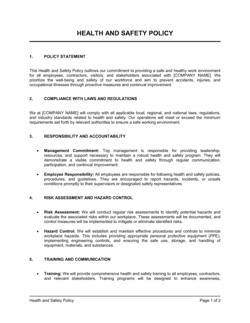
Field workforce requires a complete health, safety, and environment manualHealth and Safety Policy
Remote or traveling employees need a comprehensive travel expense frameworkEmployee Travel Policy
Organization needs a full workplace safety management systemWorkplace Safety Policy
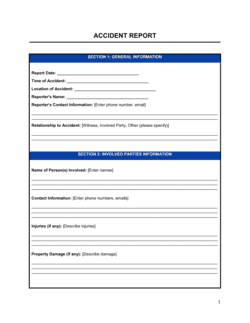
Incident requires formal documentation for insurance or legal recordsAccident Report Form

Common mistakes to avoid

❌ Scoping the policy only to company-owned vehicles

Why it matters: Employees driving personal cars on company business create identical vicarious liability. An accident during a client visit in a personal vehicle can expose the company to the same claims as one in a company truck.

Fix: Explicitly include BYOV arrangements in the scope section and require the same conduct standards and accident reporting procedures regardless of vehicle ownership.

❌ Never re-verifying driver eligibility after initial hire

Why it matters: A license suspended after hire leaves the company exposed if the employee continues driving on company time without anyone knowing. A single accident in this scenario dramatically increases liability.

Fix: Schedule annual MVR checks for all authorized drivers and suspend driving authorization automatically upon notification of any license suspension or DUI charge.

❌ Vague accident reporting timelines

Why it matters: Requiring reports 'as soon as possible' leads to delays that compromise insurance claims, evidence collection, and legal defense β€” some insurers have strict notification windows that the company must also meet.

Fix: Set a specific maximum reporting window (24 hours is standard) and name the exact person or system to notify, so drivers know exactly what to do immediately after an incident.

❌ No signed driver acknowledgment on file

Why it matters: Without a signed acknowledgment, employees can credibly claim they never received or read the policy β€” removing the legal protection the policy was written to create.

Fix: Require every covered employee to sign a dated acknowledgment form before they drive for the first time under the policy, and re-collect signatures when the policy is updated.

❌ Omitting consequences for specific high-severity violations

Why it matters: A policy that lists general 'disciplinary action' without specifying outcomes for DUI or reckless driving gives managers no clear authority to act and leaves the company exposed to inconsistent enforcement claims.

Fix: Name the automatic consequence for each high-severity violation β€” for example, immediate driving authorization suspension for any DUI charge, regardless of outcome in court.

❌ Failing to update the policy after fleet or role changes

Why it matters: A policy written for sedans is inadequate when the fleet expands to include commercial vans or heavy equipment β€” different vehicle classes carry different license requirements, inspection standards, and insurance conditions.

Fix: Schedule a policy review whenever the company adds a new vehicle class, changes its insurance coverage, or modifies roles that involve driving, and re-distribute the updated version with fresh acknowledgments.

The 9 key sections, explained

Purpose and scope

Driver eligibility and authorization

Vehicle inspection and maintenance

Rules of the road and prohibited conduct

Seat belt and safety equipment requirements

Accident and incident reporting

Traffic violations and fines

Consequences and disciplinary action

Driver acknowledgment and sign-off

How to fill it out

  1. 1

    Define the scope and covered vehicle types

    Fill in your company name and specify whether the policy covers company-owned vehicles, leased vehicles, personal vehicles used for work (BYOV), or all three. List the job roles or departments the policy applies to.

    πŸ’‘ If your business uses any BYOV arrangement, include it explicitly β€” the liability exposure is identical to a company-owned vehicle once an employee is driving on company time.

  2. 2

    Set driver eligibility criteria

    Specify the minimum license class required, the maximum number of demerit points or moving violations that disqualify a driver, and how often MVR checks will be conducted (annually is standard).

    πŸ’‘ For roles requiring commercial vehicle operation, verify the specific license class required by your jurisdiction before filling in this section.

  3. 3

    Customize the prohibited conduct list

    Review the default list of prohibited behaviors and add any rules specific to your industry or vehicle types β€” for example, no eating while driving for passenger transport, or no personal errands in delivery vehicles.

    πŸ’‘ Cross-reference your fleet insurance policy for any conduct exclusions; behaviors that void insurance coverage should always be explicitly prohibited in writing.

  4. 4

    Insert inspection and maintenance responsibilities

    Name the person responsible for fleet maintenance scheduling, specify the pre-trip inspection frequency, and attach or reference your vehicle inspection checklist as an appendix.

    πŸ’‘ Link the inspection checklist to a digital form employees can complete on a mobile device β€” this creates a time-stamped record that is invaluable in post-accident investigations.

  5. 5

    Fill in the accident reporting chain and timeline

    Enter the name or title of the person to notify after an incident, the required reporting window (24 hours is standard), and where the completed accident report form should be submitted.

    πŸ’‘ Include your fleet insurer's 24-hour claims line directly in this section so drivers do not have to search for it after an accident.

  6. 6

    Set violation thresholds and disciplinary steps

    Define how many moving violations within a 12-month window trigger a driving authorization review, and map each violation severity to a specific disciplinary outcome (warning, suspension, termination).

    πŸ’‘ Align the disciplinary language with your existing employee handbook β€” inconsistent disciplinary frameworks across policies create confusion and legal exposure.

  7. 7

    Distribute, collect acknowledgments, and file

    Send the completed policy to all covered employees, collect signed acknowledgment forms, and retain a copy in each employee's personnel file. Re-distribute any time the policy is materially updated.

    πŸ’‘ Use an e-signature tool to collect acknowledgments β€” this creates a timestamped audit trail that paper forms cannot match.

Frequently asked questions

What is a safe driving policy?

A safe driving policy is an internal company document that sets the rules and procedures employees must follow when operating any vehicle for work purposes β€” whether company-owned, leased, or personally owned. It covers driver eligibility, prohibited conduct (such as mobile phone use and impaired driving), vehicle inspection requirements, accident reporting steps, and the consequences for violations. Its primary functions are protecting employees on the road and reducing the company's vicarious liability exposure.

Does my company need a safe driving policy?

Any business where employees drive on company time β€” even occasionally β€” benefits from a written safe driving policy. Without one, you have no documented standard of conduct to enforce, no accident reporting protocol in place, and no evidence that you took reasonable steps to manage driver risk if a liability claim arises. For businesses operating a vehicle fleet, most commercial auto insurers expect or require one.

Does a safe driving policy apply to employees using their own cars?

Yes β€” vicarious liability applies whenever an employee is driving in the scope of their employment, regardless of who owns the vehicle. If an employee causes an accident while traveling to a client meeting in their personal car, the employer can be held liable. Your policy should explicitly cover bring-your-own-vehicle (BYOV) arrangements and require employees to carry minimum personal auto insurance limits as a condition of authorization.

How often should a safe driving policy be reviewed and updated?

Review the policy at least once a year, and also whenever your fleet composition changes, your commercial auto insurance is renewed, applicable traffic or employment laws change in your jurisdiction, or a significant accident or near-miss reveals a gap in your procedures. Re-distribute the updated policy and collect fresh employee acknowledgments each time a material change is made.

Should employees sign a safe driving policy?

Yes. A signed driver acknowledgment form is one of the most important elements of the policy. It creates a documented record that the employee received, read, and agreed to comply with the requirements β€” removing their ability to claim ignorance in a disciplinary proceeding or liability claim. Collect acknowledgments at onboarding and whenever the policy is updated.

Can a safe driving policy help reduce insurance premiums?

It often can. Many commercial fleet insurers offer lower premiums or reduced deductibles to businesses that maintain a written safe driving policy, conduct regular MVR checks, and use fleet telematics to monitor driver behavior. Provide a copy of your policy to your insurance broker at renewal β€” it demonstrates proactive risk management and may influence your risk classification.

What should happen immediately after a company vehicle accident?

The driver should first ensure the safety of all parties and call emergency services if needed. They should not admit fault or liability at the scene. They should exchange insurance and contact information with all other parties, document the scene with photos if it is safe to do so, and notify the designated company contact as soon as possible β€” ideally within the reporting window specified in your policy (typically 24 hours). The completed accident report form should be submitted within the same window.

What is vicarious liability and why does it matter for driving policies?

Vicarious liability means an employer can be held legally responsible for harm caused by an employee acting within the scope of their employment. When an employee causes a vehicle accident while on company time, the injured party can typically sue both the employee and the employer. A documented safe driving policy β€” consistently enforced β€” demonstrates that the company took reasonable steps to prevent such harm, which can reduce damages or strengthen a legal defense.

How does a safe driving policy differ from a fleet management policy?

A safe driving policy governs driver conduct and behavior β€” rules of the road, phone use, impairment, accident reporting, and consequences for violations. A fleet management policy is broader and covers vehicle acquisition, maintenance scheduling, fuel management, telematics, and disposal of vehicles. Many businesses use both: the safe driving policy sets behavioral standards, while the fleet management policy governs the vehicles themselves. For smaller fleets, one combined document often suffices.

How this compares to alternatives

vs Health and safety policy

A health and safety policy covers the full spectrum of workplace hazards β€” equipment, chemicals, ergonomics, and emergency procedures. A safe driving policy is a focused subset addressing vehicle operation specifically. Businesses with field workforces typically need both: the H&S policy as the overarching framework and the safe driving policy as a detailed operational standard for driving activities.

vs Employee travel policy

An employee travel policy governs all business travel β€” flights, hotels, expense limits, and booking procedures. A safe driving policy focuses exclusively on vehicle operation conduct and liability. If your employees travel primarily by car, the two documents overlap and are often issued together, but the safe driving policy provides the specific driver conduct rules that a general travel policy does not cover.

vs Accident report form

An accident report form is the document an employee completes after an incident has occurred. A safe driving policy is the upstream governance document that defines the conduct standards, reporting obligations, and timelines that make the accident report form effective. The policy should reference the report form by name and specify exactly when and how it must be completed.

vs Employee code of conduct

A code of conduct sets broad behavioral and ethical standards across all aspects of employment. A safe driving policy is a specific operational policy that translates those standards into detailed, enforceable rules for vehicle use. For companies with significant driving exposure, the code of conduct alone is too general to satisfy insurer requirements or serve as a credible liability defense.

Industry-specific considerations

Construction and trades

Field crews operating tool trucks, heavy equipment, and site vehicles across multiple locations require daily pre-trip inspections and job-site-specific load and speed rules.

Logistics and delivery

Last-mile delivery operations depend on structured route compliance, real-time telematics monitoring, and strict accident reporting timelines to protect high-volume driver workforces.

Healthcare and home services

Community nurses, home care workers, and mobile service technicians driving between client sites create continuous BYOV liability exposure that requires documented authorization and insurance minimums.

Professional services

Consultants and field sales representatives making client visits in personal or company vehicles need a clear policy covering reimbursement conditions, phone use, and incident reporting.

Template vs pro β€” what fits your needs?

PathBest forCostTime
Use the templateSmall businesses and growing companies establishing a driving policy for the first timeFree30–60 minutes to customize and distribute
Template + professional reviewCompanies with commercial fleets, regulated industries, or workers operating heavy vehicles$200–$600 for an HR consultant or employment lawyer review2–5 business days
Custom draftedLarge logistics operations, government contractors, or businesses with cross-jurisdictional fleets requiring jurisdiction-specific compliance$1,000–$3,000+1–3 weeks

Glossary

Motor Vehicle Record (MVR)
An official report from a government licensing authority showing a driver's license status, violations, suspensions, and accident history.
Authorized Driver
An employee or contractor who has been formally approved by the company to operate a company or work-related vehicle after meeting license and eligibility criteria.
Distracted Driving
Any activity that diverts a driver's attention from the road, including mobile phone use, eating, or adjusting in-vehicle systems while the vehicle is in motion.
Bring Your Own Vehicle (BYOV)
An arrangement in which an employee uses a personally owned vehicle for work travel and is typically reimbursed at a per-mile or per-kilometre rate.
Pre-Trip Inspection
A standardized check performed before operating a vehicle to confirm that lights, tires, mirrors, brakes, and fluid levels meet safe operating standards.
Vicarious Liability
Legal responsibility an employer bears for harm caused by an employee acting within the scope of their employment, including vehicle accidents during work hours.
Accident Report
A structured form completed immediately after a vehicle collision or near-miss, capturing date, location, parties, witnesses, damage, and circumstances.
Moving Violation
A traffic infraction committed while a vehicle is in motion β€” such as speeding, running a red light, or unsafe lane changes β€” recorded on the driver's MVR.
Fleet Telematics
GPS and sensor-based systems installed in vehicles to monitor location, speed, braking behavior, idle time, and other driving metrics in real time.
Driver Acknowledgment Form
A signed document in which an employee confirms they have read, understood, and agreed to comply with the company's safe driving policy.

Part of your Business Operating System

This document is one of 3,000+ business & legal templates included in Business in a Box.

  • Fill-in-the-blanks β€” ready in minutes
  • 100% customizable Word document
  • Compatible with all office suites
  • Export to PDF and share electronically

Create your document in 3 simple steps.

From template to signed document β€” all inside one Business Operating System.
1
Download or open template

Access over 3,000+ business and legal templates for any business task, project or initiative.

2
Edit and fill in the blanks with AI

Customize your ready-made business document template and save it in the cloud.

3
Save, Share, Send, Sign

Share your files and folders with your team. Create a space of seamless collaboration.

Save time, save money, and create top-quality documents.

β˜…β˜…β˜…β˜…β˜…

"Fantastic value! I'm not sure how I'd do without it. It's worth its weight in gold and paid back for itself many times."

Managing Director Β· Mall Farm
Robert Whalley
Managing Director, Mall Farm Proprietary Limited
β˜…β˜…β˜…β˜…β˜…

"I have been using Business in a Box for years. It has been the most useful source of templates I have encountered. I recommend it to anyone."

Business Owner Β· 4+ years
Dr Michael John Freestone
Business Owner
β˜…β˜…β˜…β˜…β˜…

"It has been a life saver so many times I have lost count. Business in a Box has saved me so much time and as you know, time is money."

Owner Β· Upstate Web
David G. Moore Jr.
Owner, Upstate Web

Run your business with a system β€” not scattered tools

Stop downloading documents. Start operating with clarity. Business in a Box gives you the Business Operating System used by over 250,000 companies worldwide to structure, run, and grow their business.

Start freeΒ Β·Β No credit card required