Driving Record Check Letter Template

Free Word download β€’ Edit online β€’ Save & share with Drive β€’ Export to PDF

1 pageβ€’15–25 min to fillβ€’Difficulty: Standard
Learn more ↓
FreeDriving Record Check Letter Template

At a glance

What it is
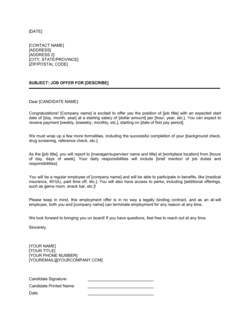
A Driving Record Check Letter is a formal written notice an employer sends to a job applicant or current employee to inform them that the company intends to request their motor vehicle record (MVR) as part of a background screening or ongoing employment review. This free Word download gives you a ready-to-use letter you can edit online and export as PDF in under five minutes.
When you need it
Use it before requesting an MVR from a state DMV or third-party screening provider β€” whenever a role requires operating a company vehicle, personal vehicle for company business, or any commercial driving function. Many jurisdictions require written notice or consent before pulling a driving record.
What's inside
Employer and recipient identification, a clear statement of intent to obtain the driving record, the purpose and scope of the check, consent acknowledgment language, and instructions for the recipient to respond or raise objections.

What is a Driving Record Check Letter?

A Driving Record Check Letter is a formal written notice an employer sends to a job applicant or current employee to inform them that the company intends to obtain their motor vehicle record (MVR) as part of a pre-employment background screening or periodic driver review. The letter identifies the employer and recipient, explains the business reason for the check, describes its scope and the source from which the record will be retrieved, and requests the recipient's written consent before the record is pulled. For roles that involve operating a company vehicle, driving a personal vehicle for business purposes, or any commercial driving function, this letter is the standard first step in a legally defensible screening process.

Why You Need This Document

Pulling a driving record without proper notice and consent exposes an employer to regulatory liability under the FCRA, state DMV disclosure laws, and data privacy statutes β€” even when the check is entirely job-related. Without a documented notice on file, an employer cannot demonstrate that consent was freely and properly obtained, which undermines any adverse employment decision based on the results. Beyond compliance, a clear written notice sets accurate expectations with the applicant or employee, reduces disputes when violations are found, and creates the paper trail required by DOT regulations for carriers managing commercial driver qualification files. This template gives you a professionally formatted, complete notice letter you can customize and send in under ten minutes β€” covering every required element without the cost of drafting from scratch.

Which variant fits your situation?

If your situation is…Use this template
Pre-employment check for a role requiring a company vehicleDriving Record Check Letter (Pre-Employment)
Annual recertification check for existing fleet driversAnnual MVR Review Notice
Notifying an employee of disqualifying violations found during a checkAdverse Action Letter (Driving Record)
Requesting a full background check beyond driving historyBackground Check Authorization Form
Informing an applicant of a conditional offer pending driving record reviewConditional Job Offer Letter
Documenting a driver's ongoing compliance with a fleet safety policyDriver Safety Policy Agreement

Common mistakes to avoid

❌ Omitting the FCRA disclosure when using a third-party CRA

Why it matters: The FCRA requires a separate, standalone disclosure document whenever a consumer reporting agency is used β€” this letter alone does not satisfy that requirement. Non-compliance exposes the employer to statutory damages and class-action risk.

Fix: Attach the FCRA-required Summary of Rights document and a separate CRA disclosure and authorization form any time a third-party screening provider is involved.

❌ Setting a blanket disqualification standard for any violation

Why it matters: Automatic disqualification based on any driving offense β€” regardless of age, severity, or relevance β€” can violate fair-chance hiring laws and EEOC guidance on the use of background checks in employment decisions.

Fix: Adopt an individualized assessment framework that weighs the nature of the violation, how long ago it occurred, and its direct relevance to the driving duties of the specific role.

❌ Using a generic notice that does not name the specific role

Why it matters: An MVR check must be job-related to be defensible. A notice that references no specific position or driving duty is harder to justify if the recipient or a regulator challenges the business necessity.

Fix: Name the job title and briefly describe why driving history is relevant to the role's core duties in the purpose statement.

❌ Not retaining a copy of the signed authorization

Why it matters: Without a signed authorization on file, the employer cannot demonstrate consent was obtained β€” creating liability if the employee later claims the record was pulled without permission.

Fix: File the signed authorization alongside the letter in the applicant's or employee's personnel record immediately upon receipt, and retain it for the duration of employment plus three years.

The 9 key clauses, explained

Date, employer, and recipient identification

In plain language: Opens the letter with the date, the employer's full legal name and address, and the recipient's name and address β€” establishing who is sending the notice and to whom.

Sample language
[DATE] | [EMPLOYER LEGAL NAME] | [ADDRESS] | To: [RECIPIENT FULL NAME] | [RECIPIENT ADDRESS]

Common mistake: Using a department name instead of the employer's legal entity name. If the notice is later cited in an adverse action proceeding, an unrecognized sender name creates confusion.

Purpose statement

In plain language: Clearly states that the employer intends to obtain the recipient's motor vehicle record and explains the business reason β€” typically as part of pre-employment screening or ongoing fleet safety review.

Sample language
[EMPLOYER NAME] intends to obtain your motor vehicle record as part of our [pre-employment background screening / annual driver review] process for the position of [JOB TITLE / ROLE].

Common mistake: Omitting the business reason entirely. Recipients who don't understand why their record is being pulled are more likely to withhold consent or raise a dispute.

Scope of the check

In plain language: Identifies what the record check will cover β€” license status, violations, suspensions, accidents β€” and the look-back period (typically 3 to 7 years).

Sample language
The record check will cover your license status, moving violations, license suspensions or revocations, and any at-fault accidents reported in the past [3 / 5 / 7] years.

Common mistake: Not specifying the look-back period. An undefined scope gives the recipient no basis to anticipate what will be reviewed, which can lead to disputes when older incidents appear.

Source of the check

In plain language: Names the agency or third-party provider that will retrieve the record β€” the state DMV, a consumer reporting agency, or both.

Sample language
This record will be obtained from the [STATE] Department of Motor Vehicles and/or a consumer reporting agency authorized to provide motor vehicle records.

Common mistake: Not disclosing a third-party CRA when one is used. Under the FCRA, employers must disclose CRA use separately from the general notice β€” failure to do so can void the consent and expose the employer to liability.

Consent and authorization request

In plain language: Requests the recipient's written consent to proceed with the record pull, including a signature block or reference to an attached authorization form.

Sample language
By signing below [or the attached Authorization Form], you authorize [EMPLOYER NAME] and its designated screening provider to obtain your motor vehicle record for the purpose described above.

Common mistake: Bundling the MVR consent with a general background check authorization form that covers many other checks. Some jurisdictions require a stand-alone, dedicated authorization for driving records.

Recipient rights disclosure

In plain language: Informs the recipient of their rights β€” including the right to review the record and dispute inaccuracies β€” and references applicable law where relevant.

Sample language
You have the right to request a copy of your motor vehicle record from the [STATE] DMV and to dispute any information you believe to be inaccurate directly with the issuing authority.

Common mistake: Skipping the rights disclosure because the letter is an internal HR document. If the check is conducted through a CRA, FCRA disclosure requirements apply regardless of how the letter is framed.

Impact on employment decision

In plain language: States plainly that the driving record may be a factor in the employment or assignment decision, and that disqualifying violations will trigger a separate adverse action process.

Sample language
The results of this check may be considered in our hiring [or assignment] decision. If the record reveals information that may affect our decision, you will receive a separate notice before any adverse action is taken.

Common mistake: Implying that any violation will automatically disqualify the applicant. Employers should individualize the assessment β€” blanket disqualification policies create legal exposure under fair-chance and anti-discrimination laws.

Contact and response instructions

In plain language: Tells the recipient who to contact with questions, how to return the signed authorization, and the deadline for doing so.

Sample language
Please return the signed authorization to [CONTACT NAME] at [EMAIL / ADDRESS] by [DATE]. If you have questions, contact [CONTACT NAME] at [PHONE / EMAIL].

Common mistake: Setting an unreasonably short response deadline β€” fewer than three business days β€” which can pressure recipients and undermine the voluntariness of their consent.

Closing and sender signature block

In plain language: Closes the letter professionally, includes the sender's name, title, and contact information, and leaves a signature line for the authorized HR or management representative.

Sample language
Sincerely, [SENDER NAME] | [TITLE] | [EMPLOYER NAME] | [PHONE] | [EMAIL]

Common mistake: Leaving the signature block blank or signed by an unauthorized employee. The letter should be signed by an HR manager, hiring manager, or officer with authority to make employment decisions.

How to fill it out

  1. 1

    Enter the employer's legal name and contact details

    Fill in the company's full registered name, mailing address, phone number, and the HR or fleet manager's contact information in the header block.

    πŸ’‘ Use the same legal entity name that appears on your employment offer letters β€” consistency across documents matters if the check is ever referenced in a dispute.

  2. 2

    Address the letter to the specific recipient

    Enter the applicant's or employee's full legal name and current mailing address. If sending by email, note the email address in the header block and retain a copy.

    πŸ’‘ For pre-employment checks, send the letter to the address provided on the application β€” not a work email the applicant may not have set up yet.

  3. 3

    State the role and reason for the check

    Insert the job title or role that requires driving duties and select whether this is a pre-employment check, an annual review, or a for-cause review.

    πŸ’‘ Being specific about the role reduces the chance the recipient disputes the relevance of the check β€” a 'delivery driver' check is self-evidently job-related; a 'marketing coordinator' check is not.

  4. 4

    Define the scope and look-back period

    Specify what the check covers (violations, suspensions, accidents) and the number of years the record will be reviewed β€” typically 3 years for standard roles and 5–7 years for commercial or DOT-regulated drivers.

    πŸ’‘ Check your company's driver safety policy or fleet insurer requirements before setting the look-back period β€” your insurer may mandate a minimum.

  5. 5

    Name the screening source

    Identify whether you will obtain the record directly from the state DMV or through a third-party consumer reporting agency, and name the provider if known.

    πŸ’‘ If you use a CRA, attach the required FCRA Summary of Rights form β€” the letter alone does not satisfy the standalone CRA disclosure requirement.

  6. 6

    Add the consent signature block or attach the authorization form

    Include a signature and date line for the recipient, or reference an attached standalone authorization form if your HR process uses one.

    πŸ’‘ For roles regulated under DOT rules, use a separate DOT-compliant authorization form in addition to this notice letter β€” the two documents serve different compliance purposes.

  7. 7

    Set a clear response deadline

    Enter a specific calendar date by which the signed authorization must be returned β€” a minimum of five business days is standard practice for pre-employment notices.

    πŸ’‘ State what happens if the deadline is missed β€” typically that the application or assignment will be placed on hold β€” so there is no ambiguity about consequences.

  8. 8

    Sign and send the letter

    Have the authorized HR manager or hiring manager sign the letter before sending. Retain a copy in the applicant's or employee's file alongside the returned authorization.

    πŸ’‘ Send by email with read receipt, or by certified mail for any role where DOT or regulatory documentation requirements apply.

Frequently asked questions

What is a driving record check letter?

A driving record check letter is a formal written notice an employer sends to a job applicant or employee to inform them that the company intends to request their motor vehicle record as part of a pre-employment screening or ongoing employment review. It explains the purpose and scope of the check, identifies the source, and typically requests the recipient's written consent before the record is pulled.

When does an employer need to send a driving record check letter?

Any time a role requires operating a company vehicle, driving a personal vehicle for company business, or performing commercial driving functions, the employer should send this letter before requesting the MVR. In many US states, written notice or consent is legally required before pulling a driving record through a consumer reporting agency. Annual recertification programs for existing fleet drivers also typically require a fresh notice each cycle.

What is the difference between a driving record check letter and an adverse action letter?

A driving record check letter is sent before the record is pulled β€” it notifies the recipient and requests consent. An adverse action letter is sent after a disqualifying finding is discovered and before a negative employment decision is made. The two documents serve distinct steps in the screening process: the check letter opens the process; the adverse action letter closes it when the result is unfavorable.

How far back does a driving record check typically go?

Most standard employer checks cover 3 years of driving history. Roles involving commercial vehicles or DOT-regulated driving typically require a 5- to 7-year look-back, and DOT rules mandate a 3-year employment history check in addition to the MVR. Fleet insurers often specify their own minimum look-back periods in the policy terms, which may exceed state minimums.

Can an employer automatically disqualify an applicant based on any driving violation?

Blanket disqualification policies based on any driving violation are legally risky. EEOC guidance and several state laws require employers to conduct an individualized assessment that considers the nature and severity of the offense, the time elapsed since the violation, and the direct relevance to the specific job duties. Categorical bans unrelated to job requirements can constitute unlawful discrimination.

Does this letter satisfy FCRA requirements on its own?

No. If the driving record is obtained through a consumer reporting agency, the FCRA requires a separate standalone disclosure document and a signed authorization form in addition to any notice letter. The employer must also provide the applicant with a copy of their FCRA rights. This letter serves as the employer's notification of intent β€” it does not replace the mandatory FCRA disclosure and authorization documents.

How should employers store driving record check letters and authorizations?

Retain the signed authorization alongside the notice letter in the individual's personnel file for the full duration of employment plus a minimum of three years after separation. For DOT-regulated employers, federal regulations specify exact retention periods for driver qualification files β€” typically three years from the date the record is obtained. Store these records separately from general personnel files where DOT rules require it.

How this compares to alternatives

vs Background Check Authorization Form

A background check authorization form is a broad consent document covering criminal history, credit, employment verification, and references β€” not limited to driving records. A driving record check letter is a targeted notice specific to MVR checks. When a driving check is conducted through a CRA, both documents are typically needed: the letter as employer notice and a standalone authorization form to satisfy FCRA requirements.

vs Adverse Action Letter

An adverse action letter is sent after a disqualifying result is found and before a negative employment decision is finalized. A driving record check letter is sent before the record is pulled to obtain consent. The two documents represent sequential steps in the same process β€” the check letter initiates it; the adverse action letter closes it when the outcome is unfavorable.

vs Conditional Job Offer Letter

A conditional offer letter extends employment contingent on the satisfactory completion of background or driving record checks. A driving record check letter is a procedural notice requesting consent for the check itself β€” it does not convey an offer. The conditional offer typically precedes the driving record notice in the hiring sequence.

vs Driver Safety Policy Agreement

A driver safety policy agreement is an ongoing operational document outlining the rules, responsibilities, and consequences for employees who drive on company business. A driving record check letter is a one-time notice for a specific screening event. The policy agreement governs the entire employment relationship for drivers; the check letter is a discrete compliance step within it.

Industry-specific considerations

Transportation and logistics

DOT-mandated MVR checks for all CDL drivers at hire and annually, with strict look-back requirements and retention rules for driver qualification files.

Construction and field services

Routine checks for site supervisors, equipment operators, and service technicians who drive company trucks or haul materials between job sites.

Healthcare and home services

Home health aides, medical transport drivers, and visiting nurses who drive to patient locations require clean records to satisfy insurer and accreditation requirements.

Retail and delivery

Last-mile delivery drivers and route sales representatives are screened at hire and periodically to manage fleet insurance costs and liability exposure.

Template vs pro β€” what fits your needs?

PathBest forCostTime
Use the templateHR managers, fleet managers, and small business owners conducting standard pre-employment or annual MVR checksFree5–10 minutes per letter
Template + professional reviewEmployers adding FCRA-compliant CRA disclosures or operating in states with specific MVR consent requirements$100–$300 (employment counsel or HR compliance consultant review)1–2 days
Custom draftedDOT-regulated carriers, multi-state fleet operations, or employers building a full driver qualification file process from scratch$500–$1,500 (employment attorney)3–7 days

Glossary

Motor Vehicle Record (MVR)
An official report from a state DMV or equivalent authority listing a driver's license status, violations, suspensions, and accident history.
Adverse Action Notice
A formal letter an employer must send before taking negative employment action based on a background or driving record check, as required under the FCRA in the US.
FCRA (Fair Credit Reporting Act)
A US federal law that regulates how consumer reporting agencies collect and use personal data, including MVR checks obtained through third-party screening providers.
DOT Compliance
Adherence to US Department of Transportation regulations, which require motor carriers to check and retain driving records for all commercial drivers.
Consumer Reporting Agency (CRA)
A third-party company that compiles background information β€” including driving records β€” and provides it to employers for screening purposes.
Pre-Adverse Action
The required step before an employer takes negative action based on a CRA report β€” sending the applicant a copy of the report and a summary of FCRA rights.
License Status
The current standing of a driver's license β€” valid, suspended, revoked, expired, or restricted β€” as recorded by the issuing authority.
Points System
A state-administered scoring method that assigns demerit points to moving violations, accumulating toward license suspension when a threshold is reached.
Commercial Driver's License (CDL)
A license class required to operate large trucks, buses, or hazardous-material vehicles, subject to stricter federal standards than a standard driver's license.
Written Consent
Signed or documented authorization from the individual permitting the employer or third party to request and review their driving record.

Part of your Business Operating System

This document is one of 3,000+ business & legal templates included in Business in a Box.

  • Fill-in-the-blanks β€” ready in minutes
  • 100% customizable Word document
  • Compatible with all office suites
  • Export to PDF and share electronically

Create your document in 3 simple steps.

From template to signed document β€” all inside one Business Operating System.
1
Download or open template

Access over 3,000+ business and legal templates for any business task, project or initiative.

2
Edit and fill in the blanks with AI

Customize your ready-made business document template and save it in the cloud.

3
Save, Share, Send, Sign

Share your files and folders with your team. Create a space of seamless collaboration.

Save time, save money, and create top-quality documents.

β˜…β˜…β˜…β˜…β˜…

"Fantastic value! I'm not sure how I'd do without it. It's worth its weight in gold and paid back for itself many times."

Managing Director Β· Mall Farm
Robert Whalley
Managing Director, Mall Farm Proprietary Limited
β˜…β˜…β˜…β˜…β˜…

"I have been using Business in a Box for years. It has been the most useful source of templates I have encountered. I recommend it to anyone."

Business Owner Β· 4+ years
Dr Michael John Freestone
Business Owner
β˜…β˜…β˜…β˜…β˜…

"It has been a life saver so many times I have lost count. Business in a Box has saved me so much time and as you know, time is money."

Owner Β· Upstate Web
David G. Moore Jr.
Owner, Upstate Web

Run your business with a system β€” not scattered tools

Stop downloading documents. Start operating with clarity. Business in a Box gives you the Business Operating System used by over 250,000 companies worldwide to structure, run, and grow their business.

Free Forever PlanΒ Β·Β No credit card required