- Safety Policy
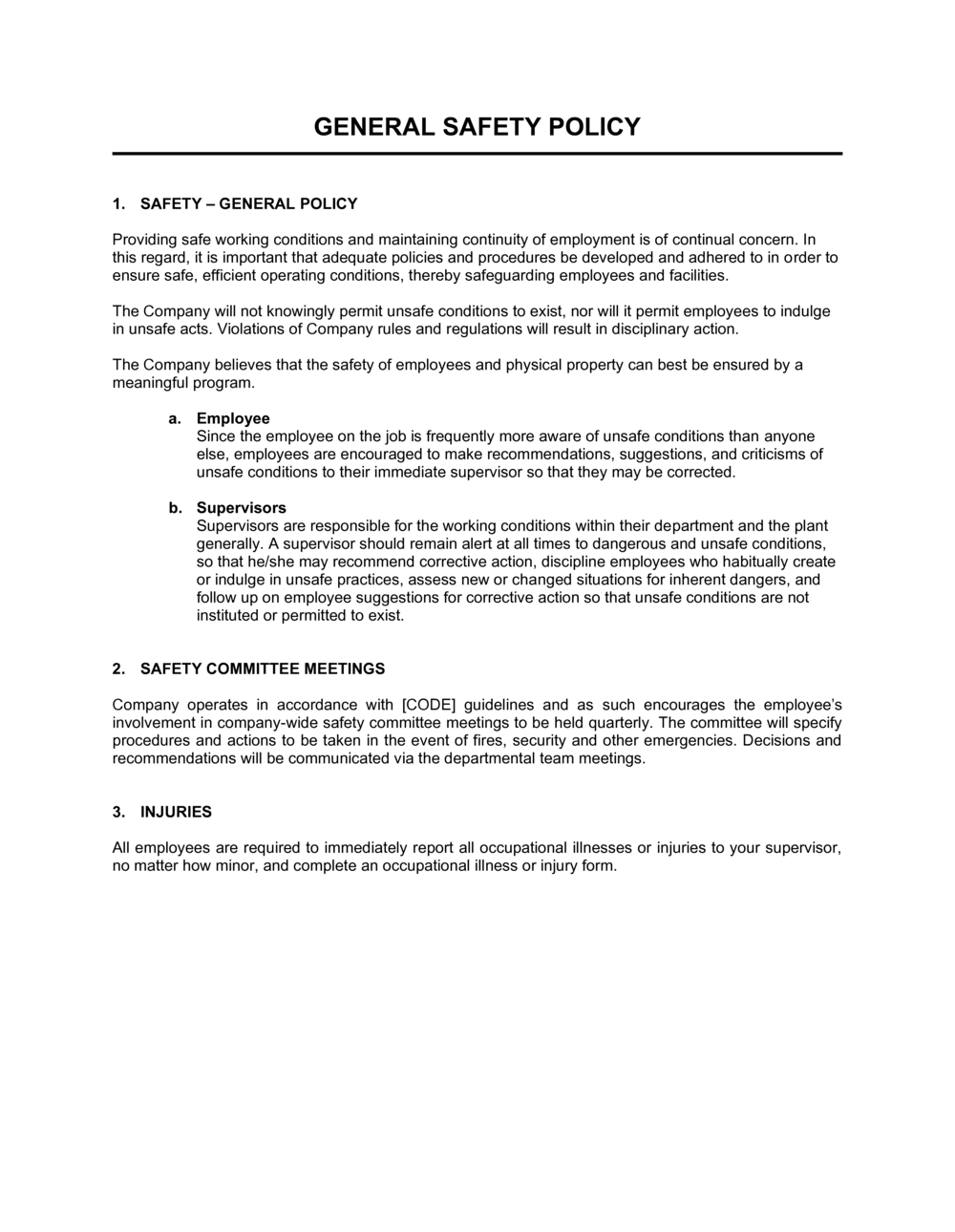
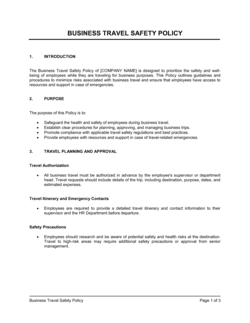
- A written statement of an organization's commitment to managing workplace health and safety, including assigned responsibilities and required procedures.
- Hazard Identification
- The process of recognizing conditions or activities in the workplace that have the potential to cause injury, illness, or property damage.
- Risk Assessment
- An evaluation of the likelihood and severity of harm from an identified hazard, used to prioritize control measures.
- Hierarchy of Controls
- A ranked framework for reducing workplace hazards: elimination, substitution, engineering controls, administrative controls, and personal protective equipment (PPE), in descending order of effectiveness.
- OSHA
- The Occupational Safety and Health Administration — the US federal agency that sets and enforces workplace safety standards and can inspect, cite, and fine non-compliant employers.
- Incident Report
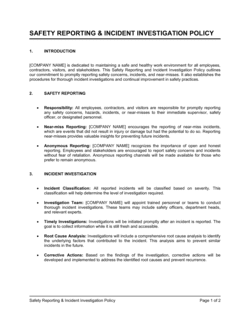
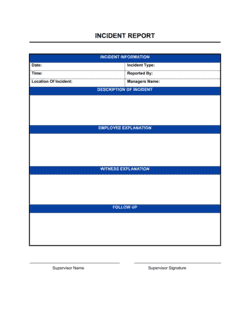
- A formal written record of a workplace injury, near-miss, or unsafe condition, used for investigation, corrective action, and regulatory recordkeeping.
- PPE (Personal Protective Equipment)
- Equipment worn by employees to minimize exposure to hazards — including hard hats, safety glasses, gloves, hearing protection, and high-visibility vests.
- Safe Work Procedure (SWP)
- A step-by-step written instruction for completing a specific task safely, used to standardize safe behavior across employees and shifts.
- Near-Miss
- An unplanned event that did not result in injury or damage but had the potential to do so — near-misses are leading indicators of future incidents if the underlying hazard is not corrected.
- WHMIS
- Workplace Hazardous Materials Information System — the Canadian framework requiring labeling, safety data sheets, and worker training for hazardous products used on the job.
- Toolbox Talk
- A brief, informal safety meeting — typically 5–15 minutes — held at the worksite before a shift or task begins to review specific hazards or procedures.