- Hazard Identification
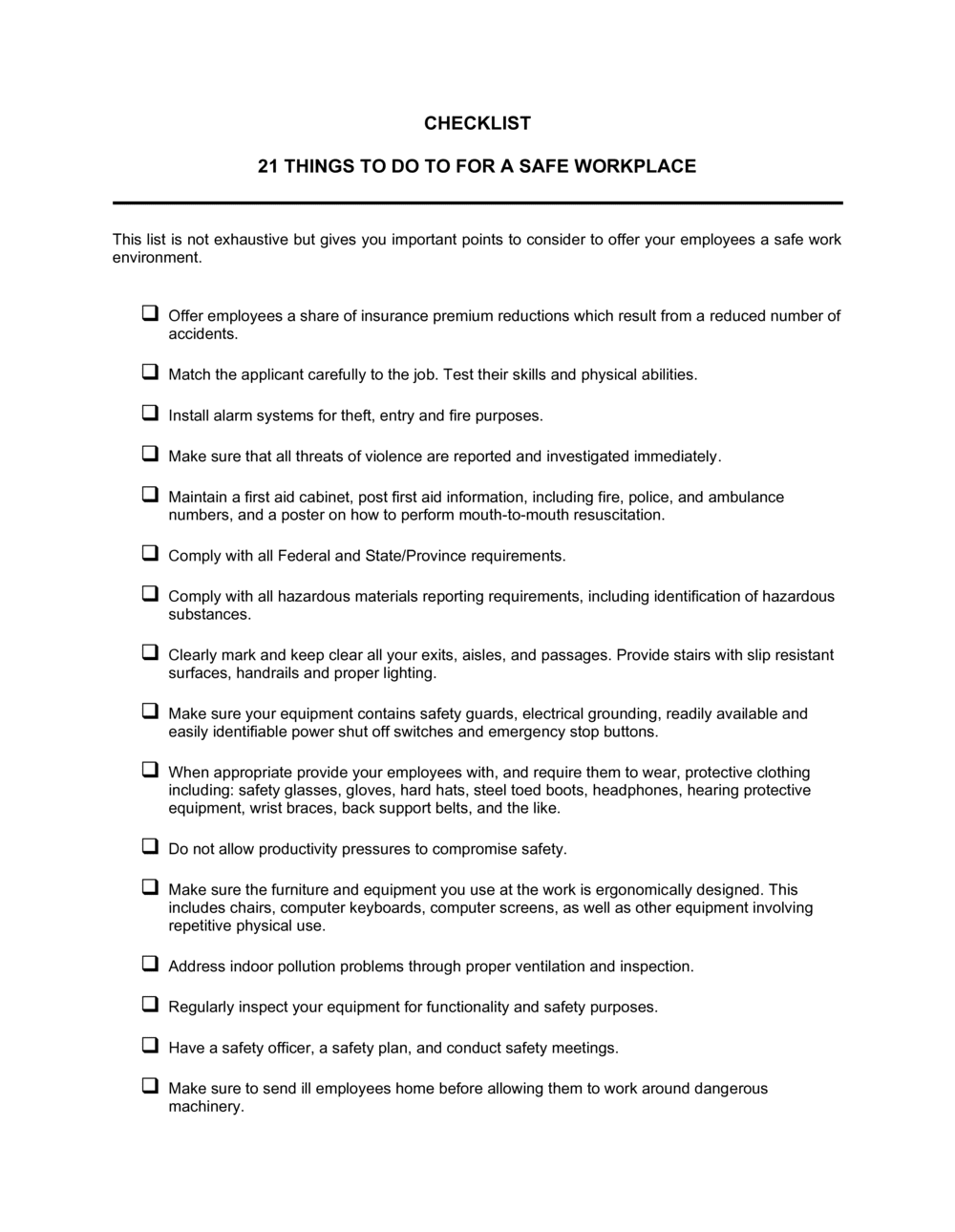
- The process of recognizing conditions or practices in the workplace that have the potential to cause injury or illness.
- PPE (Personal Protective Equipment)
- Clothing or equipment worn by employees to minimize exposure to hazards — including gloves, safety glasses, hard hats, and high-visibility vests.
- OSHA
- The US Occupational Safety and Health Administration — the federal agency that sets and enforces workplace safety standards.
- Risk Assessment
- A systematic evaluation of identified hazards to determine the likelihood and severity of harm and what controls are needed.
- Emergency Action Plan
- A written document describing procedures for responding to workplace emergencies such as fires, medical incidents, or natural disasters.
- Material Safety Data Sheet (MSDS / SDS)
- A document provided by chemical manufacturers that details the properties, hazards, handling instructions, and emergency procedures for a substance.
- Corrective Action
- A specific step taken to eliminate an identified hazard or deficiency and prevent its recurrence.
- Inspection Frequency
- How often a safety check is scheduled — daily, weekly, monthly, or quarterly — based on the risk level of the work environment.
- Near Miss
- An unplanned event that did not result in injury or damage but had the potential to do so, which should be recorded and investigated.
- Responsible Party
- The named individual or role accountable for completing or verifying a specific checklist item by a given date.