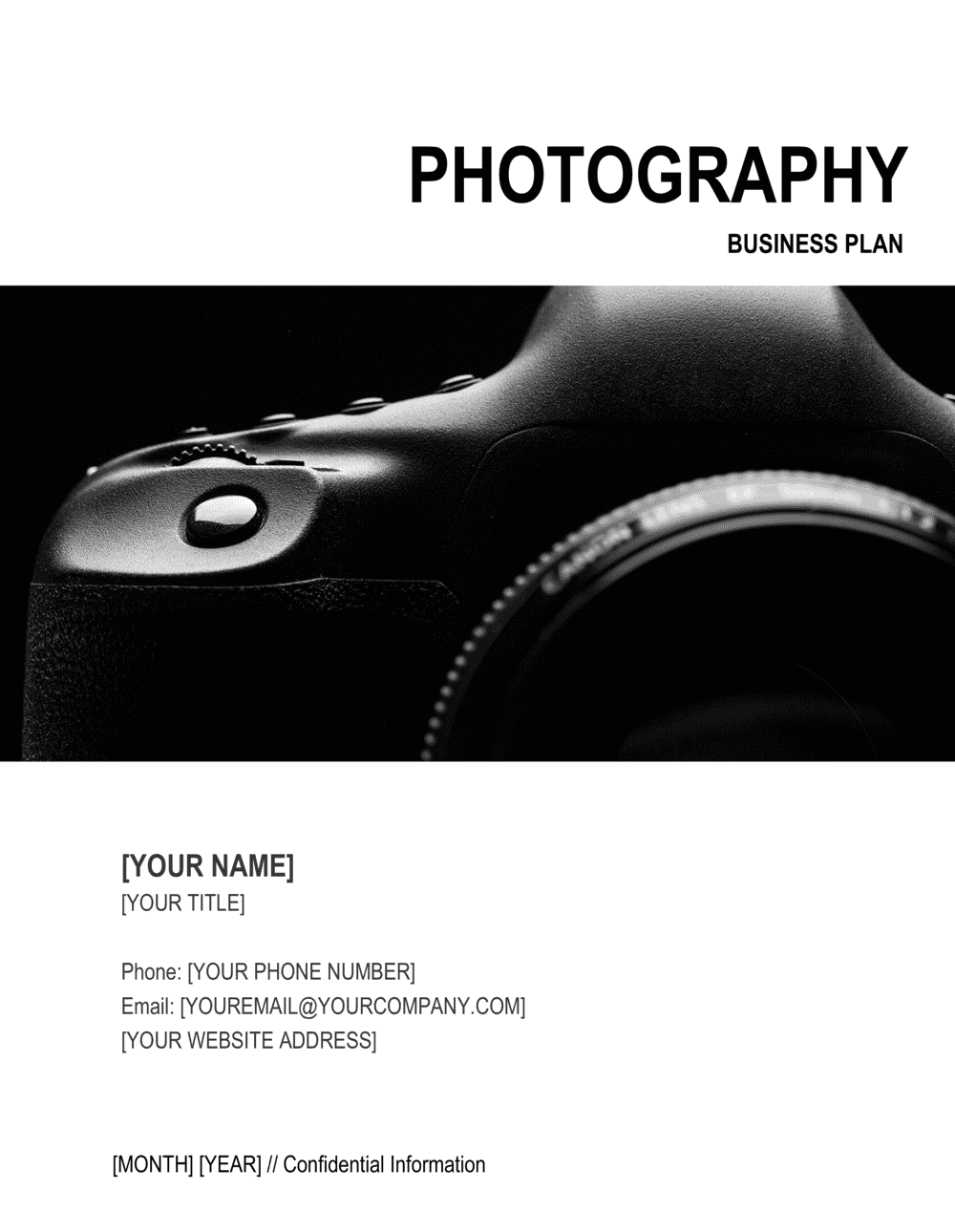
Photography Business Plan Template

Free Word download β€’ Edit online β€’ Save & share with Drive β€’ Export to PDF

30 pagesβ€’2h 35m – 3h 25m to fillβ€’Difficulty: Expert
Learn more ↓
FreePhotography Business Plan Template

At a glance

What it is
A Photography Business Plan is a structured planning document that maps your photography business's services, target market, pricing model, marketing strategy, and financial projections into a single reference document. This free Word download gives you a ready-to-edit framework you can tailor to your niche β€” wedding, portrait, commercial, or event photography β€” and export as PDF to share with lenders, investors, or business partners.
When you need it
Use it when launching a photography studio, transitioning from freelance to a formal business, applying for a small business loan, or scaling an existing photography operation with new staff or equipment.
What's inside
Executive summary, company overview, service offerings and pricing, target market analysis, competitive landscape, marketing and sales strategy, operations and equipment plan, management structure, and three-year financial projections including revenue, expenses, and cash flow.

What is a Photography Business Plan?

A Photography Business Plan is a structured planning document that maps every dimension of a photography business β€” services, pricing, target market, competitive positioning, marketing channels, operations, and multi-year financial projections β€” into a single reference document. It functions as both an internal roadmap for running and growing the business and an external document for securing bank loans, SBA financing, or investment. Unlike a general business plan, this template pre-builds the sections specific to photography businesses: session fee versus print sales revenue modeling, equipment depreciation schedules, seasonal booking patterns, licensing and usage rights as a revenue line, and second-shooter subcontractor costs as direct cost of goods.

Why You Need This Document

Without a written plan, photography businesses routinely make the same expensive mistakes: pricing packages based on competitors rather than their own cost structure, projecting flat monthly revenue that hides the cash shortfall in slow winter months, and investing in equipment without modeling the depreciation impact on annual profit. The consequences are concrete β€” underpriced packages that generate positive bookings but negative margins, loan applications rejected for missing financial projections, and growth stalls when there is no documented strategy to hand to a new hire or business partner. A completed photography business plan forces you to validate that your pricing covers your costs, that your target market is large enough to support your booking goals, and that your cash flow survives an off-peak season before you spend money finding out the hard way. This template gives you the structure to answer all of those questions in one sitting.

Which variant fits your situation?

If your situation is…Use this template
Launching a wedding photography businessWedding Photography Business Plan
Opening a portrait or headshot studioPhotography Studio Business Plan
Seeking a small business bank loan or SBA financingBank Loan Business Plan
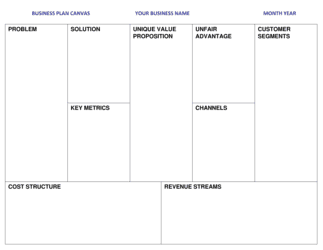
Quick internal planning or early ideationOne-Page Business Plan
Planning a full creative or media agencyCreative Agency Business Plan
Expanding into video production alongside photographyVideo Production Business Plan
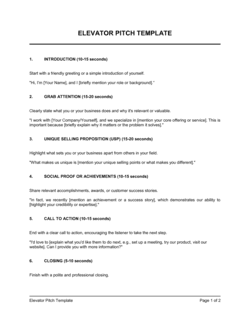
Pitching an investor with a concise visual summaryPitch Deck / Elevator Pitch Template

Common mistakes to avoid

❌ Pricing without modeling costs first

Why it matters: Many photographers set prices based on what competitors charge, not on what their own cost structure requires. This produces packages that feel competitive but generate negative margins after COGS and overhead.

Fix: Calculate your total annual operating costs, add your target salary, divide by your maximum bookings per year β€” this gives your minimum viable average package price.

❌ Projecting bookings with no market size reference

Why it matters: A plan that projects 60 weddings per year in a county with 150 annual weddings implies a 40% market share β€” a number that immediately disqualifies the plan with any experienced lender.

Fix: Research annual event volume in your specific market, then apply a realistic capture rate of 5–15% for a new business to build a credible booking forecast.

❌ Omitting equipment depreciation from operating costs

Why it matters: A camera body costing $3,000 that lasts 4 years contributes $750 per year in real cost. Ignoring depreciation overstates profit and understates the capital needed to sustain the business.

Fix: Add a depreciation schedule to your financial model covering every major equipment item, using a 3–5 year straight-line assumption.

❌ No seasonal revenue modeling in Year 1 projections

Why it matters: Photography businesses typically earn 60–70% of annual revenue in a 4–5 month peak season. A flat monthly revenue model produces a misleading cash flow picture that hides winter cash crunches.

Fix: Build month-by-month revenue projections that reflect your niche's actual booking pattern, and confirm that off-peak months have enough cash to cover fixed operating costs.

The 9 key sections, explained

Executive Summary

Company Overview

Services and Pricing

Target Market Analysis

Competitive Analysis

Marketing and Sales Strategy

Operations and Equipment Plan

Management and Team Structure

Financial Projections

How to fill it out

  1. 1

    Define your niche and service offerings first

    Decide whether the business focuses on weddings, portraits, commercial work, events, or a combination. List every service with a working price before touching any other section.

    πŸ’‘ Starting with services forces a pricing discipline that cascades correctly into the financial model β€” revenue projections built before pricing decisions are almost always wrong.

  2. 2

    Research your local market size and competitors

    Search local wedding directories, Google Maps, and county marriage license data to estimate annual bookings in your market. Identify four to five competing studios, note their prices and positioning.

    πŸ’‘ Screenshot competitor pricing pages on the day you research β€” prices change, and you want a dated snapshot for the appendix.

  3. 3

    Build the cost structure before projecting revenue

    List every operating cost: equipment depreciation, editing software subscriptions, studio rent (if any), insurance, advertising, and second-shooter fees. Calculate your break-even booking count at your average package price.

    πŸ’‘ Photographers routinely underestimate editing time as a cost. If editing 1 session takes 4 hours at your effective hourly rate, that's a real COGS line, not free time.

  4. 4

    Set your marketing channel priorities and budget

    Choose two to three primary lead channels and assign a dollar budget or time budget to each. Estimate expected leads per month and your target conversion rate for each channel.

    πŸ’‘ If you have no historical conversion data, use 20–30% as a conservative baseline for warm referrals and 5–10% for cold paid channels.

  5. 5

    Build the Year 1 financial model month by month

    Map expected bookings by month, accounting for seasonal patterns. Multiply by average booking value for revenue, then subtract monthly COGS and operating expenses to get net income per month.

    πŸ’‘ Model a slow-start scenario where Year 1 bookings come in at 60% of plan. If the business still survives on that trajectory, the plan is credible.

  6. 6

    Complete the operations and equipment section

    List current gear with purchase dates and estimated replacement timelines. Flag any equipment needed before launch with a cost and target purchase date tied to the cash flow model.

    πŸ’‘ Include a $500–$1,000 annual contingency line for unexpected gear repairs β€” equipment failures before a paid shoot are a real and recurring risk.

  7. 7

    Write the executive summary last

    Pull the single strongest data point from each section β€” market size, average booking value, Year 1 revenue target, and financing need β€” and compress them into one to two pages.

    πŸ’‘ If a lender reads only the executive summary and financial projections, they should have enough to make a preliminary decision. If they can't, the summary isn't complete.

Frequently asked questions

What is a photography business plan?

A photography business plan is a structured document that defines your photography business's services, target market, pricing, marketing strategy, and financial projections. It serves as both a roadmap for running the business and a formal document for securing loans, attracting investors, or applying for grants. Most plans cover a three-year horizon with monthly detail for Year 1.

Do I need a business plan to start a photography business?

You do not legally need one, but creating a plan significantly increases your odds of building a sustainable business. Photographers who plan their pricing based on actual cost structures and model seasonal revenue patterns are far less likely to underprice their work or run short of cash in slow months. Any bank or SBA lender will require a formal plan before approving a business loan.

How long should a photography business plan be?

For a loan application or investor presentation, 15–25 pages plus a financial model appendix is the accepted range. For internal planning purposes, a 10–15 page plan is sufficient. A one-page canvas works for early ideation but is not appropriate for capital-raising purposes. Quality of content matters more than page count β€” a tight 15-page plan with credible financials outperforms a padded 30-page document.

What financial projections should a photography business plan include?

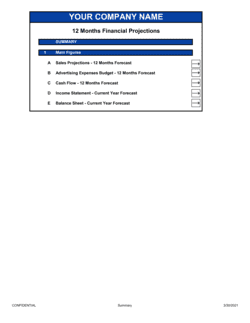
At minimum: a month-by-month revenue and expense projection for Year 1, annual summaries for Years 2 and 3, a cash flow statement, a breakeven analysis showing the number of bookings needed to cover all costs, and a startup cost schedule if the business is pre-launch. Lenders also typically want to see the assumptions behind each revenue line β€” booking count, average package value, and seasonal distribution.

How do I price my photography packages in the business plan?

Start with your total annual operating costs β€” equipment depreciation, software, insurance, marketing, and any studio rent β€” then add your target annual salary. Divide that total by the maximum number of bookings you can realistically fulfill per year. The result is your minimum viable average package price. Compare this against local market pricing to confirm it is competitive; if it isn't, you need to reduce costs or target a higher-value niche.

What is the difference between a photography business plan and a general business plan?

The structure is the same, but a photography business plan addresses niche-specific elements: session fees versus print sales revenue split, equipment depreciation schedules, seasonal booking patterns, licensing and usage rights as a revenue line, and second-shooter subcontractor costs as COGS. Generic business plan templates omit these, which means the financial model won't reflect how photography businesses actually generate and spend money.

Can I use this template for a wedding photography business specifically?

Yes. The template is structured to accommodate any photography niche. For wedding photography, the services section covers package tiers and add-ons, the financial model reflects seasonal revenue concentration in spring and fall, and the operations section addresses second-shooter costs and album production timelines. Simply fill in the niche-specific details in each section.

How often should I update my photography business plan?

Review and update it at least once per year, aligned to your fiscal year-end. Whenever you change your pricing, add a new service line, hire a staff member, or apply for financing, update the relevant sections before sharing the plan externally. A plan that is more than 18 months old without revision no longer reflects the current business and should not be submitted to a lender.

How this compares to alternatives

vs General Business Plan

A general business plan template covers the same structural sections but omits photography-specific elements like equipment depreciation, session fee vs. print sales modeling, seasonal booking patterns, and licensing revenue. Using a general template requires significant customization; the photography-specific version pre-builds those sections so you fill in numbers rather than create structure.

vs One-Page Business Plan

A one-page plan is a rapid-alignment tool suited for early ideation or internal team check-ins. It lacks the financial depth and market evidence required for a bank loan or investor conversation. Use the one-page version to validate your concept, then build the full photography business plan before any capital raise.

vs Photography Proposal

A photography proposal is a client-facing document presenting services, packages, and pricing for a specific booking inquiry. A business plan is an internal strategy and financial document not intended for clients. The proposal closes individual jobs; the business plan governs how the entire business operates and grows.

vs Marketing Plan

A marketing plan covers lead generation, brand positioning, channel strategy, and campaign execution in depth β€” typically as a standalone document. A photography business plan includes a marketing section, but at a summary level. If growing bookings is the primary challenge, the full marketing plan provides the tactical detail the business plan summarizes.

Industry-specific considerations

Wedding and Events

Seasonal booking concentration in spring and fall, retainer-heavy cash flow, second-shooter subcontracting costs, and album production as a high-margin upsell.

Commercial and Advertising

Day-rate licensing model, usage fee tiers by media and duration, repeat corporate client relationships, and higher equipment investment for studio lighting and tethering setups.

Portrait and Family

High session volume at lower per-booking value, IPS upsell model to drive print revenue, mini-session days as a lead generator, and strong referral loop from school and family networks.

Real Estate and Architecture

Volume-based pricing per property, fast 24–48 hour turnaround as a key differentiator, drone certification requirements, and recurring agency and brokerage contracts as the revenue base.

Template vs pro β€” what fits your needs?

PathBest forCostTime
Use the templateSolo photographers, freelancers formalizing their practice, and early-stage studio owners planning internallyFree1–2 weeks (15–30 hours)
Template + professional reviewPhotographers applying for an SBA loan or bank financing under $150K$300–$800 for an accountant or SCORE advisor review2–3 weeks
Custom draftedMulti-photographer studios seeking financing above $150K or expanding into a commercial lease$1,500–$5,000 for a professional business plan writer3–6 weeks

Glossary

Session Fee
A flat charge for the photographer's time and skill during a shoot, separate from any prints, albums, or digital files sold afterward.
IPS (In-Person Sales)
A business model in which photographers present and sell prints or albums to clients in a face-to-face ordering session rather than through an online gallery.
Licensing Fee
A charge for granting a client the right to use an image in a defined context β€” such as advertising, editorial, or social media β€” for a set period.
Cost of Goods Sold (COGS)
Direct costs to deliver a photography service, including printing, album production, second-shooter fees, and travel expenses.
Average Revenue Per Booking
Total revenue divided by the number of client bookings in a period β€” the key unit economics metric for photography pricing decisions.
Retainer / Deposit
A non-refundable upfront payment, typically 25–50% of the total package price, that secures a date on the photographer's calendar.
Lead Conversion Rate
The percentage of inquiries that result in a signed contract and deposit β€” a core metric for evaluating sales and pricing effectiveness.
Seasonal Revenue Pattern
The predictable fluctuation in photography bookings across the year β€” wedding and portrait peaks in spring and fall, slowdowns in winter for most markets.
Second Shooter
A subcontracted photographer hired to cover additional angles or locations at an event, typically paid a flat day rate.
Gross Margin
Revenue minus direct costs (COGS), expressed as a percentage β€” a measure of how much each booking contributes to covering overhead and profit.

Part of your Business Operating System

This document is one of 3,000+ business & legal templates included in Business in a Box.

  • Fill-in-the-blanks β€” ready in minutes
  • 100% customizable Word document
  • Compatible with all office suites
  • Export to PDF and share electronically

Create your document in 3 simple steps.

From template to signed document β€” all inside one Business Operating System.
1
Download or open template

Access over 3,000+ business and legal templates for any business task, project or initiative.

2
Edit and fill in the blanks with AI

Customize your ready-made business document template and save it in the cloud.

3
Save, Share, Send, Sign

Share your files and folders with your team. Create a space of seamless collaboration.

Save time, save money, and create top-quality documents.

β˜…β˜…β˜…β˜…β˜…

"Fantastic value! I'm not sure how I'd do without it. It's worth its weight in gold and paid back for itself many times."

Managing Director Β· Mall Farm
Robert Whalley
Managing Director, Mall Farm Proprietary Limited
β˜…β˜…β˜…β˜…β˜…

"I have been using Business in a Box for years. It has been the most useful source of templates I have encountered. I recommend it to anyone."

Business Owner Β· 4+ years
Dr Michael John Freestone
Business Owner
β˜…β˜…β˜…β˜…β˜…

"It has been a life saver so many times I have lost count. Business in a Box has saved me so much time and as you know, time is money."

Owner Β· Upstate Web
David G. Moore Jr.
Owner, Upstate Web

Run your business with a system β€” not scattered tools

Stop downloading documents. Start operating with clarity. Business in a Box gives you the Business Operating System used by over 250,000 companies worldwide to structure, run, and grow their business.

Free Forever PlanΒ Β·Β No credit card required