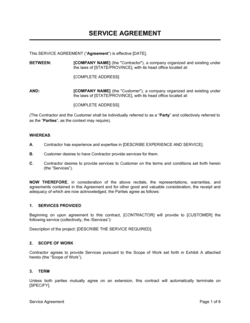
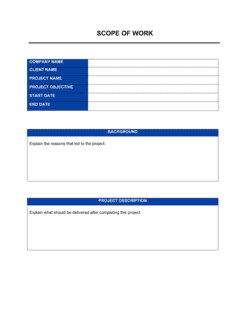
Production Video Script Template

Free Word download β€’ Edit online β€’ Save & share with Drive β€’ Export to PDF

3 pagesβ€’25–30 min to fillβ€’Difficulty: Standardβ€’Signature requiredβ€’Legal review recommended
Learn more ↓
FreeProduction Video Script Template

At a glance

What it is
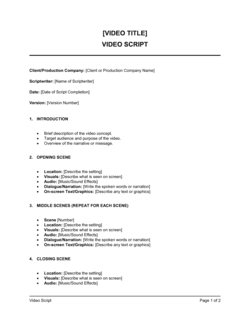
A Production Video Script is a structured document that combines the creative direction of a video project β€” scene descriptions, dialogue, shot specifications, and on-screen text β€” with the binding legal terms that govern how the finished content may be used, distributed, and attributed. This free Word download gives producers, brand managers, and agencies a complete starting point they can edit online and export as PDF for client sign-off before a single frame is shot.
When you need it
Use it before production begins on any commercial, corporate explainer, training video, social media campaign, or branded content piece where a client or stakeholder must approve the creative direction and authorize the production team's scope of work in writing. It is also required whenever the finished video will be distributed publicly, licensed to third parties, or used in regulated advertising.
What's inside
Scene-by-scene breakdown with shot descriptions and dialogue, on-screen text and graphic callouts, voiceover direction, music and sound cues, client approval and revision terms, intellectual property and licensing provisions, talent release references, distribution rights, and governing law.

What is a Production Video Script?

A Production Video Script is a document that combines the scene-by-scene creative blueprint of a video project β€” including shot descriptions, dialogue, voiceover copy, and on-screen graphics β€” with the binding legal terms that govern how the finished content is produced, owned, and distributed. Unlike a standalone creative brief, a properly executed production video script creates enforceable obligations on both the production company and the client: it locks in exactly what was approved before a single crew member is hired, defines how many revisions the client receives, establishes who owns the copyright in the final cut, and specifies where and for how long the video may be used. It is the primary document that protects both parties when creative direction, payment, or distribution rights become disputed.

Why You Need This Document

Without a signed production video script, the most expensive disagreements in video production have no written resolution mechanism. A client who approves a script verbally β€” then requests a complete reshoot after delivery β€” faces no contractual barrier to demanding unlimited revisions at no charge. A production company that delivers a finished video without an IP assignment clause may legally retain copyright in work the client fully paid for. Music clearance disputes, talent residual claims, and distribution scope arguments all become credibility contests rather than contract interpretation exercises when there is no signed document to reference. A properly executed production video script, signed before production begins, eliminates all four of these failure modes and gives both parties a shared record of exactly what was agreed, approved, and authorized before any money or time was spent on set.

Which variant fits your situation?

If your situation is…Use this template
Scripting a 30- or 60-second broadcast or digital advertisementCommercial Video Script
Producing an internal employee onboarding or training videoCorporate Training Video Script
Creating a product explainer for a website or appExplainer Video Script
Developing a multi-episode branded content or docuseriesBranded Content Series Script
Scripting a social media short-form video (Reels, TikTok, YouTube Shorts)Short-Form Video Script
Recording a professional voiceover without accompanying visualsVoiceover Script and Recording Agreement
Producing an event highlight or recap video for distributionEvent Video Production Script

Common mistakes to avoid

❌ Transferring IP before receiving final payment

Why it matters: Once the client has the video file and owns the copyright, the producer has no leverage to collect outstanding balances. Disputes over final payment become uncollectable debts.

Fix: Draft the IP assignment to trigger on receipt of cleared final payment. Deliver a watermarked or low-resolution preview for client approval, and release the broadcast master only after payment clears.

❌ No kill fee provision

Why it matters: A project cancelled after crew booking, location permits, and talent contracts are signed leaves the producer with unrecoverable third-party costs and lost opportunity on blocked calendar dates.

Fix: Include a kill fee equal to at least 50% of the total project fee plus all incurred third-party costs, payable within 15 business days of cancellation notice.

❌ Undefined revision rounds

Why it matters: Without a clear definition of what constitutes one round and a feedback consolidation requirement, clients submit revisions across dozens of emails over weeks, treating each message as a new cycle β€” scope creep becomes structurally unavoidable.

Fix: Define a revision round as one consolidated written document delivered within a stated window. Anything submitted outside that window or after the round closes is billed as an additional round at a stated rate.

❌ Granting unlimited, perpetual, worldwide distribution rights at a flat project fee

Why it matters: A video produced for a single social media campaign may be repurposed for broadcast, international markets, and in-store displays for years. Without scope limits, the producer has no contractual basis to negotiate reuse fees.

Fix: Specify channels, territories, and a distribution term (typically 1–3 years). Include a reuse fee schedule or a renegotiation trigger if the client extends beyond the original scope.

❌ Using commercially released music without a sync license

Why it matters: Streaming platforms automatically detect and mute unlicensed music. Broadcast networks reject spots with uncleared music entirely. The client may hold the producer responsible for a missed campaign launch.

Fix: Require written confirmation of valid sync licenses before the lock picture edit, and include a contractual indemnity from the client for any music they supply.

❌ No client-delay extension clause

Why it matters: When a client misses a feedback deadline by a week, the final delivery date remains unchanged in the contract β€” creating a contractual breach by the producer even though the delay was the client's fault.

Fix: Include an explicit provision stating that client delays of more than [X] business days automatically extend all subsequent milestones by the same number of days, documented in writing.

The 10 key clauses, explained

Parties, project title, and scope of work

In plain language: Identifies the production company and the client as legal entities, names the specific video project, and defines the full creative and technical scope of what will be produced.

Sample language
This Production Video Script Agreement is entered into on [DATE] between [PRODUCTION COMPANY LEGAL NAME] ('Producer') and [CLIENT LEGAL NAME] ('Client'). Producer agrees to develop and deliver the video project titled '[PROJECT TITLE]' in accordance with the approved script set out in Schedule A and the specifications in Schedule B.

Common mistake: Referencing only the project nickname rather than a precise title tied to a scope exhibit. When deliverables expand mid-project, an ambiguous project name makes it impossible to distinguish in-scope from out-of-scope work.

Script approval and revision rounds

In plain language: States how many rounds of script revisions are included, what constitutes a round, the timeline for client feedback, and what happens if revisions exceed the agreed number.

Sample language
Client shall have [NUMBER] rounds of revisions to the script. Each round consists of one consolidated set of written feedback delivered within [X] business days of receiving the revised draft. Additional revision rounds are billed at $[RATE] per round.

Common mistake: Failing to define what counts as one revision round. Without a clear definition, clients submit piecemeal feedback across multiple emails, each treated as a new round, and scope disputes follow immediately.

Intellectual property ownership and work-for-hire clause

In plain language: Establishes who owns the finished video and the underlying script β€” typically the client upon full payment β€” and whether the production company retains any portfolio or reel rights.

Sample language
Upon receipt of full payment, all rights, title, and interest in the finished video and the approved script shall vest in Client as a work made for hire under applicable copyright law. Producer retains the right to include a brief excerpt in its portfolio and showreel, not to exceed [X] seconds, unless Client requests otherwise in writing.

Common mistake: Transferring IP before payment is confirmed. If the client has the video but has not paid, the producer's only leverage β€” ownership β€” is gone. Always tie the IP transfer trigger to cleared payment.

Talent and likeness rights

In plain language: Confirms that all on-camera talent have signed releases and that the client is responsible for any talent union fees, residuals, or reuse payments triggered by the agreed distribution scope.

Sample language
Producer shall obtain signed talent release forms from all individuals appearing on camera, copies of which are attached as Schedule C. Client is solely responsible for any SAG-AFTRA, Equity, or union residual payments arising from distribution beyond the scope defined in Schedule D.

Common mistake: Omitting union residual responsibility. A producer who assumes union talent was booked on a non-union basis β€” or a client who assumes all reuse fees are bundled β€” faces unexpected cost claims months after delivery.

Music, sound, and third-party licenses

In plain language: Specifies whether music is original, royalty-free, or licensed, identifies who is responsible for obtaining sync licenses, and limits the producer's liability for client-supplied music.

Sample language
All music incorporated into the finished video shall be either (a) original compositions owned by Producer, (b) royalty-free tracks from [LIBRARY], or (c) third-party tracks for which Client has obtained a valid sync license prior to production. Client indemnifies Producer against any claims arising from Client-supplied music.

Common mistake: Using commercially released music without a sync license because it appeared in the client's rough brief. Streaming platforms flag and mute unlicensed music automatically, and broadcast networks can reject the entire spot.

Production timeline and delivery milestones

In plain language: Sets binding dates for script approval, production shoot, rough cut delivery, final cut delivery, and format deliverables, along with the consequences of delays caused by either party.

Sample language
Producer shall deliver the rough cut no later than [DATE]. Client shall provide consolidated feedback within [X] business days. Final deliverable β€” a [RESOLUTION] [FORMAT] master file β€” shall be delivered no later than [DATE]. Client delays exceeding [X] business days will extend all downstream milestones by an equivalent period.

Common mistake: Omitting a client-delay provision. When the client misses a feedback window, the production schedule slips but the original delivery date stays in the contract β€” creating a breach by the producer through no fault of their own.

Payment schedule and kill fee

In plain language: States the total fee, the installment schedule tied to milestones, and the kill fee the client owes if the project is cancelled after production has begun.

Sample language
Total production fee: $[AMOUNT]. Payment schedule: [X]% upon signing ($[AMOUNT]), [X]% upon script approval ($[AMOUNT]), [X]% upon delivery of final cut ($[AMOUNT]). If Client cancels after commencement of production, Client shall pay a kill fee equal to [X]% of the total fee plus all third-party costs incurred.

Common mistake: No kill fee provision at all. A cancellation after crew has been booked, locations scouted, and talent contracted leaves the producer with sunk costs and no contractual basis to recover them.

Distribution rights and exclusivity

In plain language: Defines the channels (broadcast, digital, social, in-store), territories, and time periods for which the client may use the finished video, and whether the producer is restricted from producing similar content for competitors.

Sample language
Client is granted a [non-exclusive / exclusive] license to distribute the finished video via [CHANNELS] in [TERRITORIES] for a period of [DURATION] from the delivery date. Producer shall not produce a substantially similar video for a direct competitor of Client for [X] months following delivery.

Common mistake: Granting unlimited, perpetual, worldwide rights at a project fee negotiated for a single campaign. Clients re-use video content across platforms and markets for years β€” without scope limits, there is no basis to negotiate reuse fees.

Confidentiality and embargo

In plain language: Prevents both parties from disclosing the script content, client identity, or project details before the agreed public release date.

Sample language
Both parties shall treat the script, production details, and existence of this Agreement as confidential until [CLIENT] has publicly released the finished video or [DATE], whichever comes first. Producer shall not publish behind-the-scenes content or announce the engagement without Client's prior written consent.

Common mistake: No embargo clause on behind-the-scenes content. A producer who posts crew photos or set footage on social media during a product-launch campaign can inadvertently reveal an unreleased product, triggering a breach claim.

Governing law, dispute resolution, and indemnification

In plain language: Specifies the jurisdiction whose law governs the agreement, the mechanism for resolving disputes (arbitration or litigation), and each party's obligation to defend the other against third-party claims arising from their own content.

Sample language
This Agreement is governed by the laws of [STATE / PROVINCE]. Any dispute shall be resolved by binding arbitration in [CITY] under [AAA / JAMS] rules, except for claims for injunctive relief. Each party shall indemnify and hold harmless the other from claims arising from materials they contributed to the production.

Common mistake: Mutual indemnification without carving out each party's contributed materials. A broad mutual indemnity can require the producer to defend the client against copyright claims on music or footage the client supplied β€” and vice versa.

How to fill it out

  1. 1

    Enter the parties' legal names and project title

    Use the full registered legal name of both the production company and the client entity β€” not trade names or individual contact names. Assign a precise project title that will appear in all schedules and invoices.

    πŸ’‘ Confirm the client's legal entity type (LLC, corporation, sole trader) before drafting β€” this affects indemnification enforceability in some jurisdictions.

  2. 2

    Attach the approved script as Schedule A

    Insert or attach the complete, scene-by-scene script including slug lines, shot descriptions, dialogue, voiceover copy, and on-screen text. Both parties should initial each page of the schedule at signing.

    πŸ’‘ Version-stamp the script document (e.g., 'Script v3 β€” Approved 2026-05-01') so there is no ambiguity about which draft governs if revisions are disputed later.

  3. 3

    Define the revision rounds and feedback timeline

    Specify the number of included revision rounds, what constitutes a single round, and the number of business days the client has to deliver consolidated feedback after each draft.

    πŸ’‘ A 5-business-day client feedback window is standard for corporate clients β€” shorter windows increase missed deadlines; longer ones stall production schedules.

  4. 4

    Set the IP ownership trigger and portfolio rights

    Confirm that ownership transfers to the client upon cleared final payment. Decide whether the producer retains the right to use a short excerpt in their portfolio and specify the maximum duration.

    πŸ’‘ If the client requires complete confidentiality β€” common in pharmaceutical or pre-launch product videos β€” offer a blackout period (e.g., 12 months) rather than a permanent restriction.

  5. 5

    Specify music, talent, and third-party license responsibilities

    List whether music is original, royalty-free, or externally licensed, and confirm which party is responsible for obtaining sync licenses and talent releases. Attach executed talent release forms as Schedule C.

    πŸ’‘ Require the client to deliver written confirmation of any sync licenses before the lock picture edit β€” post-delivery music swaps are expensive and delay final delivery.

  6. 6

    Complete the production timeline with specific dates

    Fill in the shoot date, rough cut delivery date, revision window, and final delivery date. Include a client-delay provision that extends downstream milestones day-for-day when client feedback is late.

    πŸ’‘ Build at least 3 business days of buffer between the rough cut feedback deadline and the final delivery date β€” real-world feedback almost always arrives late.

  7. 7

    Set the payment schedule and kill fee

    Enter the total fee, milestone-based installment amounts, and the kill fee percentage. A typical structure is 33% on signing, 33% on script approval, and 34% on final delivery.

    πŸ’‘ The kill fee should at minimum cover all third-party costs committed plus a reasonable portion of crew time β€” 50% of total fee is the industry norm for projects cancelled in mid-production.

  8. 8

    Define distribution rights and sign before production begins

    Specify channels, territories, and time period. Both parties must sign before the production shoot date β€” post-shoot signatures create consideration problems and leave IP ownership unresolved during the period most likely to generate disputes.

    πŸ’‘ For broadcast or streaming distribution, confirm in the agreement whether the client needs a broadcast master (ProRes, MXF) in addition to the web deliverable β€” format mismatches discovered at delivery cause costly re-exports.

Frequently asked questions

What is a production video script?

A production video script is a document that combines a complete creative direction for a video project β€” scene descriptions, dialogue, shot specifications, and on-screen text β€” with binding legal terms covering ownership, revision rights, payment, and distribution. It serves as both the creative blueprint the crew follows on set and the contractual record of what the client approved before production began.

Who owns the finished video β€” the production company or the client?

Ownership depends entirely on what the contract says. Under US copyright law, the creator owns the work by default unless it qualifies as a 'work made for hire' or IP is expressly assigned. Most production agreements transfer ownership to the client upon final payment. Without a written assignment clause, the production company retains copyright even if the client paid for the project in full.

How many revision rounds should a video script agreement include?

Two to three consolidated revision rounds is the industry standard for corporate and commercial video scripts. One round covers script concept, a second round addresses rough cut feedback, and an optional third covers final cut polish. More rounds are reasonable for complex multi-stakeholder projects but should be priced into the contract as additional fees rather than absorbed into a flat rate.

What is a kill fee and when does it apply?

A kill fee is the amount the client pays if they cancel the project after production has commenced. It compensates the producer for crew time blocked, third-party costs incurred, and opportunity cost on calendar dates that could not be sold to other clients. Industry standard is 50% of the total project fee plus all committed third-party costs. Kill fees typically apply once the script is approved and pre-production activities have begun.

Do I need a sync license for background music in a corporate video?

Yes, in most cases. Any commercially released song requires a sync license before it can be used in a video β€” even an internal-use corporate video, because distribution to employees across platforms still constitutes public performance in many jurisdictions. Royalty-free library music from licensed platforms (e.g., Artlist, Musicbed) typically includes the necessary rights. Original compositions owned by the producer are generally safe without additional licensing.

What distribution rights should a video production agreement include?

The agreement should specify the permitted channels (broadcast, digital, social media, in-store, events), territories (domestic, specific countries, or worldwide), and time period (typically 1–3 years for campaign content, with a reuse fee schedule for extensions). Unlimited, perpetual, worldwide rights are rarely appropriate at a single-project fee and should only be granted in exchange for a premium.

Is a production video script agreement enforceable without a lawyer?

A well-drafted template is generally enforceable when properly executed by both parties before production begins. Legal review is particularly advisable for projects involving broadcast distribution, union talent, third-party IP, international rights, or total fees exceeding $25,000. In the UK, regulated advertising must comply with ASA and CAP Code requirements that a standard template may not address without professional input.

What happens if the client requests changes after the script is approved?

Post-approval script changes fall outside the original scope of work. The production agreement should define a change-order process: the producer issues a written change order stating the additional cost and timeline impact, and the client must sign before the producer acts on the change. Changes that affect shoot day logistics β€” location, talent, props β€” carry the highest cost and should trigger an immediate cost-impact notice to the client.

How this compares to alternatives

vs Video Production Agreement

A video production agreement governs the overall commercial relationship between producer and client β€” fees, deliverables, timelines, and IP β€” without containing the script itself. A production video script document embeds the approved creative direction directly alongside those binding terms. Use the standalone production agreement when the script is still in development; use the combined script document when creative is approved and you need a single signed record before shoot day.

vs Screenwriting Agreement

A screenwriting agreement covers the engagement of a writer to develop a script β€” it governs the writing process, drafts, and underlying copyright in the written work. A production video script is a post-development document: the script is already written and approved, and the document governs its execution in production. The two may both exist for the same project at different stages.

vs Talent Release Form

A talent release form is a standalone consent document signed by each individual who appears on camera, authorizing use of their likeness in a specific project. A production video script agreement references and incorporates talent releases but does not replace them β€” both documents are required for any shoot involving identifiable people. The talent release binds the individual; the script agreement binds the client and producer.

vs Content Licensing Agreement

A content licensing agreement governs the rights to use an already-finished video asset β€” specifying channels, territories, and duration of use. A production video script agreement governs the creation of that asset from script through delivery. Once the video is delivered and ownership transferred, a separate content licensing agreement may be used if the client wants to sublicense the content to third parties or extend distribution beyond the original scope.

Industry-specific considerations

Advertising and Media

Broadcast compliance, ASA or FTC disclosure requirements, union talent residuals, and multi-platform format deliverables for 15-, 30-, and 60-second cuts.

Healthcare and Pharmaceuticals

Regulatory review requirements for promotional claims, mandatory fair-balance disclosures, FDA or MHRA compliance, and strict embargo terms protecting pre-launch product information.

E-learning and Corporate Training

SCORM-compatible output format requirements, narrator talent licensing for LMS redistribution, and versioning clauses covering regulatory content updates.

Technology and SaaS

Screen recording rights, software UI trademark usage approvals, and rapid revision cycles tied to product release schedules requiring tight milestone definitions.

Retail and Consumer Brands

Product claims accuracy, FTC endorsement disclosure, influencer and UGC integration rights, and multi-territory distribution rights covering differing labeling laws.

Financial Services

Compliance review gates before production approval, SEC or FCA promotional material rules, required disclosures for investment or insurance products, and archival retention obligations for regulated content.

Jurisdictional notes

United States

Copyright in the US vests automatically in the creator. Without an express work-for-hire designation or written assignment, the production company retains ownership even after the client pays. SAG-AFTRA union rules apply to any project that engages a union performer, triggering minimum pay scales, residual structures, and reuse fees that must be addressed in the agreement. FTC endorsement guidelines require clear disclosure of material connections in video advertising, including sponsored content.

Canada

Canadian copyright law similarly vests ownership in the author by default, requiring an express written assignment for the client to own the finished work. Quebec's language laws (Bill 96 and the Charter of the French Language) require that contracts with Quebec-based clients or distributors be available in French. The Canada Media Fund and provincial tax credit programs may impose additional rights-retention requirements on productions that receive public funding.

United Kingdom

In the UK, copyright in a commissioned work does not automatically transfer to the client β€” an explicit written assignment is required. Video advertising must comply with the ASA and CAP Code, including rules on misleading claims, harmful content, and mandatory disclosures. Broadcast productions touching regulated categories (financial services, healthcare, alcohol) must pass Clearcast or equivalent clearance before transmission. GDPR applies to any video featuring identifiable individuals and requires documented lawful basis for processing biometric data.

European Union

EU copyright law requires a written assignment or exclusive license for commercial exploitation rights to transfer from creator to client β€” implied transfers are not recognized in most member states. GDPR compliance is mandatory for any video content capturing identifiable individuals, requiring consent or legitimate interest documentation. Advertising standards vary by member state, but the EU Audiovisual Media Services Directive sets a baseline for commercial communications across all broadcasters and on-demand platforms operating in the EU.

Template vs lawyer β€” what fits your deal?

PathBest forCostTime
Use the templateIndependent producers and small agencies handling domestic corporate, explainer, or social media video projects under $25,000Free30–45 minutes per project
Template + legal reviewProjects involving union talent, broadcast distribution, regulated industries, or fees between $25,000 and $100,000$400–$800 for a media attorney review2–4 business days
Custom draftedMajor brand campaigns, international distribution, pharmaceutical or financial services content, or any project with fees exceeding $100,000$1,500–$5,000+1–2 weeks

Glossary

Scene Slug Line
A header line indicating whether a scene is interior or exterior, the location, and the time of day β€” used to organize the script for scheduling and budgeting.
Shot Description
A brief written direction specifying the camera angle, subject framing, and any movement required for a single shot within a scene.
Voiceover (VO)
Narration recorded separately and laid over video footage, with no speaker visible on screen.
On-Screen Text (OST)
Text graphics, titles, lower-thirds, or captions that appear over the video image during post-production.
Talent Release
A signed authorization from any person who appears on camera granting the producer and client the right to use their likeness in the finished video.
Work for Hire
A legal doctrine under which creative work produced by a contractor is owned entirely by the commissioning party from the moment of creation, with no residual rights for the creator.
Sync License
Permission to use a copyrighted musical composition in timed relation to visual content β€” required for any music that is not original or royalty-free.
Distribution Rights
The scope of channels, territories, and time periods in which the client is authorized to publish or broadcast the finished video.
Revision Round
A defined cycle of client feedback and corresponding script or editorial changes, with the number of included rounds specified in the agreement.
Deliverable
A specific, agreed output the production company must provide β€” such as a final cut in a defined format, resolution, and aspect ratio β€” by a stated deadline.
E&O Insurance
Errors and Omissions insurance carried by a production company to cover claims arising from unintentional copyright infringement or defamatory content in the finished video.

Part of your Business Operating System

This document is one of 3,000+ business & legal templates included in Business in a Box.

  • Fill-in-the-blanks β€” ready in minutes
  • 100% customizable Word document
  • Compatible with all office suites
  • Export to PDF and share electronically

Create your document in 3 simple steps.

From template to signed document β€” all inside one Business Operating System.
1
Download or open template

Access over 3,000+ business and legal templates for any business task, project or initiative.

2
Edit and fill in the blanks with AI

Customize your ready-made business document template and save it in the cloud.

3
Save, Share, Send, Sign

Share your files and folders with your team. Create a space of seamless collaboration.

Save time, save money, and create top-quality documents.

β˜…β˜…β˜…β˜…β˜…

"Fantastic value! I'm not sure how I'd do without it. It's worth its weight in gold and paid back for itself many times."

Managing Director Β· Mall Farm
Robert Whalley
Managing Director, Mall Farm Proprietary Limited
β˜…β˜…β˜…β˜…β˜…

"I have been using Business in a Box for years. It has been the most useful source of templates I have encountered. I recommend it to anyone."

Business Owner Β· 4+ years
Dr Michael John Freestone
Business Owner
β˜…β˜…β˜…β˜…β˜…

"It has been a life saver so many times I have lost count. Business in a Box has saved me so much time and as you know, time is money."

Owner Β· Upstate Web
David G. Moore Jr.
Owner, Upstate Web

Run your business with a system β€” not scattered tools

Stop downloading documents. Start operating with clarity. Business in a Box gives you the Business Operating System used by over 250,000 companies worldwide to structure, run, and grow their business.

Start freeΒ Β·Β No credit card required