1
Define the purpose and scope
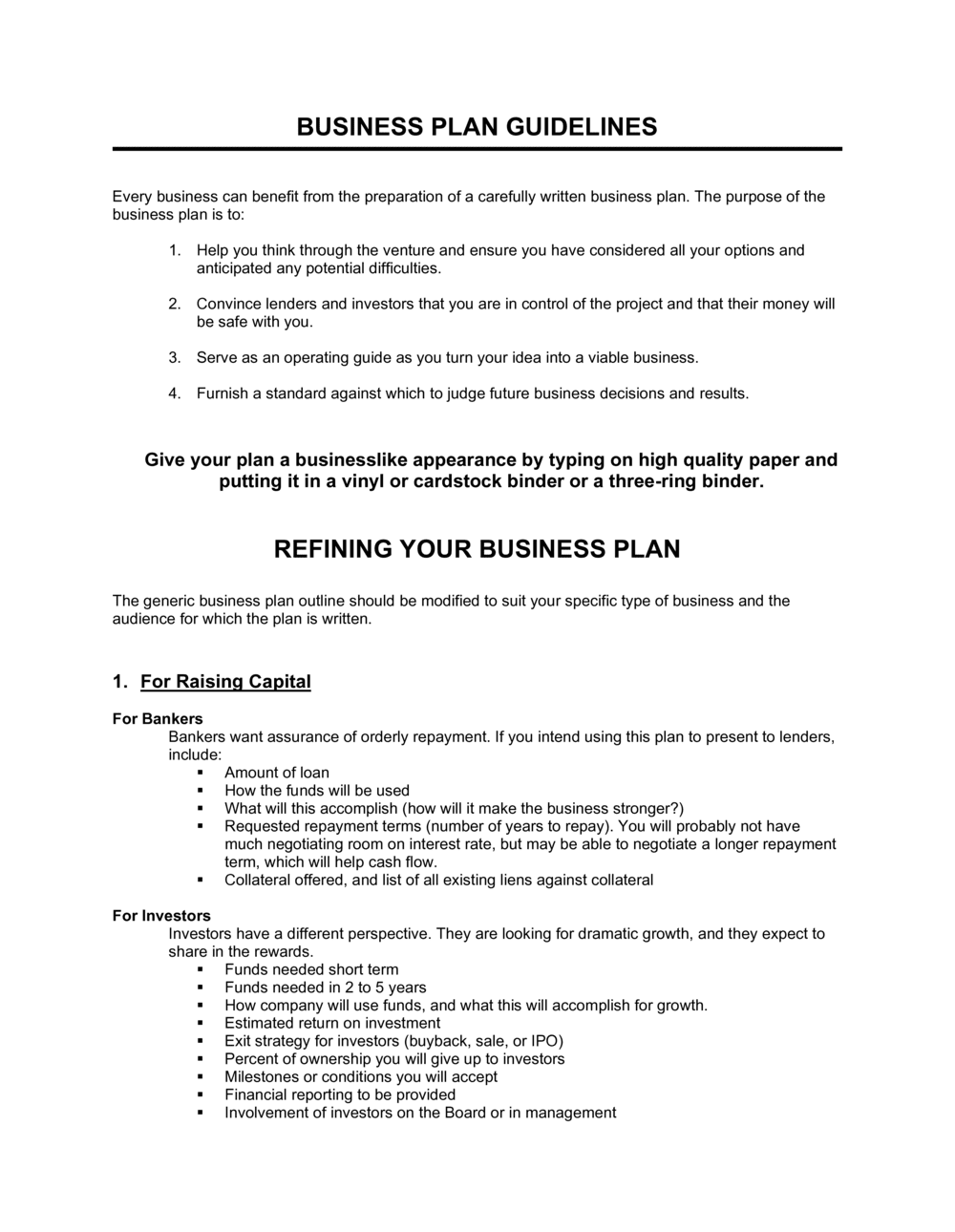
Write one paragraph stating why these guidelines exist, which programs or submission types they govern, and the effective date. Be explicit about exclusions — if the guidelines apply only to the annual capital allocation cycle and not to project proposals, say so.
💡 Name the specific program or funding round in the scope statement so applicants have no ambiguity about whether these guidelines apply to them.
2
List every required section in submission order
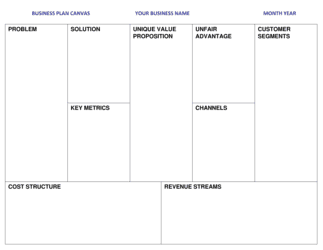
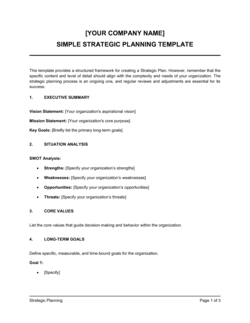
Enumerate all required plan sections in the exact order they must appear and describe the minimum content each must contain. Go beyond section names — specify required methodologies, data sources, and depth for critical sections like market analysis and financial projections.
💡 Use a table with three columns — section name, minimum content standard, and page target — so authors can scan requirements at a glance.
3
Set formatting and file requirements
Specify page limits (core document and appendices separately), font, point size, margins, heading levels, and accepted file formats. Include a file naming convention to simplify reviewer intake.
💡 Clarify whether cover pages, tables of contents, and appendices count toward the page limit — these are the most common sources of formatting confusion.
4
Define the financial model specifications
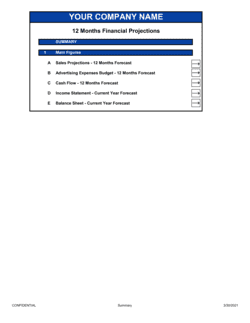
State the required financial statements, time horizon (monthly Year 1, annual Years 2–5 is standard), level of line-item detail, and whether the model must be submitted as an editable spreadsheet alongside the PDF plan.
💡 Include a sample financial model tab structure — Revenue, COGS, Operating Expenses, Cash Flow, Balance Sheet — so authors build a comparable model rather than each creating their own structure.
5
Document the review process with roles and timelines
Map each review stage to a specific role or committee, assign a turnaround time in business days, and describe what triggers advancement to the next stage or return to the author.
💡 Publish the review timeline as a visual flowchart in the appendix — applicants reference it repeatedly and a visual format reduces follow-up inquiries.
6
Build and publish the scoring rubric
Assign weights to each required section based on its importance to the decision being made. Write 3–5 specific quality descriptors for each score level (1–5) so different reviewers apply the rubric consistently.
💡 Pilot the rubric with two reviewers scoring the same plan independently before publishing — if scores diverge by more than one point per section, refine the descriptors.
7
Compile the compliance checklist
Translate every requirement in the guidelines into a binary yes/no checklist item. Group items by category — structure, financials, formatting — and include a signature line for author attestation.
💡 Run the checklist against the three most recent non-compliant submissions from prior cycles to confirm it would have caught every failure.
8
Update the document after each review cycle
After each batch of submissions, log the top three recurring errors and add them to the common submission errors section. Increment the version number and effective date so authors always know they are reading the current version.
💡 Archive prior versions with their effective dates — applicants who submitted under an earlier version sometimes need to reference the rules that applied to their submission.