eCommerce Business Plan Template

Free Word download β€’ Edit online β€’ Save & share with Drive β€’ Export to PDF

38 pagesβ€’3h 5m – 4h 10m to fillβ€’Difficulty: Expert
Learn more ↓
FreeeCommerce Business Plan Template

At a glance

What it is
An Ecommerce Business Plan is a structured document that maps your online store's product strategy, target market, fulfillment model, digital marketing channels, and financial projections into a single investor-ready or lender-ready file. This free Word download gives you a complete, editable framework you can customize and export as PDF to share with banks, investors, or co-founders.
When you need it
Use it when launching a new online store, applying for a business loan or ecommerce financing, pitching investors on a product-based venture, or restructuring an existing online retail operation around a clear growth strategy.
What's inside
Executive summary, company overview, product catalog and sourcing strategy, market and competitive analysis, digital marketing and customer acquisition plan, fulfillment and operations model, technology stack, management team, and 3-year financial projections including revenue, cost of goods sold, and cash flow.

What is an Ecommerce Business Plan?

An Ecommerce Business Plan is a structured document that maps an online store's product strategy, target market, digital acquisition model, fulfillment operations, technology stack, and 3-year financial projections into a single actionable file. Unlike a general business plan, it addresses the metrics that actually drive online retail performance β€” average order value, customer acquisition cost, ROAS, fulfillment cost per order, and inventory cash flow timing β€” giving lenders, investors, and co-founders the specific numbers they need to evaluate the opportunity. This free Word template gives you a complete, investor-ready starting point you can edit and export as PDF in hours rather than weeks.

Why You Need This Document

Launching an ecommerce store without a written plan means making inventory, marketing, and pricing decisions without validating whether the unit economics actually work. The consequences are concrete: merchants who skip the financial modeling step frequently discover β€” only after spending on stock and ads β€” that their landed cost plus fulfillment leaves no margin to profitably acquire customers. Beyond internal planning, any SBA loan, ecommerce lender, or investor will require a formal plan before committing capital, and a plan built from a structured template signals operational seriousness that an informal pitch deck does not. This template forces you to calculate gross margin, model CAC payback, and stress-test cash flow against inventory purchase timing before a single dollar is spent β€” turning costly assumptions into informed decisions.

Which variant fits your situation?

If your situation is…Use this template
Launching a direct-to-consumer physical product brandEcommerce Business Plan
Running a dropshipping store with no held inventoryDropshipping Business Plan
Selling handmade or artisan goods onlineRetail Business Plan
Building a subscription box or recurring product serviceSubscription Box Business Plan
Expanding an existing ecommerce store to new marketsBusiness Expansion Plan
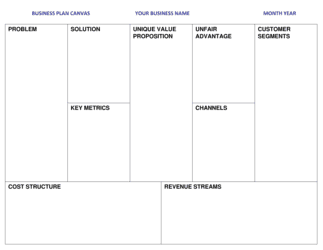
Quick internal planning or early product ideationOne-Page Business Plan
Pitching to venture capital or accelerator programsInvestor Business Plan

Common mistakes to avoid

❌ Projecting revenue from a desired outcome, not unit economics

Why it matters: A model that starts with '$500K Year 1 revenue' and works backward will produce assumptions that don't survive a single question from a lender or investor.

Fix: Build the model from daily sessions Γ— conversion rate Γ— AOV Γ— gross margin. Every revenue line must trace back to a traffic and conversion assumption.

❌ Omitting fulfillment cost from the gross margin calculation

Why it matters: Fulfillment cost β€” pick, pack, ship, and packaging β€” can reduce effective gross margin by 10–20 percentage points, turning a seemingly profitable product into a loss-maker at scale.

Fix: Add a 'fulfillment cost per order' line explicitly to the COGS section and recalculate gross margin after including it.

❌ Allocating the entire marketing budget to paid acquisition

Why it matters: Ecommerce businesses that rely solely on paid ads are one iOS privacy update or CPM spike away from a collapsed CAC. Retention and owned channels are non-negotiable.

Fix: Allocate at least 20–30% of the marketing budget to retention channels β€” email, SMS, loyalty β€” and model repeat purchase rate as a separate revenue driver.

❌ Ignoring inventory cash timing in the cash flow statement

Why it matters: Paying a supplier 60–90 days before selling the inventory creates cash flow gaps that have shut down profitable ecommerce businesses. P&L profitability does not equal cash availability.

Fix: Model inventory purchases as cash outflows in the month payment is due to the supplier, not in the month the goods are sold. Show the resulting cash balance separately.

❌ No competitive analysis or a single-competitor comparison

Why it matters: Readers assume a one-competitor analysis means the founder hasn't done the research β€” or is cherry-picking the weakest opponent to look stronger.

Fix: Identify at least four competitors including indirect substitutes and the status quo (e.g., buying in-store), and be specific about your advantage against each.

❌ Technology stack costs excluded from operating expenses

Why it matters: Shopify fees, app subscriptions, payment processing (typically 2.5–3% of revenue), and email platform costs are real and recurring β€” omitting them overstates EBITDA by thousands of dollars per month at scale.

Fix: List every platform and app with its monthly cost and any percentage-of-revenue fee. Add payment processing as a separate line item in the P&L.

The 10 key sections, explained

Executive Summary

Company Overview

Products and Sourcing

Market Analysis

Competitive Analysis

Digital Marketing and Customer Acquisition

Fulfillment and Operations

Technology Stack

Management Team

Financial Projections

How to fill it out

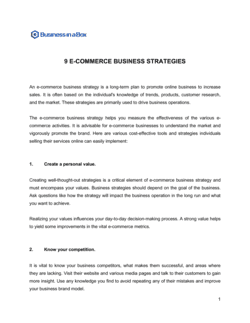
  1. 1

    Complete the company overview and mission

    Enter your legal business name, entity type, founding date, and a one-sentence mission identifying what you sell, to whom, and why. This anchors every other section.

    πŸ’‘ Register your business entity before completing this section β€” lenders and investors want the legal name, not the brand name.

  2. 2

    Document your product catalog and unit economics

    List your current or planned SKUs with landed cost, retail price, and gross margin for each. Summarize the sourcing model β€” direct manufacturer, wholesale, or dropship β€” and include lead times and MOQs.

    πŸ’‘ Target a minimum 50% gross margin before fulfillment costs for physical ecommerce products β€” below that, CAC and returns will eliminate profitability at scale.

  3. 3

    Build the market analysis from the bottom up

    Research TAM using at least two sources (e.g., Statista and a trade publication). Then build a bottom-up SAM by estimating the number of reachable target customers multiplied by expected annual spend per customer.

    πŸ’‘ If your bottom-up and top-down estimates differ by more than 40%, revisit your customer segment definition before presenting the plan.

  4. 4

    Map competitors and define your differentiation

    Identify at least four direct or indirect competitors. For each, note their price point, primary acquisition channel, and key weakness. Write one concrete paragraph on why your store wins against each.

    πŸ’‘ A simple 2Γ—2 matrix plotting price vs. product quality or speed vs. breadth makes the competitive section scannable for readers who skim.

  5. 5

    Define your acquisition channels and set CAC targets

    Select two to three primary paid and organic channels. For each, estimate monthly budget, expected CAC, and ROAS or conversion rate. Link these assumptions directly to the revenue model.

    πŸ’‘ If your target CAC payback period exceeds 6 months for a non-subscription product, show explicitly how repeat purchase rate compensates.

  6. 6

    Detail your fulfillment model and per-order costs

    Specify whether you are fulfilling in-house, via a 3PL, or dropshipping. Enter the per-order fulfillment cost (pick, pack, ship, packaging) and include it as a line item in your COGS or gross margin calculation.

    πŸ’‘ Get at least two 3PL quotes before publishing fulfillment cost assumptions β€” rates vary significantly by average package weight and order volume tier.

  7. 7

    Build the three-year financial model

    Model P&L and cash flow monthly for Year 1, annually for Years 2–3. Start from orders Γ— AOV, subtract COGS and fulfillment, then layer in operating expenses by category. Include a sensitivity table at 70% of projected order volume.

    πŸ’‘ Separate inventory purchase cash outflows from COGS in the cash flow statement β€” confusing the two is the most common financial modeling error in ecommerce plans.

  8. 8

    Write the executive summary last

    Pull the single most compelling data point from each section β€” market size, target margin, traction metric, funding ask β€” and compress into one to two pages. The summary should make the reader want to read the full plan.

    πŸ’‘ State your funding ask and the specific milestone it funds in the first paragraph of the executive summary. Burying the ask on page two costs you the reader's attention.

Frequently asked questions

What is an ecommerce business plan?

An ecommerce business plan is a structured document that defines an online store's product strategy, target market, customer acquisition model, fulfillment operations, technology stack, and financial projections. It serves as both an internal operating roadmap and an external document for raising capital from investors, banks, or ecommerce lenders. It differs from a general business plan by addressing ecommerce-specific metrics such as AOV, CAC, ROAS, and fulfillment cost per order.

Do I need a business plan to start an ecommerce store?

You do not legally need one to open a Shopify store, but you do need one to raise capital, secure a business loan, or apply for ecommerce financing programs. Beyond external requirements, the planning process itself forces you to validate margins, model cash flow timing around inventory purchases, and prioritize acquisition channels before you spend real money on ads or stock.

What financial projections should an ecommerce business plan include?

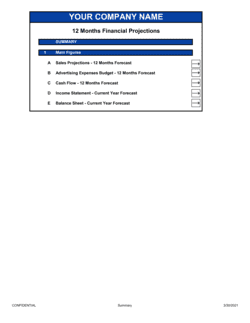
A complete ecommerce financial model includes a monthly P&L for Year 1 and annual for Years 2–3, a cash flow statement that separates inventory purchase timing from COGS, a summary of key unit economics (CAC, LTV, AOV, gross margin, and CAC payback period), and a use-of-funds breakdown if capital is being raised. A sensitivity table at 70% of projected order volume is expected by most lenders and investors.

How long should an ecommerce business plan be?

For investor or lender audiences, 15–25 pages plus a financial model appendix is the accepted range. Internal operating plans can be shorter. A one-page canvas works for early ideation but is insufficient for any capital raise. Appendices covering supplier agreements, market research data, or platform screenshots do not count against the page target.

What is the difference between an ecommerce business plan and a general business plan?

A general business plan covers any type of company. An ecommerce business plan replaces generic sections like 'retail location' with digital-specific ones: technology stack, fulfillment model, paid acquisition channels, CAC and ROAS targets, and inventory cash flow timing. The financial model must account for payment processing fees, platform costs, and the lag between inventory purchase and sale that does not appear in service businesses.

How do I calculate gross margin for an ecommerce product?

Start with your retail selling price and subtract the landed cost of the product β€” including manufacturing or wholesale cost, freight, import duties, and packaging. Divide the result by the selling price to get gross margin percentage. Note that fulfillment cost (pick, pack, ship) is sometimes included in COGS and sometimes reported separately; be consistent in how you treat it so your model is comparable to industry benchmarks.

Can I use this template for a dropshipping business?

Yes, with modifications. In a dropshipping model the products and sourcing section describes supplier relationships and margin agreements rather than inventory purchases. The fulfillment section notes that the supplier ships directly, and the cash flow model changes significantly because there are no inventory purchase cash outflows. Document the dropshipping margin β€” typically 15–30% of retail β€” and CAC explicitly, as those are the two numbers most scrutinized in a dropshipping plan.

How often should I update my ecommerce business plan?

Update the financial model monthly against actuals during Year 1 β€” ecommerce metrics move too fast for quarterly reviews to be useful. Revise the full plan before any fundraising conversation, any major product or channel pivot, and at least annually once the business is established. A plan more than 12 months old will not reflect current platform costs, ad CPMs, or competitive conditions.

What do ecommerce investors look for in a business plan?

The four metrics ecommerce investors examine first are gross margin (target 50%+ before fulfillment for physical products), CAC payback period (under 6 months for non-subscription, under 12 months for subscription), LTV to CAC ratio (3x or higher is the common benchmark), and repeat purchase rate. Beyond the numbers, investors want to see a specific customer acquisition strategy, not a channel laundry list, and a clear explanation of why this product wins against the current market alternatives.

How this compares to alternatives

vs General Business Plan

A general business plan covers any type of company across all business models. An ecommerce business plan replaces brick-and-mortar and service-specific sections with digital-first content covering technology stack, CAC and ROAS targets, fulfillment model, and inventory cash flow timing. Use the ecommerce version when your revenue is generated entirely or primarily through an online storefront.

vs Retail Business Plan

A retail business plan focuses on physical store operations β€” foot traffic, lease costs, staffing, and POS systems. An ecommerce business plan replaces those elements with digital acquisition channels, platform costs, 3PL logistics, and conversion rate optimization. If you operate both online and in-store, you may need sections from both templates.

vs Marketing Plan

A marketing plan covers only the customer acquisition and brand strategy layer of the business. An ecommerce business plan includes a full marketing section but also adds product strategy, fulfillment, technology stack, financials, and funding requirements. Use a standalone marketing plan when your business model is already defined and you need to go deeper on channel tactics and campaign execution.

vs One-Page Business Plan

A one-page business plan is a rapid-alignment tool for internal teams or early ideation β€” useful for testing assumptions before committing to a full plan. It lacks the financial depth, competitive analysis, and operational detail required by lenders or investors. Use it to pressure-test your concept, then build the full ecommerce plan before any capital conversation.

Industry-specific considerations

Apparel and Fashion

SKU proliferation across sizes and colors drives inventory complexity; return rates of 20–30% must be modeled into gross margin calculations.

Health, Beauty, and Wellness

High repeat purchase rates enable LTV-driven CAC models; regulatory labeling requirements and FDA cosmetic compliance should be addressed in the operations section.

Food and Beverage

Cold chain logistics and perishability add fulfillment complexity; subscription models are common and churn rate must be explicitly projected.

Consumer Electronics and Gadgets

Higher AOV reduces CAC as a percentage of revenue but requires detailed warranty, returns, and after-sales support planning.

Home Goods and Furniture

Large parcel shipping costs can erode margins significantly; white-glove delivery and assembly services are common upsells that must be costed separately.

Pet Products

Strong repeat purchase behavior and subscription potential; product safety and ingredient transparency are increasingly scrutinized by the customer base.

Template vs pro β€” what fits your needs?

PathBest forCostTime
Use the templateEarly-stage founders, internal operating plans, and ecommerce loans under $250KFree2–4 weeks (30–60 hours)
Template + professional reviewSeed raises up to $500K, first SBA loan, or accelerator applications$500–$2,000 for a financial model review with an accountant or ecommerce advisor3–5 weeks
Custom draftedRaises above $500K, institutional ecommerce lenders, or complex multi-channel operations$3,000–$8,000 for a professional business plan writer with ecommerce experience4–8 weeks

Glossary

Average Order Value (AOV)
Total revenue divided by the number of orders in a given period β€” a key metric for pricing and upsell strategy.
Customer Acquisition Cost (CAC)
Total sales and marketing spend divided by the number of new customers acquired in the same period.
Customer Lifetime Value (LTV)
The total gross profit expected from a single customer across all their purchases over the entire relationship.
Gross Margin
Revenue minus cost of goods sold, expressed as a percentage of revenue β€” the primary indicator of product profitability.
Conversion Rate
The percentage of website visitors who complete a purchase, typically ranging from 1–4% for ecommerce stores.
SKU (Stock Keeping Unit)
A unique identifier assigned to each distinct product variant β€” size, color, or bundle β€” used for inventory tracking.
Fulfillment Model
The method by which orders are stored, picked, packed, and shipped β€” options include in-house, third-party logistics (3PL), or dropshipping.
Return on Ad Spend (ROAS)
Revenue generated for every dollar spent on paid advertising β€” a standard efficiency metric for digital marketing channels.
Churn Rate
For subscription or repeat-purchase models, the percentage of customers who stop buying within a defined period.
3PL (Third-Party Logistics)
An outsourced fulfillment provider that warehouses inventory and ships orders on behalf of the ecommerce seller.
Cart Abandonment Rate
The percentage of shoppers who add items to their cart but leave the site without completing the purchase.

Part of your Business Operating System

This document is one of 3,000+ business & legal templates included in Business in a Box.

  • Fill-in-the-blanks β€” ready in minutes
  • 100% customizable Word document
  • Compatible with all office suites
  • Export to PDF and share electronically

Create your document in 3 simple steps.

From template to signed document β€” all inside one Business Operating System.
1
Download or open template

Access over 3,000+ business and legal templates for any business task, project or initiative.

2
Edit and fill in the blanks with AI

Customize your ready-made business document template and save it in the cloud.

3
Save, Share, Send, Sign

Share your files and folders with your team. Create a space of seamless collaboration.

Save time, save money, and create top-quality documents.

β˜…β˜…β˜…β˜…β˜…

"Fantastic value! I'm not sure how I'd do without it. It's worth its weight in gold and paid back for itself many times."

Managing Director Β· Mall Farm
Robert Whalley
Managing Director, Mall Farm Proprietary Limited
β˜…β˜…β˜…β˜…β˜…

"I have been using Business in a Box for years. It has been the most useful source of templates I have encountered. I recommend it to anyone."

Business Owner Β· 4+ years
Dr Michael John Freestone
Business Owner
β˜…β˜…β˜…β˜…β˜…

"It has been a life saver so many times I have lost count. Business in a Box has saved me so much time and as you know, time is money."

Owner Β· Upstate Web
David G. Moore Jr.
Owner, Upstate Web

Run your business with a system β€” not scattered tools

Stop downloading documents. Start operating with clarity. Business in a Box gives you the Business Operating System used by over 250,000 companies worldwide to structure, run, and grow their business.

Start freeΒ Β·Β No credit card required