Investment Calculator Template

Free Excel download β€’ Use online β€’ Print or share

28 pagesβ€’45–55 min to useβ€’Difficulty: Expertβ€’Signature requiredβ€’Legal review recommended
Learn more ↓
FreeXLSInvestment Calculator Template

At a glance

What it is
An Investment Calculator is a structured document that formalizes the projected returns, contribution terms, and financial assumptions agreed upon between an investor and a company or fund manager. This free Word download lets you define investment amounts, rate-of-return assumptions, compounding periods, and exit scenarios in a single binding reference document β€” exportable as PDF for investor files, board packages, or capital-raise disclosures.
When you need it
Use it when presenting projected returns to prospective investors, formalizing the financial assumptions underpinning a term sheet, or documenting agreed-upon performance benchmarks before capital is committed. It is also used internally when boards or finance committees require a standardized return-scenario analysis before approving an investment decision.
What's inside
Principal investment amount, rate-of-return assumptions (base, optimistic, and downside scenarios), compounding frequency, investment horizon, projected ending value, IRR and net present value calculations, and a signature block acknowledging the assumptions as the agreed basis for the investment relationship.

What is an Investment Calculator?

An Investment Calculator is a structured document that formalizes the financial assumptions, projected return scenarios, and agreed-upon calculation methodology between an investor and a company or fund manager. It captures the principal investment amount, annual rate-of-return assumptions across base, optimistic, and downside scenarios, compounding frequency, investment horizon, and the resulting projected ending values β€” including IRR and NPV where applicable. Unlike a standalone spreadsheet, this template incorporates binding legal clauses: risk disclaimers, fee disclosures, governing law, and a mutual signature block that confirms both parties reviewed and accepted the projections as the documented basis of their investment relationship.

Why You Need This Document

Without a signed investment calculator document, projected return figures exist only in email threads and pitch decks β€” neither of which constitutes a clear, acknowledged record of what both parties understood before capital was committed. When actual returns diverge from projections, as they frequently do, the absence of a documented and signed assumption set turns a routine performance discussion into a credibility dispute or, in regulated contexts, a securities misrepresentation claim. An investment calculator also forces the issuer to disclose fees, compounding mechanics, and scenario assumptions upfront β€” the precise disclosures that regulators in the US, Canada, the UK, and the EU require before any investment projection is placed in front of an outside investor. This template gives you the structure to make those disclosures correctly, the scenario framework to present returns honestly, and the signature block to create an enforceable record β€” all in a single free Word download.

Which variant fits your situation?

If your situation is…Use this template
Projecting returns on a startup equity investment over a 5-year horizonInvestment Calculator (Equity)
Calculating compound interest on a fixed-term debt instrumentInvestment Calculator (Fixed Income)
Modeling cash flow and cap rate for a rental property acquisitionReal Estate Investment Calculator
Comparing multiple investment scenarios for a board approval packageInvestment Proposal
Documenting the full legal terms of an equity investment roundInvestment Agreement
Presenting a structured summary of a proposed capital raise to investorsInvestor Presentation
Formalizing the terms of a convertible note investmentConvertible Note Agreement

Common mistakes to avoid

❌ Omitting return disclaimers

Why it matters: Presenting projected returns without an explicit non-guarantee disclaimer exposes the document issuer to securities misrepresentation claims in the US, Canada, the UK, and the EU β€” regardless of intent.

Fix: Include a clear, jurisdiction-compliant statement that projections are estimates only, based on stated assumptions, and that actual results may differ materially.

❌ Using gross returns without disclosing fees

Why it matters: Gross return projections that omit management fees and carried interest systematically overstate what the investor will actually receive, which regulators treat as a material omission.

Fix: Present both gross and net-of-fees projections side by side in the scenario summary, with the fee structure itemized in the fees clause.

❌ Leaving compounding frequency unspecified

Why it matters: Annual versus monthly compounding on the same nominal rate produces meaningfully different ending values over multi-year horizons, and silence on this point creates enforceable disputes.

Fix: Explicitly state the compounding frequency in the relevant clause and confirm the investor understands its effect on the projected ending value.

❌ Using a trade name instead of the registered legal entity

Why it matters: If the company name on the document doesn't match the registered corporate entity, the document may not bind the correct legal person β€” making IP assignment and payment obligations harder to enforce.

Fix: Use the full registered corporate name from the articles of incorporation or company registry filing, and include the jurisdiction of incorporation.

❌ Executing after capital has already been transferred

Why it matters: A signed acknowledgment of return assumptions has reduced evidentiary weight if it post-dates the actual transfer of funds, since the investor gave nothing new in exchange.

Fix: Always execute the document before or simultaneous with the wire transfer or capital contribution β€” use a closing checklist to enforce this sequence.

❌ Selecting a governing law with no connection to the parties

Why it matters: Many jurisdictions apply local securities and investor protection laws regardless of the contractual choice-of-law clause, leaving the parties subject to unexpected regulatory requirements.

Fix: Select the governing law of the jurisdiction where the investor is domiciled or where the investment is primarily managed, and have a local securities lawyer confirm the choice is defensible.

The 10 key clauses, explained

Parties and Investment Purpose

In plain language: Identifies the investor and the recipient (company, fund, or project), states the purpose of the investment, and confirms the document's role as the agreed basis for financial projections.

Sample language
This Investment Calculator and associated projections are entered into as of [DATE] between [INVESTOR FULL NAME / ENTITY] ('Investor') and [COMPANY LEGAL NAME], a [STATE/COUNTRY] [ENTITY TYPE] ('Company'), for the purpose of [INVESTMENT PURPOSE].

Common mistake: Listing a trade name instead of the registered legal entity for either party. If the entity name doesn't match corporate records, the document's enforceability is weakened in a dispute.

Principal Investment Amount

In plain language: States the exact amount of capital the investor is committing, the currency, and the scheduled date or conditions for funding.

Sample language
Investor agrees to contribute a principal amount of [CURRENCY SYMBOL][AMOUNT] (the 'Principal') to Company on or before [FUNDING DATE], subject to satisfaction of the conditions set out in Section [X].

Common mistake: Omitting the currency denomination on cross-border investments. USD and CAD, or GBP and EUR, are commonly confused when only a number is stated, creating material disputes at exit.

Rate of Return Assumptions

In plain language: Defines the assumed annual rate of return for base, optimistic, and downside scenarios, and confirms that these are projections, not guarantees.

Sample language
The parties acknowledge the following projected annual rates of return for modeling purposes only: Base Case: [X]% per annum; Optimistic Case: [X]% per annum; Downside Case: [X]% per annum. These projections are not representations of actual future performance.

Common mistake: Presenting return assumptions without a clear disclaimer that they are projections, not guarantees. In most jurisdictions, omitting this exposes the issuer to securities fraud liability if returns fall short.

Compounding Frequency and Investment Horizon

In plain language: Specifies how often returns compound (annually, quarterly, or monthly) and the total duration of the investment.

Sample language
Returns shall be calculated using [COMPOUNDING FREQUENCY β€” annual / quarterly / monthly] compounding over an investment horizon of [X] years, commencing on [START DATE] and concluding on [MATURITY / EXIT DATE].

Common mistake: Defaulting to annual compounding without specifying it explicitly. If the investor assumes monthly compounding and the document is silent, the resulting projected-value dispute can void the agreement.

Projected Ending Value and Scenario Summary

In plain language: Presents the calculated projected ending value of the investment under each scenario, based on the agreed principal, rate, and horizon.

Sample language
Based on the assumptions above, projected ending values are as follows: Base Case: [CURRENCY][AMOUNT]; Optimistic Case: [CURRENCY][AMOUNT]; Downside Case: [CURRENCY][AMOUNT]. All figures are pre-tax and exclude fees unless otherwise stated.

Common mistake: Presenting projected values without specifying whether they are pre-tax or after-tax and whether management fees are deducted. This creates expectation mismatches that generate disputes at distribution time.

IRR and NPV Calculations

In plain language: Discloses the internal rate of return and net present value under the base-case scenario, using an agreed discount rate, so both parties share a common understanding of value.

Sample language
At the Base Case rate of [X]% per annum, the estimated IRR is [X]% and the NPV (discounted at [DISCOUNT RATE]%) is [CURRENCY][AMOUNT] as of [CALCULATION DATE].

Common mistake: Omitting the discount rate used to calculate NPV. Two parties using different discount rates will arrive at materially different NPV figures β€” explicitly stating the agreed rate eliminates this conflict.

Fees, Carried Interest, and Deductions

In plain language: Discloses any management fees, performance fees (carried interest), or other deductions applied before investor distributions are calculated.

Sample language
An annual management fee of [X]% of assets under management and a carried interest of [X]% of profits above the hurdle rate of [X]% per annum will be deducted prior to calculation of net investor returns.

Common mistake: Burying fee structures in a schedule rather than the main body. Investors who miss fee disclosures can successfully argue misrepresentation in many jurisdictions, exposing the fund manager to liability.

Acknowledgment of Risk and Non-Guarantee

In plain language: Both parties formally acknowledge that projected returns are estimates based on stated assumptions and that past performance does not guarantee future results.

Sample language
Investor acknowledges that all projections contained herein are based on assumptions that may not materialize and that [COMPANY NAME] makes no representation or warranty as to the actual future performance of the investment. Investing involves risk, including the possible loss of the entire Principal.

Common mistake: Using generic boilerplate risk language copied from unrelated documents. Jurisdiction-specific securities regulators prescribe exact disclosure language β€” generic wording may not satisfy mandatory disclosure requirements.

Governing Law and Dispute Resolution

In plain language: Specifies which jurisdiction's law governs the document and how disputes over projected returns or calculation methodology are resolved.

Sample language
This document shall be governed by the laws of [STATE / PROVINCE / COUNTRY]. Any dispute arising under this document shall be resolved by binding arbitration in [CITY] administered by [AAA / JAMS / ICAC], except claims for injunctive relief.

Common mistake: Selecting a governing law with no meaningful connection to either party's location or the investment's subject matter. Several jurisdictions will apply local securities law regardless of contractual choice-of-law provisions.

Signature and Acknowledgment Block

In plain language: Captures the dated signatures of both parties confirming they have read, understood, and agreed to the assumptions, methodology, and disclaimers in the document.

Sample language
By signing below, each party confirms they have read and understood this Investment Calculator, including all assumptions, projections, disclaimers, and fee disclosures. [INVESTOR NAME] _________________ Date: _______ [COMPANY REPRESENTATIVE] _________________ Date: _______

Common mistake: Omitting the date of signature from the acknowledgment block. An undated signature creates ambiguity about when the parties were bound, which matters if assumptions were updated between drafting and execution.

How to fill it out

  1. 1

    Identify both parties with full legal names

    Enter the investor's full legal name or registered entity name and the company's exact registered corporate name, jurisdiction of incorporation, and entity type.

    πŸ’‘ Cross-reference the company's articles of incorporation to confirm the exact legal name before execution β€” trade names are not sufficient.

  2. 2

    Enter the principal investment amount and currency

    State the exact committed capital amount, the three-letter ISO currency code (USD, CAD, GBP, EUR), and the scheduled funding date or trigger conditions.

    πŸ’‘ Always include the ISO currency code, not just a symbol β€” $ alone is ambiguous in cross-border transactions.

  3. 3

    Set the rate-of-return assumptions for each scenario

    Define the annual rate for your base, optimistic, and downside cases. Base these on comparable market benchmarks, sector data, or historical fund performance β€” not aspirational targets.

    πŸ’‘ Use an independent market benchmark (e.g., S&P 500 10-year CAGR for equity, treasury rates for fixed income) as your base-case anchor to make assumptions defensible.

  4. 4

    Specify compounding frequency and investment horizon

    Select annual, quarterly, or monthly compounding and enter the start and expected end dates of the investment. Confirm both parties understand the horizon before execution.

    πŸ’‘ Monthly compounding on a 10-year horizon produces approximately 8% more ending value than annual compounding at the same nominal rate β€” the difference is material and must be agreed explicitly.

  5. 5

    Calculate and disclose projected ending values

    Run the compounding formula for each scenario and enter the pre-tax, pre-fee projected ending values in the scenario summary table. Flag any figures that assume reinvestment of distributions.

    πŸ’‘ State clearly whether projections assume distributions are reinvested or paid out β€” these produce very different ending values and investors interpret the default differently.

  6. 6

    Disclose all fees and carried interest

    Enter the annual management fee percentage, the carried-interest rate, and the hurdle rate above which carry is calculated. Show how these are deducted from the gross return figures.

    πŸ’‘ A 2% management fee and 20% carry on a 10-year investment can reduce net investor return by 30–40% versus gross β€” investors should see a net-of-fees projection alongside the gross figure.

  7. 7

    Review and insert the risk disclaimer language

    Ensure the risk acknowledgment section uses jurisdiction-compliant language. For US-based offerings, verify the language aligns with applicable SEC or state securities disclosure requirements.

    πŸ’‘ If the investment qualifies as a security under applicable law, have a securities lawyer review the disclaimer language before the document is shown to any investor.

  8. 8

    Execute with dated signatures before capital is transferred

    Both parties must sign and date the document before any funds are transferred. File the executed copy in your investor relations records and provide a copy to the investor.

    πŸ’‘ Use a timestamped eSign platform to create an immutable execution record β€” this is critical if projected return disputes arise after a market downturn.

Frequently asked questions

What is an investment calculator template?

An investment calculator template is a structured Word document that formalizes the financial assumptions, projected return scenarios, and agreed-upon methodology underpinning an investment relationship. It goes beyond a spreadsheet by incorporating legally relevant clauses β€” risk disclaimers, fee disclosures, governing law, and a signature block β€” so the projected return figures carry documented, acknowledged weight between investor and issuer.

Is an investment calculator document legally binding?

An investment calculator document is generally enforceable as a binding acknowledgment of agreed assumptions when properly executed by both parties. However, it is not a substitute for a full investment agreement or subscription agreement β€” it supplements those documents by formalizing the return projections both parties relied upon. A securities lawyer should review it before it is shown to investors in any regulated offering.

What return assumptions should I use in an investment calculator?

Base-case assumptions should be anchored to verifiable market benchmarks β€” the 10-year S&P 500 CAGR (~10%) for diversified equity, comparable fund IRR data for private equity, or prevailing Treasury rates for fixed income. Optimistic and downside cases typically diverge 3–5 percentage points from the base in each direction. Assumptions that significantly exceed sector norms without supporting data expose the issuer to misrepresentation risk.

Do I need a lawyer to use this template?

For straightforward internal investment analysis or board-level capital project reviews, the template is typically sufficient on its own. However, if the document will be shown to outside investors in connection with a capital raise, a securities lawyer should review the risk disclaimer language and confirm it meets applicable regulatory requirements β€” this applies in the US, Canada, the UK, and the EU.

What is the difference between IRR and ROI in an investment calculator?

ROI is a simple ratio: net gain divided by cost, expressed as a percentage, with no adjustment for the time value of money. IRR accounts for the timing of cash flows β€” a dollar received in year one is worth more than a dollar received in year five. For multi-year investments with irregular distributions, IRR is the more accurate measure of investment performance and is the standard metric used by institutional investors and fund managers.

How does compounding frequency affect my projected returns?

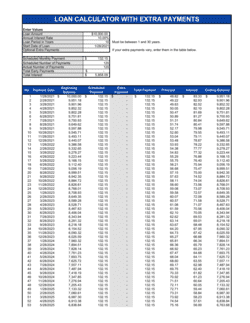
More frequent compounding produces higher ending values at the same nominal rate because interest is applied to a growing base more often. For example, $100,000 invested at 8% for 10 years grows to approximately $215,892 with annual compounding but $222,039 with monthly compounding β€” a difference of over $6,000 on the same nominal rate. Specifying compounding frequency explicitly in the document eliminates disputes over which figure the parties agreed to.

Can this template be used for real estate investment projections?

Yes, with modifications. Real estate projections typically incorporate additional variables β€” annual rental income, vacancy rate, operating expenses, depreciation, and leverage β€” that require supplemental schedules. The core clauses covering principal, horizon, scenario assumptions, fee disclosure, and risk disclaimers apply equally to real estate investments. A Real Estate Investment Calculator variant addresses property-specific metrics such as cap rate and cash-on-cash return.

What disclosures are required when sharing investment projections?

In the US, projections shared in connection with a securities offering must comply with SEC forward-looking statement safe harbor rules and, for registered offerings, Regulation S-K requirements. In Canada, securities regulators require future-oriented financial information to be based on reasonable assumptions and include mandatory cautionary language. The UK FCA and EU ESMA have parallel requirements under their respective prospectus regimes. In all cases, the disclaimer must be specific to the assumptions stated, not generic boilerplate.

How often should an investment calculator document be updated?

The document should be updated whenever the underlying assumptions change materially β€” for example, if the investment horizon is extended, the capital commitment increases, or market conditions cause the base-case return assumption to become unsupportable. Both parties should re-execute an updated version, with the prior version retained in records. For active fund relationships, an annual review of projections against actuals is standard practice.

How this compares to alternatives

vs Investment Agreement

An investment agreement is the binding legal contract that governs the terms of a capital contribution β€” ownership percentage, rights, representations, and obligations. An investment calculator document formalizes the financial projections and return assumptions that support that agreement. Both are needed for a complete investor file; the calculator supplements but does not replace the agreement.

vs Investment Proposal

An investment proposal is a narrative pitch document designed to generate investor interest by describing the opportunity, market, and team. An investment calculator is a financial calculation and acknowledgment document signed by both parties once they have agreed to proceed. The proposal comes before the calculator in the investor relationship timeline.

vs Financial Projections Template

A financial projections template models a company's expected P&L, cash flow, and balance sheet for operational planning purposes. An investment calculator focuses specifically on investor-level return metrics β€” IRR, NPV, CAGR, and ending value across scenarios β€” and includes the legal clauses and signatures needed to make those projections a documented, acknowledged part of the investment record.

vs Term Sheet

A term sheet outlines the proposed commercial and legal terms of an investment deal β€” valuation, equity percentage, liquidation preferences, and governance rights. An investment calculator documents the quantitative return projections that inform those terms. Term sheets are typically non-binding letters of intent; investment calculators, when signed, are binding acknowledgments of agreed-upon assumptions.

Industry-specific considerations

Private Equity and Venture Capital

IRR-based return modeling across investment tranches, carried-interest calculation above a defined hurdle rate, and scenario analysis tied to exit multiples at specified holding periods.

Real Estate

Cash-on-cash return and equity multiple projections incorporating NOI, debt service coverage, vacancy assumptions, and terminal cap rate at disposition.

Financial Services and Wealth Management

Client-facing compound-growth illustrations subject to FINRA, SEC, FCA, or IIROC suitability and disclosure requirements depending on jurisdiction.

Manufacturing and Capital-Intensive Business

ROI and payback period calculations for equipment purchases, plant expansions, and automation investments where capital budgeting requires board-level sign-off.

Jurisdictional notes

United States

Investment projections shared in connection with a securities offering must comply with SEC forward-looking statement safe harbor provisions under the Private Securities Litigation Reform Act. State blue sky laws add a second layer of disclosure requirements that vary by state. The FTC and FINRA also regulate the presentation of projected returns in certain financial advisory contexts. Projections shown to unaccredited investors carry heightened scrutiny.

Canada

Canadian securities regulators (provincial CSA members including the OSC and BCSC) require that future-oriented financial information be prepared on the basis of reasonable assumptions, prominently labeled as projections, and accompanied by cautionary language specific to the stated assumptions. Quebec investors may require materials in French under provincial language law. Exempt-market dealer rules apply when projections are used to solicit investment under an exemption.

United Kingdom

The FCA regulates the communication of financial promotions, including investment projections, under FSMA 2000 and the Financial Promotions Order. Projections shown to retail clients must meet specific presentation standards under MiFID II as retained in UK law post-Brexit. Unauthorized financial promotions carrying projected return figures are a criminal offence. FCA-authorized firms must ensure projections comply with COBS 4 rules on fair, clear, and not misleading communications.

European Union

The EU Prospectus Regulation and MiFID II govern the presentation of projected returns in connection with public and private investment offerings. ESMA guidelines require that profit forecasts and projections in prospectuses be prepared on a stated basis, reviewed by auditors, and accompanied by prescribed cautionary language. GDPR considerations apply when investor personal data is processed in connection with the calculator document. Member state securities regulators may impose additional local requirements.

Template vs lawyer β€” what fits your deal?

PathBest forCostTime
Use the templateInternal capital project approvals, board presentations, and early-stage investor conversations where no regulated securities offering is involvedFree1–2 hours
Template + legal reviewCapital raises up to $500K involving outside investors, angel rounds, or real estate syndications with fewer than 20 investors$400–$800 for a securities lawyer review of disclaimer language2–5 business days
Custom draftedRegistered securities offerings, institutional fund raises, cross-border investments, or any situation where the document will be included in an offering memorandum$2,000–$8,000+1–3 weeks

Glossary

Principal
The original sum of money invested, before any returns, interest, or appreciation are applied.
Compound Interest
Interest calculated on both the original principal and the accumulated interest from prior periods, causing returns to grow exponentially over time.
IRR (Internal Rate of Return)
The discount rate at which the net present value of all cash flows from an investment equals zero β€” used to compare the attractiveness of different investments.
NPV (Net Present Value)
The difference between the present value of cash inflows and outflows over a period, used to assess whether an investment adds value in today's dollars.
CAGR (Compound Annual Growth Rate)
The mean annual growth rate of an investment over a specified period longer than one year, expressed as a percentage.
Compounding Period
The frequency at which interest or returns are calculated and added to the principal β€” annually, quarterly, monthly, or daily.
Discount Rate
The rate used to convert future cash flows into their present-day value, reflecting the time value of money and investment risk.
Return on Investment (ROI)
Net gain from an investment divided by the cost of the investment, expressed as a percentage β€” a basic measure of profitability.
Investment Horizon
The total length of time an investor plans to hold an investment before expecting a return or exit, typically expressed in years.
Scenario Analysis
A financial modeling technique that calculates projected outcomes under multiple sets of assumptions β€” typically base, optimistic, and downside cases.
Liquidity Event
An occurrence β€” such as an IPO, acquisition, or asset sale β€” that converts an illiquid investment into cash for investors.
Hurdle Rate
The minimum acceptable rate of return on an investment, below which the project or deal is considered not worth pursuing.

Part of your Business Operating System

This document is one of 3,000+ business & legal templates included in Business in a Box.

  • Fill-in-the-blanks β€” ready in minutes
  • 100% customizable Word document
  • Compatible with all office suites
  • Export to PDF and share electronically

Create your document in 3 simple steps.

From template to signed document β€” all inside one Business Operating System.
1
Download or open template

Access over 3,000+ business and legal templates for any business task, project or initiative.

2
Edit and fill in the blanks with AI

Customize your ready-made business document template and save it in the cloud.

3
Save, Share, Send, Sign

Share your files and folders with your team. Create a space of seamless collaboration.

Save time, save money, and create top-quality documents.

β˜…β˜…β˜…β˜…β˜…

"Fantastic value! I'm not sure how I'd do without it. It's worth its weight in gold and paid back for itself many times."

Managing Director Β· Mall Farm
Robert Whalley
Managing Director, Mall Farm Proprietary Limited
β˜…β˜…β˜…β˜…β˜…

"I have been using Business in a Box for years. It has been the most useful source of templates I have encountered. I recommend it to anyone."

Business Owner Β· 4+ years
Dr Michael John Freestone
Business Owner
β˜…β˜…β˜…β˜…β˜…

"It has been a life saver so many times I have lost count. Business in a Box has saved me so much time and as you know, time is money."

Owner Β· Upstate Web
David G. Moore Jr.
Owner, Upstate Web

Run your business with a system β€” not scattered tools

Stop downloading documents. Start operating with clarity. Business in a Box gives you the Business Operating System used by over 250,000 companies worldwide to structure, run, and grow their business.

Free Forever PlanΒ Β·Β No credit card required