I Am Sorry You Are Displeased with the Substitute Item Template

Free Word download • Edit online • Save & share with Drive • Export to PDF

1 page20–30 min to fillDifficulty: StandardSignature requiredLegal review recommended
Learn more ↓
FreeI Am Sorry You Are Displeased with the Substitute Item Template

At a glance

What it is
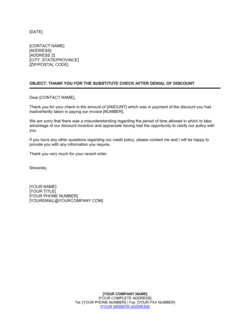
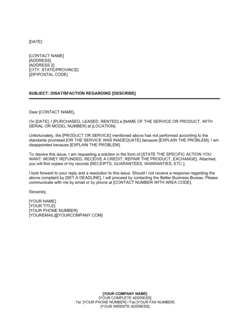
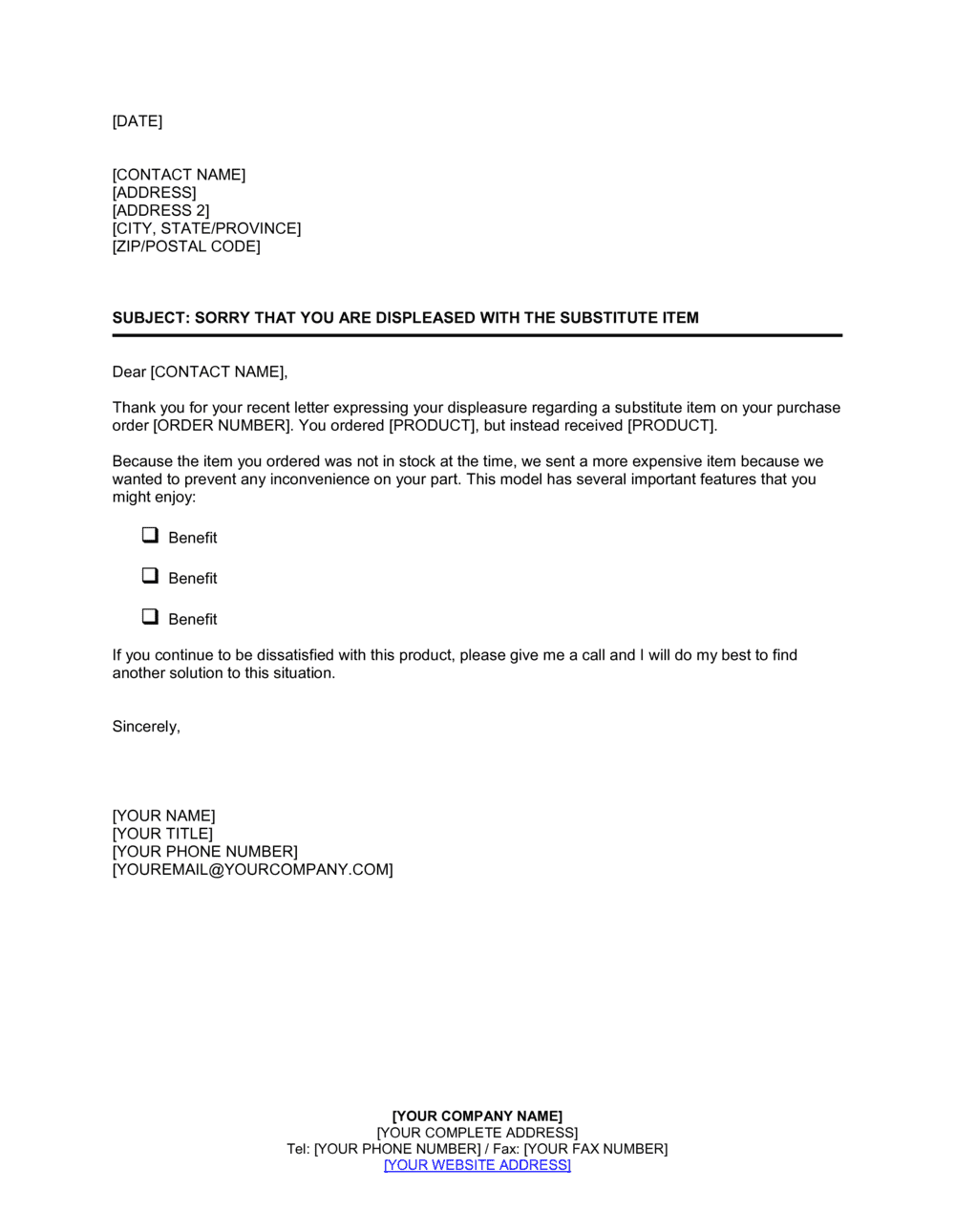
"I Am Sorry You Are Displeased With The Substitute Item" is a formal business letter a seller or supplier sends to a customer who has complained that a substituted product does not meet their expectations or match the originally ordered item. This free Word download gives you a professionally structured template you can edit online and export as PDF — covering acknowledgment, explanation of the substitution, any applicable contractual right to substitute, and a proposed remedy.
When you need it
Use it whenever a customer formally objects to receiving a product different from the one they ordered — whether due to stock shortages, supply chain substitutions, or contractual substitution clauses — and you need a written record of how you responded and what resolution you offered. It is particularly important when the complaint carries legal or financial risk, such as a threatened chargeback, return, or breach-of-contract claim.
What's inside
Date and party identification, acknowledgment of the customer's displeasure, explanation of the substitution and its basis, reference to any contractual substitution right, a specific remedy offer (replacement, refund, credit, or discount), a goodwill statement, and a signature block from an authorized representative.

What is an "I Am Sorry You Are Displeased With The Substitute Item" Letter?

An "I Am Sorry You Are Displeased With The Substitute Item" letter is a formal written response a seller or supplier sends to a customer who has complained about receiving a product different from the one they originally ordered. It acknowledges the customer's dissatisfaction, explains the factual and contractual basis for the substitution, and commits to a specific remedy — whether a replacement shipment, full refund, store credit, or partial discount — within a defined timeline. Unlike a general apology, this letter is structured to serve a dual purpose: preserving the customer relationship and creating a legally defensible documentary record of the company's good-faith response to the complaint.

Why You Need This Document

Failing to respond in writing to a substitution complaint carries concrete legal and financial risk. Without a documented response, a customer can file a chargeback with their card issuer — citing receipt of an item significantly different from what was ordered — and the merchant will have no evidence of good-faith effort to resolve the issue, typically resulting in the chargeback being decided in the customer's favor. In the US, UK, EU, and Canada, consumer protection statutes give customers rights when goods do not match their description, and those rights can be enforced through regulators, ADR schemes, or small claims courts if a complaint goes unanswered. A signed, specific, and timely letter — referencing the order number, explaining the substitution, and offering a defined remedy — demonstrates that the company took the complaint seriously and acted proportionately. This template gives you that response in 15 minutes, with the language calibrated to acknowledge the situation without admitting liability.

Which variant fits your situation?

If your situation is…Use this template
Customer wants a full refund for the substituted itemRefund Approval Letter
Customer is threatening a chargeback or formal disputeResponse to Customer Complaint Letter
Substitution was made under a supply agreement with a substitution clauseAmendment to Supply Agreement
Customer accepts the substitute but wants a partial creditCredit Note
Substitution caused financial loss and customer is claiming damagesSettlement Agreement
You need to notify a customer in advance that a substitution will occurNotice of Substitution Letter
Customer complaint involves a defective substitute item, not just dissatisfactionResponse to Product Defect Complaint Letter

Common mistakes to avoid

❌ Admitting fault with unqualified apology language

Why it matters: Phrases like 'we were wrong to substitute your item' or 'we made an error' can be treated as admissions of breach of contract or misrepresentation in a subsequent chargeback or small claims proceeding.

Fix: Use regret language — 'we are sorry the substitute item did not meet your expectations' — which acknowledges the customer's experience without creating a legal admission.

❌ Omitting the order number and complaint reference

Why it matters: Without a traceable order number and complaint date, the letter cannot be matched to the transaction record, weakening your position in a chargeback dispute where documentation matching is critical.

Fix: Always include the original order number, the substitute item's SKU or description, and the date and method of the customer's complaint in the opening paragraph.

❌ Offering a vague remedy with no timeline

Why it matters: A response that says 'we will make this right' without specifying the amount, method, and completion date is treated as non-responsive by card issuers and consumer protection agencies.

Fix: State the exact remedy — full refund of $[X], processed within 5 business days — and include the deadline for the customer to respond if a choice is required.

❌ Asserting a contractual substitution right that does not exist in the agreement

Why it matters: Citing a substitution clause that is not in the actual contract or terms exposes the company to a misrepresentation claim on top of the original substitution complaint.

Fix: Review the original order confirmation and terms before drafting. If no substitution right exists, rely instead on the explanation and remedy — not an asserted contractual permission.

❌ Signing with a department name instead of an authorized individual

Why it matters: A letter signed 'Customer Service Team' has no identified signatory, reducing its credibility as a corporate communication and its value as evidence in a formal dispute.

Fix: Have a named individual with an appropriate title — Customer Service Manager, Operations Director, or above — sign with their full name and title.

❌ Failing to retain a copy against the original order record

Why it matters: Chargeback windows can run up to 120 days; without a retrievable copy of this letter tied to the order, the company cannot produce documentary evidence of its good-faith response.

Fix: File the fully executed letter against the order record in your CRM or document management system immediately after sending, with a note of the date and channel of delivery.

The 9 key clauses, explained

Date, sender, and recipient identification

In plain language: Identifies the date of the letter, the full legal name and address of the sending company, and the full name and address of the customer who complained.

Sample language
[DATE] | [COMPANY LEGAL NAME] | [COMPANY ADDRESS] | To: [CUSTOMER FULL NAME] | [CUSTOMER ADDRESS]

Common mistake: Using only a first name or account number instead of the customer's full legal name — creating ambiguity that undermines the letter's evidentiary value if a dispute escalates.

Reference to original order and complaint

In plain language: States the original order number, the item ordered, the date of the complaint, and how the complaint was received — creating a paper trail that ties this letter to the specific transaction.

Sample language
We are writing in response to your complaint dated [DATE] regarding Order No. [ORDER NUMBER], in which you ordered [ORIGINAL ITEM DESCRIPTION] and received [SUBSTITUTE ITEM DESCRIPTION] in its place.

Common mistake: Omitting the original order number and complaint date — without them, the letter cannot be matched to the transaction record in a dispute or chargeback investigation.

Acknowledgment of displeasure

In plain language: Sincerely acknowledges that the customer is unhappy with the substitute item, without admitting fault or liability for a breach of contract.

Sample language
We sincerely regret that the substitute item you received did not meet your expectations and understand your disappointment. We value your business and take all customer concerns seriously.

Common mistake: Using language that admits legal liability — such as 'we were wrong to send you a different item' — which can be used against the company in a subsequent dispute or chargeback arbitration.

Explanation of the substitution

In plain language: Explains, factually and briefly, why the original item was unavailable and why the specific substitute was selected as the closest comparable alternative.

Sample language
Due to [REASON — e.g., unexpected stock depletion / supply chain disruption / manufacturer discontinuation], we were unable to fulfill your order of [ORIGINAL ITEM]. We selected [SUBSTITUTE ITEM] as the closest available equivalent based on [CRITERIA — e.g., comparable specifications, equivalent price point].

Common mistake: Providing no explanation at all, or a vague one like 'due to circumstances.' Customers and adjudicators are more likely to accept a substitution when the reason is specific and credible.

Reference to substitution right (if applicable)

In plain language: If the original order or supply agreement included a substitution clause, this section quotes or references it to establish the legal basis for the substitution.

Sample language
As provided in Section [X] of our [Terms and Conditions / Supply Agreement] dated [DATE], we reserve the right to substitute items of equivalent or greater value when the ordered item is unavailable. A copy of the applicable terms is enclosed for your reference.

Common mistake: Asserting a substitution right that does not exist in the contract or terms — making the claim legally unsupportable and potentially worsening the company's position.

Proposed remedy

In plain language: States the specific resolution the company is offering — replacement with the original item, full refund, store credit, or a partial discount — with a clear timeline for completion.

Sample language
As a resolution, we are offering you [OPTION: a full refund of $[AMOUNT] / a replacement shipment of [ORIGINAL ITEM] at no additional charge / a store credit of $[AMOUNT] valid for [PERIOD] / a [X]% discount on your next order]. Please confirm your preferred resolution by [DATE] and we will process it within [X] business days.

Common mistake: Offering a vague remedy with no timeline — 'we will make this right' without specifics. Courts and chargeback panels treat vague remedy offers as non-responsive, which weakens the company's position.

Goodwill statement

In plain language: Offers an additional discretionary concession — such as a discount voucher, free shipping, or a loyalty credit — beyond the contractual remedy, to preserve the customer relationship.

Sample language
As a gesture of goodwill, we would like to offer you [GOODWILL OFFER — e.g., a [X]% discount on your next order / complimentary shipping on your next purchase / a $[AMOUNT] store credit]. This is offered in addition to the remedy above and does not affect any rights you may have.

Common mistake: Omitting the disclaimer that the goodwill gesture does not affect the customer's legal rights — without it, the offer may be interpreted as the full extent of the company's obligation.

Invitation to contact and next steps

In plain language: Provides a direct contact name, phone number, and email for the customer to confirm their chosen remedy or raise further concerns — and sets a response deadline.

Sample language
Please contact [NAME], [TITLE], at [EMAIL] or [PHONE NUMBER] by [DATE] to confirm your preferred resolution or to discuss any further concerns. If we do not hear from you by this date, we will [DEFAULT ACTION — e.g., process the full refund / close this matter].

Common mistake: Failing to specify a response deadline and default action — leaving the matter perpetually open and creating ambiguity about when the company's obligation is discharged.

Signature block

In plain language: Identifies the authorized company representative signing the letter by full name, title, and company — confirming that the response and remedy offer are made with corporate authority.

Sample language
Sincerely, [AUTHORIZED REPRESENTATIVE FULL NAME] | [TITLE] | [COMPANY LEGAL NAME] | [DATE SIGNED]

Common mistake: Signing with only a first name or department name rather than an identifiable individual with a title — which reduces the letter's enforceability and credibility as a corporate communication.

How to fill it out

  1. 1

    Enter the date and party details

    Insert today's date at the top, then fill in your company's full legal name and address in the sender block. Enter the customer's full name and billing address as they appear on the original order.

    💡 Use the customer's legal name as it appears on the order confirmation — not a nickname or account alias — to ensure the letter can be matched to the transaction record in any dispute.

  2. 2

    Reference the original order and complaint

    Insert the original order number, the exact description of the item ordered, the date the complaint was received, and the channel through which it was submitted (email, phone, web form).

    💡 Keep a copy of the original complaint — email, screenshot, or call log — attached to your file copy of this letter. If the matter escalates to a chargeback, you will need to produce both documents together.

  3. 3

    Draft the acknowledgment of displeasure

    Write a sincere but legally neutral acknowledgment. Express regret that the customer is dissatisfied without using language that admits fault or breach of contract.

    💡 Avoid phrases like 'we made a mistake' or 'we were wrong.' Use 'we regret that the substitute item did not meet your expectations' — it acknowledges the situation without admitting liability.

  4. 4

    Complete the explanation of the substitution

    Fill in the specific reason the original item was unavailable and the criteria used to select the substitute — price parity, functional equivalence, or comparable specification.

    💡 The more specific and factual your explanation, the more credible it appears to both the customer and any third-party adjudicator. Cite a supplier name or SKU discontinuation notice if you have one.

  5. 5

    Add the substitution right reference if applicable

    If your terms and conditions or supply agreement includes a substitution clause, quote the relevant section number and include a copy of the terms as an attachment.

    💡 If no substitution right exists in your contract, omit this section entirely. Do not imply a contractual right you cannot support — it will worsen your legal position if the matter escalates.

  6. 6

    Choose and specify the remedy

    Select the appropriate remedy — refund, replacement, store credit, or discount — and enter the exact amount, timeline, and any conditions. A specific dollar amount and a firm deadline are both required.

    💡 Offer the remedy the customer is most likely to accept quickly. A full refund closes the matter faster than a credit, which requires a future transaction and often prolongs the dispute.

  7. 7

    Add the goodwill gesture and contact details

    Insert the goodwill offer with its specific value, include the disclaimer that it does not affect the customer's rights, and provide a direct contact name, email, phone number, and response deadline.

    💡 Name the specific individual the customer should contact — not a generic 'customer service team.' A named contact signals accountability and typically generates faster resolution.

  8. 8

    Sign before sending and retain a copy

    Have an authorized representative sign with their full name and title. Send via the same channel the complaint arrived, plus a follow-up by the next most formal channel (e.g., email confirmation if the complaint was by phone).

    💡 Store the fully executed copy against the original order record. If a chargeback is filed within 120 days, you will need to produce this letter as evidence of your good-faith remedy attempt.

Frequently asked questions

What is a substitute item complaint response letter?

A substitute item complaint response letter is a formal written communication a seller sends to a customer who has objected to receiving a product different from the one they originally ordered. It acknowledges the customer's dissatisfaction, explains the reason for the substitution, references any contractual right to substitute, and offers a specific remedy such as a refund, replacement, or credit. It also creates a documentary record of the company's good-faith response, which is important if the complaint escalates to a chargeback or formal dispute.

When should a business send this letter?

Send it as soon as a customer formally objects — by email, phone, or written notice — to a substituted item. Prompt response is important for two reasons: consumer protection laws in most jurisdictions set response deadlines for complaints, and chargeback windows typically open within 30–60 days of delivery. Responding with a documented offer before those windows close significantly improves your position in any dispute resolution process.

What remedy should a business offer for a substituted item complaint?

The appropriate remedy depends on the circumstances. If the substitute was materially different in quality or value, a full refund is the most defensible option. If the substitute was comparable but the customer simply preferred the original, a replacement shipment or store credit is often sufficient. A partial discount is appropriate when the customer is willing to keep the substitute but wants acknowledgment of the inconvenience. Whatever you offer, state the exact amount and completion timeline in the letter.

Can this letter be used as evidence in a chargeback dispute?

Yes — and it is one of the most important documents a merchant can produce in a chargeback dispute. Card networks require merchants to show they made a good-faith effort to resolve the complaint before the chargeback was filed. A dated, signed letter that acknowledges the complaint, explains the substitution, and offers a specific remedy demonstrates exactly that. Keep the letter filed against the original order record and produce it promptly when responding to the chargeback notification.

What is the difference between this letter and a general apology letter?

A general apology letter expresses regret without addressing the specific transaction, the legal basis for the substitution, or a concrete remedy. This letter is structured to serve both a customer-relations function and a legal documentation function — it references the specific order, explains the substitution with factual detail, invokes any applicable contractual right, and commits to a defined remedy with a timeline. That specificity is what gives it evidentiary value in a formal dispute.

Should I admit fault in a substitute item response letter?

No. Acknowledge the customer's dissatisfaction and express genuine regret, but use carefully chosen language that does not admit breach of contract or misrepresentation. Phrases like 'we regret that the substitute did not meet your expectations' or 'we understand your disappointment' are appropriate. Phrases like 'we made a mistake' or 'we were wrong to send you a different product' can be used against you in a chargeback arbitration or small claims proceeding and should be avoided.

Do I need a lawyer to send this letter?

For routine substitution complaints where the remedy is straightforward — a refund or replacement — a well-drafted template is typically sufficient. Legal review is advisable when the complaint involves a large-value order, when the customer has explicitly threatened legal action or a formal complaint to a consumer protection agency, or when the substitution implicates a supply agreement with a counterparty who has their own legal team. A 30-minute legal review typically costs $100–$250 and is worthwhile in those circumstances.

How long do I have to respond to a substitute item complaint?

Response timelines vary by jurisdiction and sales channel. In the US, the FTC's Mail, Internet, or Telephone Order Merchandise Rule generally requires merchants to respond to unmet delivery expectations within defined periods. In the UK and EU, consumer protection regulations typically require acknowledgment of a complaint within a reasonable time — often 5–14 days. As a practical matter, responding within 3–5 business days reduces chargeback risk, as most chargeback filings accelerate when a complaint goes unanswered.

How this compares to alternatives

vs Response to Customer Complaint Letter

A general customer complaint response addresses dissatisfaction with service, quality, or experience without focusing on a specific transaction type. The substitute item letter is narrower — it addresses the specific legal and factual issues around product substitution, including the substitution right, comparable-item explanation, and remedy offer. Use the general response for service complaints; use this letter when the complaint is specifically about a substituted product.

vs Refund Approval Letter

A refund approval letter confirms that a refund has been authorized and provides payment details and timeline. This substitute item letter is a prior step — it acknowledges the complaint, explains the substitution, and offers a remedy that may include a refund. Use this letter first; issue the refund approval letter once the customer confirms their preference for a refund.

vs Credit Note

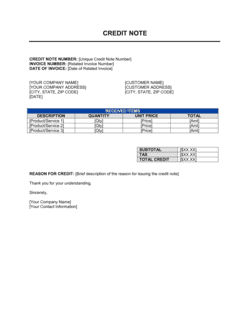
A credit note is an accounting document that reduces or cancels a previously issued invoice — it records the financial adjustment but does not address the customer's complaint or explain the substitution. This letter handles the communication and resolution offer; the credit note documents the financial transaction that follows. Both are typically needed when a credit is the agreed remedy.

vs Notice of Substitution Letter

A notice of substitution is sent proactively before delivery to inform the customer that their ordered item will be replaced and to obtain consent. This letter is reactive — it responds after the customer has already received the substitute and complained. Use the notice when you can anticipate a substitution in advance; use this letter when the complaint has already arrived.

Industry-specific considerations

E-commerce and online retail

High substitution frequency due to real-time inventory fluctuations; chargeback risk from card-not-present transactions makes a documented response letter essential for dispute evidence.

Food and grocery delivery

Substitutions are routine in grocery fulfillment; many operators include substitution consent in app terms, making the contractual reference clause directly applicable and important to invoke.

Wholesale and distribution

Substitutions in B2B supply chains can trigger production delays or quality non-conformance claims; formal written responses are critical to managing liability under supply agreements.

Subscription boxes and direct-to-consumer fulfillment

Subscribers expect curated items by name; substitutions generate disproportionate complaints relative to their frequency, and a standardized response letter reduces customer service escalation rates.

Jurisdictional notes

United States

The FTC's Mail, Internet, or Telephone Order Merchandise Rule requires merchants to ship on time or offer cancellation and refund; a substituted item may trigger this rule if the customer did not consent to substitution. State consumer protection laws — particularly California's CLRA and New York's General Business Law Section 349 — provide additional remedies for deceptive substitution practices. Chargeback rules under Visa and Mastercard network regulations treat a documented good-faith response letter as a key piece of merchant evidence.

Canada

Provincial consumer protection legislation — including Ontario's Consumer Protection Act and similar statutes in BC and Alberta — requires that goods match their description and that merchants respond to complaints within a reasonable time. In Quebec, the Consumer Protection Act imposes French-language requirements on consumer communications. A formal written response acknowledging the complaint and offering a specific remedy is important evidence if the matter proceeds to the Office de la protection du consommateur or a provincial consumer tribunal.

United Kingdom

Under the Consumer Rights Act 2015, goods must match their description — delivering a different product without the consumer's consent is a breach of this statutory right, giving the consumer a short-term right to reject within 30 days. A prompt, documented response offering a remedy can prevent escalation to a Trading Standards complaint or a County Court claim. ADR (Alternative Dispute Resolution) schemes in the UK require evidence of written complaint handling, making this letter important documentation.

European Union

The EU Consumer Rights Directive and the Sale of Goods Directive require that products conform to their description; an unauthorized substitution may entitle the consumer to repair, replacement, or a price reduction. The Online Dispute Resolution platform and national ADR bodies require merchants to produce evidence of their complaint-handling process. GDPR considerations apply when the letter includes personal data — ensure the communication is sent through a GDPR-compliant channel and that the customer's data is handled in accordance with your privacy policy.

Template vs lawyer — what fits your deal?

PathBest forCostTime
Use the templateRoutine substitution complaints on standard retail or e-commerce orders where the remedy is a straightforward refund, replacement, or creditFree15–20 minutes per letter
Template + legal reviewOrders over $500, complaints that reference legal action or consumer agency filings, or situations involving a supply agreement substitution clause$100–$300 for a 30-minute attorney review1–2 business days
Custom draftedHigh-value B2B supply disputes, cross-border transactions involving EU consumer rights or UK CRA obligations, or matters where a formal legal response is required to a solicitor's letter$500–$1,500+3–7 business days

Glossary

Substitute Item
A product or good delivered in place of the originally ordered item, typically due to stock unavailability or supply chain constraints.
Substitution Clause
A contractual provision that permits a seller or supplier to deliver a comparable alternative product when the original ordered item is unavailable.
Remedy
The relief offered to a dissatisfied customer — such as a replacement, refund, store credit, or discount — to resolve a complaint.
Chargeback
A reversal of a payment initiated by a customer's card issuer, often triggered when a customer disputes a transaction including receipt of an unacceptable substitute item.
Goodwill Gesture
A discretionary concession — such as a discount voucher or free shipping — offered by a business beyond its contractual obligations to preserve the customer relationship.
Acknowledgment of Complaint
A written confirmation that the seller has received and understood the customer's objection, which starts the clock on any statutory response deadlines.
Comparable Substitute
An alternative item that is substantially equivalent in function, quality, and value to the originally ordered product.
Consumer Protection Law
Legislation that sets minimum standards for goods, including the right to receive items that match their description — which a substitution may implicate if the substitute is materially different.
Sale by Description
A sale in which the buyer contracts for a specific described product; delivering a different item may constitute a breach unless a substitution right exists.
Resolution Timeline
The stated period within which a business commits to completing the remedy — for example, processing a refund within 5–10 business days.
Authorized Representative
The individual who signs the letter on behalf of the company, confirming the response and remedy offer carry corporate authority.

Part of your Business Operating System

This document is one of 3,000+ business & legal templates included in Business in a Box.

  • Fill-in-the-blanks — ready in minutes
  • 100% customizable Word document
  • Compatible with all office suites
  • Export to PDF and share electronically

Create your document in 3 simple steps.

From template to signed document — all inside one Business Operating System.
1
Download or open template

Access over 3,000+ business and legal templates for any business task, project or initiative.

2
Edit and fill in the blanks with AI

Customize your ready-made business document template and save it in the cloud.

3
Save, Share, Send, Sign

Share your files and folders with your team. Create a space of seamless collaboration.

Save time, save money, and create top-quality documents.

★★★★★

"Fantastic value! I'm not sure how I'd do without it. It's worth its weight in gold and paid back for itself many times."

Managing Director · Mall Farm
Robert Whalley
Managing Director, Mall Farm Proprietary Limited
★★★★★

"I have been using Business in a Box for years. It has been the most useful source of templates I have encountered. I recommend it to anyone."

Business Owner · 4+ years
Dr Michael John Freestone
Business Owner
★★★★★

"It has been a life saver so many times I have lost count. Business in a Box has saved me so much time and as you know, time is money."

Owner · Upstate Web
David G. Moore Jr.
Owner, Upstate Web

Run your business with a system — not scattered tools

Stop downloading documents. Start operating with clarity. Business in a Box gives you the Business Operating System used by over 250,000 companies worldwide to structure, run, and grow their business.

Start free · No credit card required