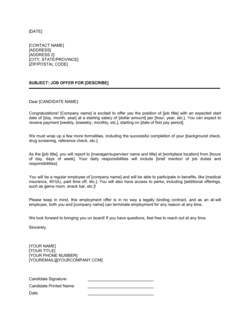
I Highly Recommend (Person) Template

Free Word download β€’ Edit online β€’ Save & share with Drive β€’ Export to PDF

1 pageβ€’20–30 min to fillβ€’Difficulty: Standardβ€’Signature requiredβ€’Legal review recommended
Learn more ↓
FreeI Highly Recommend (Person) Template

At a glance

What it is
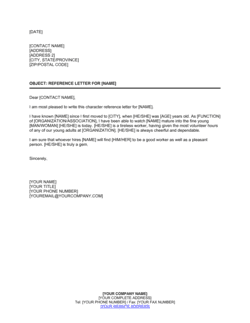
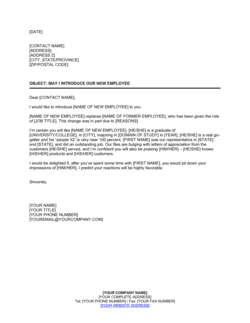
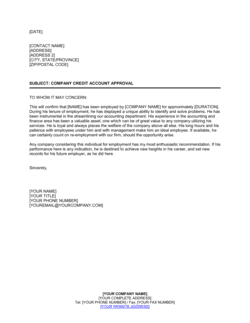
An "I Highly Recommend Person" letter is a formal written statement in which an employer, supervisor, colleague, or business partner attests to another individual's professional qualifications, character, and achievements. This free Word download gives you a structured, credible one-to-two-page template you can edit online and export as PDF, ready for signatures and submission to employers, academic institutions, licensing bodies, or immigration authorities.
When you need it
Use it when a former employee, colleague, or business associate requests a formal written endorsement for a job application, professional certification, graduate school admission, visa or immigration filing, or business partnership evaluation. It is also appropriate when a vendor, client, or peer requests a written reference for a procurement or licensing process.
What's inside
Recommender's credentials and relationship to the subject, a clear statement of recommendation, specific evidence of the subject's skills and achievements, a character and professional conduct assessment, and contact information for follow-up verification.

What is an "I Highly Recommend Person" Letter?

An "I Highly Recommend Person" letter β€” more formally known as a professional letter of recommendation or employment reference letter β€” is a signed, formal written statement in which a supervisor, manager, or professional associate attests to an individual's qualifications, work history, character, and suitability for a specific opportunity. Unlike a brief phone reference or an informal email, this document creates a permanent, attributable record of the endorsement that can be submitted to employers, academic institutions, licensing bodies, immigration authorities, and business partners. A well-constructed letter moves beyond generic praise to provide specific, evidence-backed testimony that allows the recipient to make an informed decision about the subject.

Why You Need This Document

Without a formal written recommendation on file, candidates lose competitive ground in hiring processes, visa filings stall for lack of supporting documentation, and professional licensing applications are returned incomplete. The cost of an absent or poorly written reference is concrete: immigration petitions without signed employer letters receive Requests for Evidence (RFEs) that delay processing by months; academic programs that receive generic letters with no specific examples routinely weight them as neutral rather than positive references. From the recommender's side, writing without a structured template increases the risk of inadvertently including legally problematic language β€” overstated credentials, vague character claims, or omitted disclaimers β€” that can expose you to defamation or negligent misrepresentation liability. This template gives you a consistent, professional structure that protects both parties: it guides you toward the specific, verifiable language that carries weight with recipients and keeps you on the right side of the qualified privilege protections recognized in the US, Canada, the UK, and the EU.

Which variant fits your situation?

If your situation is…Use this template
Recommending a former employee for a new jobEmployee Recommendation Letter
Providing a character reference for a personal or legal matterCharacter Reference Letter
Endorsing a student or recent graduate for graduate schoolAcademic Letter of Recommendation
Confirming employment dates and job title onlyEmployment Verification Letter
Supporting a visa or immigration application with a work referenceImmigration Reference Letter
Endorsing a vendor or supplier for a procurement processBusiness Reference Letter
Providing a reference for a former employee facing a performance inquiryNeutral Employment Reference Letter

Common mistakes to avoid

❌ Generic praise with no specific examples

Why it matters: Statements like 'one of the best employees I've had' without supporting evidence are dismissed by experienced hiring managers and admissions officers as meaningless filler. The letter fails to differentiate the subject.

Fix: Replace every unsubstantiated superlative with a concrete example. For each positive trait you claim, add a one-sentence instance: what situation, what the subject did, and what the outcome was.

❌ Writing the letter without input from the subject

Why it matters: Without the subject's current CV, the target role, and their preferred highlights, the letter will reference outdated projects and miss the skills most relevant to the opportunity β€” reducing its impact.

Fix: Request a briefing document from the subject before drafting: their CV, the job description, and two or three achievements they want the letter to cover.

❌ Omitting your direct reporting relationship or oversight role

Why it matters: A letter that does not explain how you know the subject β€” and in what supervisory or professional capacity β€” reads as a peer opinion, not an authoritative reference, and carries significantly less weight.

Fix: State in the opening paragraph exactly how you worked together: 'As [SUBJECT NAME]'s direct manager for three years on the enterprise sales team at [ORGANIZATION].'

❌ Submitting an unsigned or undated letter

Why it matters: An unsigned letter cannot be verified and is routinely rejected by employers, universities, and immigration authorities. An undated letter may be treated as stale regardless of when it was written.

Fix: Always sign with a handwritten or timestamped electronic signature and enter the date of writing in the header. If the letter is reused for multiple applications, update the date each time.

❌ Making statements that could constitute material misrepresentation

Why it matters: Overstating a subject's title, responsibilities, or accomplishments β€” even at the subject's request β€” exposes the recommender to defamation liability and professional sanctions if discovered.

Fix: Confirm all factual claims against employment records before writing. If pressured to overstate, decline and offer a neutral verification letter instead.

❌ Addressing the letter 'To Whom It May Concern' when the recipient is known

Why it matters: A generic salutation signals a form letter, which immediately reduces the letter's perceived sincerity and relevance to the specific opportunity.

Fix: Ask the subject for the full name, title, and organization of the recipient. Use a specific salutation β€” 'Dear Ms. [NAME], Head of Talent Acquisition at [ORGANIZATION]' β€” whenever possible.

The 10 key clauses, explained

Header and date

In plain language: Identifies the recommender's name, title, organization, address, and the date of writing, establishing the letter's provenance and currency.

Sample language
[RECOMMENDER FULL NAME] | [JOB TITLE], [ORGANIZATION NAME] | [ADDRESS] | [EMAIL] | [DATE]

Common mistake: Omitting the date entirely β€” undated letters raise immediate credibility questions and may be rejected by employers, institutions, or immigration bodies that require a recent reference.

Salutation and recipient identification

In plain language: Addresses the letter to a specific recipient where known, or uses a formal general salutation when the recipient is not yet identified.

Sample language
Dear [HIRING MANAGER NAME / ADMISSIONS COMMITTEE / To Whom It May Concern]:

Common mistake: Using an overly casual salutation β€” 'Hi [NAME]' β€” in a formal reference letter. This undermines the letter's professional weight before the reader reaches the endorsement.

Opening statement of recommendation

In plain language: Delivers the unambiguous endorsement in the first sentence, identifying the subject by name, the recommender's relationship to them, and the duration of that relationship.

Sample language
It is my sincere pleasure to recommend [SUBJECT FULL NAME], who served as [JOB TITLE] under my supervision at [ORGANIZATION] for [DURATION], for [POSITION / PROGRAM / OPPORTUNITY].

Common mistake: Burying the endorsement in the second or third paragraph. Readers scan reference letters quickly β€” a delayed recommendation is often read as a lukewarm one.

Recommender's credentials and relationship context

In plain language: Establishes who the recommender is, their authority to evaluate the subject, and the professional context in which they observed the subject's performance.

Sample language
As [RECOMMENDER JOB TITLE] at [ORGANIZATION] since [YEAR], I have directly supervised [SUBJECT NAME]'s work on [SPECIFIC PROJECTS / RESPONSIBILITIES] throughout our [DURATION] working relationship.

Common mistake: Failing to explain the nature of the working relationship. A letter from a 'colleague' with no context of oversight or collaboration carries far less weight than one from a direct supervisor.

Evidence of skills and professional achievements

In plain language: Provides two to three specific, quantified examples of the subject's contributions, skills, and accomplishments β€” the core evidentiary section of the letter.

Sample language
[SUBJECT NAME] led the [PROJECT NAME] initiative, delivering [OUTCOME] on time and [X]% under budget. Her/His expertise in [SKILL] enabled the team to [SPECIFIC RESULT].

Common mistake: Writing generic praise like 'always did excellent work' without a single specific example. Unsubstantiated superlatives are the most common reason reference letters fail to influence the recipient.

Character and professional conduct assessment

In plain language: Attests to the subject's reliability, integrity, communication style, and ability to work with others β€” qualities not captured by performance metrics alone.

Sample language
[SUBJECT NAME] consistently demonstrated [QUALITY] in high-pressure situations, including [EXAMPLE]. Colleagues at every level regarded her/him as [SPECIFIC TRAIT].

Common mistake: Focusing exclusively on technical skills and ignoring interpersonal conduct. For most roles, hiring managers weight character evidence as heavily as skills evidence.

Suitability statement for the specific opportunity

In plain language: Connects the subject's demonstrated strengths directly to the role, program, or opportunity they are applying for, making the letter feel tailored rather than generic.

Sample language
[SUBJECT NAME]'s background in [AREA] and proven ability to [SKILL] make her/him exceptionally well suited for [ROLE / PROGRAM] at [ORGANIZATION / INSTITUTION].

Common mistake: Sending a generic 'To Whom It May Concern' letter when the recipient and opportunity are known. A tailored suitability statement materially increases the letter's impact.

Closing endorsement and rating

In plain language: Delivers a final unambiguous statement of the strength of the recommendation β€” often including a comparative rating β€” to leave the reader with a clear overall impression.

Sample language
Without reservation, I recommend [SUBJECT NAME] in the highest possible terms. Among the [NUMBER] professionals I have managed over [YEARS], she/he ranks among the top [X]%.

Common mistake: Ending with 'I recommend [SUBJECT NAME] for this position' without any comparative or intensity qualifier. Flat closings signal a mediocre reference even when the body is positive.

Contact information and offer to verify

In plain language: Provides the recommender's direct contact details and an explicit invitation for the recipient to reach out for follow-up, reinforcing the letter's authenticity.

Sample language
Please feel free to contact me directly at [EMAIL] or [PHONE NUMBER] if you have any questions or wish to discuss [SUBJECT NAME]'s qualifications further.

Common mistake: Providing only a general company phone number or switchboard. Recipients who cannot reach the recommender directly often treat the letter as unverifiable and discount it.

Signature block

In plain language: The recommender's handwritten or electronic signature, printed name, title, and organization β€” the formal attestation that makes the letter a signed professional document.

Sample language
Sincerely, [HANDWRITTEN / ESIGNED SIGNATURE] | [RECOMMENDER FULL NAME] | [JOB TITLE] | [ORGANIZATION NAME] | [DATE]

Common mistake: Submitting an unsigned printed letter. Many employers and institutions reject unsigned references as unverified, regardless of how strong the written content is.

How to fill it out

  1. 1

    Gather information from the subject before writing

    Ask the subject to provide their current CV or resume, the job description or program details they are applying to, and two or three specific achievements they want highlighted. This prevents the letter from relying on vague memory.

    πŸ’‘ Request a brief written summary from the subject β€” even bullet points β€” so the letter reflects their current goals, not just your recollections.

  2. 2

    Complete the header with your full professional details

    Enter your full name, job title, organization, mailing address, email, and the date of writing. If writing on company letterhead, ensure the header matches the letterhead exactly.

    πŸ’‘ Use your work email address, not a personal one. Institutional email addresses increase the letter's credibility and make follow-up verification straightforward.

  3. 3

    Address the salutation to a specific recipient where possible

    Ask the subject who the letter is addressed to and use that person's name and title. If the letter will be used for multiple applications, use 'To Whom It May Concern' with 'Re: Letter of Recommendation for [SUBJECT NAME]' in the subject line.

    πŸ’‘ A named salutation increases open and read rates in professional correspondence β€” the same principle applies to reference letters submitted by post or email.

  4. 4

    Write the opening endorsement in the first sentence

    State your recommendation immediately β€” do not warm up to it. Include your name, your relationship to the subject, the duration of that relationship, and the specific opportunity you are recommending them for.

    πŸ’‘ Read your first sentence aloud. If it does not contain the words 'recommend' or 'endorse' and the subject's name, revise before continuing.

  5. 5

    Add two to three specific, quantified achievement examples

    Choose examples that are directly relevant to the opportunity the subject is pursuing. Include numbers, outcomes, and context β€” project name, timeline, team size, or dollar value β€” wherever possible.

    πŸ’‘ If you cannot recall a specific number, use qualitative comparisons: 'the fastest resolution time on the team' or 'the only analyst to complete the full certification in Year 1.'

  6. 6

    Write the character and conduct section from direct observation

    Describe one or two instances where you observed the subject's interpersonal skills, integrity, or professional judgment under pressure. Avoid adjectives without evidence β€” show, do not just tell.

    πŸ’‘ Specific behavioral examples β€” 'resolved a client conflict that prevented a $40K contract cancellation' β€” are far more persuasive than 'excellent communication skills.'

  7. 7

    Tailor the suitability statement to the specific role or program

    Read the job description or program requirements the subject has shared, and match at least two of their demonstrated strengths explicitly to those requirements.

    πŸ’‘ Mirror the language of the job posting or program brief. If the employer uses 'cross-functional collaboration,' use that phrase β€” it signals the letter was written for this specific opportunity.

  8. 8

    Sign and deliver in the format requested

    Sign the letter with a handwritten signature or a verified electronic signature. Deliver in the format requested β€” email PDF, sealed envelope, or direct institutional submission β€” by the stated deadline.

    πŸ’‘ If using an eSignature, use a service that timestamps the signing event. Some institutions and immigration bodies require a timestamped electronic signature to accept the document.

Frequently asked questions

What is a letter of recommendation?

A letter of recommendation is a formal written statement in which a supervisor, manager, colleague, or business partner attests to another person's professional qualifications, skills, character, and suitability for a specific role, program, or opportunity. It is used in job applications, graduate school admissions, professional licensing, visa filings, and business partner evaluations. Unlike a reference check by phone, a written letter creates a permanent, signed record of the endorsement.

Who should write a letter of recommendation?

The most credible letters come from direct supervisors or managers who observed the subject's day-to-day work and can speak to specific performance outcomes. Senior colleagues, clients, or business partners with direct professional experience of the subject are also appropriate. Letters from peers with no supervisory relationship, or from personal acquaintances, carry less weight in employment or academic contexts unless a character reference is specifically requested.

How long should a letter of recommendation be?

One to two pages is the standard length for a professional letter of recommendation. One page is appropriate for most employment references. Two pages are acceptable for senior executive endorsements, academic fellowship applications, or immigration filings that require detailed evidence of expertise. Longer letters do not improve impact β€” specificity and evidence quality matter more than length.

Should I ask the subject's permission before writing the letter?

Yes β€” always confirm with the subject that they want you to write the reference before proceeding. In practice, subjects typically approach you to request it. Before writing, ask the subject to provide their current CV, the specific opportunity details, and any key achievements they want highlighted. This protects you from inadvertently disclosing information the subject considers confidential and ensures the letter is relevant to the actual opportunity.

What is the difference between a letter of recommendation and an employment verification letter?

An employment verification letter confirms factual details only β€” job title, employment dates, and salary, if authorized. It makes no evaluative statements about the person's performance or character. A letter of recommendation goes further, attesting to skills, achievements, and suitability for a future opportunity. Many employers issue only verification letters as a matter of policy to limit liability; a personal letter of recommendation from a direct manager carries substantially more evidential weight.

Can a letter of recommendation be used for immigration applications?

Yes β€” employment reference letters are commonly required as supporting evidence for skilled worker visas, green card petitions, and other immigration filings in the US (O-1, EB-1, H-1B), Canada (Express Entry), the UK (Skilled Worker visa), and EU member state work permits. For immigration use, the letter must typically be on company letterhead, signed in ink or with a verified electronic signature, and include the recommender's title, contact information, and a clear statement of the subject's role, duration of employment, and specific expertise.

What should I do if the subject asks me to write something inaccurate?

Decline to include any statement you cannot personally verify or honestly attest to. If the subject asks you to inflate their title, responsibilities, or achievements, explain that you cannot include inaccurate information and offer to write a letter based only on what you directly observed. If you are uncomfortable writing any positive reference, it is professionally appropriate β€” and in the subject's best interest β€” to decline the request entirely and suggest they ask someone better positioned to endorse them.

Does a letter of recommendation need to be on company letterhead?

Letterhead is strongly preferred for employment, academic, and immigration references β€” it authenticates the recommender's professional affiliation and makes verification straightforward. Some institutions specifically require it. If you are writing a reference after leaving a company and no longer have access to letterhead, use your current professional title and employer in the header, and explain in the letter that you supervised the subject during your tenure at the prior organization.

How this compares to alternatives

vs Employment Verification Letter

An employment verification letter confirms factual details only β€” dates of employment, job title, and compensation where authorized. It makes no evaluative statements about performance or character. A recommendation letter goes further by attesting to skills, achievements, and suitability. Use verification when policy limits you to facts; use a recommendation when the subject needs an active endorsement.

vs Business Reference Letter

A business reference letter endorses a company, vendor, or service provider to a prospective client or partner β€” focusing on commercial reliability and service quality. A personal recommendation letter endorses an individual's professional qualifications and character. Use a business reference when the subject is an entity; use a personal recommendation when the subject is an individual.

vs Character Reference Letter

A character reference letter focuses on personal qualities β€” integrity, trustworthiness, and community standing β€” and is typically used in legal proceedings, court submissions, or situations where professional performance is less relevant than personal conduct. A professional recommendation letter centers on job-specific skills and workplace achievements. Use a character reference for personal or legal matters; use a recommendation for employment, academic, or professional licensing purposes.

vs Employee Dismissal Letter

An employee dismissal letter formally terminates employment and documents the grounds for separation. A recommendation letter is a positive endorsement issued after β€” or sometimes during β€” employment to support the individual's future opportunities. These documents address opposite ends of the employment lifecycle but are often produced close together in time when a departure is amicable.

Industry-specific considerations

Professional Services

Lawyers, accountants, and consultants frequently require formal written references for bar admissions, CPA licensure renewals, and partner-track evaluations at new firms.

Technology / SaaS

Reference letters for senior engineers, product managers, and executives often accompany O-1 and EB-1 visa petitions and are used in technical leadership hiring processes that include reference-based scoring.

Healthcare

Credentialing bodies and hospital systems require formal written references as part of physician and nursing licensure applications, residency placements, and staff privilege reviews.

Financial Services

Regulatory licensing bodies including FINRA, the FCA, and provincial securities commissions require character and professional conduct references as part of registration and fitness-and-propriety reviews.

Jurisdictional notes

United States

Most US states extend qualified privilege to good-faith employment references, protecting recommenders from defamation claims provided statements are honest and not made with malice. Some states β€” including California β€” have codified this protection by statute. Employers should be aware that refusing to provide any reference (beyond title and dates) does not automatically shield them from liability if courts find the refusal itself was retaliatory. For immigration filings such as O-1 or EB-1 petitions, USCIS expects letters on company letterhead with specific attestations of extraordinary ability.

Canada

Canadian courts recognize qualified privilege for employment references provided in good faith, but the protection is lost if the recommender acts with malice or reckless disregard for accuracy. In Quebec, the Civil Code imposes a general duty not to cause harm through negligent misrepresentation, which applies to reference letters. For Express Entry and other immigration streams, Employment and Social Development Canada requires signed reference letters confirming NOC code duties, hours, and compensation for points-based applications.

United Kingdom

UK law recognizes qualified privilege for employment references, but employers owe a duty of care to ensure references are accurate and not misleading under Spring v Guardian Assurance [1994]. A negligently prepared reference that causes economic loss to the subject can give rise to a claim in negligence. For Skilled Worker visa applications, UK Visas and Immigration (UKVI) requires employer reference letters as evidence of previous skilled employment when work history points are claimed.

European Union

Employment reference law varies significantly by EU member state. Germany requires employers to issue a written reference (Arbeitszeugnis) on request and mandates that the language be factually accurate and not covertly negative through coded phrasing β€” a distinct and heavily litigated area of German employment law. France and the Netherlands recognize qualified privilege but impose GDPR obligations on the processing of personal data in reference letters, requiring that the subject's personal information be handled lawfully, including obtaining consent where required.

Template vs lawyer β€” what fits your deal?

PathBest forCostTime
Use the templateStandard employment references for departing staff, peer endorsements, and general professional referencesFree15–30 minutes
Template + legal reviewReferences supporting immigration filings, licensing applications, or senior executive hires where content accuracy is critical$150–$400 for a legal or HR professional review1–2 days
Custom draftedHigh-stakes immigration petitions (O-1, EB-1), regulatory fitness-and-propriety reviews, or situations involving prior performance disputes$500–$2,000+ for attorney-drafted supporting documentation3–7 days

Glossary

Recommender
The individual writing and signing the letter β€” typically a supervisor, manager, or business partner with direct knowledge of the subject's work.
Subject (Recommendee)
The person being recommended β€” the individual whose qualifications, character, and achievements are attested to in the letter.
Professional Reference
A formal attestation from someone who has worked with a person in a professional capacity, confirming their skills, conduct, and suitability for a role or opportunity.
Character Reference
An attestation focused on personal qualities β€” integrity, reliability, and judgment β€” rather than technical skills or job performance.
Defamation Liability
Legal exposure a recommender faces if the letter contains false statements of fact that damage the subject's reputation, whether the statements are positive or negative.
Qualified Privilege
A legal protection in many jurisdictions that shields good-faith employment references from defamation claims, provided the statements are honest, relevant, and not made with malice.
Release of Liability
A clause or separate document in which the subject consents to the release of reference information and waives claims against the recommender for good-faith statements.
Reference Verification
The process by which a prospective employer or institution contacts the recommender to confirm the letter's contents and ask follow-up questions.
Blank Reference Letter
A reference letter issued without a named recipient β€” addressed 'To Whom It May Concern' β€” that the subject can submit to multiple parties.
Material Misrepresentation
A false or misleading statement in a reference letter that causes a third party (such as an employer) to rely on it to their detriment, potentially creating legal liability for the recommender.

Part of your Business Operating System

This document is one of 3,000+ business & legal templates included in Business in a Box.

  • Fill-in-the-blanks β€” ready in minutes
  • 100% customizable Word document
  • Compatible with all office suites
  • Export to PDF and share electronically

Create your document in 3 simple steps.

From template to signed document β€” all inside one Business Operating System.
1
Download or open template

Access over 3,000+ business and legal templates for any business task, project or initiative.

2
Edit and fill in the blanks with AI

Customize your ready-made business document template and save it in the cloud.

3
Save, Share, Send, Sign

Share your files and folders with your team. Create a space of seamless collaboration.

Save time, save money, and create top-quality documents.

β˜…β˜…β˜…β˜…β˜…

"Fantastic value! I'm not sure how I'd do without it. It's worth its weight in gold and paid back for itself many times."

Managing Director Β· Mall Farm
Robert Whalley
Managing Director, Mall Farm Proprietary Limited
β˜…β˜…β˜…β˜…β˜…

"I have been using Business in a Box for years. It has been the most useful source of templates I have encountered. I recommend it to anyone."

Business Owner Β· 4+ years
Dr Michael John Freestone
Business Owner
β˜…β˜…β˜…β˜…β˜…

"It has been a life saver so many times I have lost count. Business in a Box has saved me so much time and as you know, time is money."

Owner Β· Upstate Web
David G. Moore Jr.
Owner, Upstate Web

Run your business with a system β€” not scattered tools

Stop downloading documents. Start operating with clarity. Business in a Box gives you the Business Operating System used by over 250,000 companies worldwide to structure, run, and grow their business.

Free Forever PlanΒ Β·Β No credit card required