Hazard Communication Plan Template

Free Word download β€’ Edit online β€’ Save & share with Drive β€’ Export to PDF

4 pagesβ€’20–30 min to fillβ€’Difficulty: Standard
Learn more ↓
FreeHazard Communication Plan Template

At a glance

What it is
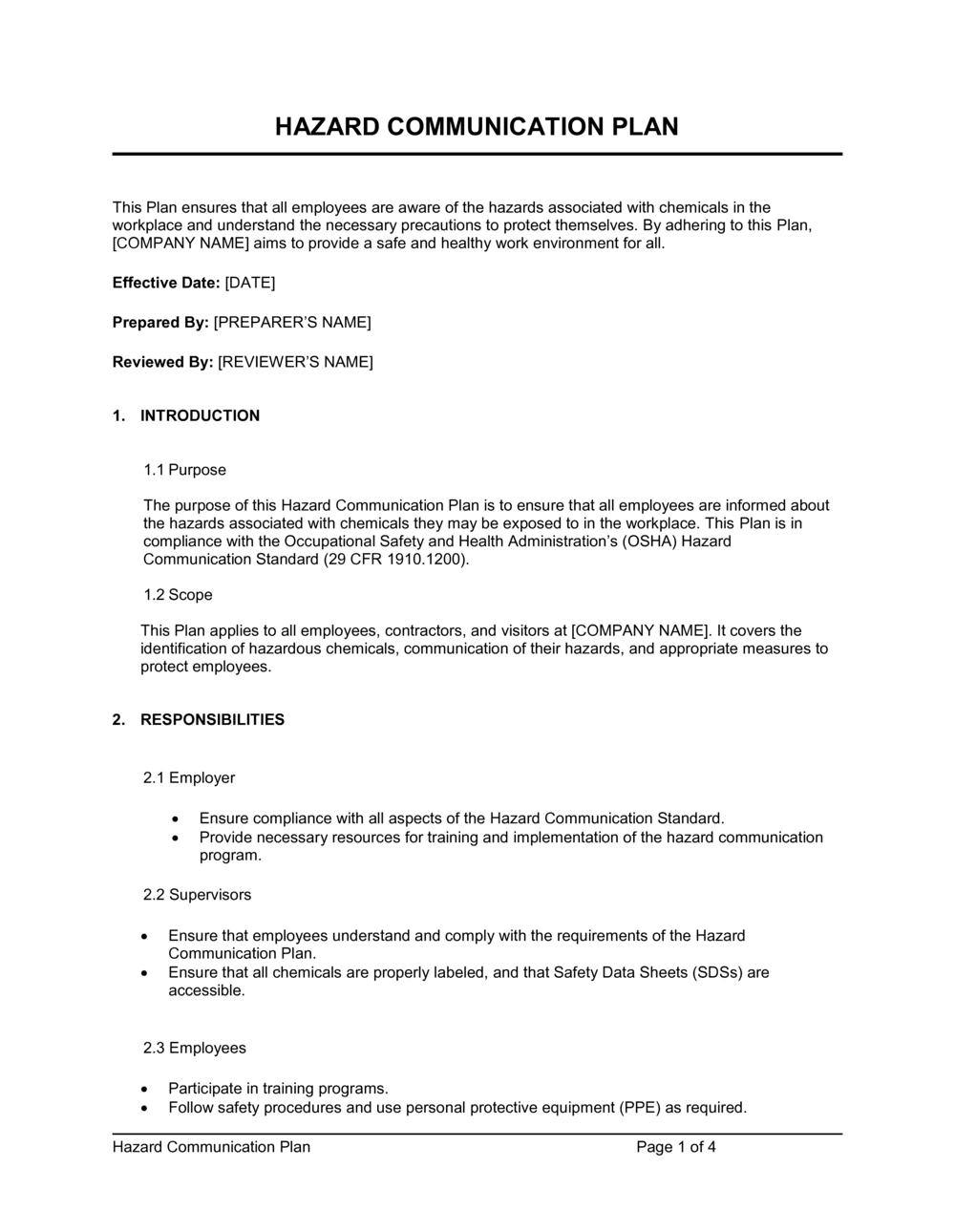
A Hazard Communication Plan is a written workplace safety policy that documents how an organization identifies, communicates, and manages chemical hazards to protect employees. This free Word download gives you a structured, OSHA HazCom 2012 (GHS-aligned) framework you can edit online and export as PDF for posting, training, and regulatory inspection.
When you need it
Any employer whose workers may be exposed to hazardous chemicals β€” solvents, cleaning agents, fuels, gases, or industrial compounds β€” is required under OSHA 29 CFR 1910.1200 to maintain a written hazard communication program. Use this template when setting up a new facility, updating an existing plan to reflect GHS labeling standards, or preparing for an OSHA inspection.
What's inside
The template covers a written program statement, chemical inventory list, Safety Data Sheet (SDS) management procedures, container labeling requirements, employee training records, contractor notification procedures, and program review schedule β€” all pre-formatted and ready to complete.

What is a Hazard Communication Plan?

A Hazard Communication Plan (also called a HazCom program or written hazard communication program) is a workplace-specific policy document that describes exactly how an organization identifies chemical hazards, maintains Safety Data Sheets, labels containers, and trains employees to work safely with hazardous substances. Required under OSHA's Hazard Communication Standard (29 CFR 1910.1200), which aligns with the Globally Harmonized System (GHS) of Classification and Labelling of Chemicals, the plan functions as the organizational backbone of a facility's chemical safety program β€” ensuring that every employee who works with or near a hazardous chemical has access to the information they need to protect themselves.

Why You Need This Document

Without a written Hazard Communication Plan, your organization is in direct violation of one of OSHA's most frequently cited standards β€” a violation that carries penalties up to $16,131 per instance and can escalate to criminal liability when a worker is seriously injured. Beyond the regulatory exposure, the absence of documented procedures means employees encountering an unfamiliar chemical have no reliable way to identify its hazards, locate its Safety Data Sheet, or know what protective equipment to wear. A spill, accidental mixing of incompatible chemicals, or skin exposure that could have been prevented with a 10-minute SDS review becomes a medical event, a workers' compensation claim, and a reputational problem. This template gives you a compliant, customizable starting point that satisfies OSHA's written program requirement and builds the daily operational habits β€” current inventory, accessible SDS files, documented training β€” that keep workers safe and inspections uneventful.

Which variant fits your situation?

If your situation is…Use this template
Single facility with a fixed list of commonly used chemicalsHazard Communication Plan (Standard)
Construction or field work with frequently changing chemical inventoriesJob-Site Hazard Communication Plan
Multi-site organization needing a corporate-level programCorporate EHS Policy
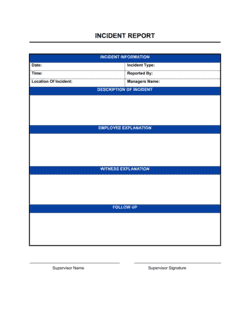
Documenting a specific incident involving chemical exposureIncident Report
Training employees on chemical safety and SDS comprehensionEmployee Safety Training Record
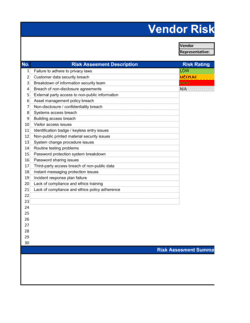
Conducting a full workplace chemical risk assessmentRisk Assessment Report
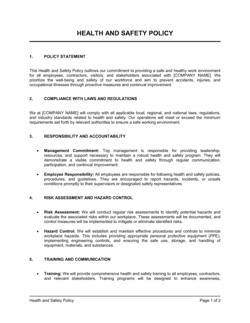
Creating a general workplace safety policy to accompany HazComWorkplace Health and Safety Policy

Common mistakes to avoid

❌ Using a generic template without customizing it to the actual facility

Why it matters: OSHA explicitly requires a workplace-specific written program. A plan that references chemicals, procedures, or contacts not present at the facility is evidence of a copy-paste approach and will be cited.

Fix: Replace every placeholder with facility-specific data before the plan is considered complete β€” chemical inventory, SDS location, administrator name, and emergency contacts must all reflect the actual workplace.

❌ Keeping SDS files inaccessible during work shifts

Why it matters: Locking SDS in a manager's office or behind a password-protected system prevents employees from accessing hazard information in an emergency β€” the core purpose of the regulation.

Fix: Maintain at minimum one physical SDS binder accessible in each work area during every shift, and verify accessibility is documented in the plan.

❌ Failing to update the chemical inventory when new products arrive

Why it matters: An outdated inventory means employees may be working with chemicals that have no SDS on file and for which they have received no training β€” both citable violations.

Fix: Designate a single point of contact responsible for approving all new chemical purchases and requiring SDS submission before first use.

❌ No documented evidence of employee training completion

Why it matters: Without dated, signed training records, the employer cannot demonstrate that workers were informed of chemical hazards β€” the fundamental obligation under HazCom.

Fix: Use a training sign-in form that captures date, trainer name, topics covered, and each employee's printed name and signature, and retain records for at least three years.

❌ Omitting contractor chemical notification procedures

Why it matters: Host employers are responsible for informing contractors about hazardous chemicals in shared work areas. A plan that only addresses direct employees leaves a compliance gap every time outside workers are on site.

Fix: Add a contractor section requiring chemical hazard briefings before work begins and SDS submission for any chemicals the contractor introduces.

❌ No revision history or version date on the plan document

Why it matters: An undated plan provides no evidence of when it was last reviewed, whether it reflects the current chemical inventory, or whether it has been updated following incidents or regulatory changes.

Fix: Add a version number, effective date, and revision log to the document template so every update is traceable.

The 9 key sections, explained

Program purpose and scope

Chemical inventory list

Safety Data Sheet (SDS) management

Container labeling requirements

Employee training program

Non-routine task hazard procedures

Contractor and visitor notification

Spill, release, and emergency response procedures

Program review and update schedule

How to fill it out

  1. 1

    Identify the program administrator and scope

    Name the individual β€” by title and name β€” responsible for maintaining the plan. Confirm which facilities, departments, and job classifications are covered. If multiple sites are involved, note whether this is a site-specific or enterprise-wide plan.

    πŸ’‘ Use a job title rather than a person's name as the primary reference β€” plans outlive individuals, and a title-based reference never becomes outdated.

  2. 2

    Compile the chemical inventory

    Walk every storage area, work zone, and utility room and list every chemical product in use or stored. Record the product name, manufacturer, CAS number if available, and the work area where it is used.

    πŸ’‘ Include chemicals that seem minor β€” cleaning sprays, lubricants, and compressed gases are all covered by HazCom and are frequently missed in inventories.

  3. 3

    Collect and organize Safety Data Sheets

    Obtain a current SDS (dated within the last 5 years, or the most recent available) for every chemical on the inventory. File them in the order they appear on the inventory list and verify the SDS format follows the 16-section GHS structure.

    πŸ’‘ Request SDS directly from manufacturers or distributors β€” third-party aggregator databases sometimes host outdated versions that do not reflect current GHS revisions.

  4. 4

    Document labeling procedures

    Specify the label standard for original containers (must not be removed or defaced) and the minimum required information for secondary containers. Identify who is authorized to create and apply secondary labels.

    πŸ’‘ Pre-print a stock of secondary container labels with the company name, chemical identity field, and GHS pictogram blocks β€” it takes 30 seconds to complete one instead of improvising with a marker.

  5. 5

    Define the training curriculum and delivery schedule

    List the specific topics covered in HazCom training, the format (classroom, video, on-the-job), and the schedule for initial and refresher training. Attach the sign-in or completion record form.

    πŸ’‘ Document training outcomes, not just attendance. A record showing employees demonstrated SDS comprehension holds up in an OSHA investigation far better than a sign-in sheet alone.

  6. 6

    Address non-routine tasks and contractor procedures

    List the non-routine tasks at your facility that involve chemical exposure and write a brief procedure for each. Then draft the contractor notification language and the form contractors must complete before bringing chemicals on site.

    πŸ’‘ A one-page chemical hazard briefing form for contractors β€” listing the chemicals in their work area and the PPE required β€” takes 20 minutes to create and satisfies the notification requirement on every future job.

  7. 7

    Set the review schedule and version-control the document

    Add a header or footer with the document version number, effective date, and the name of the approving manager. Add a revision log table at the end to track future changes.

    πŸ’‘ Schedule the annual review on a fixed calendar date β€” January 1 or the start of the fiscal year β€” so it does not get displaced by operational priorities.

  8. 8

    Post, distribute, and communicate the plan

    Post a notice in each work area directing employees to the location of the written plan and the SDS binder. Provide a copy to all supervisors and include plan location in new-employee orientation materials.

    πŸ’‘ A laminated one-page summary posted at the chemical storage area β€” listing the SDS binder location, the spill response steps, and the emergency contact β€” is the single most-referenced output of the full plan.

Frequently asked questions

What is a Hazard Communication Plan?

A Hazard Communication Plan is a written workplace policy that documents how an employer identifies chemical hazards, manages Safety Data Sheets, ensures containers are properly labeled, and trains employees to work safely with hazardous substances. OSHA requires every employer whose workers may be exposed to hazardous chemicals to maintain a written program under 29 CFR 1910.1200 β€” the Hazard Communication Standard.

Who is required to have a Hazard Communication Plan?

Any employer covered by OSHA whose employees may be exposed to hazardous chemicals in the workplace must have a written HazCom program. This includes manufacturers, warehouses, construction sites, healthcare facilities, restaurants, janitorial services, and any office that uses cleaning chemicals or other hazardous products. There is no employee-count threshold β€” even a two-person shop using a solvent cleaner must comply.

What is the difference between a Hazard Communication Plan and an SDS?

A Safety Data Sheet (SDS) is a document provided by the chemical manufacturer that describes a specific product's hazards, safe handling, and emergency response. A Hazard Communication Plan is the employer's written program describing how the company manages SDS files, labels containers, and trains employees across all chemicals in the workplace. The plan is the organizational system; the SDS is the product-specific data it organizes.

What does OSHA require in a written HazCom program?

OSHA 29 CFR 1910.1200(e) requires the written program to cover: how container labeling is maintained, how SDS are obtained and made accessible to employees, how employees are trained, how hazards associated with non-routine tasks are communicated, and how the employer informs contractors about chemicals in shared work areas. The plan must be available to employees and OSHA representatives on request.

How often should a Hazard Communication Plan be updated?

At minimum, a formal review should occur annually. An immediate update is required whenever a new hazardous chemical is introduced to the workplace, after a chemical-related incident, or when OSHA amends the Hazard Communication Standard. Every revision should be documented with a date and the name of the person who approved the change.

Can a small business use a template for its Hazard Communication Plan?

Yes β€” OSHA does not require a custom-drafted plan, only a workplace-specific one. A template is a valid starting point provided every placeholder is replaced with actual facility data: the chemical inventory, the SDS storage location, the administrator's name and title, and the emergency contacts. A template that still contains generic text or blank placeholders is not compliant.

What are GHS labels and why do they matter for HazCom?

GHS labels are standardized chemical container labels that include a product identifier, signal word (Danger or Warning), hazard statements, GHS pictograms, precautionary statements, and supplier information. OSHA adopted GHS labeling in 2012 as part of HazCom 2012. Employers must ensure manufacturer labels remain intact and that any secondary containers created at the facility carry at minimum the product name and applicable GHS hazard information.

What happens if an employer does not have a written Hazard Communication Plan?

The absence of a written HazCom program is a direct violation of 29 CFR 1910.1200(e)(1) and is one of OSHA's most frequently cited standards. Penalties range from $16,131 per willful or repeated violation (2024 figures, adjusted annually for inflation) to criminal referral for violations causing death. Beyond penalties, an employer without a written plan has reduced standing in any workers' compensation or personal injury claim arising from chemical exposure.

Does the Hazard Communication Standard apply to construction sites?

Yes. OSHA's HazCom standard applies to general industry (29 CFR 1910.1200), construction (29 CFR 1926.59), maritime, and agriculture. The core requirements β€” written program, SDS management, labeling, and training β€” are the same across sectors, though construction employers must also address the frequently changing chemical inventory inherent to job-site work and the multi-employer responsibility when multiple contractors share a site.

How this compares to alternatives

vs Workplace Health and Safety Policy

A workplace health and safety policy is a broad statement of the organization's overall commitment to worker safety β€” covering all hazard types, responsibilities, and general procedures. A Hazard Communication Plan is a narrower, OSHA-mandated document focused specifically on chemical hazards. Most organizations need both: the safety policy as the governing framework and the HazCom plan as a required program beneath it.

vs Risk Assessment Report

A risk assessment identifies and evaluates workplace hazards β€” including but not limited to chemicals β€” and prioritizes control measures. A Hazard Communication Plan documents the communication and training system for chemical hazards specifically, as required by regulation. The risk assessment informs what goes into the HazCom plan; the plan documents how those findings are communicated to employees.

vs Incident Report

An incident report documents a specific event β€” a spill, exposure, or chemical-related injury β€” after it occurs. A Hazard Communication Plan is a proactive document designed to prevent those incidents through training, labeling, and SDS management. Following a chemical incident, the incident report captures what happened; reviewing and updating the HazCom plan is the corrective action.

vs Standard Operating Procedure (SOP)

An SOP documents the step-by-step process for a specific task β€” including safe chemical handling for a particular process. A Hazard Communication Plan is the program-level document that covers all chemicals site-wide and establishes the framework SOPs operate within. Chemical-specific SOPs are often developed as attachments or supplements to the HazCom plan.

Industry-specific considerations

Manufacturing

High chemical volumes across solvents, lubricants, coatings, and cleaning agents require zone-specific SDS binders, PPE matrices by work area, and shift-by-shift supervisor accountability.

Construction

Rotating chemical inventory across job sites demands a portable SDS system, contractor coordination procedures, and pre-task HazCom briefings for non-routine tasks like epoxy injection or paint stripping.

Healthcare

Disinfectants, sterilants, and laboratory reagents require patient-area and lab-area SDS segregation, OSHA Bloodborne Pathogen integration, and training records tied to credentialing files.

Retail and Food Service

Cleaning chemicals, sanitizers, and pest-control products are often overlooked β€” a simplified plan with a short inventory, accessible SDS binder near the utility closet, and documented new-hire training satisfies compliance for most small operators.

Template vs pro β€” what fits your needs?

PathBest forCostTime
Use the templateSmall to mid-sized businesses with a stable chemical inventory and no specialized industrial processesFree2–4 hours to complete and customize
Template + professional reviewFacilities with complex chemical inventories, multi-department operations, or prior OSHA citations$200–$800 for an EHS consultant review1–3 days
Custom draftedHigh-hazard industries (chemical manufacturing, petrochemical, industrial coatings) or sites undergoing OSHA PSM compliance$1,500–$5,000+ for a full EHS program development engagement2–6 weeks

Glossary

HazCom (Hazard Communication Standard)
OSHA's regulation (29 CFR 1910.1200) requiring employers to inform workers about chemical hazards through labels, Safety Data Sheets, and training.
GHS (Globally Harmonized System)
An international framework for classifying and labeling chemicals consistently, adopted by OSHA in 2012 as the basis for HazCom 2012.
Safety Data Sheet (SDS)
A standardized 16-section document provided by chemical manufacturers describing a substance's hazards, safe handling, PPE requirements, and emergency response.
Chemical Inventory
A master list of all hazardous chemicals present at a workplace, used to ensure SDS files are complete and training covers every substance in use.
GHS Pictogram
A standardized symbol on a chemical label β€” such as a flame, skull, or exclamation mark β€” that communicates the nature of the hazard at a glance.
Permissible Exposure Limit (PEL)
The maximum concentration of a chemical in workplace air that OSHA allows an employee to be exposed to over an 8-hour workday.
Personal Protective Equipment (PPE)
Gloves, goggles, respirators, and other gear worn to reduce direct contact with hazardous chemicals during handling or emergencies.
Secondary Container
Any container other than the original manufacturer's packaging into which a chemical is transferred, which must also be labeled with the product name and hazard warnings.
Right-to-Know
The legal principle underlying HazCom β€” employees have the right to know what hazardous substances they work with and how to protect themselves.
Written HazCom Program
The documented workplace-specific plan β€” required by OSHA β€” describing exactly how the employer implements labeling, SDS management, and training.

Part of your Business Operating System

This document is one of 3,000+ business & legal templates included in Business in a Box.

  • Fill-in-the-blanks β€” ready in minutes
  • 100% customizable Word document
  • Compatible with all office suites
  • Export to PDF and share electronically

Create your document in 3 simple steps.

From template to signed document β€” all inside one Business Operating System.
1
Download or open template

Access over 3,000+ business and legal templates for any business task, project or initiative.

2
Edit and fill in the blanks with AI

Customize your ready-made business document template and save it in the cloud.

3
Save, Share, Send, Sign

Share your files and folders with your team. Create a space of seamless collaboration.

Save time, save money, and create top-quality documents.

β˜…β˜…β˜…β˜…β˜…

"Fantastic value! I'm not sure how I'd do without it. It's worth its weight in gold and paid back for itself many times."

Managing Director Β· Mall Farm
Robert Whalley
Managing Director, Mall Farm Proprietary Limited
β˜…β˜…β˜…β˜…β˜…

"I have been using Business in a Box for years. It has been the most useful source of templates I have encountered. I recommend it to anyone."

Business Owner Β· 4+ years
Dr Michael John Freestone
Business Owner
β˜…β˜…β˜…β˜…β˜…

"It has been a life saver so many times I have lost count. Business in a Box has saved me so much time and as you know, time is money."

Owner Β· Upstate Web
David G. Moore Jr.
Owner, Upstate Web

Run your business with a system β€” not scattered tools

Stop downloading documents. Start operating with clarity. Business in a Box gives you the Business Operating System used by over 250,000 companies worldwide to structure, run, and grow their business.

Free Forever PlanΒ Β·Β No credit card required