Employee Training and Development Record Template

Free Excel download β€’ Edit online β€’ Save & share with Drive β€’ Export to PDF

68 pagesβ€’1h – 1h 20m to fillβ€’Difficulty: Expertβ€’Signature requiredβ€’Legal review recommended
Learn more ↓
FreeXLSEmployee Training and Development Record Template

At a glance

What it is
An Employee Training and Development Record is a signed, binding document that formally captures every training activity completed by an employee β€” course names, dates, instructors, hours, assessment results, and certifications earned. This free Word download gives you a structured, legally defensible record you can edit online and export as PDF to store in employee files or HR systems.
When you need it
Use it every time an employee completes mandatory compliance training, a professional development course, a certification program, or an on-the-job skills module β€” and whenever regulators, insurers, or legal counsel require documented proof that training occurred.
What's inside
Employee and employer identification, training program details, delivery method and instructor credentials, assessment results, certification expiry dates, employee and supervisor acknowledgment signatures, and a development plan section linking completed training to future role requirements.

What is an Employee Training and Development Record?

An Employee Training and Development Record is a signed, legally defensible document that formally captures every training activity completed by an individual employee β€” including the program name, delivery dates, instructor credentials, competency assessment results, certifications earned, and expiry dates. It functions simultaneously as an HR administration tool, a regulatory compliance document, and a performance management resource that connects completed training to an employee's ongoing development plan. Unlike an informal attendance log, a properly executed training record carries dual signatures β€” from the employee and their direct supervisor β€” creating an auditable chain of accountability that holds up under regulatory inspection, insurance review, and litigation.

Why You Need This Document

Without signed, detailed training records, an employer cannot prove that training occurred β€” only that it was scheduled. In a workplace injury claim, regulatory audit, or employment tribunal, the absence of a training record is treated the same as the absence of training itself, regardless of what actually happened in the room. OSHA, provincial OHS regulators, the FCA, and a growing number of sector-specific bodies treat missing or incomplete records as independent violations, distinct from any underlying safety or compliance failure. Beyond the regulatory risk, undocumented training creates operational blind spots: certification lapses go unnoticed, employees are assigned to tasks they are no longer qualified to perform, and the development investments an organization makes in its people become invisible during performance reviews and succession planning. This template gives HR teams, compliance officers, and line managers a consistent, signed record for every training activity β€” building the audit trail that protects both the organization and the employees it trains.

Which variant fits your situation?

If your situation is…Use this template
Recording mandatory workplace health and safety trainingHealth and Safety Training Record
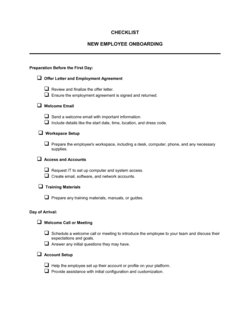
Documenting onboarding training for a new hireNew Employee Onboarding Checklist
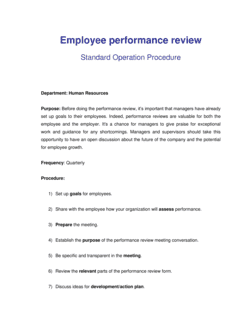
Tracking annual performance goals tied to development activitiesEmployee Performance Review
Formalizing a structured career development plan with the employeeEmployee Development Plan
Logging certifications with expiry dates requiring renewal trackingCertification Tracking Log
Recording training delivered to a group or cohort at onceGroup Training Attendance Sheet
Documenting a formal mentoring or coaching engagementMentoring Agreement

Common mistakes to avoid

❌ Leaving the assessment section blank

Why it matters: A training record without an assessment outcome does not prove competency β€” only attendance. In a workplace injury or regulatory investigation, attendance alone is insufficient to demonstrate the employer met its duty of care.

Fix: Record at least an observational assessment for every training activity β€” even informal on-the-job training. 'Observed and confirmed competent' is a defensible outcome; a blank field is not.

❌ Recording vague training dates

Why it matters: Recording 'March 2026' instead of a specific date makes it impossible to prove training occurred before a specific incident, audit period, or certification expiry.

Fix: Always record the exact date on which each training session began and ended. For multi-day training, record each session date individually.

❌ Omitting the instructor's qualification

Why it matters: For regulated or safety-critical training, an unqualified instructor renders the training non-compliant β€” regardless of what content was delivered or how well the employee performed.

Fix: Record the instructor's name and the specific credential that qualifies them to deliver the training. File a copy of their qualification alongside the record.

❌ Having the wrong person sign the supervisor block

Why it matters: A signature from a peer, trainer, or HR coordinator in the supervisor block creates ambiguity about accountability and may be rejected by regulators who trace the supervisory chain.

Fix: Only the employee's direct line manager should sign the supervisor acknowledgment. If the manager is unavailable, document the delegation in writing and note it on the record.

❌ Failing to record certification expiry dates

Why it matters: Without an expiry date on file, there is no prompt to renew β€” allowing certifications to lapse silently. An employee performing safety-critical work with a lapsed certification exposes the employer to significant liability.

Fix: Enter the expiry date and renewal deadline on every record where a certification is issued. Link these to a central certification tracker reviewed monthly by HR.

❌ Storing records only in the training provider's system

Why it matters: Third-party LMS records are outside the employer's control β€” providers change systems, go out of business, or lose data. If you cannot produce the record independently, it may as well not exist.

Fix: Export and file a completed, signed copy of every training record in the employee's HR file β€” paper or employer-controlled digital β€” immediately after training is completed.

The 9 key clauses, explained

Employee and employer identification

In plain language: Identifies the employee by full legal name, job title, department, and employee ID, and identifies the employer by its registered legal entity name and location.

Sample language
Employee: [EMPLOYEE FULL NAME], [JOB TITLE], [DEPARTMENT], Employee ID: [ID NUMBER]. Employer: [EMPLOYER LEGAL NAME], a [ENTITY TYPE] located at [ADDRESS].

Common mistake: Using a nickname or informal job title instead of the employee's legal name and official title. Regulators and courts match records to payroll files β€” a name mismatch can render the record inadmissible.

Training program details

In plain language: Records the course or program name, the subject matter covered, the training provider, and whether the training is mandatory or elective.

Sample language
Training Program: [PROGRAM NAME]. Subject: [DESCRIPTION OF CONTENT]. Provider: [TRAINING PROVIDER NAME]. Type: [Mandatory / Elective]. Regulatory Reference (if applicable): [REGULATION OR STANDARD].

Common mistake: Recording only the course title without the regulatory reference or content scope. If training is cited as evidence in a compliance audit or personal injury claim, the record must show what specifically was covered.

Delivery method and instructor credentials

In plain language: States how the training was delivered β€” in-person, e-learning, on-the-job, or blended β€” and identifies the instructor or facilitator with their relevant qualification.

Sample language
Delivery Method: [In-Person / E-Learning / On-the-Job / Blended]. Instructor / Facilitator: [INSTRUCTOR NAME], [QUALIFICATION OR CREDENTIAL]. Instructor Signature: ___________.

Common mistake: Omitting the instructor's qualification when the training has a regulatory component. In safety and healthcare contexts, training delivered by an unqualified instructor can be deemed non-compliant regardless of content.

Training date, duration, and location

In plain language: Records the exact date or date range training occurred, the total hours or days, and the physical or virtual location.

Sample language
Training Date(s): [START DATE] to [END DATE]. Duration: [X] hours / [X] days. Location: [FACILITY NAME / ADDRESS / VIRTUAL PLATFORM].

Common mistake: Recording only a month and year instead of specific dates. Regulatory bodies frequently require proof that training occurred before a specific incident date β€” a vague date makes this impossible to demonstrate.

Competency assessment and results

In plain language: Documents the type of assessment used to verify competency, the score or outcome, and the pass standard required.

Sample language
Assessment Method: [Written Test / Practical Demonstration / Observation / None]. Score / Outcome: [X]% / [Pass / Fail / Satisfactory]. Pass Standard: [X]%. Assessor: [ASSESSOR NAME].

Common mistake: Leaving the assessment section blank when no formal test was administered. Even for informal on-the-job training, recording 'observed competency β€” satisfactory' is far more defensible than a blank field.

Certification and expiry

In plain language: Records any certification, licence, or qualification issued upon completion, along with the expiry date and renewal requirements.

Sample language
Certification Issued: [CERTIFICATION NAME / None]. Certificate Number: [NUMBER]. Issue Date: [DATE]. Expiry Date: [DATE]. Renewal Required By: [DATE].

Common mistake: Failing to record the expiry date and renewal deadline. Allowing a certification to lapse unnoticed exposes the employer to liability β€” particularly in safety-critical or regulated roles β€” if the employee performs the certified activity after the expiry date.

Employee acknowledgment

In plain language: The employee's signed confirmation that they attended, completed, and understood the training described in the record.

Sample language
I, [EMPLOYEE FULL NAME], confirm that I attended and completed the training described above, that I understood the content, and that I have had the opportunity to ask questions. Employee Signature: ___________ Date: ___________.

Common mistake: Obtaining a signature without giving the employee time to read the record first. A signature obtained under time pressure or without the employee reading the document may be challenged as uninformed consent.

Supervisor or manager sign-off

In plain language: The supervisor's signed confirmation that the training occurred as described and that the employee's competency has been observed or assessed.

Sample language
I confirm that [EMPLOYEE FULL NAME] has completed the above training to the required standard. Supervisor Name: [NAME], Title: [TITLE]. Supervisor Signature: ___________ Date: ___________.

Common mistake: Having a peer or training coordinator sign in place of the direct supervisor. In litigation or regulatory investigations, the chain of supervisory accountability matters β€” only the employee's direct manager should sign the supervisor block.

Development plan and next steps

In plain language: Links the completed training to future development goals, identifies the next scheduled training activity, and notes any follow-up actions required.

Sample language
Completed training contributes to: [DEVELOPMENT GOAL / ROLE REQUIREMENT]. Next Scheduled Training: [PROGRAM NAME], [DATE]. Follow-Up Actions: [DESCRIPTION / None]. Reviewed in next performance review: [Yes / No].

Common mistake: Leaving the development plan section blank because training was mandatory rather than developmental. Connecting even compliance training to role requirements strengthens the performance management record and demonstrates investment in the employee.

How to fill it out

  1. 1

    Enter the employee's legal name and employer details

    Use the employee's full legal name as it appears on their employment contract and payroll record. Use the employer's registered legal entity name, not a brand or trading name.

    πŸ’‘ Cross-reference the employee's name against your HRIS to catch discrepancies before the record is signed β€” mismatches become problems during audits.

  2. 2

    Complete the training program details

    Record the exact course or program name, the content covered, the provider, and whether the training is mandatory under a specific regulation or standard. Include the regulatory reference number where applicable.

    πŸ’‘ For OSHA, ISO, or industry-specific mandatory training, always include the regulation citation β€” it transforms the record from administrative paperwork into compliance evidence.

  3. 3

    Record the delivery method, instructor, and credentials

    State whether training was in-person, e-learning, on-the-job, or blended. Record the instructor's full name and their relevant qualification or certification.

    πŸ’‘ Obtain and file a copy of the instructor's credential alongside the training record β€” regulators sometimes request both simultaneously.

  4. 4

    Enter the training dates, duration, and location

    Record specific start and end dates, total hours or days, and the physical address or virtual platform where training took place.

    πŸ’‘ For multi-session training delivered over several weeks, record each session date separately rather than a single date range β€” this provides a more defensible audit trail.

  5. 5

    Document the competency assessment and result

    Select the assessment method used, record the score or outcome, and note the pass standard. If no formal test was used, record an observational assessment outcome.

    πŸ’‘ A brief written note β€” 'employee demonstrated correct procedure on three consecutive observations' β€” is far more defensible than a blank assessment field.

  6. 6

    Record certification details and expiry date

    If a certificate or licence was issued, enter the certificate name, number, issue date, and expiry date. Set a calendar reminder for the renewal deadline at the same time.

    πŸ’‘ Build a master certification expiry tracker from these records β€” knowing 60 days in advance that a certification is lapsing prevents costly compliance gaps.

  7. 7

    Obtain employee and supervisor signatures

    Have the employee read and sign the acknowledgment section on the day training is completed. The direct supervisor signs the sign-off block within 5 business days, confirming they have verified the record.

    πŸ’‘ Both signatures must be dated β€” an undated signature is frequently rejected as insufficient evidence of when acknowledgment occurred.

  8. 8

    File the record and update the development plan

    Save the signed record to the employee's file β€” paper or digital β€” and update the development plan section to link this training to their next performance review or career milestone.

    πŸ’‘ Store records for a minimum of 3 years after the employee's departure in most jurisdictions β€” some safety-specific records must be kept for the employee's working lifetime.

Frequently asked questions

What is an employee training and development record?

An employee training and development record is a signed document that formally captures every training activity completed by an employee β€” including the course name, delivery date, instructor, assessment result, and any certification earned. It serves as both an administrative HR record and legally defensible evidence that the employer met its training obligations under employment, safety, or industry-specific regulations.

Are employers legally required to keep employee training records?

In most jurisdictions, yes β€” particularly for mandatory safety, compliance, and industry-regulated training. OSHA in the US mandates training records for many standards, with retention periods ranging from 3 years to the duration of employment. The UK's Health and Safety at Work Act, Canada's provincial occupational health and safety legislation, and EU directives similarly require documented evidence of training delivery. Even where no specific law mandates it, training records are critical evidence of due diligence in employment disputes and personal injury claims.

How long should employee training records be kept?

Retention periods vary by jurisdiction and training type. In the US, OSHA requires most safety training records to be retained for 3 years; some standards (asbestos, lead) require lifetime retention. In the UK, health and safety training records are typically retained for 3 years after the training date or the employee's departure, whichever is later. As a general rule, retain all training records for at least 3 years after the employee leaves the organization, and consult jurisdiction- specific guidance for regulated industries.

Does an employee training record need to be signed?

Yes. A signed acknowledgment from both the employee and their direct supervisor is what transforms a training record from an administrative log into a legally defensible document. The employee's signature confirms attendance and understanding; the supervisor's signature confirms the training was verified. Unsigned records are frequently challenged in regulatory audits and litigation as insufficient proof that training actually occurred.

What is the difference between a training record and a training certificate?

A training certificate is issued by the training provider confirming course completion β€” it is external and typically belongs to the employee. A training record is the employer's internal document capturing the full context: who was trained, when, by whom, under what standard, and with what outcome. The record references the certificate but contains operational and legal details the certificate does not. Both should be retained in the employee's file.

Can I use a single training record for a group training session?

For group training, each participant should have their own individual signed record in their personal HR file. A group attendance sheet can supplement individual records as supporting documentation, but it should not replace the individual employee record β€” particularly for mandatory compliance training where individual competency must be demonstrated and documented separately.

What happens if an employee refuses to sign their training record?

If an employee refuses to sign, note the refusal on the record with the date and the name of a witness. The record remains valid as evidence that training was delivered, and the refusal itself is documented. Inform the employee that the refusal does not change their obligation to apply the training, and follow your disciplinary procedure if the refusal is part of a broader pattern of non-compliance.

Should training records be kept in the employee's personnel file or separately?

Best practice is to keep training records in a dedicated training file within the employee's broader HR record β€” either physically separate from the disciplinary and compensation files, or in distinct folders within an HRIS. This makes records readily accessible for audits without exposing unrelated personal information. Some regulated industries (healthcare, aviation, nuclear) require training records to be immediately available on request, making organized separate filing essential.

Do training records need to be updated when an employee changes roles?

Yes. When an employee moves to a new role, their training record should be reviewed to identify any new mandatory training requirements for that role, and a development plan note should be added connecting the role change to upcoming training activities. Prior training records carry forward in full β€” they document cumulative competency development and may be required as prerequisites for the new role's training programs.

How this compares to alternatives

vs Employee Performance Review

A performance review evaluates an employee's overall contribution against role objectives and behavioral expectations over a review period. A training and development record documents specific training activities and competencies acquired. The two documents are complementary β€” training records provide the evidence base for development-related comments in the performance review, and the review identifies training gaps that generate new training records.

vs New Employee Onboarding Checklist

An onboarding checklist tracks all administrative and orientation tasks required in the first days and weeks of employment β€” equipment setup, policy introductions, benefits enrollment. A training and development record captures the formal training activities within and beyond onboarding, with signed acknowledgments and competency assessments. The checklist starts the process; the training record creates the ongoing legal paper trail.

vs Employee Handbook

An employee handbook communicates company policies, expectations, and procedures to all staff. A training and development record documents that a specific individual received, understood, and was assessed on specific training content. The handbook sets the standard; the training record proves the standard was communicated and understood at the individual level β€” which is the distinction that matters in disputes and audits.

vs Independent Contractor Agreement

An independent contractor agreement defines the terms of a non-employment working relationship, including scope, fees, and IP ownership. A training and development record is an employment document β€” it applies to employees whose training obligations, certification requirements, and competency development are the employer's legal responsibility. Training records for contractors are generally the contractor's own responsibility, though some regulated industries require them regardless of worker classification.

Industry-specific considerations

Healthcare

Mandatory infection control, BLS/CPR, and HIPAA training must be documented with specific content scope, instructor credentials, and annual renewal dates β€” records are routinely subpoenaed in patient safety litigation.

Construction and Trades

OSHA 10 and OSHA 30 certifications, equipment operator qualifications, fall protection, and confined space training each require individual signed records with expiry dates and renewal tracking.

Manufacturing

Machine-specific operator certifications, lockout/tagout procedures, and ISO 9001 quality training all require documented competency assessments β€” absent records can void insurance coverage following a workplace incident.

Financial Services

Anti-money laundering, FINRA/FCA regulatory training, and data privacy compliance must be recorded with completion dates and assessment scores to satisfy regulator examination requests β€” records are typically retained for 5–7 years.

Retail / Hospitality

Food handler certifications, responsible service of alcohol training, and customer safety inductions carry expiry dates and local licensing requirements that vary by state, province, and country.

Professional Services

CPD hours must be recorded against professional body requirements for lawyers, accountants, and engineers β€” incomplete records can result in licence suspension and individual liability.

Jurisdictional notes

United States

OSHA mandates written training records for dozens of specific standards β€” including hazard communication, bloodborne pathogens, and powered industrial trucks β€” with retention periods ranging from 3 years to the employee's term of employment plus 30 years for certain toxic exposure records. Training records are also critical evidence in workers' compensation claims and EEOC proceedings. State-level OSHA plans (California, Washington, Michigan) may impose additional requirements beyond the federal standard.

Canada

Each province's occupational health and safety legislation imposes training documentation requirements β€” Ontario's OHSA and Alberta's OHS Act both require employers to document safety training for workers exposed to specific hazards. Federal employers under the Canada Labour Code face additional obligations for workplace violence and harassment training records. Quebec-regulated employers must provide bilingual training materials and records for French-speaking employees. Typical retention is 3–5 years post-employment.

United Kingdom

The Health and Safety at Work Act 1974 and the Management of Health and Safety at Work Regulations 1999 require employers to provide adequate training and to keep records as evidence of compliance. The UK GDPR governs how training records containing personal data must be stored and retained β€” employees have the right to access their own records. Sector-specific regulators (CQC for healthcare, FCA for financial services) impose additional training record requirements and may inspect records with limited notice.

European Union

EU Framework Directive 89/391/EEC requires member states to mandate employer training documentation β€” implemented differently across member states but consistently requiring records of safety training delivery and content. Under GDPR, training records are personal data and must be stored securely, limited to necessary retention periods, and made available to employees on request. France, Germany, and the Netherlands impose specific mandatory training requirements for certain industries, with formal documentation standards that go beyond a basic record.

Template vs lawyer β€” what fits your deal?

PathBest forCostTime
Use the templateSMEs and HR teams documenting standard employee training in non-regulated or low-risk rolesFree10–15 minutes per record
Template + legal reviewEmployers in regulated industries, safety-critical roles, or jurisdictions with mandatory retention requirements$200–$500 for an HR or employment law review1–3 days
Custom draftedEnterprises with multi-jurisdiction workforces, union agreements, or industry-specific regulatory frameworks requiring custom documentation$1,000–$3,000+1–2 weeks

Glossary

Training Record
A signed document confirming that a specific employee completed a defined training activity on a specific date.
Competency Assessment
A structured evaluation β€” written test, practical demonstration, or observation β€” used to confirm the employee has acquired the required skill or knowledge.
Mandatory Training
Training an employer is legally or contractually required to provide, such as workplace safety inductions, anti-harassment courses, or food-handler certifications.
Certification Expiry
The date on which a professional certification or licence lapses, after which the employee must recertify before performing the certified activity.
Instructor of Record
The qualified individual who delivered the training and whose credentials may be examined by regulators to validate the training's legitimacy.
Development Plan
A forward-looking section of the record that links completed training to future skills targets, role requirements, or promotion criteria.
CPD (Continuing Professional Development)
Ongoing learning activities required by a professional body to maintain a licence or membership, typically measured in hours per year.
Training Needs Analysis (TNA)
A formal assessment identifying gaps between an employee's current competencies and those required for their role or a future role.
Acknowledgment Signature
The employee's signed confirmation that they attended, understood, and completed the training as described β€” creating a binding record of participation.
Audit Trail
The complete, chronological documentary record of training activities that allows regulators, insurers, or courts to verify compliance at any point in time.

Part of your Business Operating System

This document is one of 3,000+ business & legal templates included in Business in a Box.

  • Fill-in-the-blanks β€” ready in minutes
  • 100% customizable Word document
  • Compatible with all office suites
  • Export to PDF and share electronically

Create your document in 3 simple steps.

From template to signed document β€” all inside one Business Operating System.
1
Download or open template

Access over 3,000+ business and legal templates for any business task, project or initiative.

2
Edit and fill in the blanks with AI

Customize your ready-made business document template and save it in the cloud.

3
Save, Share, Send, Sign

Share your files and folders with your team. Create a space of seamless collaboration.

Save time, save money, and create top-quality documents.

β˜…β˜…β˜…β˜…β˜…

"Fantastic value! I'm not sure how I'd do without it. It's worth its weight in gold and paid back for itself many times."

Managing Director Β· Mall Farm
Robert Whalley
Managing Director, Mall Farm Proprietary Limited
β˜…β˜…β˜…β˜…β˜…

"I have been using Business in a Box for years. It has been the most useful source of templates I have encountered. I recommend it to anyone."

Business Owner Β· 4+ years
Dr Michael John Freestone
Business Owner
β˜…β˜…β˜…β˜…β˜…

"It has been a life saver so many times I have lost count. Business in a Box has saved me so much time and as you know, time is money."

Owner Β· Upstate Web
David G. Moore Jr.
Owner, Upstate Web

Run your business with a system β€” not scattered tools

Stop downloading documents. Start operating with clarity. Business in a Box gives you the Business Operating System used by over 250,000 companies worldwide to structure, run, and grow their business.

Start freeΒ Β·Β No credit card required