- Crisis
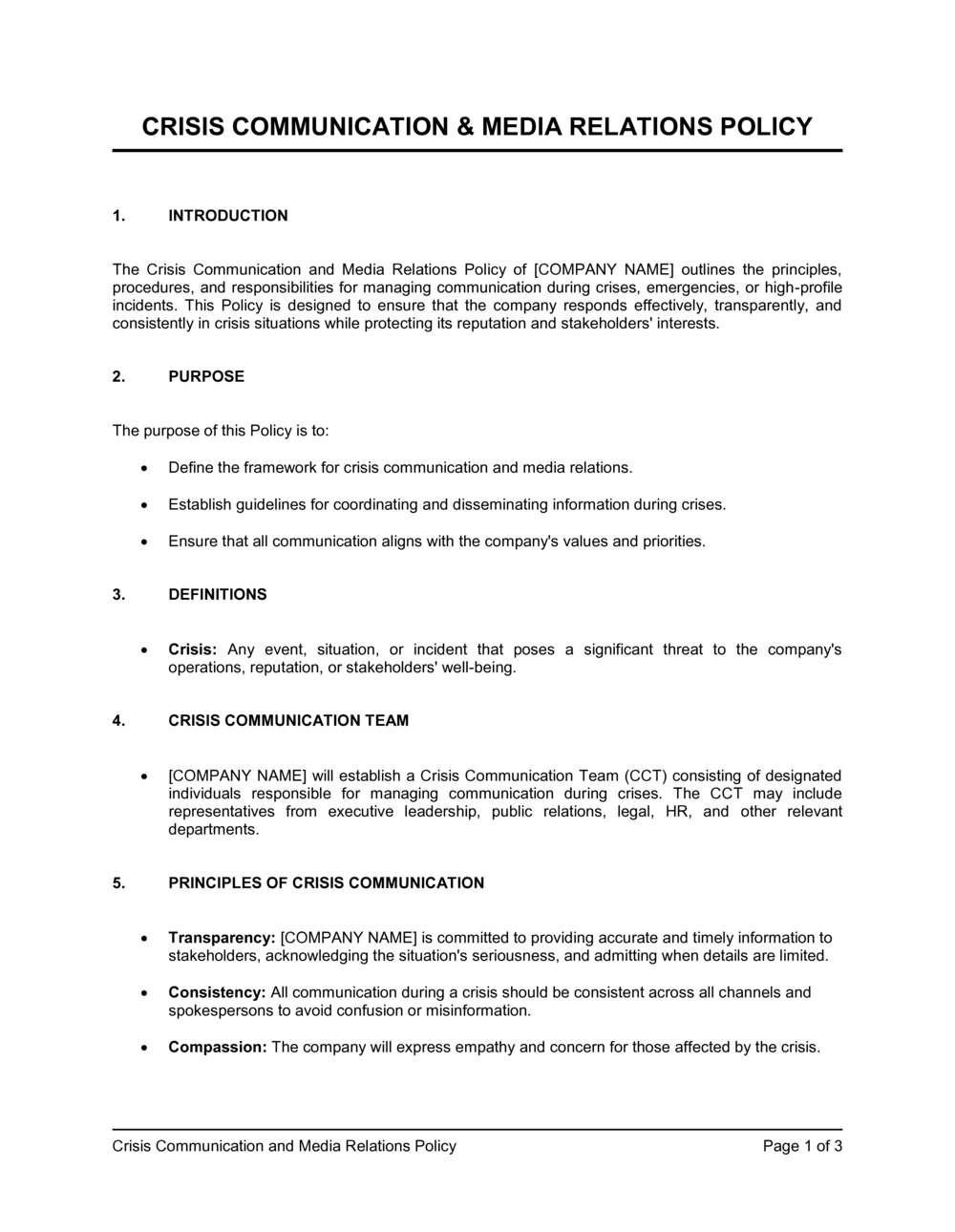
- An event or situation that poses a significant threat to an organization's reputation, operations, financial stability, or the safety of its people and the public.
- Designated Spokesperson
- The individual formally authorized to speak to media, regulators, or the public on behalf of the organization during a specific incident or crisis level.
- Holding Statement
- A brief, pre-approved message issued within the first hour of a crisis to acknowledge awareness while detailed facts are still being confirmed.
- Escalation Chain
- The documented sequence of people who must be notified — and in what order — when an incident reaches or exceeds a defined severity threshold.
- Crisis Classification Level
- A tiered severity rating (commonly Level 1 to Level 3) that determines which response protocols, approvals, and communications channels are activated.
- Dark Site
- A pre-built, password-protected website or webpage activated during a crisis to serve as the primary public information hub, replacing or supplementing the main site.
- Embargo
- An agreement with a media outlet to withhold publishing information until a specified date and time, used to coordinate simultaneous news releases.
- Media Monitoring
- Ongoing tracking of news outlets, social platforms, and online forums for mentions of the organization, its products, or its people — critical for early crisis detection.
- On the Record
- Any statement or information that the speaker consents to be attributed to them or the organization by name in media reporting.
- Off the Record
- Background information shared with a journalist with the understanding it will not be published or attributed — a status that must be explicitly agreed to before speaking, not assumed.
- Crisis Communication Team (CCT)
- The cross-functional group — typically including communications, legal, HR, and operations leads — responsible for coordinating the organization's response during a crisis.