1
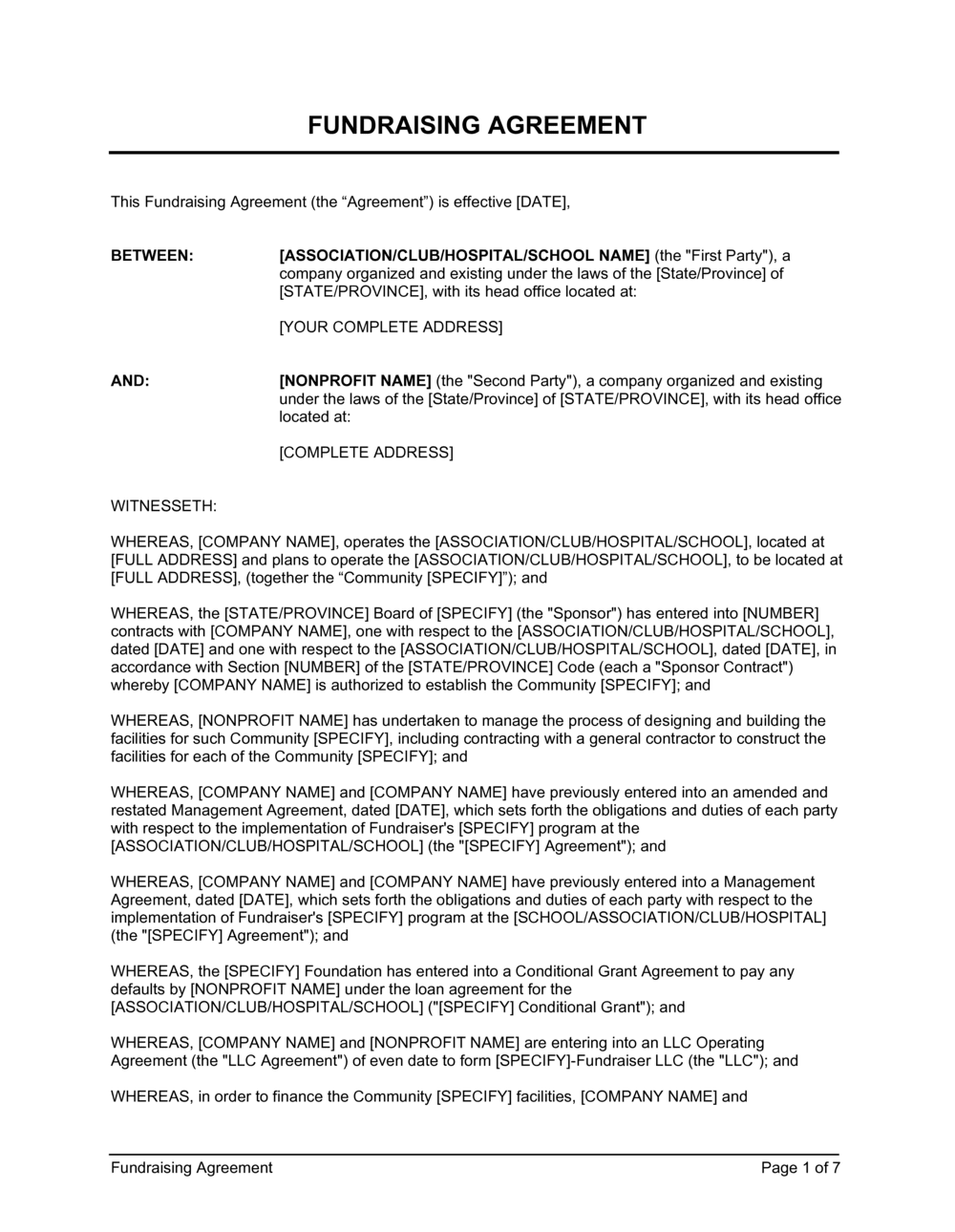
Identify both parties with full legal names
Enter the organization's registered legal name — not its brand name — and the fundraiser's legal entity or individual name. Include addresses and entity types for both.
💡 Cross-check both names against state or provincial corporate registries before signing. A mismatch creates enforcement problems and can delay payment processing.
2
Define the scope of services in a Schedule A
List every fundraising activity the consultant or agent will perform — donor outreach, investor introductions, campaign management, reporting — and explicitly state what is excluded from scope.
💡 Move detailed deliverables to a Schedule A rather than embedding them in the body. This lets you update the scope by amending only the schedule, not the entire contract.
3
Select and document the compensation structure
Choose flat fee, hourly rate, retainer, or success fee — then enter the specific amounts, payment dates, and any expense reimbursement cap. Confirm the structure is permitted under applicable charitable solicitation laws before finalizing.
💡 For nonprofit engagements, verify state-by-state whether percentage-based fees are restricted. Many US states require a flat or hourly fee for charitable fundraising.
4
Specify fund handling and disbursement mechanics
State exactly where collected funds must be deposited, how quickly they must be remitted to the organization, and who has authority to initiate disbursements.
💡 Require a dedicated sub-account or trust account for collected funds. This single requirement eliminates the commingling risk that triggers the majority of fundraising enforcement actions.
5
Insert the representations and warranties
Confirm that the fundraiser holds all required charitable solicitation registrations or broker-dealer licenses for each jurisdiction where they will solicit. Include a representation that the organization is validly formed and authorized to raise funds.
💡 Ask the fundraiser to attach copies of their current state or provincial solicitation licenses as an exhibit before execution.
6
Set the term, notice period, and termination triggers
Enter the start date, the engagement duration, and the number of days' written notice required for voluntary termination. List at least three for-cause triggers: material breach, fraud, and loss of required licenses.
💡 A 30-day notice period is standard for most engagements. For large capital raises, consider a 60-day notice period to allow time to transition donor or investor relationships.
7
Document post-termination obligations
Specify the deadline for returning donor records and campaign materials, the requirement for a final accounting, and any tail period during which a success fee may be earned on commitments already in progress.
💡 Include a specific timeline — 'within 5 business days of termination' — not just a general obligation to cooperate. Vague timelines are routinely ignored.
8
Execute before any solicitation activity begins
Both parties must sign the agreement before the fundraiser contacts any donor, investor, or prospect. Post-commencement execution weakens enforceability and may constitute an unlicensed solicitation under state law.
💡 Use a timestamped electronic signature platform to document execution date and order of signatures. Store the executed copy in a secure, accessible location before campaign launch.