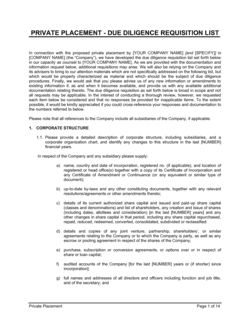
Private Placement Agreement Template

Free Word download • Edit online • Save & share with Drive • Export to PDF

11 pages30–40 min to fillDifficulty: ComplexSignature requiredLegal review recommended
Learn more ↓
FreePrivate Placement Agreement Template

At a glance

What it is
A Private Placement Agreement is a legally binding contract between an issuing company and one or more investors through which securities — equity, debt, or convertible instruments — are sold without a public offering or SEC registration. This free Word download gives you a structured, attorney-ready starting point covering offering terms, investor representations, use of proceeds, and applicable exemption disclosures, exportable as PDF for execution.
When you need it
Use it when raising capital from accredited or institutional investors under an exemption from public securities registration — typically Regulation D in the US, prospectus exemptions in Canada, or equivalent private placement regimes in the UK and EU. It is required before any funds are transferred and must be signed prior to closing.
What's inside
Offering terms and securities description, investor eligibility and accreditation representations, subscription mechanics, use of proceeds, transfer restrictions and legend requirements, risk factors, confidentiality obligations, and governing law with dispute resolution provisions.

What is a Private Placement Agreement?

A Private Placement Agreement is a legally binding contract through which a company sells securities — equity, debt, or convertible instruments — directly to a select group of investors without registering the offering with a public securities regulator. Rather than conducting an IPO or a public offering governed by a full prospectus, the issuer relies on a statutory exemption such as Regulation D in the United States, National Instrument 45-106 in Canada, or equivalent private placement regimes in the UK and EU. The agreement documents the offering price, security type, investor eligibility requirements, transfer restrictions, representations and warranties of both parties, use of proceeds, and the conditions that must be satisfied before the transaction closes. It functions as the definitive transactional instrument binding the issuer and each investor from the moment of execution through the life of the securities.

Why You Need This Document

Accepting investor capital without a properly executed private placement agreement creates exposure on every front simultaneously. Without it, there is no documented investor representation of accredited status — exposing the issuer to securities law violations and civil rescission liability for every dollar received. Transfer restrictions are unenforceable without the restrictive legend and contractual prohibition the agreement creates, meaning investors could resell unregistered securities and trigger regulatory action against the company. Use-of-proceeds disclosures that exist only in side emails rather than a signed agreement are inadequate for regulatory purposes and invite investor fraud claims if actual spending deviates. Courts and regulators have imposed personal liability on founders and officers who raised capital informally, without compliant documentation, even when the investors were sophisticated and willing. This template provides a compliant, attorney-ready starting point that closes the most critical documentation gaps — but given the securities law complexity involved, a review by qualified securities counsel before any funds are accepted is strongly recommended for most offerings.

Which variant fits your situation?

If your situation is…Use this template
Raising equity from accredited investors under Regulation D Rule 506(b)Private Placement Agreement (Equity)
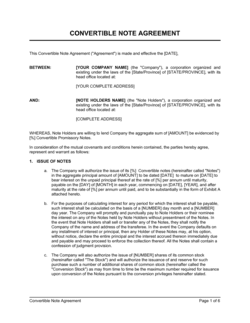
Issuing convertible notes or SAFEs to early-stage investorsConvertible Note Agreement
Syndicating real estate capital from multiple accredited investorsReal Estate Syndication Private Placement Agreement
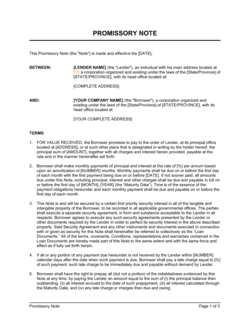
Raising debt capital with fixed interest and maturity termsPromissory Note
Issuing preferred shares with liquidation preferences and anti-dilutionPreferred Stock Purchase Agreement
Documenting the full offering details in a disclosure documentPrivate Placement Memorandum
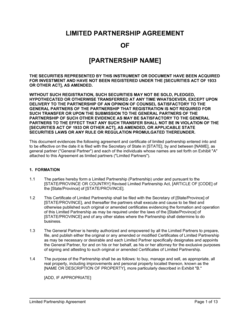
Structuring a limited partnership fund for pooled investor capitalLimited Partnership Agreement

Common mistakes to avoid

❌ General solicitation under a 506(b) offering

Why it matters: Using advertising, social media, or public seminars to market a 506(b) offering automatically disqualifies the exemption, exposing the issuer to securities fraud liability and rescission claims from every investor.

Fix: Either switch to a 506(c) structure (which permits general solicitation but requires verified accreditation) or limit outreach strictly to pre-existing substantive relationships with prospective investors.

❌ Accepting subscriptions from non-accredited investors without proper qualification

Why it matters: Under 506(b), up to 35 sophisticated non-accredited investors may participate, but the issuer must provide financial statements and additional disclosure; exceeding the limit voids the exemption entirely.

Fix: Implement a subscription intake process that verifies accredited status before accepting funds, and track each investor's classification in a subscription ledger.

❌ Missing or late Form D filing

Why it matters: Failure to file Form D within 15 days of the first sale is a technical violation that can disqualify the Reg D exemption in some states and trigger regulatory sanctions.

Fix: Assign Form D filing responsibility to a specific person — counsel or CFO — and calendar the deadline the moment the offering first closes on any subscription.

❌ Vague or misleading use-of-proceeds disclosure

Why it matters: Material omissions or misleading statements in the use-of-proceeds section constitute securities fraud under Section 10(b) and Rule 10b-5, regardless of the offering's exempt status.

Fix: Provide a specific, itemized breakdown with dollar ranges for each category and update the disclosure if the intended allocation changes materially before subsequent closes.

❌ No minimum offering threshold or escrow requirement

Why it matters: Without a minimum, the company can close on a fraction of the intended raise and deploy proceeds that are insufficient to achieve the stated business objectives disclosed to investors.

Fix: Set a meaningful minimum offering amount and require subscription funds to be held in escrow until the minimum is reached, then released to the company at a defined closing date.

❌ Signing the agreement after funds have been received

Why it matters: Receiving investor funds before executing the placement agreement means the securities transaction occurred without a governing contract in place, creating regulatory exposure and investor rescission rights.

Fix: Require signed subscription documents and the executed placement agreement as conditions precedent to accepting or holding any investor funds.

The 10 key clauses, explained

Parties, Recitals, and Defined Terms

In plain language: Identifies the issuing company and each investor as legal entities, states the purpose of the agreement, and defines key terms used throughout the document.

Sample language
This Private Placement Agreement ('Agreement') is entered into as of [DATE] between [ISSUER LEGAL NAME], a [STATE] [ENTITY TYPE] ('Company'), and the investor identified on the signature page ('Investor'). Capitalized terms have the meanings set out in Section 1.

Common mistake: Using a trade name or DBA instead of the registered legal entity name — if the issuer entity doesn't match corporate records, the agreement may not bind the right party and securities issuance is clouded.

Description of Securities and Offering Terms

In plain language: Specifies exactly what is being sold — share class, number of units, price per unit, aggregate offering amount, and any conversion or preference features.

Sample language
The Company is offering up to [NUMBER] shares of [CLASS] Common Stock at a price of $[X] per share, for aggregate gross proceeds of up to $[TOTAL AMOUNT] (the 'Offering'). The minimum subscription amount per Investor is $[MINIMUM].

Common mistake: Leaving the aggregate offering amount open-ended without a stated maximum. Without a cap, investors cannot assess dilution and regulators may challenge the exemption scope.

Investor Representations and Accreditation

In plain language: Requires each investor to represent that they meet accredited investor standards, are investing for their own account, have reviewed the offering materials, and understand the risks.

Sample language
Investor represents and warrants that: (a) Investor is an 'accredited investor' as defined in Rule 501 of Regulation D; (b) Investor is acquiring the Securities for its own account for investment purposes only; (c) Investor has sufficient knowledge and experience in financial matters to evaluate the merits and risks of this investment.

Common mistake: Relying solely on self-certification checkboxes without collecting supporting documentation for 506(c) offerings — the SEC requires issuers to take reasonable steps to verify accreditation, and a checkbox alone is insufficient.

Issuer Representations and Warranties

In plain language: States the company's representations about its legal existence, authorization of the offering, absence of material litigation, and accuracy of information provided to investors.

Sample language
The Company represents and warrants that: (a) it is duly organized and in good standing under the laws of [STATE]; (b) the execution and delivery of this Agreement has been duly authorized; (c) no material litigation, arbitration, or governmental proceeding is pending or, to the Company's knowledge, threatened against the Company.

Common mistake: Omitting a 'no material adverse change' representation, leaving investors without recourse if the company's condition deteriorates materially between signing and closing.

Use of Proceeds

In plain language: Discloses how the company intends to allocate the capital raised, broken down by category such as product development, working capital, debt repayment, and sales and marketing.

Sample language
The Company intends to use the net proceeds of the Offering as follows: approximately [X]% for [PURPOSE 1], [X]% for [PURPOSE 2], and [X]% for general working capital. The Company reserves the right to reallocate proceeds among categories based on business conditions.

Common mistake: Writing 'general corporate purposes' as the sole use of proceeds — regulators and investors treat this as a red flag, and in several jurisdictions it is insufficient disclosure for a valid exemption.

Transfer Restrictions and Resale Limitations

In plain language: Prohibits investors from reselling, transferring, or pledging the securities unless the transfer is registered or an exemption applies, and requires the restrictive legend be placed on all certificates or records.

Sample language
The Securities have not been registered under the Securities Act of 1933 and may not be offered, sold, transferred, or otherwise disposed of without an effective registration statement or an applicable exemption. All certificates evidencing the Securities shall bear the following legend: 'THE SECURITIES REPRESENTED HEREBY HAVE NOT BEEN REGISTERED UNDER THE SECURITIES ACT OF 1933...'

Common mistake: Failing to include the legend on electronic book-entry securities — transfer agents and brokers will reject the transfer or flag the position as unrestricted if the legend is absent.

Confidentiality and Non-Disclosure

In plain language: Obligates the investor to keep non-public information about the company — financials, pipeline, IP, customer data — confidential both during and after the investment relationship.

Sample language
Investor agrees to keep confidential and not to disclose or use any Confidential Information received from the Company in connection with this Agreement, except as required by law or with the Company's prior written consent. 'Confidential Information' means all non-public information relating to the Company's business, technology, finances, or customers.

Common mistake: No carve-out for disclosure to the investor's own legal, tax, and financial advisors — courts have found overly restrictive confidentiality clauses to be unreasonable, potentially voiding the whole provision.

Conditions to Closing

In plain language: Lists the conditions that must be satisfied before the investor's funds are released to the company, such as minimum subscription thresholds, regulatory filings, and delivery of executed documents.

Sample language
The obligation of each party to consummate the Closing is subject to the satisfaction of the following conditions: (a) Investor has delivered a completed and executed Subscription Booklet; (b) the Company has filed Form D with the SEC; (c) aggregate subscriptions have reached the Minimum Offering Amount of $[X].

Common mistake: No minimum offering threshold — if the company closes on a fraction of the intended raise and proceeds are insufficient for stated purposes, investors have no remedy and the use-of-proceeds disclosure becomes materially misleading.

Indemnification

In plain language: Allocates liability between the issuer and investor for losses arising from breaches of representations, misstatements in offering materials, or violations of securities laws.

Sample language
The Company shall indemnify and hold harmless each Investor from and against any losses, claims, or liabilities arising out of any material misstatement or omission in the offering materials. Investor shall indemnify the Company against losses arising from Investor's breach of any representation or warranty in this Agreement.

Common mistake: One-sided indemnification covering only the investor — omitting issuer indemnity for material misstatements exposes investors to the full risk of fraudulent or negligent offering disclosures without recourse.

Governing Law, Jurisdiction, and Dispute Resolution

In plain language: Specifies the law that governs the agreement, the forum for disputes, and whether disagreements are resolved through arbitration, mediation, or litigation.

Sample language
This Agreement shall be governed by and construed in accordance with the laws of the State of [STATE], without regard to conflict-of-laws principles. Any dispute shall be resolved by binding arbitration administered by [AAA / JAMS] in [CITY, STATE], except that either party may seek injunctive relief in any court of competent jurisdiction.

Common mistake: Choosing a governing law with no operational connection to the issuer's state of incorporation or investor's location — certain states (Delaware, New York) are preferred for their developed securities case law; exotic choices create enforcement uncertainty.

How to fill it out

  1. 1

    Identify the issuer's legal entity and confirm authorization

    Enter the company's full registered legal name, state of incorporation, and entity type. Confirm the board has passed a resolution authorizing the offering and the issuance of the securities being sold.

    💡 Attach or reference the board resolution in the agreement recitals — it demonstrates proper corporate authorization and protects the officers signing on behalf of the company.

  2. 2

    Define the securities and set the offering terms

    Specify the security type (common stock, preferred stock, convertible note, SAFE), number of units offered, price per unit, aggregate maximum offering amount, and minimum subscription per investor.

    💡 Set a hard cap on the aggregate offering amount to avoid inadvertently exceeding exemption thresholds — Reg D Rule 504 caps at $10M in a 12-month period.

  3. 3

    Determine and document the applicable exemption

    Identify which securities exemption applies — Reg D 506(b), 506(c), or an equivalent exemption in the applicable jurisdiction. Confirm whether general solicitation is permitted under the chosen rule, and document the exemption in the agreement recitals.

    💡 If using 506(c) and advertising the offering broadly, build an investor verification checklist — tax returns, brokerage statements, or a letter from a licensed CPA — before accepting any subscription.

  4. 4

    Complete the investor representation section for each investor

    Each investor must complete and sign the representations block confirming accredited status, investment-for-own-account purpose, and receipt and review of offering materials. For 506(c) offerings, collect supporting verification documents.

    💡 Maintain a separate investor verification file for every subscriber — SEC enforcement actions frequently arise from missing or inadequate accreditation documentation.

  5. 5

    Draft a specific use-of-proceeds table

    Break the intended use of net proceeds into at least four categories with estimated dollar amounts and percentages. Avoid vague descriptions such as 'general corporate purposes' as the primary allocation.

    💡 Include a materiality qualifier: 'The Company reserves the right to reallocate proceeds among categories based on business conditions' — this gives operational flexibility without invalidating the disclosure.

  6. 6

    Set transfer restrictions and prepare the restrictive legend

    Confirm the holding period requirements under the applicable exemption (Rule 144 typically requires 6–12 months for restricted securities). Insert the full restrictive legend text and confirm it will be applied to all certificates or book-entry positions.

    💡 Coordinate with your transfer agent before closing to confirm they can apply and track restricted legends on book-entry securities — a missed legend can trigger a compliance violation.

  7. 7

    File Form D within 15 days of first sale (US issuers)

    Submit Form D electronically through the SEC's EDGAR system within 15 calendar days of the first sale of securities under a Reg D exemption. Check applicable state Blue Sky notice-filing requirements, which often carry separate deadlines and fees.

    💡 Calendar the Form D deadline the moment the first subscription closes — a missed filing triggers potential loss of the exemption and personal liability for the signatories.

  8. 8

    Execute before funds are transferred and retain originals

    Both the authorized company representative and each investor must sign the agreement before any subscription funds are received. Store fully executed copies in a secure document repository.

    💡 Use a timestamped eSign platform so you have an auditable record showing execution preceded the wire transfer — the order matters for exemption integrity.

Frequently asked questions

What is a private placement agreement?

A private placement agreement is a legally binding contract between a company issuing securities and one or more investors purchasing those securities outside a registered public offering. It governs the terms of the sale — price, security type, representations, transfer restrictions, and closing conditions — and establishes the legal framework under which the capital raise occurs. It is distinct from a private placement memorandum, which is the disclosure document; the agreement is the binding transactional instrument.

What is the difference between a private placement agreement and a subscription agreement?

A private placement agreement sets the overarching terms of the offering and the rights and obligations of both the issuer and investors as a class. A subscription agreement is the investor-specific document through which a particular investor commits to purchase a defined number of securities at the offering price. In many transactions, the two are combined into a single document; in larger offerings with many investors, they are executed separately so each investor's subscription is individually documented.

Who qualifies as an accredited investor?

Under SEC Rule 501, an accredited investor includes an individual with annual income exceeding $200,000 (or $300,000 jointly with a spouse) in each of the two prior years, or net worth exceeding $1 million excluding the primary residence. Entities such as funds, trusts, and corporations with assets exceeding $5 million also qualify. In 2020, the SEC expanded the definition to include certain licensed financial professionals and knowledgeable employees of private funds. Equivalent thresholds exist in Canada, the UK, and the EU under their respective private placement regimes.

Do I need to register a private placement with the SEC?

No — the purpose of a private placement is to raise capital under an exemption from the registration requirements of the Securities Act of 1933. Under Regulation D, companies may raise unlimited capital from accredited investors under Rule 506(b) or 506(c) without registering the offering. However, issuers must file Form D with the SEC within 15 days of the first sale and comply with applicable state Blue Sky notice-filing requirements, which vary by state and carry separate deadlines and fees.

What is the difference between Rule 506(b) and Rule 506(c)?

Rule 506(b) allows issuers to raise unlimited capital from accredited investors plus up to 35 sophisticated non-accredited investors, but prohibits general solicitation or advertising. Rule 506(c) permits general solicitation and advertising — including social media and public seminars — but restricts the offering strictly to accredited investors and requires the issuer to take reasonable steps to independently verify each investor's accredited status, which typically means collecting tax returns, brokerage statements, or letters from licensed professionals.

What are transfer restrictions and how long do they last?

Transfer restrictions prohibit investors from reselling or transferring privately placed securities until the holding period specified under SEC Rule 144 has elapsed. For reporting companies, the Rule 144 holding period is typically 6 months; for non-reporting companies, it is 12 months. After the holding period, investors may resell under Rule 144 subject to volume limitations. The restriction is evidenced by a restrictive legend on the securities certificate or book-entry record, which the transfer agent removes only upon receipt of a legal opinion confirming the resale conditions are met.

What are Blue Sky laws and do they apply to Reg D offerings?

Blue Sky laws are US state-level securities statutes that impose additional registration or notice-filing requirements on top of federal exemptions. Reg D offerings are not automatically exempt from Blue Sky compliance — issuers must file notice filings (and in some states, pay fees) in each state where investors are located, typically within 15 days of the first sale in that state. Rule 506(b) and 506(c) offerings are preempted from state merit review, but notice filings are still required in most states.

Can a foreign company use a private placement agreement to raise money from US investors?

Yes, but with additional complexity. Foreign issuers raising capital from US investors must comply with US securities laws, including Reg D requirements, unless the offering qualifies under Regulation S as an offshore transaction with no directed selling efforts in the US. Foreign issuers who do target US investors typically engage US securities counsel to structure the offering, verify accreditation, and handle Form D filing and state Blue Sky notices.

Do I need a lawyer to prepare a private placement agreement?

For any offering above $250,000 or involving more than a handful of investors, engaging a securities attorney is strongly recommended and practically necessary. Securities law violations — even unintentional ones — carry civil rescission liability and potential criminal enforcement. A qualified template provides a solid structural starting point, but jurisdiction-specific disclosure requirements, exemption qualification, and investor-specific negotiation points require attorney review before any funds are accepted.

How this compares to alternatives

vs Private Placement Memorandum

A private placement memorandum (PPM) is a disclosure document that describes the company, the offering, the risks, and the financial background provided to investors before they commit. A private placement agreement is the binding transactional contract that governs the actual purchase of securities. The PPM informs the investor; the agreement binds both parties. Both are typically required together for a compliant offering.

vs Convertible Note Agreement

A convertible note agreement is a debt instrument that converts into equity at a future financing event, typically a priced round, at a discount or with a valuation cap. A private placement agreement issues securities — equity or debt — immediately at a fixed price with no conversion mechanics. Convertible notes are used for bridge or pre-seed financing where the company's valuation is not yet established; private placements are used when pricing and terms are definite.

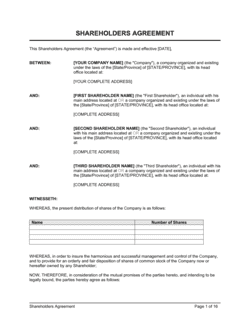
vs Shareholders Agreement

A shareholders agreement governs the ongoing rights and obligations of existing equity holders — voting, drag-along, tag-along, and pre-emption rights — after securities have been issued. A private placement agreement governs the transaction through which those securities are sold to new investors. The placement agreement closes the deal; the shareholders agreement runs the company afterward. In most financing rounds, both documents are executed at or around the same closing.

vs Promissory Note

A promissory note is a simple debt instrument recording a loan obligation, repayment schedule, and interest rate. A private placement agreement is a comprehensive securities transaction document covering investor representations, securities law exemptions, and transfer restrictions that a bare promissory note does not address. Use a promissory note for straightforward loans between known parties; use a private placement agreement when the debt instrument is being sold to investors as a security under a formal capital-raising structure.

Industry-specific considerations

Technology / SaaS

Seed and Series A equity rounds structured under Reg D 506(b), often paired with a convertible note or SAFE for early-stage bridge financing before a priced round.

Real Estate

Syndication of accredited investor capital for property acquisitions, development projects, or REITs, with proceeds allocation tied to specific property addresses and projected returns.

Financial Services / Private Equity

LP interest subscriptions, co-investment side cars, and fund-level capital calls governed by the placement agreement in conjunction with a limited partnership agreement and offering memorandum.

Healthcare / Biotech

Pre-IPO capital raises for clinical-stage companies where FDA regulatory timelines are a material risk factor and investor representations must acknowledge the speculative nature of the investment.

Energy and Natural Resources

Project finance raises for oil, gas, or renewable energy developments where use-of-proceeds ties directly to specific project milestones and state-level Blue Sky requirements are particularly complex.

Manufacturing and Infrastructure

Equipment financing and facility expansion raises from institutional investors, often using secured debt instruments or preferred equity with defined coupon rates and collateral packages.

Jurisdictional notes

United States

Most US private placements rely on Regulation D exemptions under the Securities Act of 1933. Rule 506(b) is the most commonly used exemption, permitting unlimited capital from accredited investors without general solicitation. Form D must be filed with the SEC within 15 days of the first sale. State Blue Sky notice filings are required in each state where investors reside, with fees and deadlines that vary by state. Rule 506 offerings are preempted from state merit review but not from notice-filing requirements.

Canada

Canadian private placements are primarily governed by National Instrument 45-106, which sets out prospectus exemptions including the accredited investor exemption and the offering memorandum exemption. Each provincial securities commission (OSC in Ontario, AMF in Quebec, BCSC in BC) requires a Form 45-106F1 report of exempt distribution within 10 days of the distribution. Quebec requires bilingual offering materials for provincially regulated issuers. The accredited investor definition in Canada includes individuals with net financial assets exceeding CAD $1 million or net income over CAD $200,000.

United Kingdom

Following Brexit, UK private placements are governed by the Financial Services and Markets Act 2000 (FSMA) and the Financial Promotions Order. Securities can be offered without a prospectus to high-net-worth individuals (with annual income over £100,000 or net assets over £250,000) and sophisticated investors under specific exemptions. The FCA requires that financial promotions are communicated by or approved by an FCA-authorized firm. UK-specific risk factor disclosures and prescribed investor certification language are required.

European Union

In the EU, private placements are governed by the EU Prospectus Regulation (Regulation 2017/1129), which exempts offerings to fewer than 150 persons per member state or offerings to qualified investors from the full prospectus requirement. Member states have varying national private placement regimes — Germany, France, and the Netherlands each impose additional requirements. GDPR imposes strict obligations on the handling of investor personal data collected during the subscription process. The EU's MiFID II framework also applies if placement agents or brokers are involved in marketing the offering.

Template vs lawyer — what fits your deal?

PathBest forCostTime
Use the templateFounders raising under $250,000 from a very small number of close, known accredited investors in a single jurisdictionFree1–2 days to complete
Template + legal reviewRaises between $250,000 and $2M from multiple accredited investors, or any 506(c) offering requiring verified accreditation$1,500–$5,000 for securities counsel review and Form D preparation1–2 weeks
Custom draftedInstitutional raises above $2M, multi-jurisdictional offerings, offerings with complex security structures, or any offering involving non-US investors or issuers$5,000–$25,000+3–6 weeks

Glossary

Private Placement
The sale of securities directly to a select group of investors without a registered public offering, relying on an exemption from securities registration requirements.
Accredited Investor
An individual or entity that meets minimum income, net worth, or professional qualification thresholds set by securities regulators, qualifying them to participate in unregistered offerings.
Regulation D
A US SEC regulation providing safe-harbor exemptions — primarily Rules 504, 506(b), and 506(c) — allowing companies to raise capital from accredited investors without full registration.
Offering Memorandum
A disclosure document accompanying the placement agreement that describes the company, securities, risks, and financial information provided to prospective investors.
Securities Exemption
A statutory or regulatory provision that allows the issuance of securities without the full registration process required for a public offering.
Subscription Agreement
The investor-executed document confirming their commitment to purchase a specified number or dollar amount of securities at the agreed offering price.
Transfer Restriction
A contractual limitation on the investor's ability to resell or transfer purchased securities, typically requiring a holding period or registration before resale.
Restrictive Legend
A printed notice on a share certificate or electronic securities record stating that the securities are unregistered and subject to resale restrictions under applicable law.
Closing
The point at which the investor funds the subscription and the issuer delivers the agreed securities, completing the transaction contemplated by the placement agreement.
Rule 506(b) vs. 506(c)
Two Reg D safe harbors: 506(b) permits up to 35 non-accredited sophisticated investors and prohibits general solicitation; 506(c) allows general advertising but requires the issuer to verify accreditation status for all investors.
Blue Sky Laws
State-level securities laws in the US that impose additional registration or notice-filing requirements on top of federal Reg D exemptions, varying by state.

Part of your Business Operating System

This document is one of 3,000+ business & legal templates included in Business in a Box.

  • Fill-in-the-blanks — ready in minutes
  • 100% customizable Word document
  • Compatible with all office suites
  • Export to PDF and share electronically

Create your document in 3 simple steps.

From template to signed document — all inside one Business Operating System.
1
Download or open template

Access over 3,000+ business and legal templates for any business task, project or initiative.

2
Edit and fill in the blanks with AI

Customize your ready-made business document template and save it in the cloud.

3
Save, Share, Send, Sign

Share your files and folders with your team. Create a space of seamless collaboration.

Save time, save money, and create top-quality documents.

★★★★★

"Fantastic value! I'm not sure how I'd do without it. It's worth its weight in gold and paid back for itself many times."

Managing Director · Mall Farm
Robert Whalley
Managing Director, Mall Farm Proprietary Limited
★★★★★

"I have been using Business in a Box for years. It has been the most useful source of templates I have encountered. I recommend it to anyone."

Business Owner · 4+ years
Dr Michael John Freestone
Business Owner
★★★★★

"It has been a life saver so many times I have lost count. Business in a Box has saved me so much time and as you know, time is money."

Owner · Upstate Web
David G. Moore Jr.
Owner, Upstate Web

Run your business with a system — not scattered tools

Stop downloading documents. Start operating with clarity. Business in a Box gives you the Business Operating System used by over 250,000 companies worldwide to structure, run, and grow their business.

Start free · No credit card required