- Care Recipient
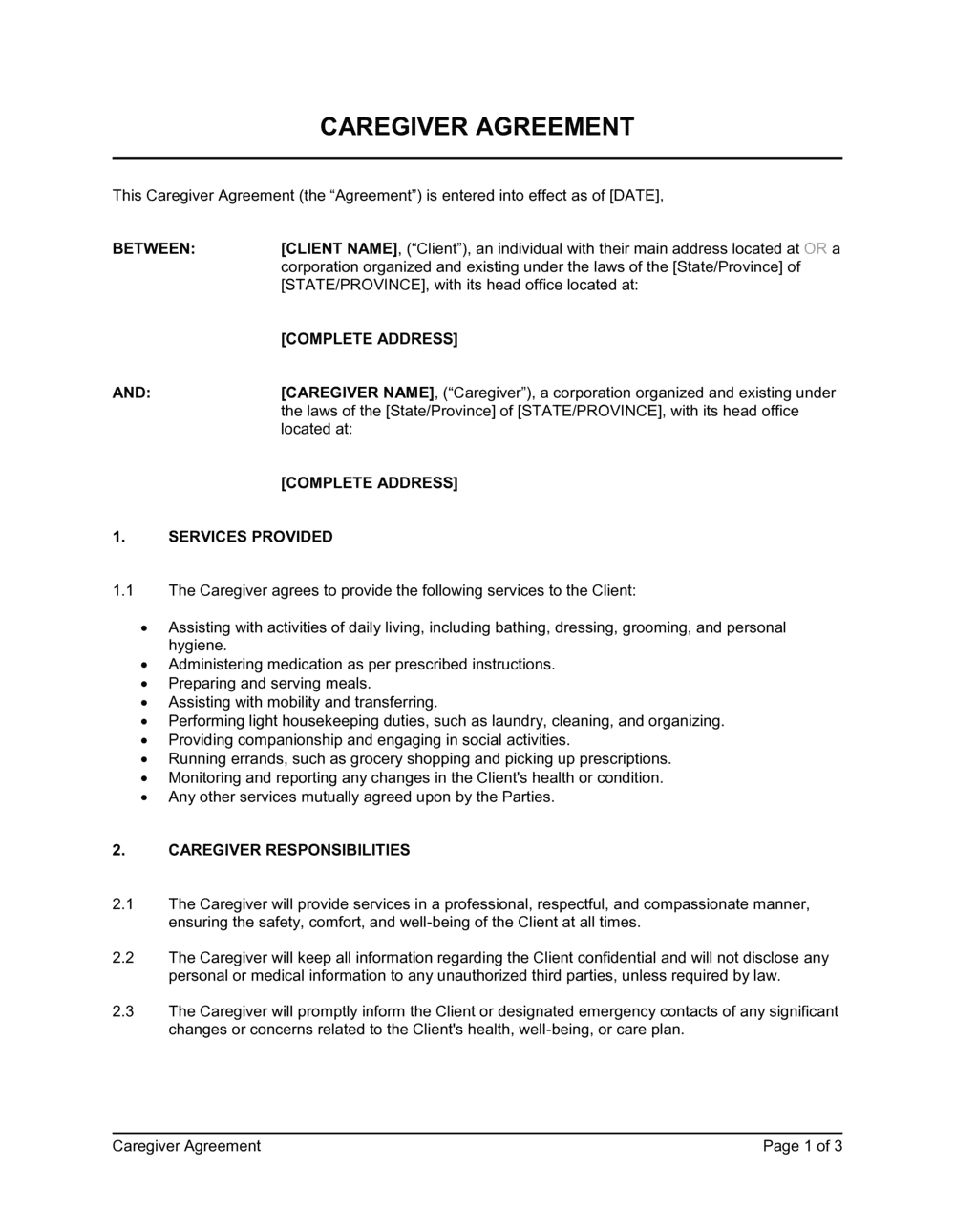
- The individual who receives care services under the agreement — may be an elderly adult, a person with a disability, or a child.
- Scope of Care
- A defined list of specific tasks the caregiver is authorized and expected to perform, such as bathing assistance, meal preparation, or medication reminders.
- Household Employee
- A caregiver classified as an employee rather than a contractor because the care recipient or family controls how, when, and where the work is performed.
- Independent Contractor
- A caregiver who operates as a self-employed individual, sets their own methods, and is responsible for their own taxes — distinct from an employee under IRS and CRA rules.
- Medicaid Personal Care Agreement
- A written contract required by many US states to document compensated care by a family member without those payments being treated as an uncompensated gift that disqualifies the care recipient from Medicaid benefits.
- Activities of Daily Living (ADLs)
- Basic self-care tasks — bathing, dressing, eating, toileting, transferring, and continence — used to define the level and type of care a person requires.
- Respite Care
- Temporary, short-term care provided to give a primary caregiver a planned break, typically lasting hours to a few weeks.
- HIPAA
- The US Health Insurance Portability and Accountability Act, which sets standards for protecting individually identifiable health information — relevant to caregivers who handle medical records or communicate with healthcare providers.
- Indemnification
- A contractual obligation by one party to compensate the other for losses or legal liability arising from specified events, such as a caregiver's negligent act.
- Schedule of Care
- The agreed days, times, and hours per week the caregiver is expected to work, including provisions for schedule changes and overtime.
- Termination for Cause
- Ending the agreement immediately, without notice or severance, due to a specific serious breach — such as abuse, theft, or failure to meet care standards.