Coaching Agreement Template

Free Word download β€’ Edit online β€’ Save & share with Drive β€’ Export to PDF

5 pagesβ€’25–35 min to fillβ€’Difficulty: Complexβ€’Signature requiredβ€’Legal review recommended
Learn more ↓
FreeCoaching Agreement Template

At a glance

What it is
A Coaching Agreement is a legally binding contract between a coach and a client that defines the scope, schedule, fees, confidentiality obligations, and termination conditions of a professional coaching engagement. This template is a free Word download you can edit online β€” add your service details, payment terms, and liability limits β€” then export as PDF and send for signature before the first session.
When you need it
Use it before beginning any paid coaching engagement β€” life, executive, business, or career coaching β€” where you need enforceable obligations around session delivery, payment, and confidentiality in writing.
What's inside
Scope of coaching services, session schedule and format, fees and payment terms, confidentiality obligations, intellectual property ownership, limitation of liability, cancellation and rescheduling policy, and termination conditions for both parties.

What is a Coaching Agreement?

A Coaching Agreement is a legally binding contract between a coach and a client that governs the terms of a professional coaching engagement β€” defining the scope of services, session schedule and format, fees, confidentiality obligations, intellectual property ownership, limitation of liability, and the conditions under which either party may end the relationship. It functions as the foundational document for any paid coaching relationship, replacing informal email exchanges and verbal understandings with enforceable written obligations. Because coaching sits in a legally unregulated space in most jurisdictions, the written agreement is the primary mechanism that distinguishes a professional engagement from a casual conversation and protects both parties from claims about what was or was not promised.

Why You Need This Document

Without a signed coaching agreement in place before the first session, you have no contractual basis to retain prepaid fees when a client terminates early, no enforceable boundary between your coaching services and regulated activities like therapy or financial advice, and no cap on your liability if a client claims your sessions contributed to a poor business decision or a personal setback. The risks are concrete: coaches without written agreements regularly face chargebacks on pre-purchased packages, requests for full refunds months into a program, and disputes over the ownership of proprietary frameworks shared during sessions. On the client side, an unsigned engagement leaves them without any clarity on what they are entitled to receive, what their cancellation rights are, or how their personal disclosures will be protected. This template gives both parties a clear, enforceable starting point β€” covering every clause that typically triggers disputes β€” so the coaching relationship can focus on outcomes rather than contract ambiguity.

Which variant fits your situation?

If your situation is…Use this template
Providing one-on-one personal development or life coachingLife Coaching Agreement
Coaching a senior executive or leadership team on behalf of a corporate sponsorExecutive Coaching Agreement
Delivering a structured group coaching program with multiple participantsGroup Coaching Agreement
Engaging an external coach as a business contractor rather than an employeeIndependent Contractor Agreement
Offering an online self-paced coaching course rather than live sessionsOnline Course Terms and Conditions
Providing mentorship within a formal organizational mentoring programMentorship Agreement
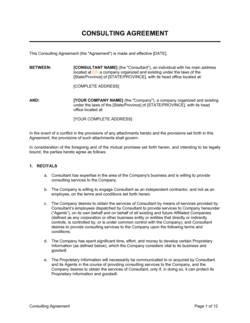
Delivering consulting services alongside coaching with defined project deliverablesConsulting Agreement

Common mistakes to avoid

❌ No refund or unused-session policy

Why it matters: When a client pre-purchases a package and terminates early, the absence of a written refund policy turns a business decision into a legal dispute. Chargebacks and small claims actions are the most common outcome.

Fix: State explicitly whether pre-paid sessions are refundable, on what pro-rata basis, and within how many days of termination the refund will be issued.

❌ Omitting the therapy and medical advice disclaimer

Why it matters: Coaches who use emotionally supportive language without a clear written boundary between coaching and therapy risk regulatory complaints and civil liability for practicing without a license in jurisdictions that regulate counseling.

Fix: Include a standalone clause β€” not just a footnote β€” stating that coaching is not therapy or medical advice, and that the client should seek a licensed practitioner for those needs.

❌ No IP clause protecting proprietary frameworks

Why it matters: Clients who receive signature frameworks, worksheets, or methodologies during coaching may reproduce and resell them after the engagement ends, with no written basis for the coach to object.

Fix: Include a clause granting the client a personal-use-only license to all materials and explicitly prohibiting commercial reproduction or distribution without written consent.

❌ Signing the agreement after the first session has already taken place

Why it matters: In common-law jurisdictions, a contract signed after services have already commenced may lack fresh consideration for restrictive provisions β€” including confidentiality and limitation of liability β€” making those clauses potentially unenforceable.

Fix: Execute the agreement before or on the same day as the first session. If circumstances require a later signature, provide a documented benefit β€” a complimentary session or fee reduction β€” as fresh consideration.

❌ Using vague outcome language in the scope of services

Why it matters: Phrases like 'transform your business' or 'achieve financial freedom' create implied warranties that the coach cannot deliver, giving clients grounds to demand refunds when subjective outcomes fall short.

Fix: Describe what the coach will do β€” sessions delivered, tools provided, accountability structures β€” not what the client will achieve. Reserve aspirational language for marketing materials, not the contract.

❌ No limitation of liability clause

Why it matters: Without a liability cap, a business coaching client who claims the coach's advice contributed to a failed venture could seek damages far exceeding the total coaching fees β€” with no contractual ceiling to limit exposure.

Fix: Include a limitation of liability clause capping the coach's total exposure at the fees paid in the 30 or 90 days preceding the claim, and exclude consequential and indirect damages explicitly.

The 10 key clauses, explained

Parties and engagement details

In plain language: Identifies the coach and client by legal name, states the nature of the coaching relationship, and records the start date of the engagement.

Sample language
This Coaching Agreement is entered into on [DATE] between [COACH FULL NAME / BUSINESS NAME] ('Coach') and [CLIENT FULL NAME / ENTITY NAME] ('Client'). The parties agree to enter into a coaching engagement commencing [START DATE].

Common mistake: Using a business brand name instead of the registered legal entity. If a dispute arises, enforcing the agreement against the correct contracting party becomes complicated and can require additional evidence.

Scope of coaching services

In plain language: Defines exactly what services the coach will deliver β€” session format, frequency, duration, and any supplementary materials β€” and explicitly excludes services outside the coach's scope, such as therapy or legal advice.

Sample language
Coach shall provide [X] coaching sessions per [week/month], each lasting approximately [DURATION], conducted via [FORMAT β€” video call / in-person / telephone]. Coaching does not constitute therapy, counseling, financial advice, or legal advice.

Common mistake: Describing services so broadly that the client expects outcomes the coach never intended to deliver β€” such as guaranteed results or business strategy consulting β€” leading to disputes over refunds.

Fees, payment schedule, and retainer

In plain language: States the total fee or per-session rate, when invoices are due, accepted payment methods, and any deposit or retainer required to secure the engagement.

Sample language
Client shall pay Coach a fee of $[AMOUNT] per session / $[AMOUNT] per [MONTH/PACKAGE], due on [DATE]. A retainer of $[AMOUNT] is due upon signing and will be applied to the final [X] sessions. Payment via [METHOD].

Common mistake: Omitting what happens to prepaid fees if the client terminates early. Without a clear refund policy, disputes over unused session credits are the most common source of coaching contract litigation.

Cancellation and rescheduling policy

In plain language: Sets the minimum notice required to cancel or reschedule a session without charge, and the fee or forfeiture that applies when notice is not given in time.

Sample language
Client must provide at least [48 hours'] notice to cancel or reschedule a session. Sessions cancelled with less than [48 hours'] notice will be forfeited and charged at the full session rate. Coach will make reasonable efforts to offer an alternative time.

Common mistake: Setting a 24-hour cancellation window without specifying the timezone β€” international clients may forfeit sessions due to timezone ambiguity, creating friction and refund requests.

Confidentiality

In plain language: Obligates both parties to keep all session content, personal disclosures, and shared business information confidential, with any agreed exceptions stated explicitly.

Sample language
Both parties agree to maintain strict confidentiality regarding all information shared during the coaching engagement. Coach shall not disclose Client's personal or business information to any third party without Client's prior written consent, except as required by law.

Common mistake: Omitting reciprocal confidentiality β€” failing to bind the client to confidentiality regarding the coach's proprietary methods, frameworks, and session structure, leaving those assets unprotected.

Intellectual property and materials

In plain language: Establishes that worksheets, assessments, frameworks, and other materials provided by the coach remain the coach's property, and restricts the client from reproducing or distributing them.

Sample language
All materials, frameworks, worksheets, and tools provided by Coach remain the sole property of Coach and are licensed to Client for personal use only. Client may not reproduce, distribute, or use them commercially without Coach's prior written consent.

Common mistake: No IP clause at all β€” clients who receive proprietary frameworks and later become coaches themselves may use or resell those materials, and there is no written basis to prevent it.

Disclaimer of results and limitation of liability

In plain language: States that coaching outcomes are not guaranteed, that the client is responsible for their own decisions, and caps the coach's maximum financial liability to the fees paid under the agreement.

Sample language
Coach does not guarantee any specific outcome, result, or transformation. Client acknowledges that coaching success depends on their own effort and choices. Coach's total liability shall not exceed the total fees paid by Client in the [30/90] days preceding the claim.

Common mistake: Omitting the limitation of liability entirely, leaving the coach exposed to claims that far exceed the value of the engagement β€” for example, a business coaching client claiming lost profits attributable to the coach's advice.

Coaching is not therapy β€” disclaimer

In plain language: Explicitly distinguishes coaching services from therapy, counseling, mental health treatment, or medical advice, and recommends clients seek licensed professionals for those needs.

Sample language
Client acknowledges that coaching is not therapy, psychotherapy, counseling, or mental health treatment. Coach is not a licensed mental health professional. Clients experiencing mental health concerns should consult a qualified and licensed mental health practitioner.

Common mistake: Using language like 'emotional healing' or 'trauma work' in the scope of services while the disclaimer says coaching is not therapy β€” the contradiction can expose the coach to liability for unlicensed practice.

Termination and notice

In plain language: States how either party may end the engagement, the notice period required, and what happens to any prepaid fees or scheduled sessions after termination.

Sample language
Either party may terminate this Agreement with [14 days'] written notice. Upon termination, Client shall pay for all sessions completed to the date of termination. Prepaid fees for unused sessions will be refunded on a pro-rata basis within [30] days, except where termination is due to Client's material breach.

Common mistake: No termination clause at all β€” when a client stops responding or a relationship breaks down, the coach has no contractual basis to retain already-delivered-session fees or end the engagement cleanly.

Governing law and dispute resolution

In plain language: Specifies which jurisdiction's law governs the agreement and how disputes will be resolved β€” mediation, arbitration, or court β€” and in which venue.

Sample language
This Agreement is governed by the laws of [STATE / PROVINCE / COUNTRY]. Any dispute arising under this Agreement shall first be submitted to non-binding mediation. If unresolved, disputes shall be settled by binding arbitration in [CITY], [JURISDICTION].

Common mistake: Selecting a governing law jurisdiction where the coach has no presence and the client does not reside, making enforcement impractical and expensive for both parties.

How to fill it out

  1. 1

    Enter legal names for both parties

    Use the coach's full registered business or personal name and the client's legal name as it appears on government ID or corporate registration. Avoid using brand names or social media handles.

    πŸ’‘ If a corporate sponsor (such as an employer) is paying on behalf of the client, add the sponsor as a third party with their payment obligations stated separately.

  2. 2

    Define the scope and format of coaching services

    Specify the session frequency, duration, and format (video, phone, or in-person). List any supplementary deliverables β€” worksheets, assessments, or email support β€” and explicitly state what is excluded.

    πŸ’‘ A one-sentence exclusion of therapy, financial advice, and legal advice in the scope section reduces the risk of a client claiming they expected services the coach is not qualified to provide.

  3. 3

    Set the fee structure and payment schedule

    Enter the per-session rate or package fee, state the due date for each payment, and specify the accepted payment method. Include any deposit or retainer and clarify how it is applied to future sessions.

    πŸ’‘ Add a late-payment fee β€” typically 1.5% per month β€” to encourage timely payment without requiring a collections conversation.

  4. 4

    Write the cancellation and rescheduling policy

    State the minimum notice period (commonly 24–48 hours), what happens to a forfeited session fee, and any limit on how many sessions per package may be rescheduled.

    πŸ’‘ Include the timezone for all notice calculations β€” a client in Tokyo and a coach in New York can easily misread a 24-hour window.

  5. 5

    Tailor the confidentiality clause

    Confirm that confidentiality runs both ways β€” the coach protects client disclosures, and the client protects the coach's proprietary materials and methods. Add any mandatory disclosure exceptions (e.g., risk of harm to self or others).

    πŸ’‘ If you plan to use anonymized client success stories in marketing, include explicit written permission language in the confidentiality section rather than seeking it retroactively.

  6. 6

    Set the limitation of liability and results disclaimer

    Cap the coach's financial liability at fees paid in the preceding 30 or 90 days. Include a plain-language statement that coaching outcomes are not guaranteed and depend on the client's own effort and choices.

    πŸ’‘ Courts are more likely to uphold a liability cap that is clearly explained and acknowledged in writing than one buried in fine print without the client's attention drawn to it.

  7. 7

    State the termination notice period and refund policy

    Set the notice period for either party to end the engagement (14 days is standard for most individual coaching relationships). Define the pro-rata refund formula for prepaid but unused sessions.

    πŸ’‘ Phrase the termination clause symmetrically β€” both parties should be able to exit on the same terms β€” to avoid appearing one-sided, which can make the clause harder to enforce.

  8. 8

    Sign before the first session and store copies

    Both parties must sign the agreement before the coaching engagement begins. Send the client a countersigned PDF copy immediately after execution and retain one for your records.

    πŸ’‘ Use an e-signature tool to timestamp execution β€” a time-stamped digital signature is generally enforceable and eliminates disputes about whether the agreement was signed before or after services commenced.

Frequently asked questions

What is a coaching agreement?

A coaching agreement is a legally binding contract between a coach and a client that defines the terms of a professional coaching engagement β€” scope of services, session schedule, fees, confidentiality obligations, IP ownership, and termination conditions. It protects both parties by setting clear expectations before the first session and providing a written basis for resolving disputes if the relationship breaks down.

Is a coaching agreement legally binding?

Yes, a properly executed coaching agreement is generally enforceable as a contract in most jurisdictions when it includes offer, acceptance, and consideration β€” typically the exchange of coaching services for fees. Both parties must sign before services begin. Clauses that are unreasonably one-sided or that conflict with consumer protection laws in the client's jurisdiction may be unenforceable on their own terms without voiding the entire agreement.

What should a coaching agreement include?

At minimum: full legal names of both parties, start date, scope of services with explicit exclusions, session format and frequency, fee structure and payment schedule, cancellation and rescheduling policy, confidentiality obligations, IP ownership of materials, a disclaimer distinguishing coaching from therapy, limitation of liability, termination notice period and refund policy, and governing law. Missing any of these creates gaps that courts fill using jurisdiction-specific defaults.

Do I need a lawyer to draft a coaching agreement?

For straightforward individual coaching engagements, a high-quality template reviewed against your jurisdiction's consumer protection and service contract requirements is typically sufficient. Consider engaging a lawyer when coaching a corporate client with significant revenue at stake, when your services touch regulated areas such as health or financial wellness, or when you operate across multiple jurisdictions with conflicting consumer protection laws.

Can a coach use a coaching agreement for both individual and group programs?

A standard coaching agreement is designed for one-on-one engagements. For group programs, you need a separate agreement that addresses shared confidentiality obligations among participants, a group-specific cancellation policy, and the coach's rights if a participant disrupts the program. Using a one-on-one template for a group program leaves significant gaps around participant interaction and group-specific risks.

What is the difference between a coaching agreement and a consulting agreement?

A coaching agreement governs a relationship focused on the client's development, goal-setting, and accountability β€” the coach asks questions and facilitates insight rather than delivering expert recommendations. A consulting agreement covers the delivery of specific expert advice, analysis, or project deliverables. Many practitioners do both, but mixing the two in a single undefined agreement creates liability if the client later claims the coach crossed into unqualified consulting or advice-giving.

How should a coaching agreement handle confidentiality?

Confidentiality should run in both directions. The coach agrees not to disclose the client's personal disclosures or business information. The client agrees not to reproduce or share the coach's proprietary methods and materials. The clause should also state any mandatory exceptions β€” such as risk of harm to self or others β€” to avoid the coach being legally obligated to maintain silence when disclosure is required by law or ethics.

What happens if a coaching client wants to cancel mid-package?

The outcome depends entirely on what the agreement says. Without a written refund policy, the coach has no contractual basis to retain prepaid fees β€” and the client has no clear expectation of what they are owed back. A well-drafted coaching agreement should specify the pro-rata refund formula for unused sessions, the notice period required, and whether any administrative or cancellation fee applies. This avoids chargebacks and small claims disputes in almost all cases.

Does a coaching agreement need to be notarized?

No β€” notarization is not required for a coaching agreement to be enforceable in any major jurisdiction. A signed paper or electronic copy executed by both parties before services begin is sufficient. Using a timestamped e-signature tool adds an additional layer of evidence confirming when the agreement was signed, which can be valuable if the timing of execution is later disputed.

How this compares to alternatives

vs Consulting Agreement

A consulting agreement covers the delivery of specific expert advice, reports, or project deliverables β€” the consultant is hired for their knowledge and recommendations. A coaching agreement governs a facilitative relationship focused on the client's development and goal achievement. Mixing the two in a single document without clear role boundaries creates liability if the client claims the coach gave unqualified expert advice that led to a loss.

vs Independent Contractor Agreement

An independent contractor agreement governs the relationship between a business and a self-employed service provider β€” it covers tax status, work-for-hire IP, and deliverable obligations. A coaching agreement governs the relationship between a coach and the person being coached. If an organization hires an external coach to serve its employees, both documents may be needed: one between the organization and the coach as a contractor, and one between the coach and each client.

vs Non-Disclosure Agreement

A standalone NDA creates broad confidentiality obligations before any services begin β€” useful when a potential client needs to disclose sensitive information during a discovery call before signing a coaching contract. A coaching agreement contains its own confidentiality clause that applies for the duration of the engagement. For most coaching relationships, the coaching agreement's confidentiality clause is sufficient; a separate NDA is warranted when pre-engagement disclosures involve genuinely sensitive IP or competitive information.

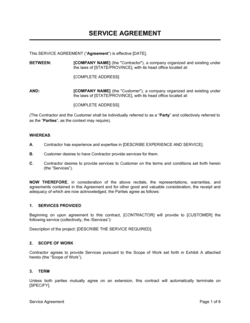
vs Service Agreement

A general service agreement is a broad contract covering any professional service β€” deliverables, payment, and liability β€” without coaching-specific provisions. It lacks the therapy disclaimer, results disclaimer, and session-forfeiture policies that are critical for coaching engagements. A coaching agreement is a purpose-built service contract that addresses the specific risks and expectations of the coaching relationship.

Industry-specific considerations

Professional services

Executive and leadership coaching engagements often involve a corporate sponsor paying on behalf of an individual client, requiring a three-party agreement structure covering confidentiality between the client and the sponsoring organization.

Health and wellness

Health and wellness coaches face elevated liability exposure from clients with underlying medical conditions β€” the therapy disclaimer and limitation of liability clauses are critical risk-management tools, not optional additions.

SaaS and technology

Startup founders and tech executives increasingly engage business coaches under NDAs, requiring confidentiality clauses strong enough to protect pre-launch product details and unreleased financials disclosed during sessions.

Education and training

Career coaches and academic coaches working with students or recent graduates must address age-of-majority considerations for younger clients and align cancellation policies with academic calendars and term-based payment structures.

Financial services

Financial wellness coaches must explicitly disclaim that coaching does not constitute investment advice or regulated financial planning, referencing applicable securities and financial advice regulations in the governing jurisdiction.

Retail and e-commerce

Business coaches working with e-commerce entrepreneurs often deliver proprietary growth frameworks and supplier sourcing methods that require strong IP clauses to prevent clients from reselling or repackaging the methodology.

Jurisdictional notes

United States

Coaching is largely unregulated at the federal level, but several states have consumer protection statutes that govern prepaid service contracts β€” California, for example, requires specific refund provisions for prepaid personal services under the Health Studio Services Act if the coaching is health-related. Non-compete clauses within coaching agreements are generally unenforceable against clients in most states. Limitation of liability clauses are enforceable in most states but may be scrutinized in consumer transactions.

Canada

Coaching agreements are subject to provincial consumer protection legislation. Ontario's Consumer Protection Act and British Columbia's Business Practices and Consumer Protection Act impose specific disclosure and cancellation rights for service contracts β€” clients may have a statutory right to cancel within a cooling-off period regardless of contract terms. Quebec requires consumer contracts to be in French for provincially regulated consumer transactions. Limitation of liability clauses must not contravene consumer protection statutes to be enforceable.

United Kingdom

Coaching agreements with individual consumers are subject to the Consumer Rights Act 2015, which requires services to be performed with reasonable care and skill and makes unfair terms unenforceable. Limitation of liability clauses that exclude liability for negligence causing personal injury or death are void under the Unfair Contract Terms Act 1977. GDPR-aligned data protection obligations apply to any personal data processed during coaching sessions, including session notes.

European Union

EU consumer protection directives give individual clients a 14-day right of withdrawal from distance or off-premises service contracts, which applies to coaching agreements signed online or outside a physical business location. Unfair terms in consumer contracts are unenforceable under the EU Unfair Contract Terms Directive. GDPR requires explicit consent for processing personal data disclosed during sessions β€” session notes, assessments, and recorded calls all constitute personal data and must be handled with a lawful basis.

Template vs lawyer β€” what fits your deal?

PathBest forCostTime
Use the templateIndividual coaches offering life, career, or personal development coaching to private clientsFree20–30 minutes
Template + legal reviewCoaches working with corporate clients, health-adjacent niches, or clients in multiple jurisdictions$300–$6001–3 days
Custom draftedHigh-value executive coaching programs, regulated wellness or financial coaching, or franchise coaching models$1,000–$3,500+1–2 weeks

Glossary

Coaching Engagement
The entire period and set of services covered by a single coaching contract, from the start date through to termination or natural conclusion.
Scope of Services
A defined description of what the coach will and will not provide β€” sessions, tools, materials, and any excluded activities such as therapy or financial advice.
Confidentiality Clause
A provision obligating both parties to keep session content, personal disclosures, and any shared business information private from third parties.
Limitation of Liability
A clause capping the maximum financial exposure of the coach to the client β€” typically limited to fees paid in the preceding 30 or 90 days.
Intellectual Property (IP) Ownership
The clause establishing who owns proprietary frameworks, worksheets, assessments, and materials created or shared during the engagement.
Disclaimer of Therapeutic Services
A statement clarifying that coaching is not therapy, counseling, or medical advice β€” important for limiting liability and regulatory exposure.
Cancellation Policy
The rules governing how and when either party may cancel or reschedule a session, and the financial consequences of late notice or no-show.
Retainer Fee
A flat fee paid in advance β€” monthly or per engagement block β€” that secures the coach's availability and covers a defined number of sessions.
Good Faith Effort Clause
A provision stating that coaching outcomes depend on the client's own effort and engagement, and the coach does not guarantee specific results.
Governing Law
The jurisdiction whose laws will interpret and govern the agreement in the event of a dispute between coach and client.

Part of your Business Operating System

This document is one of 3,000+ business & legal templates included in Business in a Box.

  • Fill-in-the-blanks β€” ready in minutes
  • 100% customizable Word document
  • Compatible with all office suites
  • Export to PDF and share electronically

Create your document in 3 simple steps.

From template to signed document β€” all inside one Business Operating System.
1
Download or open template

Access over 3,000+ business and legal templates for any business task, project or initiative.

2
Edit and fill in the blanks with AI

Customize your ready-made business document template and save it in the cloud.

3
Save, Share, Send, Sign

Share your files and folders with your team. Create a space of seamless collaboration.

Save time, save money, and create top-quality documents.

β˜…β˜…β˜…β˜…β˜…

"Fantastic value! I'm not sure how I'd do without it. It's worth its weight in gold and paid back for itself many times."

Managing Director Β· Mall Farm
Robert Whalley
Managing Director, Mall Farm Proprietary Limited
β˜…β˜…β˜…β˜…β˜…

"I have been using Business in a Box for years. It has been the most useful source of templates I have encountered. I recommend it to anyone."

Business Owner Β· 4+ years
Dr Michael John Freestone
Business Owner
β˜…β˜…β˜…β˜…β˜…

"It has been a life saver so many times I have lost count. Business in a Box has saved me so much time and as you know, time is money."

Owner Β· Upstate Web
David G. Moore Jr.
Owner, Upstate Web

Run your business with a system β€” not scattered tools

Stop downloading documents. Start operating with clarity. Business in a Box gives you the Business Operating System used by over 250,000 companies worldwide to structure, run, and grow their business.

Start freeΒ Β·Β No credit card required