1
Gather the underlying agreement and delivery records
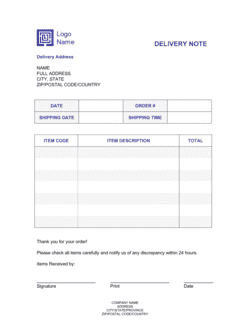
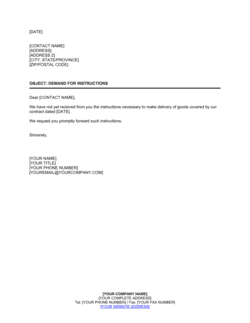
Before completing the template, locate the original contract, purchase order, or agreement that created the delivery obligation. Collect proof of non-delivery — emails, shipping records, or vendor acknowledgments confirming items were not dispatched.
💡 Attach a copy of the agreement as Exhibit A. A demand that arrives with supporting documentation is far harder to dismiss than a bare letter.
2
Enter the full legal names and addresses of both parties
Use the registered legal entity name for businesses — not a brand name or trade name. Include mailing addresses and email addresses for both the demanding party and the obligated party.
💡 Cross-reference the names against the signature block of the underlying agreement to ensure exact consistency.
3
Cite the agreement by date, type, and reference number
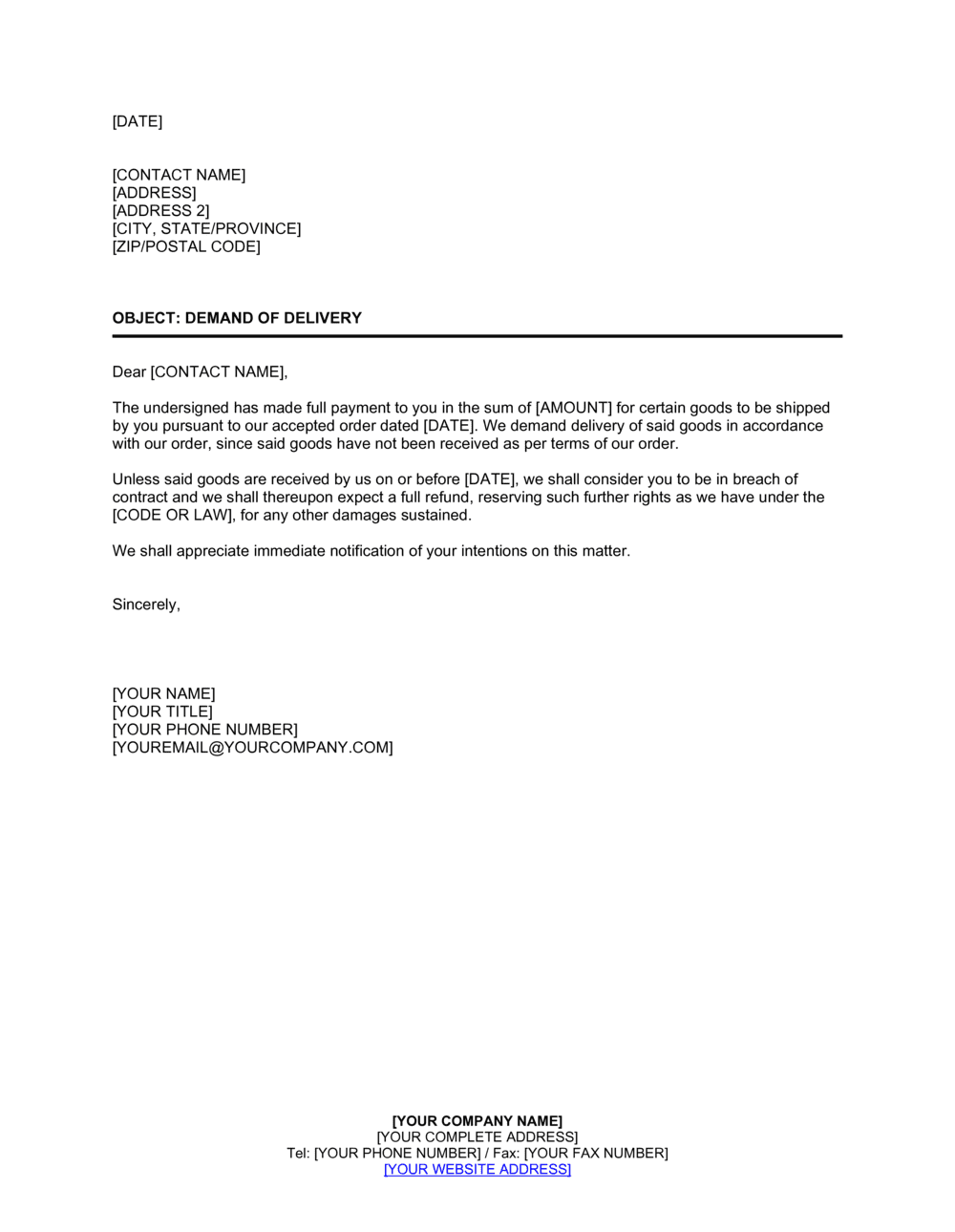
Fill in the agreement type (e.g., Supply Agreement, Purchase Order), the execution date, and the contract or PO reference number. If multiple documents govern the transaction, list all of them.
💡 Include the specific clause or section number from the agreement that imposed the delivery obligation — this pinpoints the breach and leaves less room for the recipient to claim ambiguity.
4
Describe the undelivered goods or property with precision
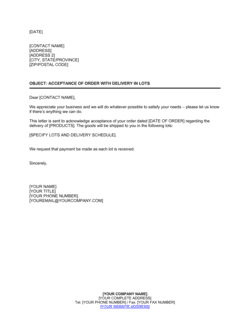
State the quantity, product description, part numbers, and any applicable specifications. If a delivery schedule was attached to the original agreement, reference it by name and attach a copy.
💡 Use the exact terminology from the original agreement or purchase order. Synonyms or paraphrasing create ambiguity the recipient can exploit.
5
Set a specific, realistic cure deadline
Enter a firm calendar date by which delivery must be made. Factor in realistic shipping timelines, especially for international goods. Business-day deadlines (e.g., 10 business days) are more defensible than short fixed windows.
💡 Review the underlying agreement for any notice or cure period it already specifies — your demand deadline should meet or exceed that contractual minimum.
6
State all remedies you are reserving
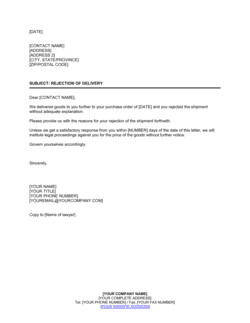
Complete the remedies clause to include cancellation, damages, specific performance, and any other remedy referenced in the agreement. Do not limit yourself to one remedy at this stage.
💡 Adding a reference to the specific damages you have already incurred — storage costs, lost sales, customer penalties — strengthens the urgency and signals you are prepared to litigate.
7
Sign and send by a traceable method
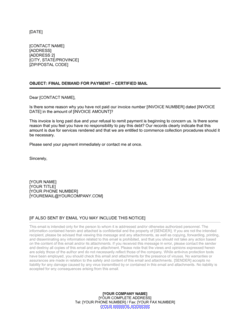
Have an authorized officer or legal representative sign and date the demand. Send by certified mail with return receipt, courier with proof of delivery, or a documented eSign platform. Keep a timestamped copy of all delivery records.
💡 Send the demand simultaneously by email and certified mail. Email establishes near-instant notice; certified mail creates the evidentiary record courts require.
8
Calendar the cure deadline and prepare next steps
Immediately after sending, calendar the cure deadline. If delivery does not occur by that date, have your next document — a notice of breach or a contract termination letter — ready to issue without delay.
💡 Delays after an expired cure deadline signal ambivalence. Acting promptly preserves your legal position and maintains negotiating pressure.