- Substituted Goods
- Goods that a seller delivers in place of originally ordered items because the original specification cannot be fulfilled.
- Conforming Goods
- Goods that exactly match the description, specification, and quality agreed to in the original purchase order or contract.
- Non-Conforming Goods
- Goods delivered that do not match the agreed specification — either the wrong item, wrong quantity, or defective quality.
- Perfect Tender Rule
- A principle in US commercial law (UCC §2-601) that allows a buyer to reject goods that fail to conform in any respect to the contract terms.
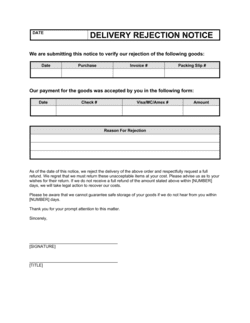
- Buyer's Right of Rejection
- The buyer's legal right to refuse delivery of goods that do not match the agreed specification, and to claim a refund or replacement.
- Material Equivalence
- A standard used to assess whether a substitute item performs the same function to the same quality level as the originally specified goods.
- UCC (Uniform Commercial Code)
- A set of standardized US commercial laws governing the sale of goods, including rules on conforming delivery, buyer remedies, and seller cure rights.
- Seller's Right to Cure
- A seller's right under UCC §2-508 to correct a defective or non-conforming delivery within the contract period, or within a reasonable additional time.
- Force Majeure
- A clause excusing a party from performance when extraordinary, unforeseeable events — supply chain collapse, natural disaster, or trade embargo — make the original delivery impossible.
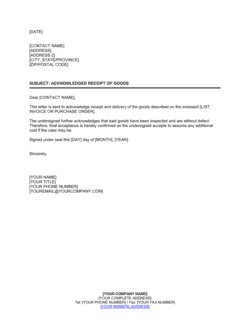
- Acceptance of Goods
- A buyer's formal or implied indication that delivered goods are satisfactory — after which the right to reject typically lapses under most commercial laws.
- Specification Sheet
- A technical document describing a product's physical dimensions, material composition, performance standards, and other measurable characteristics.