1
Identify the parties and reference the purchase order
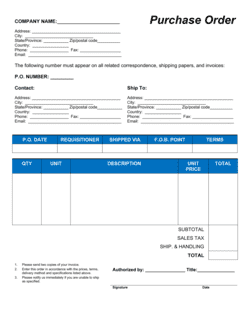
Enter both parties' full registered legal names and entity types. Reference the buyer's purchase order by number and date so there is no ambiguity about which transaction this acceptance governs.
💡 Attach the original PO as Exhibit A and include a precedence clause — e.g., 'In the event of conflict, the terms of this Agreement control' — to prevent the PO's boilerplate from overriding your acceptance terms.
2
Describe the goods with a specification reference
Name the product, total order quantity, and applicable SKU or part number. Attach a written specification sheet or quality standard as an exhibit rather than trying to capture all technical details in the body of the agreement.
💡 If the product has a regulatory compliance requirement (e.g., REACH, RoHS, FDA clearance), state the applicable standard here so conformance is a contractual obligation, not a courtesy.
3
Build the lot delivery schedule
List each lot with its quantity, delivery date or window, delivery address, and carrier or Incoterm. If delivery windows are ranges rather than fixed dates, specify whether 'time is of the essence' for each lot.
💡 Sequence lot dates to reflect your realistic production lead times plus a 5–7 day buffer. An unachievable schedule creates instant default exposure.
4
Set price, payment trigger, and late-fee terms
Enter the unit price and total contract value, specify whether payment is triggered by shipment, delivery, or buyer acceptance, and state the due date and late-fee rate for each lot's invoice.
💡 Link payment to 'delivery and acceptance' rather than 'shipment' — this protects buyers and, counterintuitively, reduces disputes for sellers by removing payment objections tied to transit damage.
5
Define the inspection window and deemed-acceptance rule
Set a fixed number of business days for the buyer to inspect each lot and submit a written non-conformance notice. State explicitly that silence within that window constitutes acceptance.
💡 Five business days is standard for most commercial goods; for complex or technical products where testing takes longer, 10–15 days is reasonable and courts will respect it.
6
Allocate risk of loss and specify title transfer
Select an Incoterm (for international shipments) or a FOB designation (for domestic US/Canada shipments) for each lot and confirm when title passes — at shipment, at delivery, or at acceptance.
💡 For high-value lots, require the seller to maintain cargo insurance through delivery and name the buyer as an additional insured on the policy.
7
Draft the default and remedies clause
Specify the cure period for late or non-conforming lots, define what level of non-performance triggers a right to cancel the entire agreement, and identify available remedies — replacement, price reduction, or damages.
💡 Mirror the UCC §2-612 'substantial impairment' standard even if you are in a non-UCC jurisdiction — it gives both parties a proportionate remedy ladder and reduces all-or-nothing disputes.
8
Execute before the first lot ships
Both parties must sign before any goods are dispatched. An unsigned acceptance may still be enforceable through conduct, but it forfeits the benefit of your specific lot schedule, inspection window, and remedy clauses.
💡 Use a timestamped e-signature platform and store the fully executed agreement with the PO and all exhibits as a single document package.