Cybersecurity and Information Protection Policy Template

Free Word download β€’ Edit online β€’ Save & share with Drive β€’ Export to PDF

3 pagesβ€’20–25 min to fillβ€’Difficulty: Standard
Learn more ↓
FreeCybersecurity and Information Protection Policy Template

At a glance

What it is
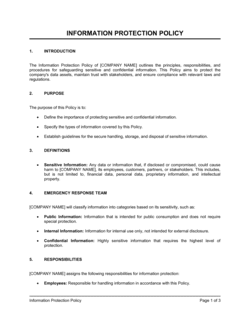
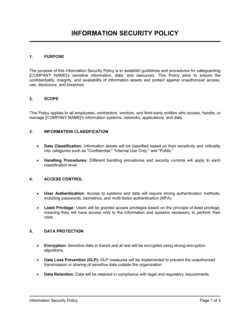
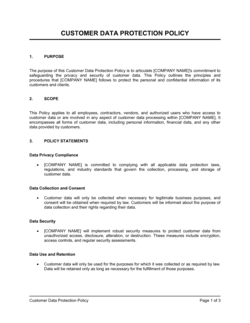
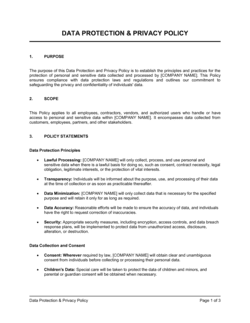
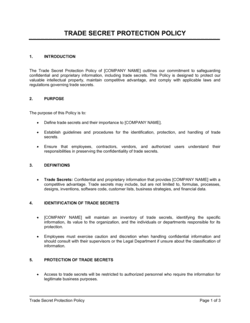
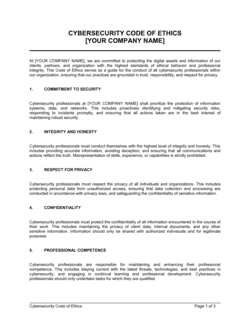
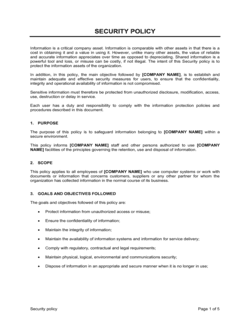
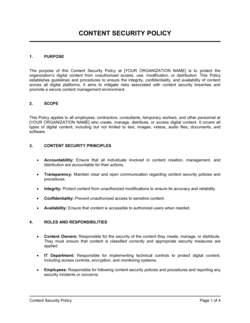
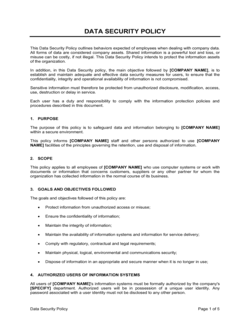
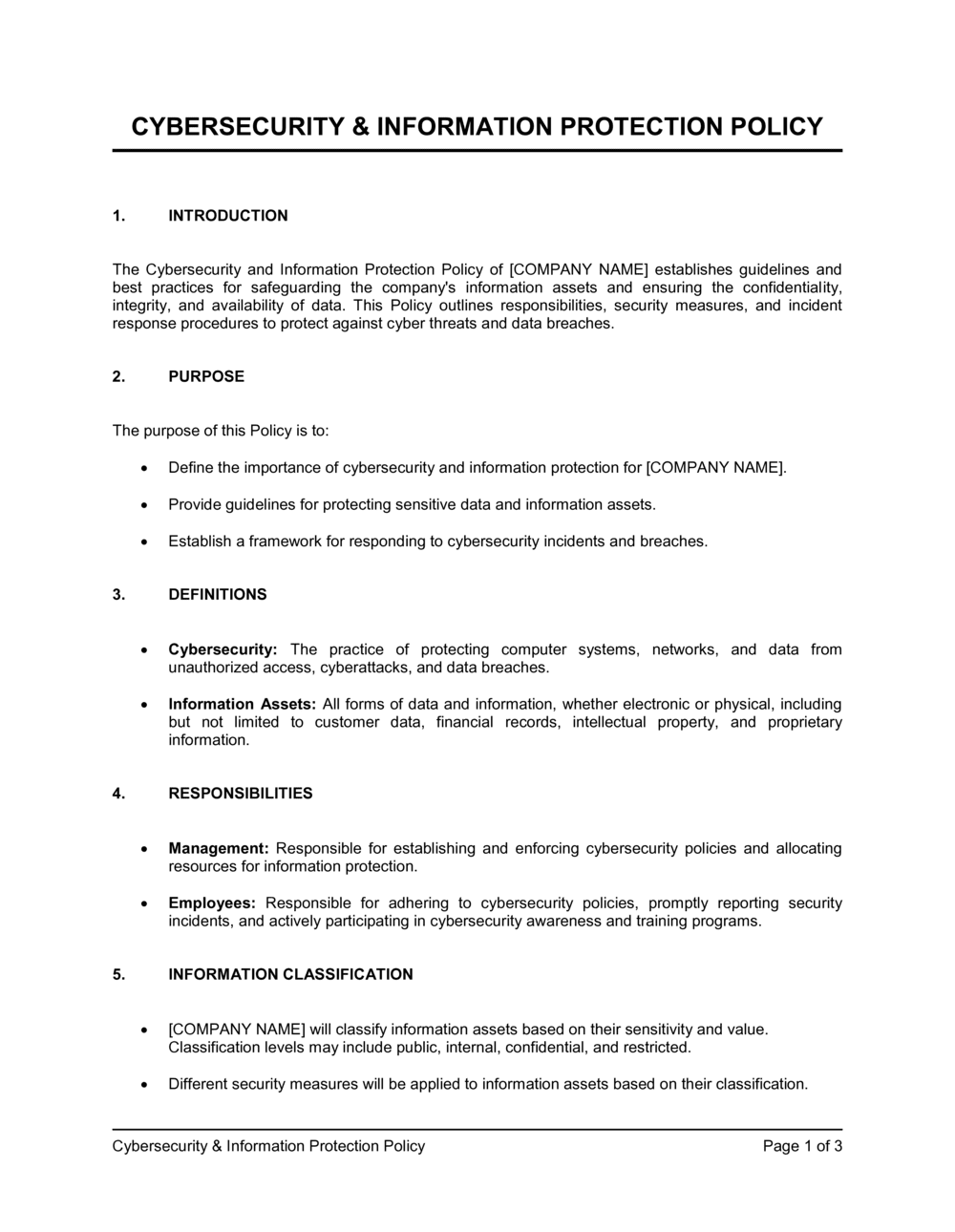
A Cybersecurity and Information Protection Policy is a formal internal document that defines how an organization identifies, classifies, protects, and responds to threats targeting its data and digital systems. This free Word download gives you a structured, editable starting point covering everything from access controls and acceptable use to incident response and employee responsibilities β€” ready to customize and distribute across your organization.
When you need it
Use it when onboarding new employees who handle sensitive data, preparing for a security audit or compliance review, or formalizing informal security practices that have grown without documentation. It is also essential when a data breach, near-miss, or new regulatory requirement forces a structured review of how your organization protects information.
What's inside
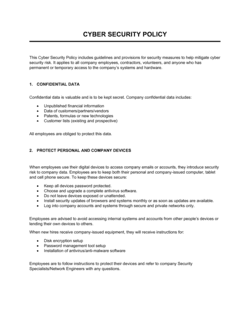
The policy covers data classification tiers, access control rules, acceptable use guidelines for devices and networks, password and authentication standards, incident response procedures, employee training obligations, and vendor and third-party risk requirements. A governance section assigns ownership of each area and establishes a review cadence.

What is a Cybersecurity and Information Protection Policy?

A Cybersecurity and Information Protection Policy is a formal internal document that establishes how an organization identifies, classifies, and protects its data and digital systems β€” and how it responds when those protections fail. It defines the rules employees, contractors, and vendors must follow when handling sensitive information, sets minimum technical controls such as authentication and encryption standards, and assigns accountability for security across the organization. Unlike a one-time security audit, a written policy creates a durable, enforceable baseline that governs daily decisions and scales as the organization grows, adds systems, or faces new threats.

Why You Need This Document

Without a written cybersecurity policy, security practices become entirely dependent on individual judgment β€” and individuals make inconsistent, often costly decisions. A single employee who shares credentials, clicks a phishing link, or stores customer data in an unsanctioned cloud service can trigger a breach that costs far more to remediate than the policy would have cost to publish. Beyond the operational risk, enterprise customers increasingly require a written policy as a condition of awarding contracts, and cyber insurers use documented controls to determine both eligibility and premium levels. Regulatory frameworks including HIPAA, GDPR, and SOC 2 treat a documented information protection policy as a baseline expectation β€” its absence during an audit signals that security is not taken seriously at a governance level. This template gives you a complete, editable starting point that covers every major section auditors and customers look for, so you can move from informal practices to documented controls in a matter of hours rather than weeks.

Which variant fits your situation?

If your situation is…Use this template
Need a brief, standalone policy covering only acceptable use of company devices and internetAcceptable Use Policy
Responding to a specific data breach and documenting the incidentIncident Response Plan
Managing security obligations with third-party vendors and suppliersVendor Security Assessment Template
Covering employee data rights and privacy obligations under GDPR or CCPAData Privacy Policy
Addressing remote work security requirements specificallyRemote Work Policy
Outlining disaster recovery and business continuity after a cyber eventBusiness Continuity Plan
Formalizing password and authentication standards as a standalone documentPassword Management Policy

Common mistakes to avoid

❌ Scoping the policy only to IT staff

Why it matters: Every employee who handles email, a laptop, or a customer record is a potential attack surface. A policy that excludes non-technical staff leaves the most exploited attack vector β€” phishing β€” unaddressed.

Fix: Explicitly scope the policy to all employees, contractors, and third parties with access to company systems or data, and require acknowledgment from each group.

❌ Publishing the policy without an employee acknowledgment process

Why it matters: Without documented acknowledgment, the organization cannot prove awareness during a regulatory investigation or litigation, and enforcement actions are far harder to sustain.

Fix: Require each employee to sign or digitally confirm receipt when the policy is first published and each time it is materially updated.

❌ Using aspirational access controls that don't match actual system configuration

Why it matters: A policy that says 'MFA is required for all Confidential systems' while several systems do not support MFA creates an immediate compliance gap and a false sense of security.

Fix: Audit your current authentication and permission configurations before writing the access control section, and note any remediation timelines for gaps you cannot close immediately.

❌ Omitting a specific incident reporting channel

Why it matters: Employees who notice a phishing email or accidental data exposure but don't know who to tell will say nothing. Unreported incidents escalate into breaches that would have been containable.

Fix: Provide a named email address, helpdesk category, or phone number in the policy and verify it works before publishing.

❌ Never updating the policy after initial publication

Why it matters: A policy that was accurate in 2022 may not cover cloud storage, AI tools, remote work, or new regulatory requirements added since then β€” creating real compliance gaps while appearing to be covered.

Fix: Set a mandatory annual review date in the document header and assign a named role to own the review. Update immediately following any material security incident or regulatory change.

❌ Treating vendor security as a one-time onboarding checkbox

Why it matters: A vendor who passed a security questionnaire in 2021 may have changed ownership, suffered a breach, or dropped a certification since then β€” and your policy still treats them as approved.

Fix: Build an annual vendor review cadence into the policy, tier vendors by data access risk, and specify which tier requires re-assessment and at what frequency.

The 9 key sections, explained

Purpose, Scope, and Governance

Data Classification and Handling

Access Control and Authentication

Acceptable Use of Devices and Networks

Password and Credential Management

Incident Detection, Reporting, and Response

Third-Party and Vendor Security

Security Awareness Training

Policy Compliance, Enforcement, and Review

How to fill it out

  1. 1

    Identify the policy owner and governance structure

    Name the individual role β€” IT Manager, CISO, or Operations Director β€” responsible for maintaining the policy. Define who approves changes and who enforces compliance.

    πŸ’‘ Assign ownership to a named role, not an individual's name, so the policy stays valid through staff changes.

  2. 2

    Define your data classification tiers

    Decide on three to four data tiers (e.g., public, internal, confidential, restricted) and write one concrete handling rule for each β€” covering storage, transmission, and disposal.

    πŸ’‘ Map your most sensitive data assets β€” customer PII, financial records, source code β€” to tiers first, then write rules that protect those assets specifically.

  3. 3

    Complete the access control section with current role permissions

    List which roles access which data tiers and what authentication method each requires. Define the process for granting access to new hires and revoking it at separation.

    πŸ’‘ Cross-reference your current Active Directory or identity provider groups to make the access rules reflect actual system configuration, not aspirational design.

  4. 4

    Set password and authentication standards

    Enter your minimum password length, complexity rules, and the approved password manager. State MFA requirements by system tier.

    πŸ’‘ Align password standards with NIST SP 800-63B guidelines β€” length over complexity, no forced rotation without compromise evidence β€” to avoid creating counterproductive security theater.

  5. 5

    Document the incident reporting channel and response steps

    Provide a specific email address or helpdesk ticket category for reporting incidents. Outline the four to six steps the IT team takes from initial report through post-incident review.

    πŸ’‘ Test the reporting channel quarterly with a simulated phishing email β€” if nobody uses it, the channel is either unknown or employees fear consequences for reporting.

  6. 6

    Add vendor security requirements and tier your suppliers

    Create two to three vendor risk tiers based on data access level. Assign requirements (e.g., SOC 2, DPA, security questionnaire) by tier rather than applying the same checklist to all vendors.

    πŸ’‘ A vendor risk register listing each supplier, their tier, and the date of their last security review makes annual compliance reviews far faster.

  7. 7

    Schedule training and set completion tracking

    Enter the training completion deadline for new hires, the annual refresh date, and the system used to track completions. Name the person responsible for following up on incomplete records.

    πŸ’‘ Pair written policy acknowledgment with the completion of the first training module β€” combining them into one workflow eliminates a common administrative gap.

  8. 8

    Set the review date and distribute for acknowledgment

    Enter the next mandatory review date (no more than 12 months from publication) and distribute the policy to all employees with a signed or digitally confirmed acknowledgment requirement.

    πŸ’‘ Version-control the document with a date and version number in the header so you can demonstrate to auditors exactly which version was in effect at any given time.

Frequently asked questions

What is a cybersecurity and information protection policy?

A cybersecurity and information protection policy is a formal internal document that defines how an organization protects its data and digital systems. It covers data classification, access controls, acceptable use, password standards, incident response, employee training obligations, and vendor security requirements. It functions as the governing document for day-to-day security decisions and as evidence of due diligence during audits, customer reviews, and regulatory inquiries.

Who needs a cybersecurity policy?

Any organization that stores, processes, or transmits sensitive data β€” customer records, financial information, employee data, or proprietary business information β€” needs a written cybersecurity policy. This includes small businesses, not just enterprises. Many cyber insurance providers, enterprise customers, and regulatory frameworks such as SOC 2, HIPAA, and GDPR explicitly require a documented policy as a condition of coverage or compliance.

What should a cybersecurity policy include?

At minimum: purpose and scope, data classification tiers with handling rules, access control and authentication requirements, acceptable use rules for devices and networks, password and credential management standards, an incident reporting and response process, third-party and vendor security requirements, a security training mandate, and a compliance and enforcement section. Each section should name a responsible role and include a review schedule.

How often should a cybersecurity policy be updated?

At minimum annually. Updates should also be triggered by any material security incident, a significant change in technology or work practices (such as adopting a new cloud platform or shifting to remote work), or a new regulatory requirement affecting data handling. Version-control the document with a date and version number so you can demonstrate to auditors which version was in effect at any given time.

Does a small business need a cybersecurity policy?

Yes. Small businesses are increasingly targeted precisely because attackers assume their security practices are less mature. Beyond the risk itself, many enterprise clients require vendors to provide a written security policy before awarding contracts, and cyber insurers use policy documentation as a factor in determining coverage eligibility and premiums. A clear policy also sets expectations for employees who might otherwise make well-intentioned but risky decisions.

What is the difference between a cybersecurity policy and an acceptable use policy?

An acceptable use policy (AUP) is a narrower document focused specifically on permitted and prohibited uses of company devices, networks, and software. A cybersecurity and information protection policy is the broader governing document that includes data classification, access controls, incident response, vendor risk, and training β€” of which acceptable use is just one section. Organizations typically maintain both, with the AUP referenced as a subsection or appendix of the broader policy.

How do I get employees to actually follow the cybersecurity policy?

Three practices consistently improve compliance: requiring a signed acknowledgment so employees know they have read it, pairing the policy with annual training that includes realistic phishing simulations, and keeping the policy readable β€” a 20-page document filled with technical jargon will not be read. Enforcement also matters: if violations have no documented consequences, the policy signals that security is optional.

Is a cybersecurity policy the same as an IT security policy?

The terms are often used interchangeably, but IT security policy sometimes refers more narrowly to technical system and network controls, while a cybersecurity and information protection policy typically covers the broader human, process, and vendor dimensions as well. For compliance and audit purposes, the broader scope is generally expected β€” a policy limited to technical controls leaves employee behavior and third-party risk undocumented.

What frameworks should inform a cybersecurity policy?

The most widely referenced frameworks are NIST Cybersecurity Framework (CSF), ISO/IEC 27001, CIS Controls, and SOC 2 Trust Services Criteria. HIPAA and GDPR impose specific information protection requirements for healthcare and organizations handling EU personal data respectively. You do not need to certify against these frameworks to use them β€” aligning your policy to one or two relevant frameworks makes it significantly easier to demonstrate compliance during audits.

How this compares to alternatives

vs Acceptable Use Policy

An acceptable use policy governs only how employees may use company devices, networks, and software. A cybersecurity and information protection policy is the broader governing document that includes acceptable use as one section alongside data classification, incident response, vendor risk, and training. Start with the full policy and reference the AUP within it rather than treating them as alternatives.

vs Data Privacy Policy

A data privacy policy addresses how the organization collects, processes, and discloses personal data β€” primarily an external-facing document for customers and regulators. A cybersecurity policy is an internal operational document governing how employees and systems protect all company data. Both are needed; they serve different audiences and address different compliance obligations.

vs Incident Response Plan

An incident response plan is a tactical step-by-step playbook for what to do when a security event occurs β€” roles, escalation paths, containment steps, and communication templates. A cybersecurity policy is the strategic governance document that mandates the existence and use of an incident response plan. The policy sets the requirement; the plan delivers the operational detail.

vs Business Continuity Plan

A business continuity plan covers how the organization maintains or restores operations after any major disruption β€” including but not limited to cyber events. A cybersecurity policy focuses specifically on preventing and responding to information security threats. After a ransomware attack, for example, the cybersecurity policy governs the security response while the business continuity plan governs operational recovery.

Industry-specific considerations

SaaS / Technology

SOC 2 Type II audit readiness, source code access controls, cloud infrastructure classification, and security review requirements for third-party API integrations.

Healthcare

HIPAA Security Rule alignment, PHI data classification and encryption requirements, workforce training mandates, and covered entity and business associate obligations.

Financial Services

PCI DSS cardholder data handling, strict access logging and audit trails, enhanced vendor due diligence for fintech integrations, and regulatory exam documentation.

Professional Services

Client confidentiality obligations, matter-level data segregation, remote access controls for consultants and lawyers, and breach notification procedures tied to client contracts.

Template vs pro β€” what fits your needs?

PathBest forCostTime
Use the templateSmall and mid-sized businesses formalizing security practices, meeting cyber insurance requirements, or responding to enterprise customer security questionnairesFree2–4 hours to customize and distribute
Template + professional reviewOrganizations preparing for SOC 2, HIPAA, or ISO 27001 audits, or operating in regulated industries where a gap analysis is warranted$500–$2,500 for an IT security consultant or vCISO review session1–2 weeks
Custom draftedEnterprises with complex multi-cloud environments, M&A integration security work, or organizations under active regulatory examination$5,000–$20,000+ for a full security program assessment and custom policy suite4–8 weeks

Glossary

Data Classification
A system that assigns sensitivity tiers β€” such as public, internal, confidential, and restricted β€” to data assets so that appropriate controls can be applied to each tier.
Access Control
Rules and technical mechanisms that restrict who can view, modify, or transmit specific data or systems, typically enforced through role-based permissions.
Multi-Factor Authentication (MFA)
A login method requiring two or more verification factors β€” such as a password plus a one-time code β€” to reduce the risk of unauthorized access from stolen credentials.
Incident Response
A documented set of steps an organization follows when a security event β€” breach, ransomware, phishing attack β€” is detected, from initial triage through containment and recovery.
Acceptable Use Policy (AUP)
A subset policy defining the permitted and prohibited ways employees may use company-owned devices, networks, and software.
Least Privilege Principle
A security design rule stating that users and systems should have only the minimum level of access necessary to perform their assigned function.
Phishing
A social engineering attack delivered via email or messaging that tricks recipients into revealing credentials, clicking malicious links, or transferring funds.
Encryption
The process of encoding data so that only authorized parties with the correct decryption key can read it, protecting information at rest and in transit.
Patch Management
The process of regularly applying security updates to operating systems, applications, and firmware to close known vulnerabilities before attackers can exploit them.
Third-Party Risk
The security exposure introduced when vendors, contractors, or partners have access to your systems or data and their own security practices are outside your direct control.
Security Awareness Training
Periodic instruction for employees covering how to identify threats such as phishing, how to handle sensitive data, and what to do when a security incident is suspected.
Data Breach
An incident in which sensitive, protected, or confidential data is accessed, disclosed, or stolen by an unauthorized party, triggering notification obligations in most jurisdictions.

Part of your Business Operating System

This document is one of 3,000+ business & legal templates included in Business in a Box.

  • Fill-in-the-blanks β€” ready in minutes
  • 100% customizable Word document
  • Compatible with all office suites
  • Export to PDF and share electronically

Create your document in 3 simple steps.

From template to signed document β€” all inside one Business Operating System.
1
Download or open template

Access over 3,000+ business and legal templates for any business task, project or initiative.

2
Edit and fill in the blanks with AI

Customize your ready-made business document template and save it in the cloud.

3
Save, Share, Send, Sign

Share your files and folders with your team. Create a space of seamless collaboration.

Save time, save money, and create top-quality documents.

β˜…β˜…β˜…β˜…β˜…

"Fantastic value! I'm not sure how I'd do without it. It's worth its weight in gold and paid back for itself many times."

Managing Director Β· Mall Farm
Robert Whalley
Managing Director, Mall Farm Proprietary Limited
β˜…β˜…β˜…β˜…β˜…

"I have been using Business in a Box for years. It has been the most useful source of templates I have encountered. I recommend it to anyone."

Business Owner Β· 4+ years
Dr Michael John Freestone
Business Owner
β˜…β˜…β˜…β˜…β˜…

"It has been a life saver so many times I have lost count. Business in a Box has saved me so much time and as you know, time is money."

Owner Β· Upstate Web
David G. Moore Jr.
Owner, Upstate Web

Run your business with a system β€” not scattered tools

Stop downloading documents. Start operating with clarity. Business in a Box gives you the Business Operating System used by over 250,000 companies worldwide to structure, run, and grow their business.

Start freeΒ Β·Β No credit card required