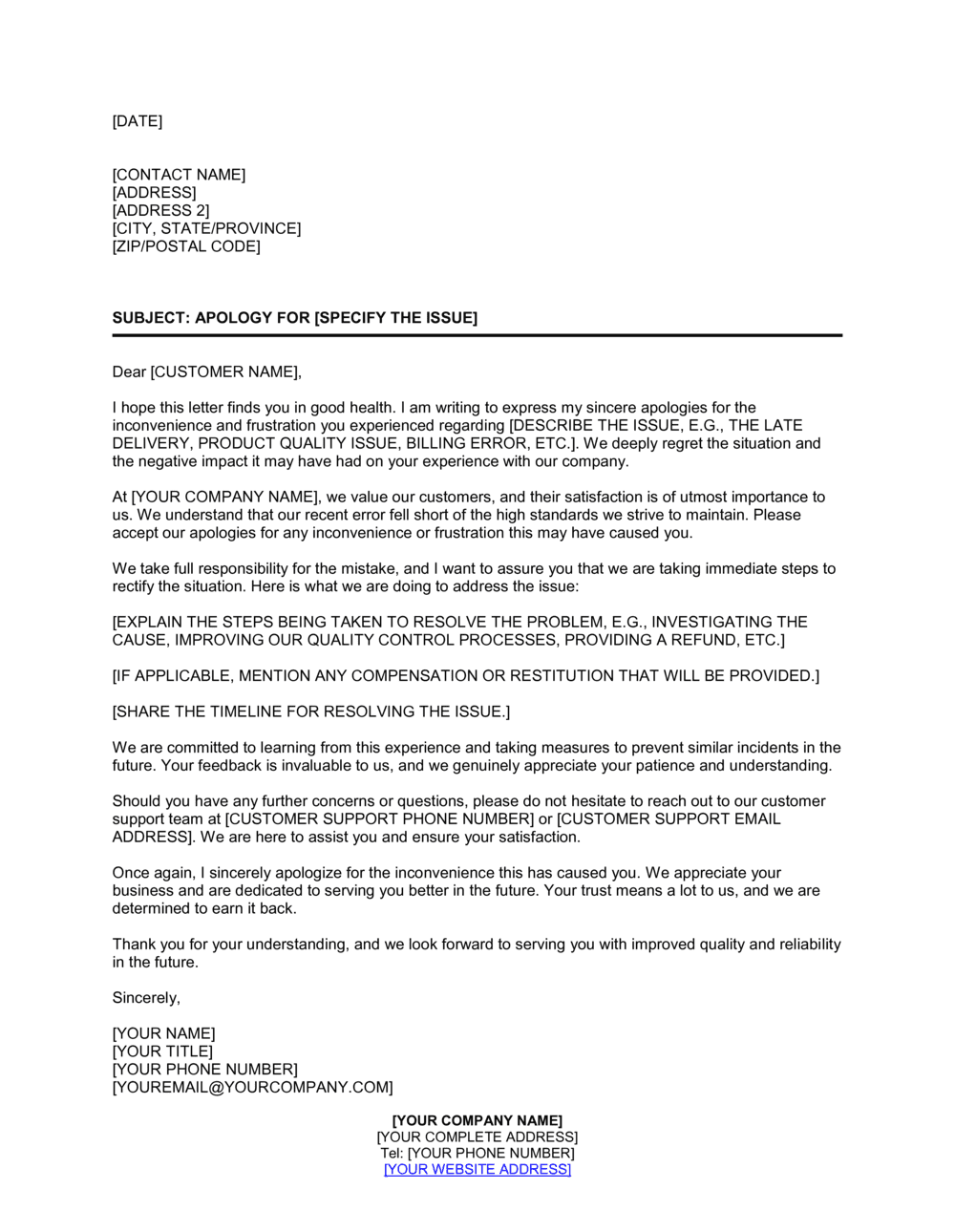
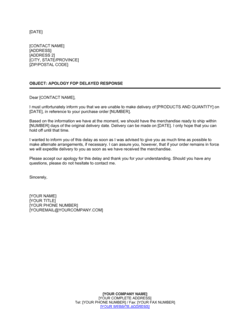
Customer Apology Letter Template

Free Word download β€’ Edit online β€’ Save & share with Drive β€’ Export to PDF

1 pageβ€’15–20 min to fillβ€’Difficulty: Standard
Learn more ↓
FreeCustomer Apology Letter Template

At a glance

What it is
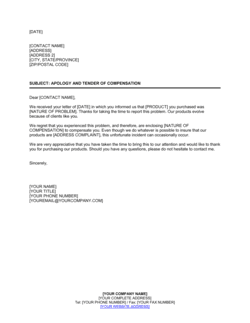
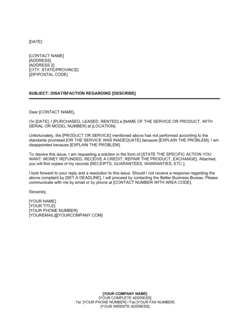
A Customer Apology Letter is a formal written communication from a business to a customer acknowledging a service failure, product defect, billing error, or other negative experience and offering a sincere response. This free Word download gives you a professionally structured template you can edit online and send by email or post in minutes.
When you need it
Use it whenever a customer has experienced a problem β€” a delayed shipment, a billing mistake, a defective product, or poor service β€” and a direct, written acknowledgment is needed to preserve the relationship and reduce the risk of escalation or lost business.
What's inside
A formal greeting, a clear acknowledgment of the incident, a direct apology without deflection, an explanation of what went wrong, corrective action taken or planned, any remedy or goodwill gesture offered, and a closing commitment to better service.

What is a Customer Apology Letter?

A Customer Apology Letter is a formal written communication from a business to a customer that acknowledges a specific failure β€” a delayed shipment, billing error, defective product, or poor service experience β€” and offers a direct, unconditional apology alongside a concrete remedy. Unlike a verbal apology or a brief email reply, a properly structured apology letter creates a written record of how the complaint was handled, demonstrates accountability at a senior level, and gives the customer a clear picture of what corrective action has been taken. When written well, it functions as a service recovery tool that turns a dissatisfied customer into a retained one.

Why You Need This Document

An unacknowledged complaint is one of the fastest paths to losing a customer permanently. Research consistently shows that customers who receive a prompt, sincere apology after a service failure are significantly more likely to continue doing business with the company than those who receive no response at all β€” even if the underlying problem is not fully resolved. Without a written apology, you leave the customer without acknowledgment, your team without a process for handling escalations consistently, and your business without a documented record if the complaint escalates to a chargeback, regulatory query, or legal dispute. This template gives you a professional, ready-to-personalize letter that takes 15 minutes to complete β€” and that can make the difference between a retained customer and a lost one.

Which variant fits your situation?

If your situation is…Use this template
Apologizing for a delayed shipment or delivery failureApology Letter for Delayed Delivery
Responding to a formal written customer complaintResponse to Customer Complaint Letter
Addressing a billing or invoice errorBilling Error Apology Letter
Notifying customers of a service outage or system disruptionService Disruption Notice
Apologizing for a defective or incorrect productProduct Recall or Defect Apology Letter
Handling a B2B client relationship repair after a missed deadlineBusiness Apology Letter (B2B)
Issuing a goodwill credit or refund alongside an apologyCredit Note

Common mistakes to avoid

❌ Using a conditional or hedged apology

Why it matters: Phrases like 'We are sorry if you were inconvenienced' imply doubt about whether the problem was real, which escalates frustration rather than resolving it.

Fix: State the apology directly and unconditionally: 'We are sorry for [specific failure].' Name the problem; do not qualify it.

❌ Delaying the letter by more than 48 hours after the complaint

Why it matters: Customer satisfaction with complaint resolution drops sharply after 48 hours. A week-old apology is perceived as an afterthought rather than a genuine response.

Fix: Use a template to draft and send within 24 hours of receiving the complaint. Speed of response is weighted as heavily as the content of the apology.

❌ Offering no concrete remedy or corrective action

Why it matters: An apology with no proposed resolution leaves the customer in the same position they were in before β€” and confirms their suspicion that the complaint has no consequence.

Fix: Identify at least one specific corrective action already taken and one remedy offered, even if further investigation is ongoing.

❌ Signing off from a generic team address instead of a named individual

Why it matters: Letters signed by 'The Customer Service Team' or 'Customer Relations' read as automated and signal no personal accountability for the outcome.

Fix: Always sign with a named person, their title, and direct contact details. For significant failures, a letter from a manager or owner carries substantially more weight.

The 8 key clauses, explained

Sender and recipient details

In plain language: Business name, address, date, and the customer's full name and contact address β€” establishes a formal written record.

Sample language
[COMPANY NAME] | [COMPANY ADDRESS] | [DATE] | [CUSTOMER FULL NAME] | [CUSTOMER ADDRESS]

Common mistake: Addressing the letter generically to 'Dear Customer' when the customer's name is known. Impersonal salutations signal low effort and worsen the customer's impression.

Subject line

In plain language: A concise reference line identifying the nature of the communication, helping the recipient and any internal file system locate the correspondence.

Sample language
Re: Apology Regarding Your Order #[ORDER NUMBER] / Your Experience on [DATE]

Common mistake: Omitting the subject line entirely. Without it, the letter lacks a clear reference point, making follow-up or escalation harder to track.

Opening acknowledgment

In plain language: The first paragraph directly acknowledges the specific incident or problem the customer experienced, demonstrating the business has listened.

Sample language
We are writing to acknowledge the difficulties you experienced with [SPECIFIC ISSUE] on [DATE], and we sincerely regret the inconvenience this has caused you.

Common mistake: Opening with a generic 'Thank you for contacting us' before addressing the complaint. It signals the customer's problem is secondary to company courtesy.

Direct apology

In plain language: A clear, unconditional statement of apology β€” without deflection, passive voice, or qualifications that shift blame to the customer or external factors.

Sample language
We are truly sorry for [SPECIFIC FAILURE]. This fell below the standard of service you deserve and that we hold ourselves to.

Common mistake: Using the passive 'Mistakes were made' or the conditional 'We are sorry if you were inconvenienced.' Both read as evasive and often escalate rather than de-escalate a complaint.

Explanation of what went wrong

In plain language: A brief, honest account of the root cause β€” enough to show the business understands the problem, without over-explaining in a way that sounds like excuse-making.

Sample language
This occurred because [BRIEF ROOT CAUSE EXPLANATION]. We take full responsibility and recognize this is not acceptable.

Common mistake: Providing a lengthy technical or operational explanation that reads as deflection. Two to three sentences identifying the cause is sufficient; detail beyond that shifts focus from the customer to the company.

Corrective action taken or planned

In plain language: Tells the customer specifically what the business has already done or will do to fix the problem and prevent recurrence.

Sample language
We have [CORRECTIVE ACTION TAKEN, e.g., 'issued a full replacement shipment dispatched on DATE'] and have implemented [PREVENTIVE MEASURE] to ensure this does not happen again.

Common mistake: Promising to 'look into it' without specifying any concrete action or timeline. Vague commitments reduce customer trust rather than restoring it.

Remedy or goodwill gesture

In plain language: An offer of compensation, credit, refund, or other tangible gesture proportionate to the impact of the failure β€” demonstrates the business values the customer relationship.

Sample language
As a gesture of goodwill, we would like to offer you [SPECIFIC REMEDY, e.g., 'a full refund of $[AMOUNT]' / 'a [X]% discount on your next order' / 'a complimentary [PRODUCT/SERVICE]'].

Common mistake: Offering a token gesture (e.g., a 5% discount after a significant service failure) that reads as dismissive. The remedy should be proportionate to the severity of the customer's experience.

Closing commitment and contact details

In plain language: Reaffirms the business's commitment to the customer, provides a direct contact for follow-up, and closes with a professional sign-off.

Sample language
We value your continued trust in [COMPANY NAME] and are committed to making this right. Please do not hesitate to contact [CONTACT NAME] directly at [EMAIL] or [PHONE NUMBER] if you have any further questions. Sincerely, [NAME] | [TITLE] | [COMPANY NAME]

Common mistake: Closing with only a generic customer service email address. Providing a named contact with direct details signals personal accountability and makes follow-up far more likely to succeed.

How to fill it out

  1. 1

    Enter sender and recipient details

    Add your company name, address, and the date at the top. Enter the customer's full name and address to create a formal written record.

    πŸ’‘ Use the customer's name exactly as it appears on their account or order β€” mismatches feel careless.

  2. 2

    Add a specific subject line

    Reference the order number, account number, or date of the incident so the customer and your records team can match the letter to the complaint immediately.

    πŸ’‘ If the complaint was escalated through a ticket system, include the ticket ID in the subject line to close the loop.

  3. 3

    Write the opening acknowledgment

    Name the specific problem in the first sentence β€” delayed delivery, billing error, product defect, or service failure. Do not open with pleasantries before addressing the issue.

    πŸ’‘ Read the customer's original complaint before writing this paragraph. Mirror their language so they know you understood the actual problem.

  4. 4

    State the apology directly and unconditionally

    Use plain, active language: 'We are sorry for X.' Avoid hedging phrases like 'if you felt' or 'to the extent that.' These invalidate the apology.

    πŸ’‘ One clear sentence of apology is more effective than two paragraphs of softening language.

  5. 5

    Explain the root cause briefly

    Provide two to three sentences identifying what caused the failure. Be honest without being defensive β€” the goal is to show you understand what went wrong.

    πŸ’‘ If the root cause investigation is still ongoing, say so and give a date by which you will follow up with findings.

  6. 6

    State the corrective action with specifics

    Describe what you have already done and what additional steps you are taking. Include dates, names, or measurable outcomes where possible.

    πŸ’‘ Past-tense actions ('We have already dispatched a replacement') are more reassuring than future promises ('We will look into this').

  7. 7

    Offer a proportionate remedy

    Choose a goodwill gesture matched to the severity of the failure β€” refund, credit, replacement, upgrade, or complimentary service. State the exact value or nature of the offer.

    πŸ’‘ If the situation is legally sensitive, add 'without prejudice' to the subject line and consult your legal or compliance team before offering financial compensation.

  8. 8

    Close with a named contact and sign off

    End with a reaffirmation of the relationship, a named contact person with direct email and phone, and a professional signature block including the sender's title.

    πŸ’‘ Senior-signed letters β€” from a manager, director, or owner rather than a generic 'Customer Service Team' β€” have measurably higher satisfaction outcomes.

Frequently asked questions

What is a customer apology letter?

A customer apology letter is a formal written communication from a business to a customer acknowledging a service failure, product defect, billing error, or other negative experience. It expresses a direct apology, explains what went wrong, describes corrective action, and typically offers a remedy. It functions as both a relationship-repair tool and a written record of how the complaint was handled.

When should I send a customer apology letter?

Send it within 24 to 48 hours of receiving a complaint or identifying a failure that affected the customer. Any delay beyond 48 hours significantly reduces its effectiveness. Use it whenever a verbal or frontline response has failed to resolve the issue, the failure was significant enough to risk losing the customer, or you need a written record for compliance or dispute purposes.

What should a customer apology letter include?

At minimum: the customer's name and contact details, a specific subject line, a direct acknowledgment of the incident, an unconditional apology, a brief explanation of the root cause, the corrective action taken or planned, a proportionate remedy or goodwill gesture, and a closing with a named contact for follow-up. Missing any of these weakens the letter's effectiveness.

Should a customer apology letter admit fault?

A clear acknowledgment of the failure and an unconditional apology are generally more effective at retaining the customer than hedged language. However, in situations where legal liability is a concern β€” product recalls, personal injury, financial loss β€” mark the letter 'without prejudice' and consult your legal team before sending. For routine service failures, direct accountability is the right approach.

How formal should a customer apology letter be?

Match the formality to your business's communication style and the severity of the failure. B2B relationships and major service failures typically call for a formal letter on company letterhead signed by a senior manager. For lower-stakes B2C complaints, a professionally written email in a warm but direct tone is usually appropriate. Avoid being so formal that the letter reads as a legal document, or so casual that it seems dismissive.

Can I use the same apology letter for multiple customers?

A template is a valid starting point, but every letter should be personalized with the customer's name, the specific incident, and the individual remedy offered. Customers who receive a clearly templated response to a specific complaint often feel dismissed rather than heard. Merge fields for name, order number, date, and remedy take under two minutes to personalize and significantly improve outcomes.

Does sending a customer apology letter expose my business to legal liability?

A standard apology for a service failure does not typically create legal liability. In most jurisdictions, expressions of regret and apology in customer service contexts are not treated as admissions of legal fault. Where financial compensation, personal injury, product recalls, or regulatory matters are involved, mark the correspondence 'without prejudice' and seek legal advice before sending.

How is a customer apology letter different from a complaint response letter?

A complaint response letter formally addresses a written complaint, often following a structured dispute resolution process β€” it may include a decision, a reference to company policy, or next steps in a formal escalation procedure. A customer apology letter is narrower: its primary purpose is to acknowledge a failure and apologize sincerely, with a remedy. Many situations call for both, with the apology letter sent first and the formal response to follow.

How this compares to alternatives

vs Response to complaint letter

A response to complaint letter follows a formal complaint and typically outlines a decision, policy reference, or escalation path. A customer apology letter is narrower β€” its primary goal is sincere acknowledgment and relationship repair, not procedural resolution. Many situations call for an apology letter first and a formal complaint response to follow if the issue is not resolved.

vs Customer satisfaction survey

A customer satisfaction survey gathers feedback proactively to identify potential issues before they escalate to formal complaints. A customer apology letter is reactive β€” sent after a failure has already occurred. Both serve customer retention, but at different stages of the experience.

vs Credit note

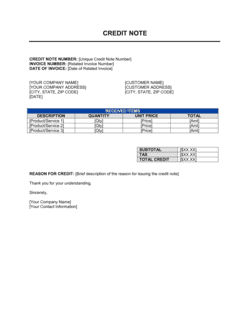
A credit note is a financial document that reduces or cancels a prior invoice β€” it is the accounting mechanism for a refund or billing correction. A customer apology letter is the relationship communication that accompanies or precedes the credit note. They address the same incident from different angles and are often sent together.

vs Customer termination letter

A customer termination letter ends a service relationship. A customer apology letter is the opposite β€” it is sent specifically to preserve the relationship after a failure. If an apology letter and corrective action fail to resolve the situation, a termination letter may follow, but they serve fundamentally different purposes.

Industry-specific considerations

Retail and E-commerce

Shipping delays, damaged goods, and fulfillment errors are the most frequent triggers β€” speed of response is the single biggest factor in retaining the customer.

Financial Services

Billing errors, incorrect charges, and account access failures require careful language reviewed for regulatory compliance before sending.

Hospitality and Travel

Room, booking, or experience failures that are raised post-stay require an apology letter that reinforces brand trust and typically includes a loyalty credit or future-stay offer.

Professional Services

Missed deadlines, deliverable errors, and billing disputes in B2B engagements require a senior-signed letter that directly addresses the impact on the client's business.

Template vs pro β€” what fits your needs?

PathBest forCostTime
Use the templateAny business handling routine customer complaints, service errors, or fulfillment failuresFree10–15 minutes per letter
Template + professional reviewComplaints involving financial compensation, regulated industries, or potential reputational exposure$100–$300 for a legal or PR reviewSame day to 24 hours
Custom draftedProduct recalls, class-action exposure, regulatory investigations, or high-profile brand incidents$500–$2,000+ for legal and communications counsel1–3 days

Glossary

Goodwill Gesture
A voluntary offer β€” such as a discount, refund, or free product β€” made by a business to a customer to compensate for a negative experience, without admitting legal liability.
Escalation
The process by which a customer complaint moves from frontline staff to a supervisor, manager, or formal written channel because it has not been resolved satisfactorily.
Root Cause
The underlying reason a service failure or error occurred, as distinct from the visible symptom the customer experienced.
Corrective Action
A specific step a business takes to fix the immediate problem and prevent it from recurring β€” typically disclosed in the apology letter to demonstrate accountability.
Tone of Voice
The personality and manner conveyed through word choice and sentence structure in written communications β€” in an apology letter, professional warmth is more effective than formal distance or casual informality.
Service Recovery
The process of turning a negative customer experience into a positive one through prompt acknowledgment, apology, and a meaningful remedy.
Churn
The rate at which customers stop doing business with a company β€” unaddressed complaints are a leading driver of preventable churn.
Net Promoter Score (NPS)
A measure of customer loyalty based on how likely customers are to recommend a business β€” service recovery after a complaint can significantly improve NPS when handled well.
Without Prejudice
A legal phrase sometimes added to sensitive apology communications to indicate the letter cannot be used as an admission of liability in legal proceedings.

Part of your Business Operating System

This document is one of 3,000+ business & legal templates included in Business in a Box.

  • Fill-in-the-blanks β€” ready in minutes
  • 100% customizable Word document
  • Compatible with all office suites
  • Export to PDF and share electronically

Create your document in 3 simple steps.

From template to signed document β€” all inside one Business Operating System.
1
Download or open template

Access over 3,000+ business and legal templates for any business task, project or initiative.

2
Edit and fill in the blanks with AI

Customize your ready-made business document template and save it in the cloud.

3
Save, Share, Send, Sign

Share your files and folders with your team. Create a space of seamless collaboration.

Save time, save money, and create top-quality documents.

β˜…β˜…β˜…β˜…β˜…

"Fantastic value! I'm not sure how I'd do without it. It's worth its weight in gold and paid back for itself many times."

Managing Director Β· Mall Farm
Robert Whalley
Managing Director, Mall Farm Proprietary Limited
β˜…β˜…β˜…β˜…β˜…

"I have been using Business in a Box for years. It has been the most useful source of templates I have encountered. I recommend it to anyone."

Business Owner Β· 4+ years
Dr Michael John Freestone
Business Owner
β˜…β˜…β˜…β˜…β˜…

"It has been a life saver so many times I have lost count. Business in a Box has saved me so much time and as you know, time is money."

Owner Β· Upstate Web
David G. Moore Jr.
Owner, Upstate Web

Run your business with a system β€” not scattered tools

Stop downloading documents. Start operating with clarity. Business in a Box gives you the Business Operating System used by over 250,000 companies worldwide to structure, run, and grow their business.

Free Forever PlanΒ Β·Β No credit card required