Apology and Tender of Compensation Template

Free Word download β€’ Edit online β€’ Save & share with Drive β€’ Export to PDF

1 pageβ€’15–20 min to fillβ€’Difficulty: Standard
Learn more ↓
FreeApology and Tender of Compensation Template

At a glance

What it is
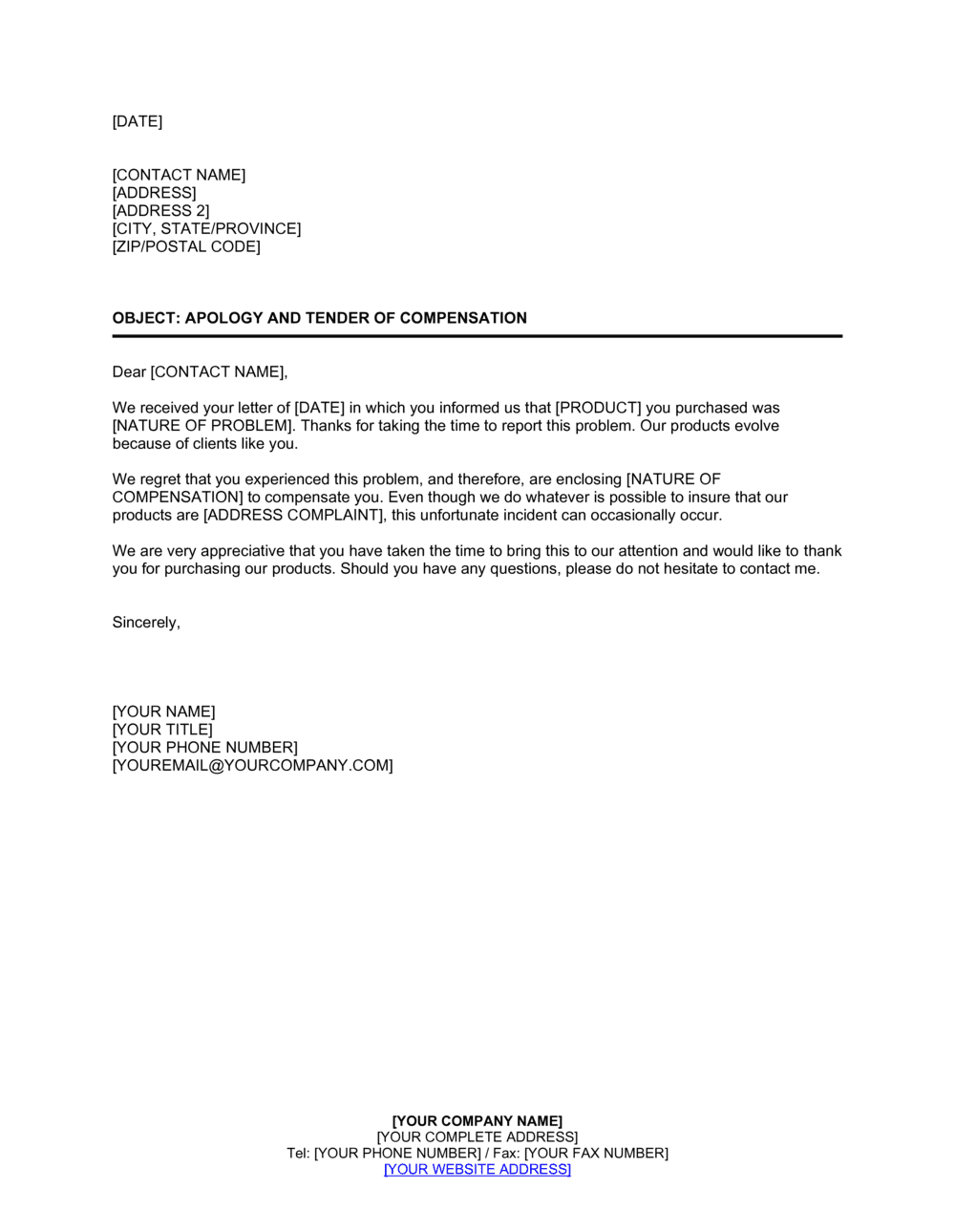
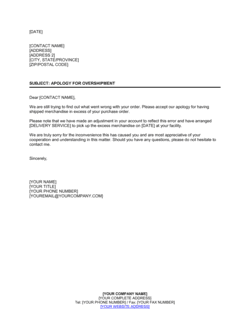
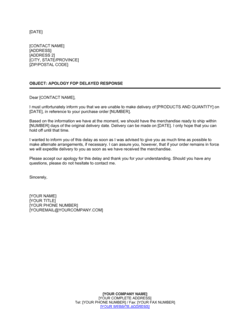
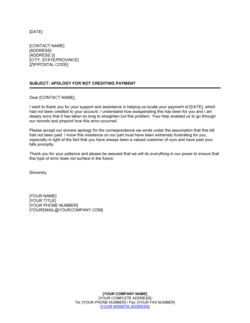
An Apology and Tender of Compensation is a formal business letter a company sends to a customer, client, or counterparty to acknowledge a failure or error, express regret, and offer a defined remedy β€” such as a refund, credit, replacement, or goodwill payment. This free Word download gives you a structured starting point you can edit online and export as PDF in minutes.
When you need it
Use it when a product defect, service failure, billing error, delivery delay, or other operational mistake has caused a customer harm and you need to formally acknowledge the issue and offer a specific resolution before the complaint escalates to a dispute, chargeback, or legal claim.
What's inside
Recipient details, acknowledgment of the specific incident, a clear apology without evasive language, a defined compensation offer with terms, and a closing that confirms next steps and contact information for follow-up.

What is an Apology and Tender of Compensation?

An Apology and Tender of Compensation is a formal business letter a company sends to a customer, client, or counterparty to acknowledge a specific failure, express genuine regret for the harm caused, and offer a defined remedy β€” such as a refund, replacement, account credit, or goodwill payment. It differs from a generic apology in that it pairs the acknowledgment with a concrete, actionable offer, giving the recipient a clear path to resolution. The letter functions simultaneously as a relationship-repair tool and a written record that the company responded to the complaint and proposed a specific remedy.

Why You Need This Document

When a product fails, a delivery goes wrong, or a billing error slips through, a prompt written response is the fastest way to stop a routine complaint from becoming a chargeback, a negative review, or a formal dispute. Customers who receive no written acknowledgment are significantly more likely to escalate β€” and escalation costs far more than the original remedy. A properly structured apology and tender of compensation letter documents your response, specifies the exact remedy offered, and creates a paper trail that protects the business if the matter is later disputed. Without it, you have no record of having offered anything, and the customer has no obligation to accept anything. This template gives you a professional starting point you can adapt in minutes, so your team can respond consistently and promptly every time.

Which variant fits your situation?

If your situation is…Use this template
Apologizing for a defective or damaged product with a replacement offerApology and Tender of Compensation
Acknowledging a billing error and issuing a credit or refundCredit Note
Addressing a service disruption affecting multiple customersBusiness Apology Letter (Service Failure)
Settling a dispute or claim with a formal agreed sumSettlement Agreement
Following up after a complaint with a documented resolution planCustomer Complaint Response Letter
Communicating a refund policy decision to a dissatisfied customerRefund Request Response Letter

Common mistakes to avoid

❌ Vague acknowledgment of the failure

Why it matters: A non-specific acknowledgment β€” 'We understand you had a negative experience' β€” signals the company did not actually investigate the complaint, which typically escalates the customer's frustration.

Fix: Reference the specific order number, date, product, or service failure by name in the opening paragraph so the recipient knows the letter was written for their situation.

❌ Coupling the apology with an excuse

Why it matters: Phrases like 'We're sorry, but our supplier let us down' transfer blame and undermine the sincerity of the apology β€” customers interpret this as the company not taking responsibility.

Fix: Separate the apology and the explanation into distinct paragraphs. Apologize fully first, then briefly explain the cause in neutral, factual language in the following paragraph.

❌ Offering a vague or conditional remedy

Why it matters: Compensation described as 'a discount' or 'some form of credit' without a specific value is perceived as insincere and forces the customer to negotiate β€” adding another point of friction.

Fix: State the exact value of the remedy: '$47.50 refund,' '20% credit on your next order up to $100,' or 'free replacement of order #[X] shipped within 3 business days.'

❌ No clear path to accepting the offer

Why it matters: When the letter does not specify how or by when to accept the compensation, many recipients either give up and escalate or contact support again β€” creating unnecessary repeat contacts.

Fix: Include a named contact, direct email or phone number, and a specific acceptance deadline of at least 30 days in the body of the letter.

The 8 key clauses, explained

Date, sender, and recipient block

In plain language: Identifies who is sending the letter, who is receiving it, and when it was written β€” establishing a clear paper trail for the record.

Sample language
[DATE] | [SENDER NAME / COMPANY] | [SENDER ADDRESS] | To: [RECIPIENT NAME] | [RECIPIENT ADDRESS]

Common mistake: Using a department name instead of a named individual in the sender block. Anonymous letters carry less weight and make follow-up harder for the recipient.

Reference line

In plain language: A one-line subject line citing the order number, account number, incident date, or complaint reference so the recipient can immediately match the letter to their record.

Sample language
Re: Order #[ORDER NUMBER] β€” Incident of [DATE OF INCIDENT]

Common mistake: Omitting the reference line entirely. Recipients in busy accounts-payable or customer-service departments cannot route a letter with no reference, which delays resolution.

Opening acknowledgment

In plain language: Directly acknowledges the specific incident or failure without hedging β€” names what went wrong, when, and who was affected.

Sample language
We are writing to acknowledge that on [DATE], [SPECIFIC FAILURE β€” e.g., your order for [PRODUCT] was delivered in damaged condition / your account was charged $[AMOUNT] in error].

Common mistake: Opening with vague language like 'We understand there may have been an issue.' Passive, non-specific openers read as dismissive and escalate frustration.

Apology statement

In plain language: A clear, first-person expression of regret for the impact of the failure β€” without minimizing the experience or shifting blame.

Sample language
We sincerely apologize for the inconvenience and frustration this has caused you. This falls below the standard of service [COMPANY NAME] is committed to providing.

Common mistake: Coupling the apology with an excuse β€” 'We're sorry, but our supplier...' Qualifications in the apology sentence undermine the sincerity of the entire letter.

Explanation of the cause

In plain language: A brief, factual account of what caused the failure β€” kept short to inform without sounding defensive, and framed around what the company is doing to prevent recurrence.

Sample language
The error occurred as a result of [BRIEF FACTUAL CAUSE]. We have since [CORRECTIVE ACTION TAKEN] to prevent this from recurring.

Common mistake: Using this section to argue why the failure was not really the company's fault. Any language that redirects blame will read as defensive and damage trust.

Tender of compensation

In plain language: The specific, concrete offer of remedy β€” stated in dollar amounts, credit values, or replacement terms β€” with any conditions clearly described.

Sample language
As compensation for this experience, we would like to offer you [SPECIFIC REMEDY β€” e.g., a full refund of $[AMOUNT] / a replacement shipment at no cost / a credit of $[AMOUNT] toward your next order]. [Any conditions, e.g., 'This offer is valid for 30 days from the date of this letter.']

Common mistake: Offering a vague remedy like 'a discount on your next purchase' without stating the specific amount or value. Vague offers feel insincere and are harder for the recipient to act on.

Instructions for accepting the offer

In plain language: Tells the recipient exactly what to do to accept the compensation β€” reply by email, call a specific number, or confirm in writing β€” and by what date.

Sample language
To accept this offer, please contact [NAME] at [EMAIL / PHONE] by [ACCEPTANCE DEADLINE DATE]. Once confirmed, [REMEDY β€” e.g., your refund will be processed within [X] business days].

Common mistake: Leaving no clear path to acceptance. When the recipient has to guess how to claim the remedy, many simply give up β€” or escalate.

Closing and goodwill statement

In plain language: Reaffirms the company's commitment to the relationship and invites further contact, ending the letter on a constructive note.

Sample language
We value your relationship with [COMPANY NAME] and are committed to making this right. If you have any further questions, please do not hesitate to contact [NAME] directly at [CONTACT DETAILS].

Common mistake: Ending with 'We hope this resolves the matter' β€” which sounds final and dismissive. A forward-looking closing that keeps the door open for contact performs better in customer retention.

How to fill it out

  1. 1

    Fill in the sender and recipient details

    Enter the sending company's full name and address at the top, followed by the recipient's full name, company (if applicable), and mailing or email address. Include the date the letter is being sent.

    πŸ’‘ Address the letter to a named individual, not 'To Whom It May Concern.' Using the customer's name increases the perceived sincerity of the apology.

  2. 2

    Add the reference line

    Insert the order number, invoice number, account reference, or incident date in the reference line so the recipient can immediately match the letter to their records.

    πŸ’‘ If the customer submitted a formal complaint number, include it here β€” it shows you read their complaint before responding.

  3. 3

    Write the acknowledgment in specific terms

    State exactly what went wrong, on what date, and how it affected the recipient. Avoid vague language β€” be as specific as the facts allow.

    πŸ’‘ Pull the incident details from your CRM or complaint log before drafting. Generic acknowledgments are the single biggest cause of re-escalation.

  4. 4

    State the apology clearly and without qualification

    Write a direct apology in the first person β€” 'We sincerely apologize' β€” without attaching an excuse to the same sentence. Move any explanation to the next paragraph.

    πŸ’‘ Read the apology sentence in isolation. If it contains the word 'but' or 'however,' rewrite it.

  5. 5

    Describe the compensation offer with exact terms

    Name the remedy, state the exact value (dollar amount, credit percentage, or replacement specification), and include any conditions such as an acceptance deadline or return requirement.

    πŸ’‘ Where possible, offer more than the customer asked for β€” an unexpected extra (such as a service credit plus a refund) converts complainants into repeat customers at a measurable rate.

  6. 6

    Provide clear acceptance instructions

    Tell the recipient exactly how to accept the offer β€” email reply, phone call, or signed acknowledgment β€” and set a realistic deadline of at least 30 days from the letter date.

    πŸ’‘ Name a specific contact person with direct contact details, not a generic support inbox, to signal accountability.

  7. 7

    Close with a forward-looking statement

    End the letter by reaffirming the relationship, expressing commitment to improvement, and inviting the recipient to reach out with further concerns.

    πŸ’‘ If the customer is a high-value account, consider adding a line offering a scheduled call with a manager to discuss the resolution personally.

Frequently asked questions

What is an apology and tender of compensation letter?

An apology and tender of compensation letter is a formal business communication a company sends to acknowledge a specific failure β€” such as a defective product, billing error, or service disruption β€” express regret for the impact, and offer a defined remedy such as a refund, credit, or replacement. It creates a written record of the company's response to a complaint and the remedy offered.

When should I send an apology and tender of compensation letter?

Send it as soon as you have confirmed the facts of the failure and determined a specific remedy β€” typically within 5–10 business days of receiving a complaint. Delays beyond two weeks signal indifference and increase the likelihood the customer escalates to a chargeback, regulatory complaint, or negative public review.

What compensation should I offer in the letter?

The remedy should be proportionate to the harm. A minor inconvenience typically warrants a discount or service credit; a defective product warrants a full refund or replacement; a significant service failure affecting the customer's business may warrant a cash goodwill payment. Always state the exact dollar value or replacement specification rather than leaving the amount open-ended.

Should I mark the letter 'without prejudice'?

Marking a letter 'without prejudice' means its contents generally cannot be used as evidence of liability in court proceedings, in most jurisdictions. For standard customer service situations involving modest amounts, this designation is rarely necessary. For complaints involving personal injury, significant financial loss, or potential litigation, consult a lawyer before deciding whether to use it.

What is the difference between an apology letter and a settlement agreement?

An apology letter acknowledges a failure and offers a remedy, but it is not a binding contract. A settlement agreement is a legally binding document in which both parties agree to resolve a dispute in exchange for a defined payment, typically including a release of future claims. For formal disputes or amounts above a few hundred dollars, a settlement agreement provides stronger protection than a letter alone.

Can I use this letter for both B2C and B2B situations?

Yes. The template is suitable for both individual consumer complaints and business-to-business disputes. For B2B situations, tailor the reference line to include the contract number or purchase order, direct the letter to the accounts payable or operations contact by name, and ensure the compensation terms align with any existing service level agreement between the parties.

Do I need a signature on this letter?

A handwritten signature adds credibility and personalizes the letter, though it is not legally required for the letter to be effective. For high-value accounts or significant compensation offers, having a senior manager or director sign demonstrates accountability. For high-volume routine complaint responses, a typed signatory with a direct contact line is generally sufficient.

How this compares to alternatives

vs Settlement Agreement

A settlement agreement is a legally binding contract in which both parties agree to resolve a dispute in exchange for a defined payment and a mutual release of claims. An apology and tender of compensation letter is an informal written offer β€” it does not bind the recipient or include a release. Use the letter for routine complaints; use a settlement agreement when the amount is significant or the dispute has escalated to a formal claim.

vs Customer Complaint Response Letter

A customer complaint response letter acknowledges the complaint and outlines the company's position or investigation findings β€” it does not necessarily include a compensation offer. An apology and tender of compensation letter goes a step further by explicitly offering a defined remedy. Use the response letter when you are still investigating; use this template when the facts are established and you are ready to offer resolution.

vs Credit Note

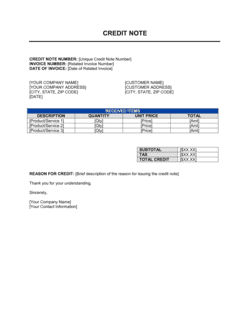
A credit note is an accounting document that formally reduces or cancels a prior invoice β€” it is processed through the billing system and updates the customer's account balance. An apology and tender of compensation letter is a relationship communication that may accompany a credit note or precede one. Issue the letter first to acknowledge the failure, then follow with a credit note to complete the financial adjustment.

vs Goodwill Payment Letter

A goodwill payment letter offers a discretionary payment as a gesture of goodwill without acknowledging fault or legal liability. An apology and tender of compensation letter explicitly acknowledges the failure and apologizes before making the offer. Use the goodwill letter when the company is not at fault but wants to preserve the relationship; use this template when the failure is clearly attributable to the company.

Industry-specific considerations

Retail and E-commerce

Damaged shipments, wrong items, and delayed deliveries are the most common triggers β€” compensation typically takes the form of a replacement order or full refund plus a percentage-off coupon.

Professional Services

Missed deadlines, billing errors, or deliverable gaps may require a fee reduction or credited hours β€” the letter should reference the specific engagement or invoice number.

Hospitality and Travel

Service failures such as room problems, cancelled bookings, or catering errors are resolved with loyalty points, complimentary nights, or vouchers stated in specific dollar or point values.

Healthcare

Billing errors, appointment cancellations, or administrative failures β€” compensation is limited to financial remedies and the letter must avoid any language that could be construed as a clinical admission.

Template vs pro β€” what fits your needs?

PathBest forCostTime
Use the templateCustomer service teams and small business owners handling routine complaints with compensation offers under $500Free10–15 minutes per letter
Template + professional reviewComplaints involving significant financial loss, potential reputational damage, or a business client relationship$100–$300 for a manager or legal team review1–2 business days
Custom draftedDisputes that have already escalated to a formal legal claim, regulatory complaint, or involve personal injury$500–$2,000+ for legal counsel3–7 business days

Glossary

Tender of Compensation
A formal offer by one party to provide a defined remedy β€” money, credit, replacement, or service β€” to another party in response to an acknowledged loss or harm.
Goodwill Payment
A voluntary compensation offered by a business as a gesture of goodwill, not as an admission of legal liability.
Without Prejudice
A designation on written communications indicating that the contents cannot be used as an admission of liability in subsequent legal proceedings.
Acknowledgment of Fault
A written statement recognizing that a specific error, failure, or omission occurred, attributed to the sending party.
Escalation
The progression of an unresolved complaint from informal communication to a formal dispute, chargeback, regulatory complaint, or legal claim.
Remedy
The specific corrective action offered β€” refund, replacement, service credit, or cash compensation β€” to address a customer's loss.
Mitigation
Steps taken by the party at fault to reduce the harm suffered by the affected party, which can limit liability in any subsequent dispute.
Release of Claims
A provision, sometimes included with a compensation offer, in which the recipient agrees not to pursue further action in exchange for accepting the remedy.
Response Time
The number of business days between receiving a complaint and sending a formal written response β€” a key metric in consumer protection regulations and service level agreements.

Part of your Business Operating System

This document is one of 3,000+ business & legal templates included in Business in a Box.

  • Fill-in-the-blanks β€” ready in minutes
  • 100% customizable Word document
  • Compatible with all office suites
  • Export to PDF and share electronically

Create your document in 3 simple steps.

From template to signed document β€” all inside one Business Operating System.
1
Download or open template

Access over 3,000+ business and legal templates for any business task, project or initiative.

2
Edit and fill in the blanks with AI

Customize your ready-made business document template and save it in the cloud.

3
Save, Share, Send, Sign

Share your files and folders with your team. Create a space of seamless collaboration.

Save time, save money, and create top-quality documents.

β˜…β˜…β˜…β˜…β˜…

"Fantastic value! I'm not sure how I'd do without it. It's worth its weight in gold and paid back for itself many times."

Managing Director Β· Mall Farm
Robert Whalley
Managing Director, Mall Farm Proprietary Limited
β˜…β˜…β˜…β˜…β˜…

"I have been using Business in a Box for years. It has been the most useful source of templates I have encountered. I recommend it to anyone."

Business Owner Β· 4+ years
Dr Michael John Freestone
Business Owner
β˜…β˜…β˜…β˜…β˜…

"It has been a life saver so many times I have lost count. Business in a Box has saved me so much time and as you know, time is money."

Owner Β· Upstate Web
David G. Moore Jr.
Owner, Upstate Web

Run your business with a system β€” not scattered tools

Stop downloading documents. Start operating with clarity. Business in a Box gives you the Business Operating System used by over 250,000 companies worldwide to structure, run, and grow their business.

Start freeΒ Β·Β No credit card required