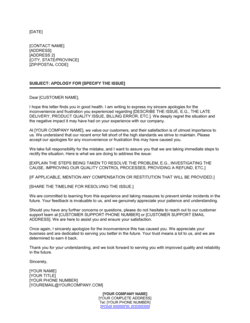
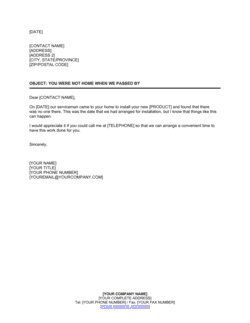
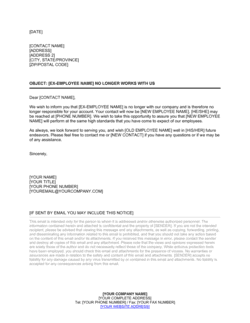
Spontaneous Good Customer Relations Letter Template

Free Word download • Edit online • Save & share with Drive • Export to PDF

1 page20–25 min to fillDifficulty: Standard
Learn more ↓
FreeSpontaneous Good Customer Relations Letter Template

At a glance

What it is
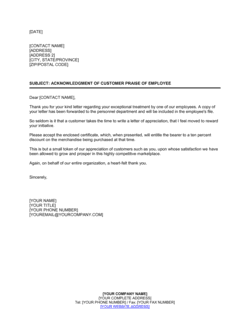
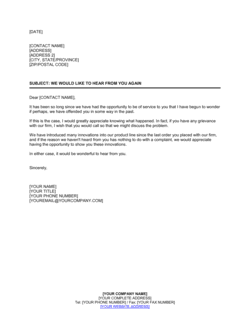
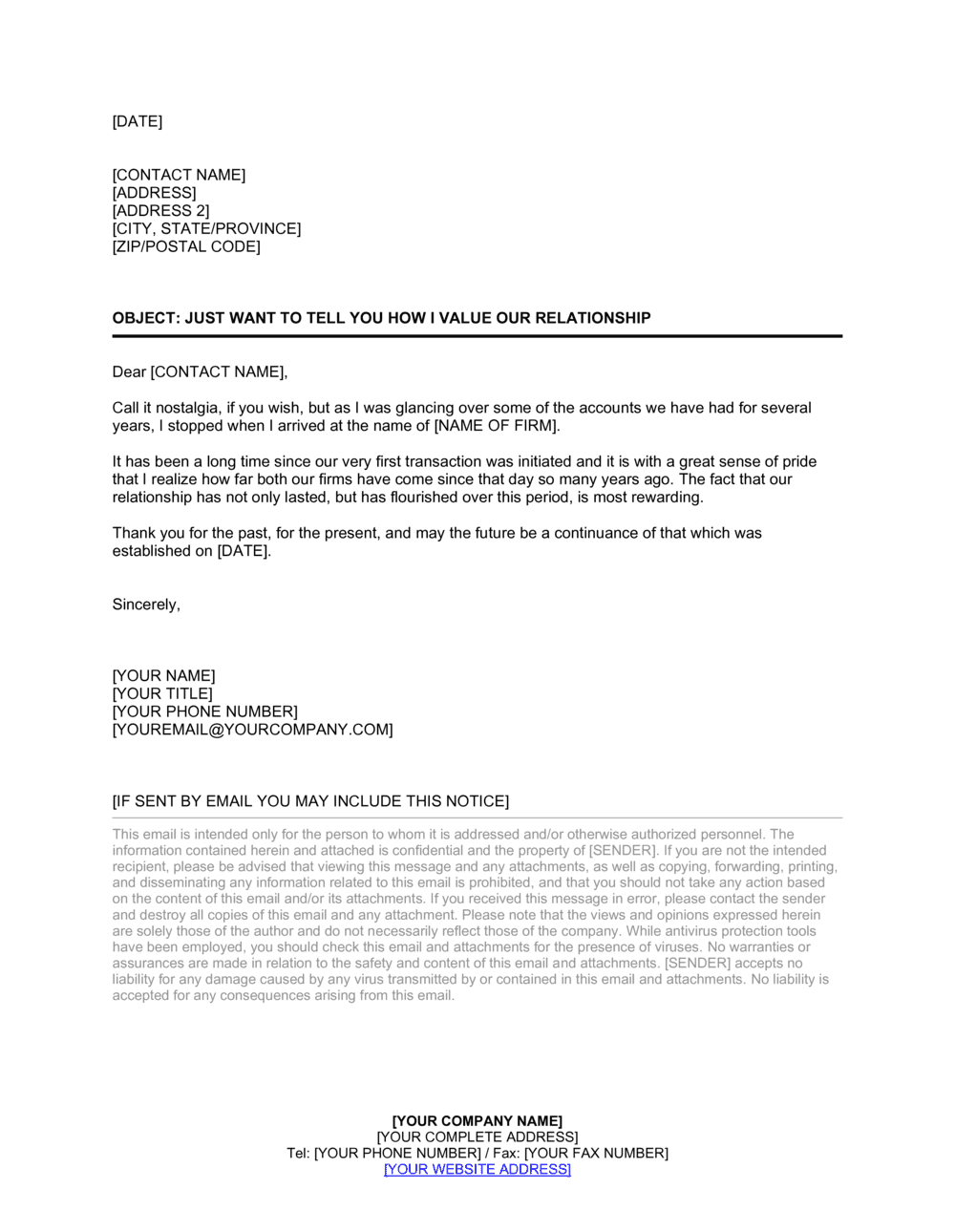
A Spontaneous Good Customer Relations Letter is a proactive, unprompted formal business letter sent to a customer to express appreciation, reinforce the relationship, and strengthen goodwill — without being triggered by a complaint, inquiry, or transaction. This free Word download gives you a polished, professional starting point you can personalize and send in under ten minutes.
When you need it
Use it when you want to thank a long-standing customer, acknowledge a milestone in the relationship, share positive company news, or simply reach out to reinforce loyalty before a renewal or re-engagement cycle.
What's inside
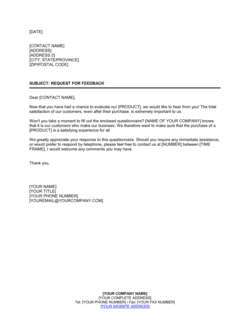
A formal letterhead block, personalized salutation, an opening that establishes the purpose of the outreach, a body paragraph acknowledging the customer's value or a specific achievement, a goodwill or value-add statement, a forward-looking closing, and a professional sign-off.

What is a Spontaneous Good Customer Relations Letter?

A Spontaneous Good Customer Relations Letter is a proactive, unprompted formal business letter sent to an existing customer to express appreciation, acknowledge the value of the relationship, and reinforce goodwill — without being triggered by a complaint, purchase, or service request. Unlike reactive correspondence, this letter is initiated entirely at the sender's discretion as a deliberate investment in the long-term health of the customer relationship. It typically includes a personalized acknowledgment of the customer's loyalty or a specific milestone, a forward-looking expression of commitment, and a warm invitation to continue the dialogue.

Why You Need This Document

Businesses that communicate with customers only when something goes wrong — an invoice, a problem, a renewal notice — train customers to associate contact with friction. A spontaneous goodwill letter breaks that pattern and signals that the relationship matters beyond the transaction. The cost of not sending one is measurable: customers who feel unacknowledged are significantly more likely to defect when a competitor offers a comparable alternative. A single well-timed letter to a key account can extend retention, reduce churn ahead of renewal, and generate referrals that no marketing campaign can reliably produce. This template gives you a professionally formatted, fully editable starting point that takes ten minutes to personalize and sends a message that generic email campaigns cannot replicate.

Which variant fits your situation?

If your situation is…Use this template
Thanking a customer for a recent purchase or completed projectCustomer Thank-You Letter
Responding to a customer complaint and restoring goodwillCustomer Complaint Response Letter
Welcoming a brand-new customer at the start of the relationshipWelcome Letter to New Customer
Notifying customers of a price increase with goodwill framingPrice Increase Notification Letter
Re-engaging a lapsed or inactive customerCustomer Re-engagement Letter
Announcing a new product or service to existing customersNew Product Announcement Letter
Acknowledging a long-term customer's loyalty publicly in writingCustomer Loyalty Recognition Letter

Common mistakes to avoid

❌ Sending a generic letter without any personalization

Why it matters: Customers recognize mass-produced goodwill letters instantly. A letter that contains no specific reference to the relationship reads as marketing, not appreciation, and is often discarded.

Fix: Include at least one specific detail — customer tenure, a product they use, or a result they achieved — in the acknowledgment paragraph before sending.

❌ Burying a sales promotion in an appreciation letter

Why it matters: When customers feel the primary purpose of the letter is to sell them something, the goodwill message is discredited and the relationship can be damaged rather than strengthened.

Fix: If you include an offer, frame it explicitly as a thank-you benefit rather than a promotion, and make it secondary to the appreciation message — not the headline.

❌ Using 'Dear Valued Customer' instead of the recipient's name

Why it matters: An impersonal salutation is the fastest way to signal that the letter was not written for this customer — it erases the spontaneous and genuine quality the format depends on.

Fix: Always address the customer by name. If your list is large, use a mail merge rather than a generic salutation.

❌ Omitting a direct call to action or contact invitation

Why it matters: A letter with no next step is a closed loop — it does not invite dialogue and misses the opportunity to strengthen the relationship through an actual conversation.

Fix: End every good customer relations letter with a specific, low-effort invitation to respond — a direct email address or phone number with a brief note welcoming feedback.

The 9 key clauses, explained

Letterhead and date

In plain language: Your company name, address, contact details, and the date the letter is sent — establishes sender identity and creates a dated record.

Sample language
[COMPANY NAME] | [ADDRESS LINE 1] | [CITY, STATE, ZIP] | [PHONE] | [EMAIL] | [DATE]

Common mistake: Using an outdated address or phone number in the letterhead — customers who try to contact you and reach a dead number lose confidence immediately.

Recipient address block

In plain language: The customer's full name, title, company (if applicable), and mailing address, formatted for professional correspondence.

Sample language
[CUSTOMER FULL NAME] | [TITLE] | [COMPANY NAME] | [ADDRESS] | [CITY, STATE, ZIP]

Common mistake: Addressing a business customer by first name only without confirming their preference — it can read as familiar rather than warm, especially in formal industries.

Personalized salutation

In plain language: A greeting that addresses the customer by name, setting a respectful and personal tone from the first line.

Sample language
Dear [CUSTOMER NAME],

Common mistake: Using 'Dear Valued Customer' instead of the person's name — it signals the letter is a mass mailing and eliminates the goodwill effect entirely.

Opening: purpose of outreach

In plain language: A brief, direct opening sentence that tells the customer why you are writing — without being prompted by a problem or transaction.

Sample language
I am writing to express our sincere appreciation for your continued partnership with [COMPANY NAME] and to let you know how much we value the trust you have placed in us over the past [TIME PERIOD].

Common mistake: Opening with a sales pitch or promotion disguised as appreciation — customers recognize it immediately and the letter loses credibility.

Body: customer acknowledgment

In plain language: One to two sentences that specifically acknowledge the customer's loyalty, a milestone, or a positive outcome they have experienced — making the letter feel genuine rather than generic.

Sample language
Over the past [X] years, your commitment to [SPECIFIC PRODUCT/SERVICE] has been a source of genuine pride for our team. Milestones like [SPECIFIC REFERENCE] remind us why we do what we do.

Common mistake: Keeping the acknowledgment so vague ('you are a great customer') that it reads as a template — include at least one specific detail drawn from the relationship.

Goodwill or value-add statement

In plain language: An optional but high-impact paragraph offering something of genuine value — a relevant resource, early access, a complimentary service, or useful information — as a tangible expression of appreciation.

Sample language
As a token of our appreciation, we would like to offer you [SPECIFIC BENEFIT — e.g., a complimentary review of your account / early access to our upcoming feature / a 15% discount on your next order], valid through [DATE].

Common mistake: Attaching a generic promotional offer with fine-print restrictions — it undercuts the goodwill message and makes the letter feel transactional.

Forward-looking statement

In plain language: A brief sentence that expresses enthusiasm for the ongoing relationship and signals that the business is committed to the customer's future success.

Sample language
We look forward to continuing to support [COMPANY NAME / YOUR GOALS] in [UPCOMING PERIOD] and are committed to delivering the quality and service you have come to expect from us.

Common mistake: Leaving this paragraph out entirely — without it, the letter ends abruptly and feels like a one-way broadcast rather than an ongoing relationship.

Call to action

In plain language: A specific, low-friction invitation for the customer to take a next step — reply, schedule a call, or reach out with any questions or feedback.

Sample language
Please do not hesitate to contact me directly at [PHONE / EMAIL] if there is anything we can do to serve you better. I would welcome the opportunity to connect at your convenience.

Common mistake: Asking for a complex action (filling out a survey, attending an event) in a goodwill letter — the CTA should require minimal effort and reinforce rather than redirect the relationship.

Closing and signature block

In plain language: A professional sign-off, the sender's name, title, and contact details — closing the letter with the same warmth and formality it opened with.

Sample language
Warm regards, [SENDER FULL NAME] [TITLE] [COMPANY NAME] [DIRECT PHONE] | [EMAIL]

Common mistake: Signing off with only a first name and title without direct contact details — customers who want to respond should not have to search for a way to reach you.

How to fill it out

  1. 1

    Add your letterhead and today's date

    Replace the placeholder letterhead with your current company name, address, phone, and email. Set the date to the day you intend to send the letter.

    💡 If you send customer letters regularly, save a master version with your letterhead pre-filled so you only edit the body each time.

  2. 2

    Enter the customer's name and address

    Fill in the recipient block with the customer's full name, title, company, and mailing address. For email delivery, you can omit the postal address and go straight to the salutation.

    💡 Confirm the correct spelling of the customer's name and their current title before sending — an error here negates the personal tone the letter is designed to create.

  3. 3

    Write a specific opening that names the relationship

    Replace the opening placeholder with a sentence that references how long you have worked together or a specific aspect of the relationship. Avoid generic phrases like 'as a valued customer.'

    💡 Pull one data point from your CRM — tenure, number of orders, or a completed project — and reference it in the opening sentence.

  4. 4

    Personalize the acknowledgment paragraph

    Add one specific detail that reflects this customer's actual history with your business — a milestone, a product they rely on, or an outcome they have achieved. This is the single most important step for making the letter feel genuine.

    💡 If you are sending this letter to multiple customers, create a short list of personalization tokens (name, tenure, product) in a spreadsheet and mail-merge — do not send the same body text to everyone.

  5. 5

    Include a value-add if appropriate

    Decide whether to include a tangible benefit such as a discount, complimentary service review, or exclusive resource. If you include one, state the offer clearly with an expiry date.

    💡 The value-add should be genuinely useful to this customer, not the offer you happen to be running this month. Relevance matters more than dollar value.

  6. 6

    Close with a direct contact invitation

    Add your direct phone number and email to the call to action paragraph. Sign off with your full name and title.

    💡 Use your direct line, not a general customer service number — it signals that a real person who cares about this customer is the author.

Frequently asked questions

What is a spontaneous good customer relations letter?

A spontaneous good customer relations letter is a proactive, unprompted business letter sent to a customer purely to express appreciation and reinforce goodwill — not in response to a complaint, inquiry, or transaction. It is one of the most cost-effective tools for reducing churn, deepening loyalty, and differentiating your business from competitors who only communicate when something goes wrong.

When should I send a customer relations letter?

Common triggers include a customer's anniversary with your business, reaching a usage or spending milestone, the completion of a significant project, a period of market disruption where a check-in adds reassurance, or simply as a periodic touchpoint for your top accounts. The "spontaneous" nature means there is no required trigger — the absence of a problem is itself a good reason to reach out.

How is this different from a marketing email?

A good customer relations letter is individually addressed, written in formal business letter format, and focused entirely on the customer's value and the relationship — not on a product feature, promotion, or campaign goal. Marketing emails are typically batch-sent to segments, designed around a conversion objective, and measured by click-through rates. A customer relations letter is measured by relationship quality, not clicks.

Should I send this as a physical letter or an email?

Physical letters carry more weight in formal or high-value B2B relationships — a printed letter on letterhead to a key account signals a level of care that email cannot replicate. Email is appropriate for most B2C contexts and for customers you primarily communicate with digitally. For your top 10–20% of accounts by revenue, consider a physical letter; for broader customer bases, a well-formatted email using this template is effective and practical.

How often should I send customer relations letters?

For key accounts, once or twice per year is typical — enough to be meaningful without feeling routine. For a broad customer base, a once-yearly touchpoint aligned to an anniversary or year-end is standard. Sending too frequently diminishes the spontaneous quality of the format; sending too rarely means customers only hear from you when there is a problem.

Can I include a promotional offer in the letter?

Yes, but with care. A value-add offer — a complimentary account review, early access to a new feature, or a modest loyalty discount — can reinforce the appreciation message when framed as a thank-you benefit. A hard promotional offer with urgent language and fine print undercuts the goodwill tone and makes the letter read as marketing. Let the appreciation message lead; any offer should be secondary and genuinely relevant to this customer.

Do I need to sign customer relations letters individually?

For key accounts, a personal signature (wet or digital) from a named senior contact adds authenticity. For broader campaigns, a printed signature from the owner, account director, or CEO is standard practice. What matters most is that the letter carries the name and direct contact of a real person — not a department or a generic customer service address.

What tone is appropriate for this type of letter?

Warm, professional, and specific. The letter should feel like it was written by a person who knows this customer, not generated by a marketing team. Avoid overly formal language that creates distance, but also avoid casual language that may feel inappropriate in a B2B context. Sentence case, full sentences, and a genuine acknowledgment of the customer's specific situation strike the right balance.

How this compares to alternatives

vs Customer Complaint Response Letter

A complaint response letter is reactive — it addresses a specific problem a customer has raised and works to restore confidence. A spontaneous good customer relations letter is proactive and sent when there is no problem to resolve. Both strengthen the customer relationship, but the complaint response is damage control while the goodwill letter builds equity before problems arise.

vs Welcome Letter to New Customer

A welcome letter is sent at the very start of a relationship to onboard a new customer and set expectations. A spontaneous good customer relations letter is sent to existing customers at any point after the relationship is established — its purpose is to deepen an already-active relationship rather than initiate one.

vs Price Increase Notification Letter

A price increase letter delivers difficult news and focuses on justifying a change to the customer's existing terms. A good customer relations letter carries no bad news — it is purely positive in intent. Savvy businesses sometimes send a goodwill letter several months before a price increase to build relationship credit in advance.

vs Customer Satisfaction Survey Letter

A customer satisfaction survey letter asks the customer to provide feedback, making the communication primarily about the business gathering data. A spontaneous good customer relations letter is entirely customer-focused — it gives rather than asks. Both have a place in a retention strategy, but they should not be sent together or the goodwill message is diluted.

Industry-specific considerations

Financial Services

Advisors and account managers send annual relationship letters to reinforce trust, acknowledge portfolio milestones, and reassure clients during periods of market volatility.

Professional Services

Law firms, consultancies, and accounting practices use relationship letters to acknowledge client anniversaries and position the firm ahead of annual engagement renewals.

Retail and E-commerce

High-value or VIP customers receive personalized appreciation letters tied to annual spend milestones, early access events, or loyalty tier upgrades.

Manufacturing and Wholesale

Distributors and suppliers use customer relations letters to acknowledge long-standing purchasing relationships and signal stability ahead of contract renewals or price adjustments.

Template vs pro — what fits your needs?

PathBest forCostTime
Use the templateSmall business owners and account managers sending personalized letters to individual or segmented customer listsFree10–15 minutes per letter
Template + professional reviewTeams running a formal customer retention program sending letters to high-value accounts on behalf of senior leadership$50–$200 (copywriter or communications review)1–2 hours
Custom draftedEnterprise accounts requiring fully bespoke, brand-voice-aligned customer communications drafted by a professional copywriter$300–$800 per letter or campaign2–5 business days

Glossary

Spontaneous Letter
A letter sent without being prompted by a specific event, complaint, or request — initiated entirely at the sender's discretion to build goodwill.
Goodwill
The intangible value of a positive customer relationship, built through consistent, proactive, and genuine communication over time.
Customer Retention
The ability of a business to keep existing customers over a defined period, measured as the percentage who do not churn or defect to a competitor.
Personalization
Tailoring the content of a communication to reflect the specific customer's history, name, preferences, or relationship details rather than sending a generic message.
Proactive Outreach
Communication initiated by the business before a customer raises an issue or makes a request — intended to strengthen the relationship rather than resolve a problem.
Value-Add Statement
A sentence or paragraph in a customer letter that offers something useful — a resource, tip, exclusive offer, or update — beyond the core message.
Letterhead
The formatted header of a business letter that includes the company name, logo, address, phone, and website, establishing the sender's identity and professionalism.
Call to Action (CTA)
A specific invitation at the close of a letter asking the reader to take a defined next step, such as scheduling a call, visiting a webpage, or replying with feedback.

Part of your Business Operating System

This document is one of 3,000+ business & legal templates included in Business in a Box.

  • Fill-in-the-blanks — ready in minutes
  • 100% customizable Word document
  • Compatible with all office suites
  • Export to PDF and share electronically

Create your document in 3 simple steps.

From template to signed document — all inside one Business Operating System.
1
Download or open template

Access over 3,000+ business and legal templates for any business task, project or initiative.

2
Edit and fill in the blanks with AI

Customize your ready-made business document template and save it in the cloud.

3
Save, Share, Send, Sign

Share your files and folders with your team. Create a space of seamless collaboration.

Save time, save money, and create top-quality documents.

★★★★★

"Fantastic value! I'm not sure how I'd do without it. It's worth its weight in gold and paid back for itself many times."

Managing Director · Mall Farm
Robert Whalley
Managing Director, Mall Farm Proprietary Limited
★★★★★

"I have been using Business in a Box for years. It has been the most useful source of templates I have encountered. I recommend it to anyone."

Business Owner · 4+ years
Dr Michael John Freestone
Business Owner
★★★★★

"It has been a life saver so many times I have lost count. Business in a Box has saved me so much time and as you know, time is money."

Owner · Upstate Web
David G. Moore Jr.
Owner, Upstate Web

Run your business with a system — not scattered tools

Stop downloading documents. Start operating with clarity. Business in a Box gives you the Business Operating System used by over 250,000 companies worldwide to structure, run, and grow their business.

Free Forever Plan · No credit card required