Apology for Overshipment Template

Free Word download β€’ Edit online β€’ Save & share with Drive β€’ Export to PDF

1 pageβ€’15–25 min to fillβ€’Difficulty: Standard
Learn more ↓
FreeApology for Overshipment Template

At a glance

What it is
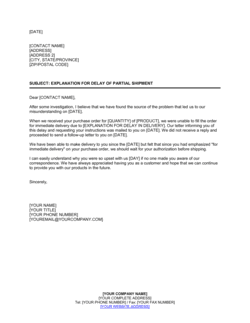
An Apology For Overshipment is a formal business letter a seller or supplier sends to a customer or buyer when more units than ordered were dispatched in error. This free Word download gives you a ready-to-edit template you can complete in minutes and send by email or post to acknowledge the mistake, outline the resolution, and preserve the business relationship.
When you need it
Send it as soon as the overshipment is discovered β€” either by your warehouse, your logistics team, or the buyer upon receipt. The sooner it is issued, the easier the return or credit process becomes for both parties.
What's inside
A clear acknowledgment of the error, the specific quantity shipped versus the quantity ordered, a proposed resolution (return, credit, or adjusted invoice), and a goodwill closing. Each component is drafted in professional business-letter style and requires only your details to complete.

What is an Apology For Overshipment?

An Apology For Overshipment is a formal business letter sent by a seller, supplier, or logistics team to a buyer when more units of a product were dispatched than the buyer's purchase order authorized. It serves three practical functions simultaneously: it acknowledges the fulfillment error clearly and without ambiguity, it proposes a concrete resolution β€” typically a prepaid return, a credit note, or a revised invoice β€” and it reassures the buyer that corrective action has been taken to prevent a recurrence. Unlike an informal email exchange, a structured apology letter creates a documented record of the error and the agreed remedy, which both parties' finance and operations teams can reference.

Why You Need This Document

Ignoring or delaying a response to an overshipment compounds the problem on two fronts. Operationally, excess goods sitting in a buyer's warehouse consume storage space, disrupt their inventory counts, and can be inadvertently sold or incorporated into production β€” making physical recovery progressively harder. Financially, if the buyer was invoiced for the shipped quantity rather than the ordered quantity, every day without a formal correction risks a disputed invoice, a withheld payment, or a chargeback. A prompt, professional apology letter containing the specific discrepancy figures, a return or credit option, and a confirmed billing adjustment resolves both issues in a single communication. It also protects the buyer relationship: buyers who receive a clear, ownership-taking letter are significantly more likely to continue ordering than those left to chase a resolution through a general customer-service queue. This template gives you the complete structure to send a professional, credible response in under ten minutes.

Which variant fits your situation?

If your situation is…Use this template
Buyer received more units than their purchase order statedApology For Overshipment
Wrong items β€” not excess items β€” were shippedApology For Incorrect Shipment
Fewer units than ordered were dispatchedApology For Undershipment
Shipment arrived later than the agreed delivery dateApology For Delay In Shipment
Goods arrived in damaged conditionApology For Damaged Goods
Customer was billed for more than they orderedApology For Billing Error
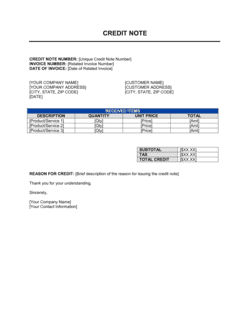
Returning excess goods and requesting a credit noteCredit Note

Common mistakes to avoid

❌ Vague or passive acknowledgment of the error

Why it matters: Phrases like 'there appears to have been a discrepancy' delay resolution because the buyer must confirm the error before agreeing to any remedy.

Fix: State the overshipment directly in the first paragraph: 'We shipped [X] units against your order for [Y] units β€” an excess of [Z] units.'
❌ No proposed resolution in the letter

Why it matters: An apology without a next step puts the burden on the buyer to request a remedy, extending the resolution timeline and increasing frustration.

Fix: Include at least one concrete option β€” return at your cost, credit note, or adjusted invoice β€” and tell the buyer exactly what action, if any, they need to take.

❌ Omitting the billing correction

Why it matters: If the buyer was invoiced for the shipped quantity rather than the ordered quantity, leaving the billing unaddressed creates a separate accounts-payable dispute after the physical return is resolved.

Fix: Reference the original invoice and confirm that a credit note or revised invoice will be issued for the correct amount before the payment due date.

❌ No named contact for follow-up

Why it matters: A letter signed by 'Customer Service' with no direct contact forces the buyer to navigate a phone tree or general inbox, creating additional friction in an already frustrating situation.

Fix: Include the full name, direct email, and phone number of the person handling the resolution in the closing paragraph.

The 9 key clauses, explained

Date, addressee, and reference line

In plain language: Identifies when the letter was written, who it is addressed to, and references the original purchase order or shipment number so both parties can locate the relevant records.

Sample language
[DATE] | [BUYER NAME AND ADDRESS] | Re: Overshipment β€” Purchase Order No. [PO NUMBER] / Shipment No. [SHIPMENT NUMBER]

Common mistake: Omitting the PO or shipment reference number. Without it, the buyer's accounts-payable or receiving team cannot match the letter to the correct transaction, slowing the resolution.

Opening acknowledgment

In plain language: States clearly and without deflection that an error occurred β€” more units were shipped than ordered β€” and expresses a direct apology.

Sample language
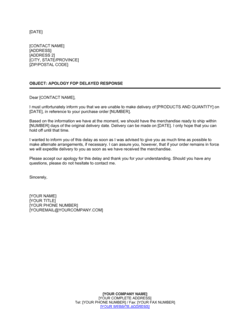
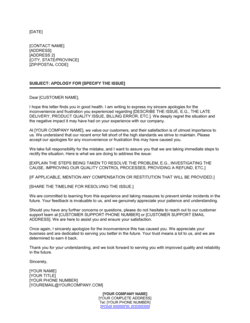
Dear [BUYER NAME], We are writing to sincerely apologize for an error in the fulfillment of your recent order. Our records confirm that [QUANTITY SHIPPED] units of [PRODUCT NAME] were dispatched against your purchase order for [QUANTITY ORDERED] units.

Common mistake: Using passive or vague language such as 'it appears there may have been a discrepancy.' A clear, active acknowledgment builds trust faster and reduces back-and-forth correspondence.

Description of the discrepancy

In plain language: Specifies exactly how many units were ordered, how many were shipped, and the resulting excess quantity, with reference to the original purchase order.

Sample language
Your Purchase Order No. [PO NUMBER] dated [DATE] specified [QUANTITY ORDERED] units. Our warehouse dispatched [QUANTITY SHIPPED] units on [SHIP DATE], resulting in an excess of [EXCESS QUANTITY] units.

Common mistake: Stating only the excess quantity without confirming the ordered quantity. The buyer needs both figures to verify the discrepancy matches their own records before authorizing a return.

Explanation of the cause

In plain language: Briefly and honestly explains how the error occurred β€” a pick-and-pack mistake, system entry error, or labeling issue β€” without over-explaining or assigning blame to a specific employee.

Sample language
This overshipment was the result of a [data-entry error / picking error / system duplication] in our fulfillment process. We take full responsibility for this mistake.

Common mistake: Providing no explanation at all. Buyers are more likely to accept the apology and cooperate with the return when they understand the root cause, even briefly.

Proposed resolution

In plain language: Offers a specific, actionable remedy β€” return of excess units at the seller's cost, issuance of a credit note, or an adjusted invoice β€” so the buyer knows exactly what happens next.

Sample language
We would like to arrange the return of the [EXCESS QUANTITY] excess units at our expense. Please retain the goods until our logistics partner contacts you to schedule a collection, or alternatively, we can issue a credit note for the excess units if you prefer to keep them.

Common mistake: Asking the buyer to 'let us know how they would like to proceed' without offering any concrete option. Buyers want the seller to propose a solution, not create more work for them.

Return or credit instructions

In plain language: Provides the specific steps the buyer needs to take β€” or confirms they need to take none β€” to facilitate the return or credit, including any RMA number or collection timeline.

Sample language
A prepaid return label and RMA No. [RMA NUMBER] will be emailed to [CONTACT EMAIL] within [X] business days. No action is required on your part until you receive the label.

Common mistake: Issuing the apology letter without arranging the RMA or return label in advance. Telling the buyer to 'await further instructions' after already inconveniencing them compounds the frustration.

Invoice or billing adjustment

In plain language: Confirms that the invoice will be corrected or that a credit note will be issued to ensure the buyer is only billed for the quantity they ordered.

Sample language
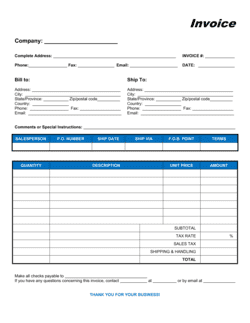
A revised invoice for [QUANTITY ORDERED] units totaling [CORRECT AMOUNT] will be issued within [X] business days, replacing Invoice No. [INVOICE NUMBER]. You are not liable for any charges related to the excess [EXCESS QUANTITY] units.

Common mistake: Failing to address the billing implication at all. If the buyer was invoiced for the full shipped quantity, leaving that unresolved creates an accounts-payable dispute that outlasts the physical return.

Preventive assurance

In plain language: Briefly states what process change or corrective action the sender is taking to prevent a recurrence, giving the buyer confidence the error was not systemic.

Sample language
We have reviewed our fulfillment workflow and implemented an additional verification step at the point of packing to prevent this type of error from recurring.

Common mistake: Promising a sweeping process overhaul without any specifics. A concrete, modest improvement ('double-check scan of PO quantity before pallet seal') is more credible than 'we are reviewing all our processes.'

Goodwill closing and contact details

In plain language: Closes the letter with a sincere expression of regret for the inconvenience, offers a direct point of contact for questions, and optionally extends a goodwill gesture such as a discount on the next order.

Sample language
We sincerely apologize for any inconvenience this overshipment has caused. Please contact [NAME] directly at [EMAIL] or [PHONE] if you have any questions. As a token of our appreciation for your patience, we would like to offer [X]% off your next order.

Common mistake: Ending with a generic 'thank you for your understanding' without providing a named contact. Buyers with practical follow-up questions need a specific person to reach, not a generic inbox.

How to fill it out

  1. 1

    Enter the date, buyer name, and address

    Add today's date and the buyer's full legal name and mailing or billing address in the header block. Use the legal entity name if writing to a business.

    πŸ’‘ Match the buyer name exactly to the name on the original purchase order β€” mismatches slow down the buyer's internal approval process.

  2. 2

    Add the purchase order and shipment reference numbers

    Insert the buyer's PO number and your internal shipment or dispatch number in the reference line. Both references help both parties pull the correct records immediately.

    πŸ’‘ If the buyer uses a vendor portal, include the portal transaction ID as well β€” it removes a lookup step for their receiving team.

  3. 3

    State the ordered quantity, shipped quantity, and excess

    Fill in the exact figures from your warehouse dispatch records and the buyer's PO. Calculate and state the excess quantity explicitly.

    πŸ’‘ Double-check your dispatch records before completing this section β€” a second error in the apology letter itself undermines your credibility.

  4. 4

    Briefly describe the cause of the error

    In one or two sentences, name the specific process failure β€” data entry, picking, or system error. Avoid over-explaining or naming individual employees.

    πŸ’‘ Frame the cause as a process issue, not a people issue. This keeps the tone professional and signals that a systemic fix is underway.

  5. 5

    Choose and describe the proposed resolution

    Select one or two resolution options β€” return at your cost, credit note, or adjusted invoice β€” and describe the logistics clearly. Tell the buyer what, if anything, they need to do.

    πŸ’‘ Offering the buyer a choice between return and credit note increases the likelihood of a quick agreement. Most buyers prefer the option that requires less effort on their end.

  6. 6

    Confirm the billing adjustment

    Reference the original invoice number and state clearly that a revised invoice or credit note will be issued for the correct quantity. Include the corrected total if possible.

    πŸ’‘ Sending the revised invoice or credit note together with the apology letter β€” rather than promising to send it later β€” resolves the billing issue in a single communication.

  7. 7

    Add the sender's name, title, and direct contact

    Close the letter with the name and title of the person responsible for resolving the issue, plus their direct email and phone number.

    πŸ’‘ Use a named individual rather than a department email. Buyers respond faster and more cooperatively when they have a real contact person.

Frequently asked questions

What is an apology for overshipment?

An apology for overshipment is a formal business letter sent by a seller or supplier to a buyer when more goods were dispatched than the buyer ordered. It acknowledges the error, identifies the exact quantity discrepancy, proposes a resolution such as a return or credit note, and confirms any billing adjustment needed to correct the invoice.

When should I send an apology for overshipment?

Send it as soon as the overshipment is confirmed β€” either by your own warehouse records or upon notification from the buyer. The sooner the letter is issued, the easier the return logistics and billing correction become. Delays allow the excess goods to be put into the buyer's own inventory or further distributed, complicating recovery.

Does the buyer have to return the excess goods?

In most commercial arrangements, the buyer is not obligated to pay for or keep goods they did not order. Whether they must return them depends on the terms of the sale contract and the seller's instructions. Most sellers arrange a prepaid collection to minimize the burden on the buyer. If the excess quantity is small and the return cost exceeds the product value, issuing a credit note and allowing the buyer to keep the goods is often the more practical resolution.

Should the apology letter include a credit note?

Not necessarily as part of the same document, but the letter should confirm that a credit note or revised invoice will be issued and state the timeline. Sending the credit note simultaneously with the apology letter is best practice β€” it resolves the financial discrepancy in one step rather than requiring a second communication.

What is the difference between an overshipment and an incorrect shipment?

An overshipment means the correct product was shipped, but in greater quantity than ordered. An incorrect shipment means the wrong product β€” different SKU, size, or item β€” was dispatched entirely. The apology language and resolution steps differ: overshipment focuses on quantity reconciliation, while incorrect shipment requires both a return and a replacement dispatch.

Can this letter be used for international shipments?

Yes, the core structure applies to both domestic and international overshipments. For international transactions, also reference the commercial invoice and packing list numbers used by customs, and confirm whether the excess goods will be returned under a customs drawback or re-export arrangement. Coordinate with your freight forwarder before dispatching return instructions.

Does this letter need to be signed?

A formal signature is not legally required for a business apology letter, but including a printed name, title, and direct contact details carries the same practical weight. For high-value overshipments or long-standing buyer relationships, having a senior manager or account manager sign the letter adds credibility and signals the matter is being handled at an appropriate level.

How do I prevent overshipments from happening again?

Common preventive measures include adding a PO quantity verification scan at the point of packing, requiring a second picker confirmation for orders above a defined unit threshold, and reconciling dispatch records against purchase orders before the carrier collects. Mentioning the specific corrective action in the apology letter demonstrates accountability and reassures the buyer that the error was not systemic.

How this compares to alternatives

vs Apology For Delay In Shipment

An apology for delay addresses a timing failure β€” goods were dispatched too late. An apology for overshipment addresses a quantity failure β€” too many goods were sent on time. The delay apology focuses on revised delivery dates; the overshipment apology focuses on return logistics and billing correction.

vs Credit Note

A credit note is a financial instrument that reduces the buyer's invoice balance for the excess units. The apology letter is the explanatory communication that precedes or accompanies the credit note. Both are typically needed: the letter explains what happened and proposes the remedy; the credit note executes the financial adjustment.

vs Purchase Order

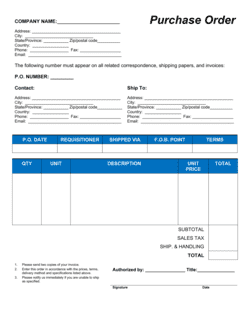
A purchase order is the buyer's original authorization specifying quantity, price, and delivery terms. It is the reference document against which the overshipment is measured. The apology letter cites the PO number and corrects the deviation from it β€” they are complementary documents in the same transaction chain.

vs Apology For Incorrect Shipment

An incorrect shipment apology covers a situation where the wrong product was sent, regardless of quantity. An overshipment apology covers the right product sent in excess quantity. Incorrect shipment resolutions require a replacement dispatch in addition to a return; overshipment resolutions require only a return or credit for the surplus units.

Industry-specific considerations

Wholesale and Distribution

High-volume case and pallet orders make unit-count errors common; letter must reference both case quantities and unit quantities to match the buyer's receiving records.

E-commerce and Retail

Overshipments to retail buyers can trigger costly back-stock or markdown situations; prompt resolution with a prepaid return label and credit note prevents chargebacks.

Manufacturing

Raw material or component overshipments affect production scheduling and storage capacity; the letter should address storage liability and the collection timeline explicitly.

Food and Beverage

Excess perishable shipments have a short resolution window; the letter must propose same-day or next-day collection and confirm whether the buyer will be compensated for any spoilage risk.

Template vs pro β€” what fits your needs?

PathBest forCostTime
Use the templateAny seller or supplier handling a standard overshipment with a domestic or international buyerFree5–10 minutes
Template + professional reviewHigh-value overshipments, international buyers with customs implications, or key account relationships$50–$150 (account manager or operations lead review)30–60 minutes
Custom draftedOvershipments involving contractual penalty clauses, regulated goods, or formal dispute proceedings$200–$5001–2 business days

Glossary

Overshipment
The dispatch of a greater quantity of goods than was specified in the buyer's purchase order or confirmed order.
Purchase Order (PO)
A buyer-issued document authorizing a specific quantity and price of goods; the reference document against which shipment accuracy is measured.
Return Merchandise Authorization (RMA)
A pre-approved number or process allowing a buyer to return goods to the seller at the seller's cost or direction.
Credit Note
A document issued by the seller reducing the amount owed by the buyer, used here to offset any invoice discrepancy caused by the overshipment.
Packing Slip
A document included in or attached to a shipment that lists the exact contents; discrepancies between the packing slip and the PO identify overshipment.
Consignment
A shipment of goods sent from a seller to a buyer; in overshipment contexts, the consignment quantity exceeds the agreed amount.
Adjusted Invoice
A corrected billing document issued to reflect the actual quantity ordered rather than the quantity erroneously shipped.
Goodwill Gesture
A discretionary offer β€” such as a discount on a future order or free shipping β€” made by the seller to compensate for inconvenience caused by the error.

Part of your Business Operating System

This document is one of 3,000+ business & legal templates included in Business in a Box.

  • Fill-in-the-blanks β€” ready in minutes
  • 100% customizable Word document
  • Compatible with all office suites
  • Export to PDF and share electronically

Create your document in 3 simple steps.

From template to signed document β€” all inside one Business Operating System.
1
Download or open template

Access over 3,000+ business and legal templates for any business task, project or initiative.

2
Edit and fill in the blanks with AI

Customize your ready-made business document template and save it in the cloud.

3
Save, Share, Send, Sign

Share your files and folders with your team. Create a space of seamless collaboration.

Save time, save money, and create top-quality documents.

β˜…β˜…β˜…β˜…β˜…

"Fantastic value! I'm not sure how I'd do without it. It's worth its weight in gold and paid back for itself many times."

Managing Director Β· Mall Farm
Robert Whalley
Managing Director, Mall Farm Proprietary Limited
β˜…β˜…β˜…β˜…β˜…

"I have been using Business in a Box for years. It has been the most useful source of templates I have encountered. I recommend it to anyone."

Business Owner Β· 4+ years
Dr Michael John Freestone
Business Owner
β˜…β˜…β˜…β˜…β˜…

"It has been a life saver so many times I have lost count. Business in a Box has saved me so much time and as you know, time is money."

Owner Β· Upstate Web
David G. Moore Jr.
Owner, Upstate Web

Run your business with a system β€” not scattered tools

Stop downloading documents. Start operating with clarity. Business in a Box gives you the Business Operating System used by over 250,000 companies worldwide to structure, run, and grow their business.

Start freeΒ Β·Β No credit card required