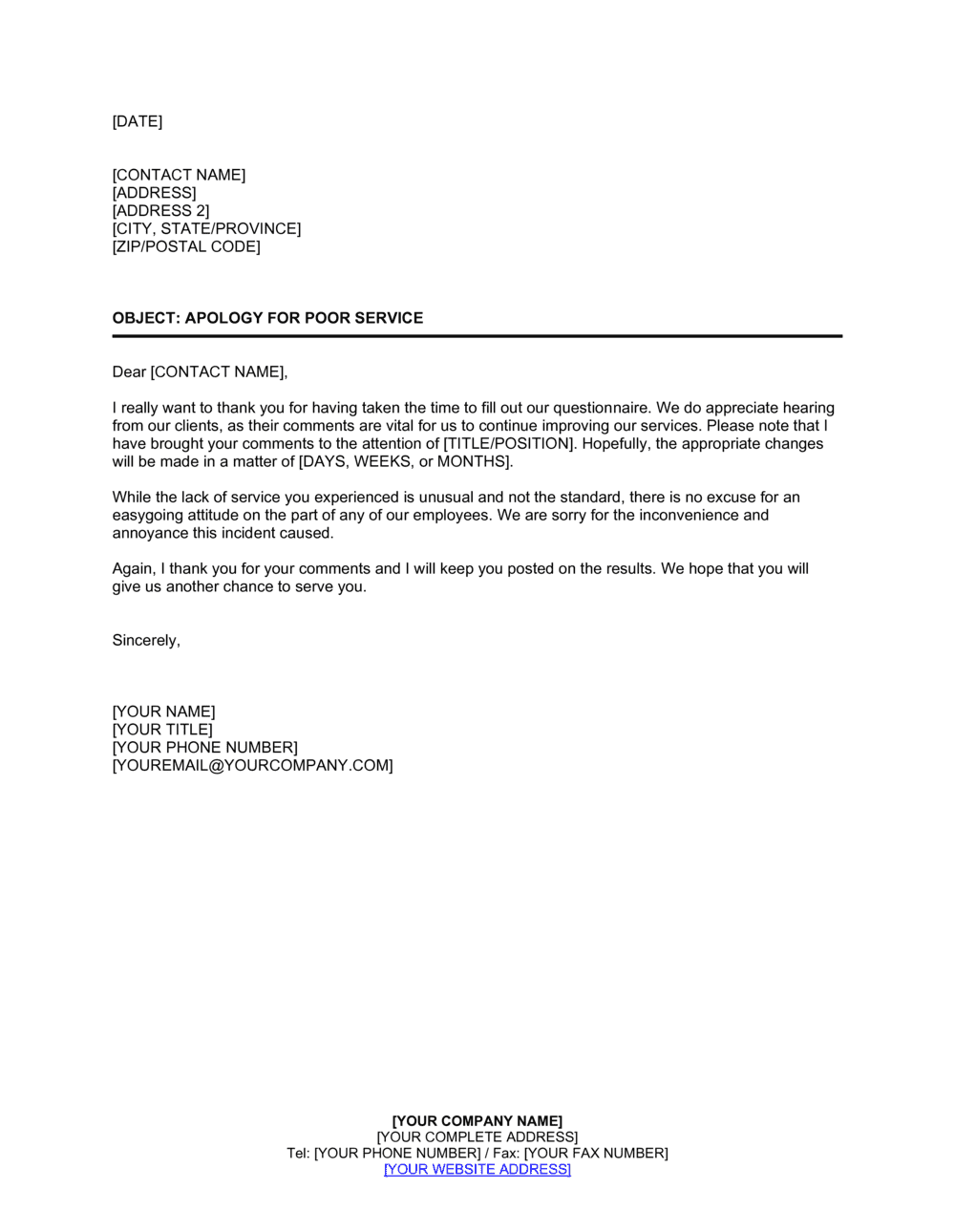
Apology for Poor Service Rating on Customer Questionnaire Template

Free Word download β€’ Edit online β€’ Save & share with Drive β€’ Export to PDF

1 pageβ€’15–25 min to fillβ€’Difficulty: Standard
Learn more ↓
FreeApology for Poor Service Rating on Customer Questionnaire Template

At a glance

What it is
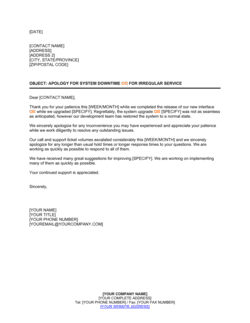
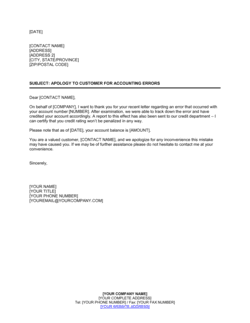
An Apology For Poor Service Rating On Customer Questionnaire is a formal business letter sent to a customer who submitted a negative or below-average score on a service satisfaction survey. This free Word download gives you a structured, professional starting point you can edit online and send by email or post within minutes of reviewing a negative rating.
When you need it
Use it as soon as your team identifies a poor score on any customer satisfaction survey, NPS questionnaire, or post-service feedback form. A prompt, personalized response within 24–48 hours of receiving the rating is the single most effective step in retaining a dissatisfied customer.
What's inside
A personalized salutation, a direct acknowledgment of the poor rating, a sincere apology without defensive language, a brief explanation of what went wrong, corrective actions being taken, and a goodwill gesture or invitation to continue the relationship.

What is an Apology For Poor Service Rating On Customer Questionnaire?

An Apology For Poor Service Rating On Customer Questionnaire is a formal business letter sent directly to a customer who submitted a below-average or negative score on a post-interaction satisfaction survey or feedback form. Its purpose is to acknowledge the poor experience, offer a sincere and unconditional apology, briefly explain what went wrong, describe the corrective steps being taken, and invite the customer to continue the relationship. Unlike a reactive complaint response, this letter is proactive β€” the company initiates contact after identifying a low score in its own feedback data, before the customer has had cause to escalate further.

Why You Need This Document

An unacknowledged poor service rating costs more than the original failure. Research on service recovery consistently shows that customers who receive a prompt, personalized follow-up after a bad experience are more likely to remain customers than those who experienced no problem at all β€” but only if the response is timely, specific, and genuine. Without a structured letter, the most common outcomes are delayed responses that arrive after the customer has already churned, generic form letters that confirm the customer's impression that no one read their feedback, and missed opportunities to capture a concrete corrective action on record. For businesses in regulated industries, a documented closed-loop response process also satisfies customer-treatment obligations monitored by financial, healthcare, and consumer protection bodies. This template gives your team a consistent, professional starting point that can be personalized and sent within minutes of identifying a low score β€” turning a service failure into a recoverable relationship.

Which variant fits your situation?

If your situation is…Use this template
Responding to a public online review rather than a private surveyResponse to Negative Online Review Letter
Addressing a formal written complaint from a customerResponse to Customer Complaint Letter
Apologizing for a delayed shipment or late deliveryApology for Late Delivery Letter
Offering a refund or compensation alongside the apologyCustomer Refund Apology Letter
Following up after a product defect or quality issueApology for Defective Product Letter
Communicating a service outage or system failure to affected customersService Disruption Notification Letter

Common mistakes to avoid

❌ Using a non-apology apology

Why it matters: Conditional language like 'sorry if you felt let down' implies the customer's perception is the problem, not the service failure itself. Customers recognize this phrasing and it increases churn risk.

Fix: Use direct, unconditional language: 'We apologize for the experience you had on [DATE].' No conditions, no hedges.
❌ Delaying the response beyond 48 hours

Why it matters: A service recovery letter sent five or more days after the survey is received is perceived as a process formality rather than a genuine response. The customer has often already moved to a competitor by then.

Fix: Set an automated alert that flags any survey score below a defined threshold (e.g., 3 out of 5) and assigns a follow-up task within the same business day.

❌ Sending a clearly templated, impersonal letter

Why it matters: A letter that contains the customer's name in the salutation but no other personalization signals the response was automated. It reinforces the feeling that the company does not care.

Fix: Reference at least one specific detail from the customer's survey β€” the date, the service type, or a point raised in their free-text comment.

❌ Making no mention of what changes are being made

Why it matters: An apology with no corrective action statement tells the customer their feedback changed nothing. It reduces trust rather than restoring it.

Fix: Include at least one concrete step taken or underway β€” a process change, a staff retraining, or a new escalation protocol β€” tied directly to the failure described.

The 9 key clauses, explained

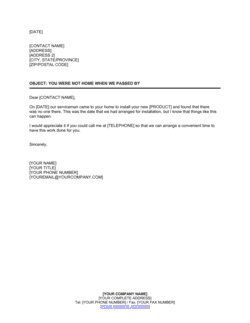
Date, sender, and recipient block

In plain language: Opens the letter with the date of writing, your full business name and address, and the customer's name and contact details.

Sample language
[DATE] | [YOUR COMPANY NAME] | [ADDRESS] | [CITY, STATE, ZIP] | [CUSTOMER FULL NAME] | [CUSTOMER ADDRESS]

Common mistake: Using a generic 'Dear Valued Customer' salutation instead of the customer's name β€” this signals the letter is a form response and reduces its impact on an already dissatisfied recipient.

Subject line

In plain language: A brief, specific heading that signals the purpose of the letter and references the feedback event.

Sample language
Re: Your Recent Service Feedback β€” [DATE OF SURVEY / INTERACTION]

Common mistake: Omitting the subject line entirely or writing something vague like 'Follow-up.' A specific subject line helps the customer immediately connect the letter to their experience.

Acknowledgment of the rating

In plain language: Directly references the poor rating received and thanks the customer for taking the time to complete the questionnaire.

Sample language
Thank you for completing our customer satisfaction questionnaire on [DATE]. We note that you rated your recent experience with [COMPANY NAME] as [RATING / SCORE], and we take that feedback seriously.

Common mistake: Jumping straight to apology without first acknowledging the specific rating. Customers feel dismissed when their feedback is not explicitly recognized before the response moves on.

Sincere apology

In plain language: A direct, unconditional apology for the poor experience β€” without excuses, blame-shifting, or minimizing language.

Sample language
We sincerely apologize for the level of service you received. The experience you described falls short of the standard we hold ourselves to, and we understand how frustrating this must have been.

Common mistake: Using passive or conditional phrasing such as 'We are sorry if you felt...' or 'We apologize that you were disappointed.' These constructions are perceived as non-apologies and can worsen customer sentiment.

Brief explanation of what went wrong

In plain language: A concise, honest account of the specific failure β€” without over-explaining or assigning blame to individuals.

Sample language
On this occasion, [BRIEF DESCRIPTION OF FAILURE β€” e.g., 'a breakdown in our internal handoff process meant your request was not escalated to the correct team in a timely manner'].

Common mistake: Providing no explanation at all, or offering a lengthy internal justification. Customers want to know their feedback prompted a real investigation β€” one or two clear sentences is the right length.

Corrective action statement

In plain language: Describes the specific steps the company is taking or has taken to prevent the same issue from recurring.

Sample language
We have [reviewed / retrained / updated] our [PROCESS / TEAM / SYSTEM] to ensure this does not happen again. [SPECIFIC MEASURE, e.g., 'All escalation requests are now acknowledged within two business hours.']

Common mistake: Stating vague intentions like 'We will work to improve.' Customers respond more favorably to specific, concrete actions β€” named processes, timelines, or measurable standards.

Goodwill gesture or remedy

In plain language: An optional but recommended tangible offer to partially compensate for the poor experience and demonstrate commitment to the relationship.

Sample language
As a gesture of goodwill, we would like to offer you [SPECIFIC OFFER β€” e.g., 'a [X]% discount on your next service' / 'a complimentary [PRODUCT/SERVICE]']. Please contact [NAME] at [CONTACT DETAILS] to arrange this.

Common mistake: Making the gesture conditional on the customer taking a specific action, such as resubmitting a higher score. Conditional goodwill gestures are perceived as manipulative and can escalate a complaint.

Invitation to continue the relationship

In plain language: Closes the substantive section by expressing a genuine desire to retain the customer and inviting further dialogue.

Sample language
We value your business and would welcome the opportunity to demonstrate the standard of service you rightly expect from us. Please do not hesitate to contact [NAME] directly at [EMAIL / PHONE] with any further feedback.

Common mistake: Ending with a generic 'Thank you for your business' without any invitation to reconnect. A specific named contact gives the customer a clear next step and signals genuine accountability.

Closing and signature block

In plain language: A professional sign-off with the sender's name, title, and contact details.

Sample language
Yours sincerely, [SENDER FULL NAME] | [TITLE] | [COMPANY NAME] | [DIRECT EMAIL] | [DIRECT PHONE]

Common mistake: Signing from a department or generic mailbox ('The Customer Service Team') rather than a named individual. A personal signature increases response rates and perceived sincerity.

How to fill it out

  1. 1

    Identify the specific interaction and customer

    Pull the original survey response and match it to the customer record β€” name, contact details, transaction date, and the specific service point that generated the poor rating.

    πŸ’‘ Act within 24–48 hours of receiving the low score. Response speed is as important as response quality in service recovery.

  2. 2

    Personalize the salutation and subject line

    Replace every placeholder with the customer's actual name and reference the specific date or interaction the questionnaire related to.

    πŸ’‘ If the customer's survey included a free-text comment, read it before writing the letter β€” specific references to their own words increase perceived sincerity significantly.

  3. 3

    Write the acknowledgment paragraph

    Cite the actual rating (e.g., '2 out of 5') and thank the customer for completing the questionnaire. Do not downplay the score.

    πŸ’‘ Avoid the phrase 'We were surprised to receive...' β€” it implies the rating was unwarranted rather than accepted.

  4. 4

    Draft the apology and explanation

    State the apology directly in the first sentence of the paragraph. Follow with one to two sentences explaining the specific process or circumstance that failed β€” keep it factual and brief.

    πŸ’‘ Read the explanation aloud before sending. If it sounds like an excuse, cut it back further.

  5. 5

    State the corrective action concretely

    Describe at least one specific change made or underway as a result of this feedback. Name the process, the team, or the timeline where possible.

    πŸ’‘ Phrases like 'Your feedback directly led to [specific change]' are far more credible than 'We are always looking to improve.'

  6. 6

    Add a goodwill gesture if appropriate

    Decide whether to offer a discount, complimentary service, or refund. Tailor the gesture to the severity of the service failure and the customer's value to the business.

    πŸ’‘ For high-value B2B clients, a phone call from a senior manager often carries more weight than a discount.

  7. 7

    Sign with a named individual and send

    Replace the signature block with the name, title, direct email, and phone of the person sending the letter. Send by email or post depending on the customer's contact preference on file.

    πŸ’‘ For email delivery, use a subject line that matches the letter's subject block β€” it increases the chance the message is opened rather than filtered as a bulk communication.

Frequently asked questions

When should I send an apology letter for a poor service rating?

Send it within 24–48 hours of receiving the poor rating. Service recovery research consistently shows that response speed matters as much as the content of the apology β€” a timely, personal response within two business days recovers significantly more customers than a polished letter sent a week later. Set up an alert in your survey platform to flag any score below your threshold immediately.

What should an apology letter for a poor service rating include?

At minimum: a personalized salutation using the customer's name, a direct acknowledgment of the specific rating, an unconditional apology, a brief and honest explanation of what went wrong, a concrete description of the corrective action taken, and a closing invitation to continue the relationship. A goodwill gesture β€” discount, complimentary service, or direct manager call β€” significantly improves retention outcomes.

Should I offer compensation in a poor service apology letter?

In most cases, yes β€” at least for meaningful service failures. A tangible goodwill gesture signals that the apology reflects genuine accountability rather than a compliance exercise. Calibrate it to the severity of the failure: a minor delay might warrant a discount code, while a significant service breakdown for a high-value client warrants a complimentary service or a refund. Never make the gesture conditional on the customer revising their rating.

What is the difference between this letter and a response to a customer complaint?

A poor service rating response is proactive β€” the company initiates contact after identifying a low score on an internal survey. A complaint response is reactive β€” it replies to a formal written complaint the customer chose to submit. The survey scenario gives you slightly more control over timing and tone since the customer has not yet escalated to a formal complaint. Both letters share the same core structure, but the survey version should reference the specific rating and questionnaire explicitly.

Can I use this letter template for email as well as post?

Yes. The template is formatted as a formal letter but adapts directly to email with minor adjustments β€” move the date and address block into the email signature, use the subject line as the email subject, and ensure the body text is readable on mobile. Email delivery is faster and appropriate for most business contexts; physical post is better suited for premium clients or situations where the service failure was severe.

How personal should the apology letter be?

Specific enough that the customer can tell the letter was written in direct response to their feedback, not dispatched as a batch communication. Reference the date of the interaction, the type of service, or a detail from their free-text comment if one was provided. You do not need to disclose internal process details or name individual staff members β€” acknowledge the failure at the company level and keep the tone professional.

What tone should an apology letter for poor service use?

Professional, direct, and warm β€” without being overly formal or corporate. Avoid passive constructions, legal hedging, and marketing language. The goal is to sound like a real person who has read the customer's feedback, takes it seriously, and is personally committed to making it right. Short paragraphs and plain language outperform elaborate prose in this context.

Does sending an apology letter obligate the company to anything legally?

A service recovery letter is not a legally binding document and does not constitute an admission of liability in most circumstances. The letter addresses a customer satisfaction issue, not a legal claim. If the poor service rating is linked to a potential legal dispute β€” a personal injury, a significant financial loss, or a regulatory complaint β€” consult legal counsel before sending any written response.

How this compares to alternatives

vs Response to Customer Complaint Letter

A complaint response letter replies to a formal, self-initiated written complaint from the customer. This apology letter is proactive β€” the company reaches out first after identifying a poor score on its own survey. Both share a similar structure, but the survey-response version has the advantage of reaching the customer before they escalate, and should explicitly reference the questionnaire and rating score.

vs Customer Apology Email Template

An apology email is a shorter, less formal communication suited to minor service issues or quick digital interactions. This formal letter is more appropriate for significant service failures, high-value clients, or situations where a documented paper trail adds accountability. The letter format signals a higher level of organizational attention to the complaint.

vs Customer Satisfaction Follow-Up Letter

A customer satisfaction follow-up letter thanks a customer for a positive rating and reinforces the relationship. This apology letter addresses the opposite scenario β€” a negative rating requiring acknowledgment and service recovery. They serve as complementary bookends in a closed-loop feedback process.

vs Goodwill Adjustment Letter

A goodwill adjustment letter focuses primarily on communicating a specific financial remedy β€” a refund, credit, or discount β€” as the central purpose of the communication. This apology letter leads with acknowledgment and empathy; any goodwill gesture is secondary. Use the adjustment letter when a concrete financial remedy has already been authorized and is the main message.

Industry-specific considerations

Hospitality and Hotels

Post-stay survey scores directly affect OTA rankings and repeat bookings, making prompt, personalized recovery letters a measurable revenue retention tool.

Financial Services

Regulatory bodies in many jurisdictions monitor complaint and satisfaction data; a documented service recovery process demonstrates compliance with customer-treatment standards.

Healthcare

Patient satisfaction scores affect reimbursement rates and accreditation in many healthcare systems, making closed-loop follow-up on low scores operationally critical.

Professional Services

Client relationships are long-term and high-value; a single unaddressed poor rating from a key account can trigger a contract review or departure.

Template vs pro β€” what fits your needs?

PathBest forCostTime
Use the templateAny business responding to a low score on a standard customer satisfaction or NPS surveyFree10–15 minutes per letter
Template + professional reviewHigh-value account recovery or situations where the service failure has potential legal dimensions$50–$200 (senior manager or communications advisor review)1–2 hours
Custom draftedEnterprise or regulated-industry clients where a documented service recovery process is required by contract or compliance$200–$5001–2 days

Glossary

NPS (Net Promoter Score)
A customer loyalty metric derived from a single survey question asking how likely the respondent is to recommend the company on a scale of 0–10.
CSAT (Customer Satisfaction Score)
A survey metric that measures a customer's satisfaction with a specific interaction, typically scored on a 1–5 or 1–10 scale immediately after service.
Service Recovery
The process of identifying a service failure and taking corrective action to restore a dissatisfied customer's confidence in the business.
Customer Questionnaire
A structured set of questions sent to customers after an interaction or purchase to measure satisfaction and collect feedback.
Goodwill Gesture
A tangible offer β€” such as a discount, refund, or complimentary service β€” made to a dissatisfied customer to demonstrate genuine commitment to making things right.
Detractor
In NPS terminology, a customer who scores the business 0–6 out of 10, indicating dissatisfaction and a risk of negative word-of-mouth.
Root Cause
The underlying reason a service failure occurred, as distinct from the visible symptom the customer experienced.
Churn
The rate at which customers stop doing business with a company over a given period, often accelerated by unresolved service failures.
Escalation Path
The defined process by which a customer complaint or poor rating is elevated to a higher-level employee with authority to resolve it.
Closed-Loop Feedback
A service process in which every negative customer survey response triggers a direct follow-up contact to acknowledge and address the issue.

Part of your Business Operating System

This document is one of 3,000+ business & legal templates included in Business in a Box.

  • Fill-in-the-blanks β€” ready in minutes
  • 100% customizable Word document
  • Compatible with all office suites
  • Export to PDF and share electronically

Create your document in 3 simple steps.

From template to signed document β€” all inside one Business Operating System.
1
Download or open template

Access over 3,000+ business and legal templates for any business task, project or initiative.

2
Edit and fill in the blanks with AI

Customize your ready-made business document template and save it in the cloud.

3
Save, Share, Send, Sign

Share your files and folders with your team. Create a space of seamless collaboration.

Save time, save money, and create top-quality documents.

β˜…β˜…β˜…β˜…β˜…

"Fantastic value! I'm not sure how I'd do without it. It's worth its weight in gold and paid back for itself many times."

Managing Director Β· Mall Farm
Robert Whalley
Managing Director, Mall Farm Proprietary Limited
β˜…β˜…β˜…β˜…β˜…

"I have been using Business in a Box for years. It has been the most useful source of templates I have encountered. I recommend it to anyone."

Business Owner Β· 4+ years
Dr Michael John Freestone
Business Owner
β˜…β˜…β˜…β˜…β˜…

"It has been a life saver so many times I have lost count. Business in a Box has saved me so much time and as you know, time is money."

Owner Β· Upstate Web
David G. Moore Jr.
Owner, Upstate Web

Run your business with a system β€” not scattered tools

Stop downloading documents. Start operating with clarity. Business in a Box gives you the Business Operating System used by over 250,000 companies worldwide to structure, run, and grow their business.

Start freeΒ Β·Β No credit card required