Apology to Customer for Accounting Error Template

Free Word download β€’ Edit online β€’ Save & share with Drive β€’ Export to PDF

1 pageβ€’15–20 min to fillβ€’Difficulty: Standard
Learn more ↓
FreeApology to Customer for Accounting Error Template

At a glance

What it is
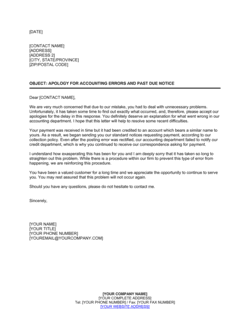
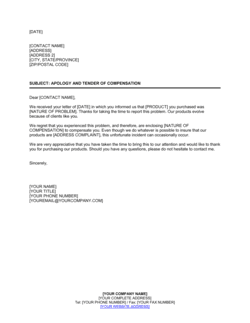
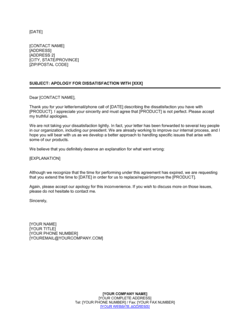
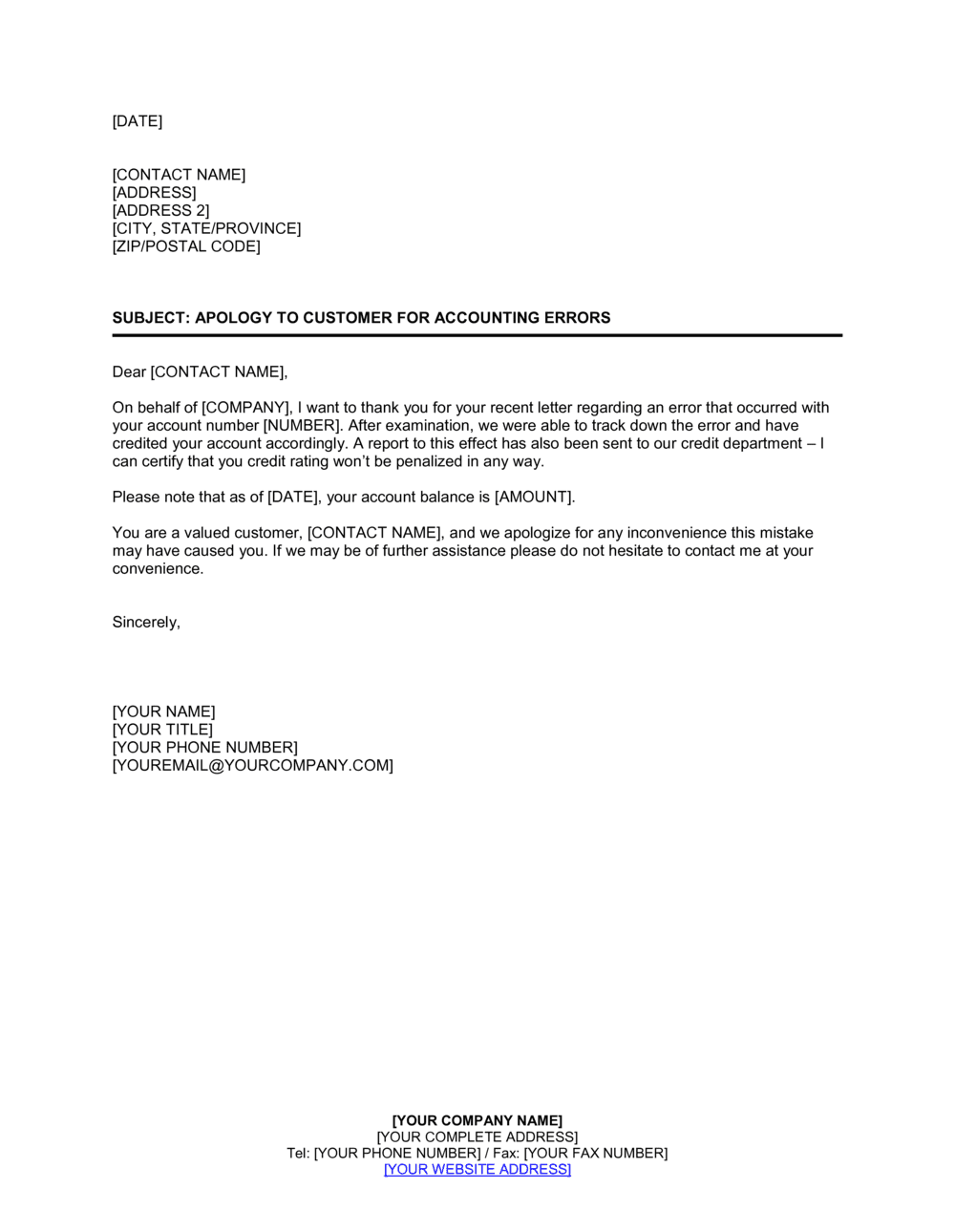
An Apology To Customer For Accounting Error is a formal business letter sent to acknowledge a billing or invoicing mistake, explain what went wrong, confirm the corrected figures, and restore the customer's confidence in your business. This free Word download gives you a ready-to-edit structure you can personalize and send the same day.
When you need it
Use it as soon as an accounting error affecting a customer is identified β€” whether an overcharge, duplicate invoice, misapplied payment, or incorrect credit. Prompt written acknowledgment prevents disputes from escalating and demonstrates accountability.
What's inside
A formal salutation, a direct apology and error description, a clear statement of the corrected figures, an explanation of the corrective action taken, and a goodwill closing with contact details for follow-up.

What is an Apology To Customer For Accounting Error?

An Apology To Customer For Accounting Error is a formal business letter sent by a company to a customer acknowledging a billing or invoicing mistake, explaining what went wrong, confirming the corrected figures, and outlining the specific steps taken to resolve the discrepancy. It functions as both a relationship management tool and a written record of error acknowledgment β€” replacing an informal phone call or email with a structured, professional communication that both parties can retain for their files. The letter typically accompanies a corrected invoice or credit note, giving the customer everything they need to update their own accounts without further follow-up.

Why You Need This Document

A billing error left unaddressed β€” or acknowledged only informally β€” creates real operational and reputational risk. Customers who discover an overcharge on their own are far more likely to dispute the invoice, initiate a chargeback, or question the reliability of your accounting practices across past transactions. A prompt, written apology sent before the customer notices the error signals accountability and keeps the resolution in your hands. For accounts payable teams on the customer's side, the letter provides the formal documentation they need to process the correction in their own system β€” without it, even a goodwill phone call may not move the reconciliation forward. This template lets you produce a polished, professional letter in under 15 minutes, reducing the gap between error discovery and customer notification to the same business day.

Which variant fits your situation?

If your situation is…Use this template
Customer was overcharged on an invoiceApology To Customer For Accounting Error
A payment was applied to the wrong accountApology Letter For Misapplied Payment
A duplicate invoice was sent to the customerApology To Customer For Accounting Error
Customer received an incorrect credit memoApology Letter For Billing Discrepancy
Customer was charged after a cancellationApology Letter For Unauthorized Charge
Error was discovered during a formal auditAccounting Adjustment Notification Letter
Customer dispute has already escalated to a formal complaintResponse To Customer Complaint Letter

Common mistakes to avoid

❌ Delaying the letter after the error is found

Why it matters: Every day between the error being discovered and the customer being notified increases the chance the customer notices it first, loses trust, and escalates to a dispute or chargeback.

Fix: Send the apology letter the same business day the error is confirmed. If the correction is not yet processed, send the letter acknowledging the error and follow up with the corrected invoice within 24 hours.
❌ Using vague or passive language to describe the error

Why it matters: Language like 'a discrepancy appears to have occurred' reads as evasive and makes the customer feel the business is not fully owning the mistake, which prolongs frustration.

Fix: Use direct language β€” 'We charged you $[X] instead of the correct $[Y]' β€” so the customer immediately understands the scope of the error and the resolution.

❌ Omitting the corrected figures or revised invoice

Why it matters: An apology without the corrected numbers or attached documentation leaves the customer unable to update their own accounts, which means follow-up calls and delayed reconciliation.

Fix: Always attach the corrected invoice or credit note to the letter, and state the correct amounts in the body of the letter itself.

❌ Providing no timeline for the refund or credit

Why it matters: Saying 'a refund will be processed' without a date forces the customer to follow up, which adds friction and signals disorganization.

Fix: State the exact number of business days β€” '5 business days from the date of this letter' β€” and identify the payment method being credited so the customer knows where to look.

The 8 key clauses, explained

Date, sender, and recipient block

In plain language: The letter's header β€” your company name and address, the date, and the customer's full name and mailing or email address.

Sample language
[COMPANY NAME] | [COMPANY ADDRESS] | [DATE] [CUSTOMER FULL NAME] [CUSTOMER ADDRESS]

Common mistake: Using an informal email-style header instead of a formal block format. A properly formatted header establishes the letter as an official business communication and creates a clean paper trail.

Subject line

In plain language: A one-line reference that identifies the purpose of the letter and the specific invoice or account number affected.

Sample language
Re: Correction of Accounting Error β€” Invoice #[INVOICE NUMBER] / Account #[ACCOUNT NUMBER]

Common mistake: Omitting the invoice or account number. Without a reference number, the customer cannot immediately match the letter to the transaction, delaying resolution.

Opening apology

In plain language: A direct, sincere acknowledgment of the error β€” naming what went wrong and expressing genuine regret without hedging or excessive qualification.

Sample language
Dear [CUSTOMER NAME], we are writing to sincerely apologize for the accounting error that affected your account. On [DATE], an incorrect charge of $[INCORRECT AMOUNT] was applied to Invoice #[INVOICE NUMBER], and we take full responsibility for this mistake.

Common mistake: Using passive constructions like 'an error occurred' instead of owning the mistake. Passive language reads as evasive and increases customer frustration.

Description of the error

In plain language: A brief, factual explanation of exactly what the error was β€” the incorrect figure, the correct figure, and how the discrepancy arose.

Sample language
The correct charge for [SERVICE / PRODUCT] should have been $[CORRECT AMOUNT]. The overcharge of $[DIFFERENCE] resulted from [BRIEF CAUSE β€” e.g., a data entry error in our billing system on DATE].

Common mistake: Over-explaining the internal cause in technical detail. A one-sentence explanation is sufficient β€” lengthy technical justifications shift focus away from the resolution.

Corrective action taken

In plain language: A concrete statement of what has already been done or will be done to fix the error β€” refund issued, credit note raised, corrected invoice attached, or account adjusted.

Sample language
We have issued a credit note for $[AMOUNT] against your account, which will be reflected on your next statement. A corrected Invoice #[INVOICE NUMBER]-R is enclosed for your records.

Common mistake: Stating what will be done without specifying a timeline. 'We will process a refund' is weaker than 'Your refund of $[X] will appear within [5] business days.'

Assurance of non-recurrence

In plain language: A brief statement explaining the steps your business has taken or will take to prevent the same error from happening again.

Sample language
We have reviewed our billing procedures and implemented an additional verification step to ensure this type of error does not recur. Your account has been flagged for priority review on the next billing cycle.

Common mistake: Making vague promises like 'we will do better.' Naming a specific process change β€” even a simple one β€” makes the assurance credible.

Goodwill gesture (optional)

In plain language: An optional offer of a discount, waived fee, or account credit as a token of goodwill for the inconvenience caused β€” used when the error was significant or the relationship warrants it.

Sample language
As a gesture of goodwill for the inconvenience this has caused, we would like to offer you a [X]% credit on your next invoice or a waiver of service fees for [PERIOD].

Common mistake: Including a goodwill gesture in every error letter regardless of scale. Offering a discount for a $2 rounding error can feel disproportionate and draws attention to a minor issue.

Closing and contact details

In plain language: A warm but professional closing that invites the customer to reach out with questions and restates your commitment to their satisfaction.

Sample language
We value your business and regret any inconvenience this error may have caused. Please do not hesitate to contact [CONTACT NAME] at [PHONE / EMAIL] if you have any questions. We look forward to continuing to serve you.

Common mistake: Closing with generic corporate language like 'Thank you for your understanding.' It can sound dismissive β€” a specific invitation to follow up feels more genuine and keeps the communication channel open.

How to fill it out

  1. 1

    Complete the header with company and customer details

    Enter your company's full legal name and address, the current date, and the customer's full name and billing address. Use the same address format as your invoices for consistency.

    πŸ’‘ Match the customer's name exactly as it appears on the invoice β€” discrepancies between the letter and the invoice create confusion in the customer's records.

  2. 2

    Add the specific invoice or account reference in the subject line

    Insert the original invoice number and account number into the subject line so the customer can immediately locate the transaction in their own records.

    πŸ’‘ If multiple invoices were affected, list all of them in the subject line rather than sending separate letters β€” one clear communication is easier for the customer to process.

  3. 3

    Write a direct apology naming the error

    State in the first paragraph what went wrong, when it happened, and that you take responsibility. Use active voice and name the specific error type β€” overcharge, duplicate invoice, misapplied payment.

    πŸ’‘ Aim for two to three sentences maximum in the opening. Lengthy apologies can read as defensive rather than sincere.

  4. 4

    Explain the error and the correct figures

    State the incorrect amount, the correct amount, and the difference β€” then give a one-sentence explanation of the cause. Attach the corrected invoice or credit note as a separate document.

    πŸ’‘ Use a simple format β€” 'Charged: $X | Correct amount: $Y | Difference: $Z' β€” to make the figures immediately scannable without reading the full paragraph.

  5. 5

    State the corrective action with a specific timeline

    Explain exactly what you have done β€” or will do β€” to fix the error, and give a specific number of business days for any refund or credit to appear.

    πŸ’‘ If a refund is being processed, include the last four digits of the payment method being credited so the customer knows where to look.

  6. 6

    Add a process improvement statement

    Briefly describe the internal step you have taken to prevent recurrence β€” even one sentence about an added verification step is sufficient.

    πŸ’‘ Keep this section short. Its purpose is to signal accountability, not to audit your internal controls in writing.

  7. 7

    Close with a named contact for follow-up

    End with a professional closing paragraph that names a specific contact β€” not just a generic 'accounts team' β€” and provides a direct phone number or email address.

    πŸ’‘ A named contact person increases response rates on follow-up questions and signals that a real person stands behind the communication.

Frequently asked questions

When should I send an apology letter for an accounting error?

Send it as soon as the error is confirmed β€” ideally the same business day. Prompt communication prevents the customer from discovering the mistake on their own, which significantly increases the likelihood of escalation. If the correction is still being processed, send the acknowledgment letter immediately and follow up with the corrected invoice within 24 hours.
What should an apology letter for an accounting error include?

At minimum: a direct apology naming the error, the incorrect and correct figures, a specific corrective action with a timeline, a brief explanation of how the error occurred, and a named contact for follow-up. Attach the corrected invoice or credit note as a separate document so the customer can update their own records immediately.

Should I offer a discount or goodwill credit in the letter?

Only when the error caused meaningful inconvenience β€” a significant overcharge, a delayed reconciliation that affected the customer's own reporting, or a repeat error with the same customer. For minor or first-time billing mistakes, a sincere written apology with a clear correction is usually sufficient. An unsolicited discount for a small error can draw more attention to the issue than it resolves.

Does an apology letter for an accounting error need to be signed?

A formal signature is not legally required, but including one β€” from a named accounts manager or business owner β€” adds credibility and signals accountability. For significant errors or high-value accounts, a letter signed by a senior manager carries considerably more weight than a generic unsigned notice.

How do I avoid sounding defensive in an apology letter?

Use active voice, own the mistake in the first sentence, and keep the explanation of the cause brief. Avoid over-explaining internal processes or listing reasons the error was understandable β€” the customer's primary concern is the resolution, not the backstory. Lead with the apology, follow immediately with the correction, and close with a specific offer to help if they have questions.

Can this letter be sent by email instead of postal mail?

Yes β€” email is appropriate and often faster for most business-to-business billing corrections. Use a clear subject line referencing the invoice number, attach the corrected invoice or credit note as a PDF, and send from a named accounts contact rather than a generic billing alias. For high-value accounts or formal disputes, follow up the email with a printed letter for the file.

What is the difference between an apology letter and a credit note?

An apology letter acknowledges the error and explains the corrective action in plain language β€” it is the human communication. A credit note is the accounting document that formally adjusts the customer's balance. Both should be issued together: the letter explains what happened and why, while the credit note gives the customer the document they need to update their own accounts payable records.

How formal does the letter need to be?

Use a standard business letter format β€” formal salutation, block paragraphs, professional closing β€” even if your normal customer communication is casual. A billing correction carries financial and legal significance, and a formal format signals that it has been handled through the appropriate internal process rather than informally patched. The tone can be warm and genuine while still being structured.

How this compares to alternatives

vs Credit Note

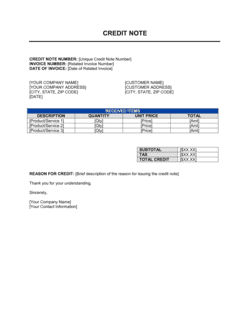
A credit note is an accounting document that adjusts a customer's balance by reducing the amount owed. An apology letter explains the error in plain language, acknowledges responsibility, and outlines the corrective action. The two are complementary β€” the letter communicates the situation to the customer; the credit note documents the financial correction. Always issue both together.

vs Response To Customer Complaint Letter

A response to a customer complaint letter is reactive β€” it addresses a grievance the customer has already raised. An apology for an accounting error is proactive β€” it is sent by the business as soon as the error is discovered, before the customer complains. Sending the apology first significantly reduces the chance of escalation to a formal complaint.

vs Corrected Invoice

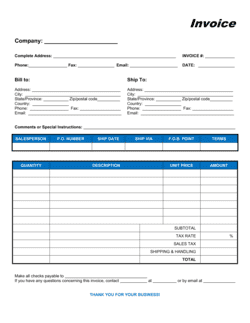
A corrected invoice replaces the erroneous one with accurate figures and a revision notation. The apology letter provides the context and human acknowledgment that a revised invoice alone cannot deliver. Together, the corrected invoice handles the accounting; the letter handles the relationship.

vs Customer Refund Letter

A customer refund letter notifies a customer that a payment is being returned β€” it may or may not involve an error. An apology for an accounting error specifically acknowledges a billing mistake, explains the cause, and may include a refund as part of the corrective action. When a refund is issued due to an error, both documents should be sent together.

Industry-specific considerations

Professional Services

Law firms, accounting firms, and consultancies frequently use this letter to correct hourly billing errors or misapplied retainer payments before client reconciliations.

Retail and E-commerce

Online retailers send this letter to correct duplicate charges, incorrect promotional pricing, or tax miscalculations that appear on customer statements after order fulfillment.

Healthcare and Medical Billing

Medical practices and billing departments issue formal accounting error apologies when insurance coordination errors result in incorrect patient invoices or unexpected balance bills.

Financial Services

Banks, credit unions, and financial advisors use this letter to acknowledge fee errors, misposted transactions, or incorrect interest charges β€” often with a regulatory obligation to respond in writing within a set timeframe.

Template vs pro β€” what fits your needs?

PathBest forCostTime
Use the templateAny business correcting a standard billing error with an existing customerFree10–15 minutes
Template + professional reviewHigh-value accounts where the error is significant or a formal dispute has been raised$50–$150 (senior manager or legal review)Same day
Custom draftedRegulated industries (financial services, healthcare) where written error notifications carry statutory obligations$200–$500 (legal or compliance counsel)1–2 days

Glossary

Accounting Error
A mistake in a financial record or transaction β€” such as an incorrect amount, duplicate entry, or misapplied payment β€” that results in inaccurate billing.
Credit Note
A document issued to reduce the amount a customer owes, typically used to correct an overcharge or return on a prior invoice.
Overcharge
Billing a customer more than the agreed or correct price for a product or service.
Duplicate Invoice
An invoice sent more than once for the same transaction, causing a customer to believe they owe payment twice.
Remittance
A payment sent by a customer in response to an invoice, which must be matched to the correct account and transaction.
Accounts Receivable
Money owed to a business by its customers for goods or services already delivered but not yet paid for.
Corrected Invoice
A replacement invoice issued after an error is found, bearing the same reference number with a revision notation and the accurate charges.
Goodwill Gesture
A voluntary action β€” such as a discount, credit, or waived fee β€” offered to a customer as an acknowledgment of inconvenience caused by a business error.

Part of your Business Operating System

This document is one of 3,000+ business & legal templates included in Business in a Box.

  • Fill-in-the-blanks β€” ready in minutes
  • 100% customizable Word document
  • Compatible with all office suites
  • Export to PDF and share electronically

Create your document in 3 simple steps.

From template to signed document β€” all inside one Business Operating System.
1
Download or open template

Access over 3,000+ business and legal templates for any business task, project or initiative.

2
Edit and fill in the blanks with AI

Customize your ready-made business document template and save it in the cloud.

3
Save, Share, Send, Sign

Share your files and folders with your team. Create a space of seamless collaboration.

Save time, save money, and create top-quality documents.

β˜…β˜…β˜…β˜…β˜…

"Fantastic value! I'm not sure how I'd do without it. It's worth its weight in gold and paid back for itself many times."

Managing Director Β· Mall Farm
Robert Whalley
Managing Director, Mall Farm Proprietary Limited
β˜…β˜…β˜…β˜…β˜…

"I have been using Business in a Box for years. It has been the most useful source of templates I have encountered. I recommend it to anyone."

Business Owner Β· 4+ years
Dr Michael John Freestone
Business Owner
β˜…β˜…β˜…β˜…β˜…

"It has been a life saver so many times I have lost count. Business in a Box has saved me so much time and as you know, time is money."

Owner Β· Upstate Web
David G. Moore Jr.
Owner, Upstate Web

Run your business with a system β€” not scattered tools

Stop downloading documents. Start operating with clarity. Business in a Box gives you the Business Operating System used by over 250,000 companies worldwide to structure, run, and grow their business.

Start freeΒ Β·Β No credit card required