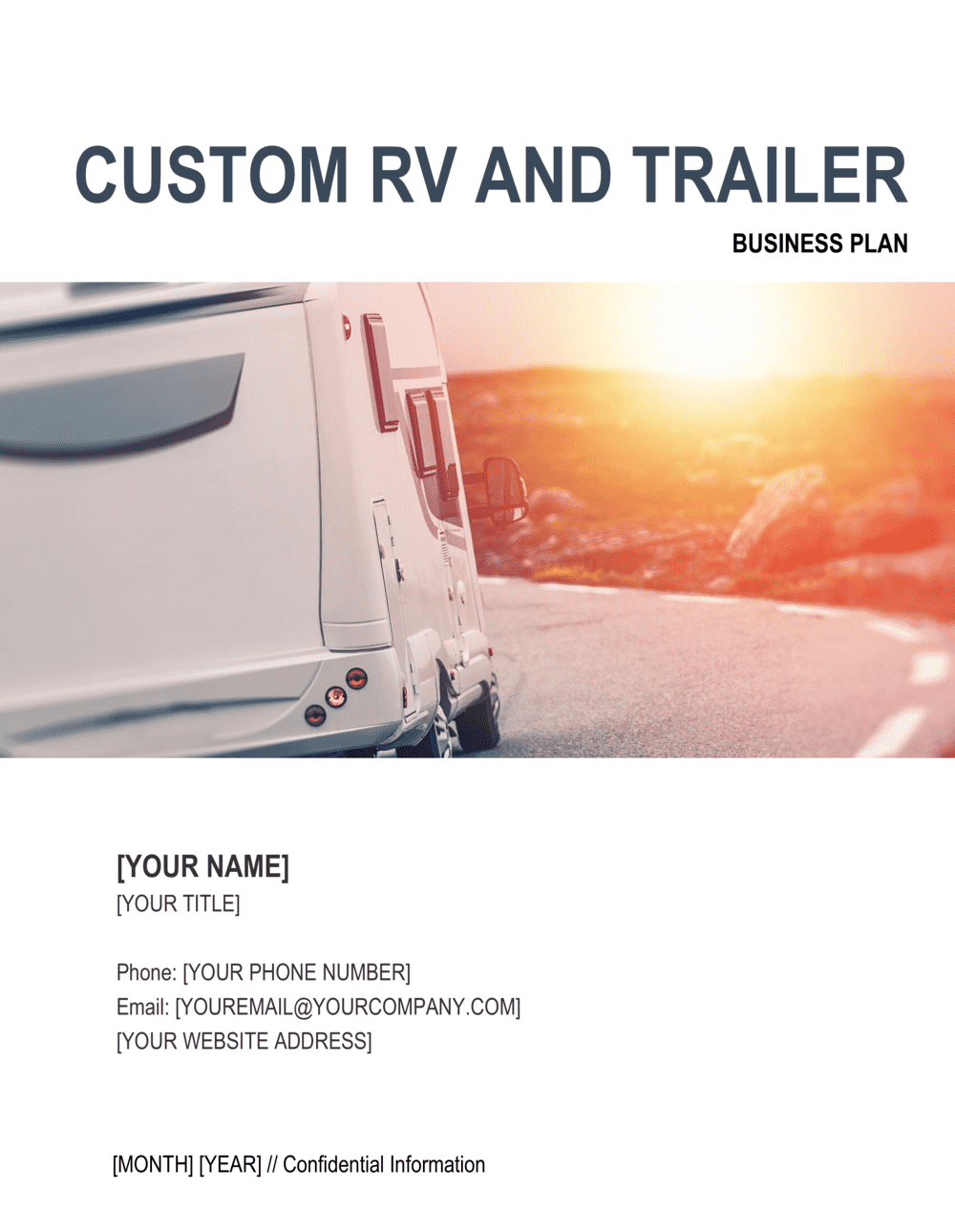
Custom RV and Trailer Business Plan Template

Free Word download β€’ Edit online β€’ Save & share with Drive β€’ Export to PDF

35 pagesβ€’2h 50m – 3h 50m to fillβ€’Difficulty: Expert
Learn more ↓
FreeCustom RV and Trailer Business Plan Template

At a glance

What it is
A Custom RV and Trailer Business Plan is a structured document that outlines the strategy, operations, and financial projections for a business that designs, builds, or sells custom recreational vehicles and trailers. This free Word download gives you a ready-to-edit framework covering everything from shop capacity and build costs to sales channels and 3-year revenue forecasts, exportable as PDF for lenders, investors, or partners.
When you need it
Use it when launching a new custom RV or trailer build shop, applying for an SBA loan or equipment financing, seeking a manufacturer dealer agreement, or formalizing growth strategy for an existing operation.
What's inside
Executive summary, company overview, market analysis, competitive positioning, products and services (build specs and pricing tiers), marketing and sales strategy, operations and production plan, management team, and 3-year financial projections including cost-of-goods-sold breakdown and cash flow schedule.

What is a Custom RV and Trailer Business Plan?

A Custom RV and Trailer Business Plan is a structured planning document that maps the full strategy, production model, market opportunity, and financial projections for a business that designs, fabricates, or sells custom recreational vehicles and trailers. It covers everything from shop capacity and per-unit cost-of-goods-sold to acquisition channels, lead times, and 3-year revenue forecasts β€” giving founders, lenders, and investors a single source of truth for evaluating the business. Unlike a general business plan template, this version is structured around build-to-order manufacturing variables: throughput constraints, materials procurement cycles, staged payment schedules, and DOT or RVIA certification requirements that directly affect cash flow and operational risk.

Why You Need This Document

Without a written business plan, SBA loan and equipment financing applications stall at underwriting β€” lenders require documented market analysis, a management team overview, and a line-item use-of-funds schedule before approving any capital request above $150,000. For custom builds specifically, the stakes are higher: a single unit may tie up $40,000–$150,000 in materials and labor over 10–20 weeks before final payment is collected. Without a plan that models deposit timing, build-slot capacity, and supplier lead times, cash flow surprises are nearly inevitable. A complete, lender-ready business plan forces you to stress-test your throughput ceiling, identify single-source supplier risks, and validate that your pricing actually covers COGS and overhead before you take your first order β€” making it as valuable internally as it is for any bank or investor reviewing it.

Which variant fits your situation?

If your situation is…Use this template
Launching a build-to-order custom RV fabrication shopCustom RV and Trailer Business Plan
Opening a standard RV dealership with manufacturer inventoryAuto Dealership Business Plan
Starting a trailer rental or fleet operationVehicle Rental Business Plan
Launching a mobile conversion van or sprinter build businessAuto Repair and Specialty Vehicle Business Plan
Seeking quick internal alignment on a new product lineOne-Page Business Plan
Expanding an existing shop into a second locationBusiness Expansion Plan
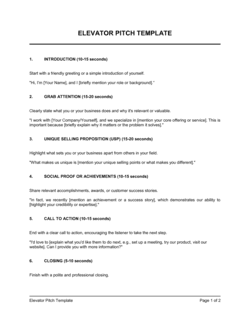
Pitching investors in a 20-minute meetingElevator Pitch Template

Common mistakes to avoid

❌ Projecting revenue beyond production capacity

Why it matters: A shop that can build eight units per month cannot generate Year 3 revenue that requires 20 units per month without a documented capacity expansion plan. Lenders catch this immediately during underwriting.

Fix: Build a throughput model first β€” available labor hours divided by average build hours per unit β€” and cap revenue projections at that ceiling unless the plan explicitly funds an expansion.

❌ Single-source supplier with no contingency

Why it matters: If the plan lists one chassis or materials supplier with no alternative, any supply disruption stalls production entirely, jeopardizing loan repayment and customer commitments.

Fix: Identify at least one secondary supplier for chassis and key components, and document their lead times and pricing in the operations section.

❌ Omitting lead time as a competitive and financial variable

Why it matters: Lead time directly determines how many build slots you can sell per year and how much working capital you tie up between deposit and final payment. Ignoring it produces inaccurate cash flow projections.

Fix: State your target lead time per tier, calculate the average work-in-progress value at any given time, and show how deposits fund materials procurement to reduce cash exposure.

❌ Describing builds in spec language only

Why it matters: Lenders and investors evaluating the plan may not understand RV or trailer specifications β€” a list of technical details without customer outcomes makes it hard to evaluate market demand.

Fix: Pair every spec with a customer benefit: 'AGM battery bank (400Ah) β€” powers all appliances off-grid for 10+ days without shore power.'

❌ No deposit or payment milestone structure

Why it matters: Custom builds have long lead times and high material costs. Without a staged payment structure, the business funds each build entirely from working capital, creating severe cash flow pressure.

Fix: Define a payment schedule β€” typically 30% at order confirmation, 40% at materials procurement, 30% at delivery β€” and model this into the cash flow statement.

❌ Ignoring regulatory and certification requirements

Why it matters: Custom trailers and RVs must meet NHTSA, DOT, and in some states RVIA certification requirements. Omitting this from the plan signals to lenders that compliance costs have not been budgeted.

Fix: Add a compliance and certification section or subsection in operations that identifies applicable standards, the cost of third-party inspection, and the timeline to achieve certification for each build tier.

The 10 key sections, explained

Executive Summary

Company Overview

Market Analysis

Competitive Analysis

Products and Services

Marketing and Sales Strategy

Operations and Production Plan

Management Team

Financial Projections

Funding Requirements and Use of Funds

How to fill it out

  1. 1

    Complete the company overview and mission first

    Enter your legal entity name, founding date, shop address and square footage, and a one-sentence mission that identifies what you build, for whom, and at what price tier.

    πŸ’‘ Locking this in first prevents scope drift β€” every subsequent section should support the business model stated here.

  2. 2

    Research and size your target market

    Pull two independent sources (e.g., RVIA industry report and a regional dealer census) for your TAM. Then build a bottom-up SAM by estimating reachable buyers in your geographic footprint multiplied by your average build price.

    πŸ’‘ If your top-down and bottom-up estimates differ by more than 30%, revisit your geographic assumptions or your average selling price.

  3. 3

    Profile at least four competitors with pricing and lead times

    Research direct competitors β€” other custom builders and nearby dealers β€” and document their pricing tiers, typical lead times, and customer reviews. Then write one paragraph explaining your specific advantage.

    πŸ’‘ Lead time is one of the most meaningful differentiators in custom builds. If you can deliver in 10 weeks versus a competitor's 20, quantify that.

  4. 4

    Define your build tiers and pricing

    List each product category with standard specs, optional upgrades, base price, and production status. Translate technical features into customer-relevant outcomes for each tier.

    πŸ’‘ Price anchoring works well in this industry β€” an entry tier makes the mid-range feel accessible, while a premium tier validates the brand.

  5. 5

    Map your sales process and acquisition channels

    Choose two or three primary channels and estimate the cost per lead and close rate for each. Document the full sales sequence from first inquiry to deposit to confirmed build slot.

    πŸ’‘ A non-refundable or partially refundable deposit of 20–30% at build-slot confirmation dramatically reduces order cancellation rates.

  6. 6

    Model throughput capacity and operational constraints

    Calculate your monthly unit capacity based on available labor hours, equipment stations, and standard build hours per unit. Flag any single-source supplier dependencies.

    πŸ’‘ Build a simple capacity model: (available labor hours per month) Γ· (average build hours per unit) = max monthly units. This number constrains every revenue projection.

  7. 7

    Build the financial model from unit economics up

    Start with units sold Γ— average selling price for revenue. Calculate COGS per unit (materials, direct labor, subcontract). Layer in fixed overhead to get to EBITDA. Model monthly for Year 1, annually for Years 2–3.

    πŸ’‘ Include a downside scenario at 70% of projected units β€” lenders expect to see how the business survives a slow quarter.

  8. 8

    Write the executive summary last

    Pull the strongest data point from each section β€” market size, competitive advantage, throughput capacity, Year 3 revenue, and funding ask β€” and compress into 1–2 pages.

    πŸ’‘ The executive summary is what a lender reads while deciding whether to read the rest. Lead with the number that matters most: projected revenue, unit margin, or payback period.

Frequently asked questions

What is a custom RV and trailer business plan?

A custom RV and trailer business plan is a structured document that defines the strategy, production model, market opportunity, competitive positioning, and financial projections for a business that designs, fabricates, or sells custom recreational vehicles and trailers. It serves as both an internal operating roadmap and an external document for lenders, investors, and equipment financing applications.

Who needs a custom RV and trailer business plan?

Custom fabricators launching or formalizing a build shop, RV dealerships expanding into custom or specialty builds, trailer manufacturing startups applying for SBA loans, and outdoor or overlanding entrepreneurs raising capital for a niche brand all need a formal business plan. Any lender providing equipment financing or a working capital line will require one as part of the application package.

What financial projections should be included?

At minimum: a monthly P&L for Year 1 and annual P&L for Years 2–3, a cash flow statement showing deposit timing versus materials spend and final payment receipt, and a COGS breakdown by unit covering materials, direct labor, and subcontracted work. Lenders also expect a use-of-funds schedule tying each capital request to a specific production or operational milestone.

How do I determine my build pricing and margins?

Start with a full bill-of-materials cost for each build tier, add direct labor hours at your fully-loaded labor rate, and include a subcontractor allowance for electrical, upholstery, or specialty work. Total direct cost is your COGS floor. Apply a target gross margin of 30–45% for custom builds to arrive at your base selling price, then validate against comparable competitor pricing in your market.

What is a realistic lead time for custom RV or trailer builds?

Lead times vary widely by complexity and shop capacity. Simple utility or cargo-conversion trailers can be completed in 4–8 weeks. Mid-range toy haulers or travel trailer conversions typically run 10–16 weeks. Fully custom Class B or Class C builds with off-grid systems and custom interiors commonly require 20–32 weeks. Your business plan should state a target lead time per tier and show how it constrains your annual throughput and revenue.

What certifications does a custom RV or trailer business need?

Requirements vary by unit type and state, but most custom trailers must meet DOT Federal Motor Vehicle Safety Standards. RVs sold commercially are typically expected to meet RVIA (Recreation Vehicle Industry Association) certification standards, which many lenders and dealers require. State-level titling and VIN assignment processes also apply. Budget for third-party inspection fees and timeline in the operations section.

Can I use this business plan template to apply for an SBA loan?

Yes. SBA lenders require a written business plan as part of the 7(a) and 504 loan application packages. The template covers the core sections β€” market analysis, management team, operations, and financial projections β€” that SBA underwriters review. For equipment-heavy loan requests above $350,000, supplement the template with a detailed equipment list, vendor quotes, and a personal financial statement.

How long should a custom RV and trailer business plan be?

A plan intended for an SBA loan or equipment financing application should run 20–30 pages plus a financial model appendix. Internal operating plans can be shorter. The sections most critical for lender review are the operations and production plan, financial projections, and use-of-funds schedule β€” these three sections should be the most detailed and well-sourced parts of the document.

What is floor plan financing and is it relevant to this business?

Floor plan financing is a revolving credit line used by dealerships to finance vehicle inventory on the lot, with the lender holding a security interest in each unit until it is sold. It is most relevant if your business model includes stocking finished units for retail sale rather than pure build-to-order. Custom build shops typically use equipment loans and working capital lines instead, since units are pre-sold before production begins.

How this compares to alternatives

vs General Business Plan

A general business plan template covers broad industries and uses generic section prompts. The custom RV and trailer business plan is pre-structured around build-to-order production, throughput capacity, COGS-per-unit modeling, and industry-specific variables like lead time and chassis sourcing. Use the general template for non-manufacturing businesses; use this one when fabrication and production capacity are central to the model.

vs One-Page Business Plan

A one-page plan is useful for early ideation and internal team alignment but lacks the financial depth, market evidence, and operational detail required for SBA loans or equipment financing. Use the one-page version to test the concept, then build this full plan before any capital application.

vs Product Launch Plan

A product launch plan focuses on the go-to-market sequence for a single new offering β€” messaging, channel activation, and launch milestones. A business plan covers the full company strategy including team, financials, and long-term operations. Use a product launch plan when introducing a new build tier to an existing business; use this business plan when establishing or funding the business itself.

vs Financial Projections Template

A standalone financial projections template covers the numbers alone β€” P&L, cash flow, and balance sheet. A business plan contextualizes those numbers with market analysis, competitive positioning, and operational detail that explains why the projections are credible. Lenders and investors never evaluate a financial model without the narrative that supports its assumptions.

Industry-specific considerations

Custom Fabrication and Manufacturing

Throughput capacity modeling, bill-of-materials costing, supplier lead times, and equipment financing are central to the financial and operations sections.

Outdoor, Recreation, and Adventure

Overlanding, van life, and off-grid travel are high-growth niches that require targeted customer profiling, community-based marketing channels, and premium pricing justification.

Automotive and Vehicle Sales

Dealer agreements, floor plan financing structures, and NHTSA/DOT compliance are recurring considerations for businesses that sell or title finished units.

Construction and Trades

Utility trailer, work trailer, and mobile workshop builds serve contractor and trade customers β€” this segment prioritizes payload rating, durability specs, and fast turnaround over aesthetic customization.

Template vs pro β€” what fits your needs?

PathBest forCostTime
Use the templateCustom builders and small shop owners applying for SBA loans under $500K or seeking equipment financingFree2–4 weeks (30–60 hours)
Template + professional reviewShops raising $500K–$2M, entering dealer agreements, or requiring a reviewed financial model for bank underwriting$500–$2,500 for a financial model review or SCORE advisor session3–5 weeks
Custom draftedMulti-location manufacturing operations, institutional investors, or businesses pursuing RVIA certification and retail dealer network expansion$3,000–$10,000 for a professional business plan writer with manufacturing sector experience4–8 weeks

Glossary

Build-to-Order
A production model where each unit is fabricated only after a customer places a confirmed order, reducing finished-goods inventory risk.
GVWR (Gross Vehicle Weight Rating)
The maximum allowable total weight of a loaded trailer or RV as specified by the manufacturer, which determines licensing, towing, and regulatory requirements.
Chassis
The underlying steel or aluminum frame on which an RV or trailer body is constructed, determining load capacity and structural performance.
Cost of Goods Sold (COGS)
All direct costs tied to producing a single unit β€” materials, purchased components, direct labor, and subcontracted work β€” before overhead and profit margin.
Dealer Agreement
A contract between a manufacturer and an authorized dealer that grants the right to sell specific brands or models within a defined territory.
Conversion
The process of modifying a standard vehicle or trailer shell β€” such as a cargo trailer or van β€” into a custom living, working, or recreational space.
Floor Plan Financing
A revolving line of credit used by dealerships to finance vehicle inventory, with the lender holding a security interest in each unit until it is sold.
Lead Time
The elapsed time from a confirmed customer order to completed delivery, covering design, procurement, fabrication, and finishing.
Throughput
The number of units a shop can complete and deliver in a given period β€” typically per month or per quarter β€” based on available labor hours and equipment.
TAM / SAM / SOM
Total Addressable Market, Serviceable Addressable Market, and Serviceable Obtainable Market β€” three nested measures of market size and realistic revenue reach.

Part of your Business Operating System

This document is one of 3,000+ business & legal templates included in Business in a Box.

  • Fill-in-the-blanks β€” ready in minutes
  • 100% customizable Word document
  • Compatible with all office suites
  • Export to PDF and share electronically

Create your document in 3 simple steps.

From template to signed document β€” all inside one Business Operating System.
1
Download or open template

Access over 3,000+ business and legal templates for any business task, project or initiative.

2
Edit and fill in the blanks with AI

Customize your ready-made business document template and save it in the cloud.

3
Save, Share, Send, Sign

Share your files and folders with your team. Create a space of seamless collaboration.

Save time, save money, and create top-quality documents.

β˜…β˜…β˜…β˜…β˜…

"Fantastic value! I'm not sure how I'd do without it. It's worth its weight in gold and paid back for itself many times."

Managing Director Β· Mall Farm
Robert Whalley
Managing Director, Mall Farm Proprietary Limited
β˜…β˜…β˜…β˜…β˜…

"I have been using Business in a Box for years. It has been the most useful source of templates I have encountered. I recommend it to anyone."

Business Owner Β· 4+ years
Dr Michael John Freestone
Business Owner
β˜…β˜…β˜…β˜…β˜…

"It has been a life saver so many times I have lost count. Business in a Box has saved me so much time and as you know, time is money."

Owner Β· Upstate Web
David G. Moore Jr.
Owner, Upstate Web

Run your business with a system β€” not scattered tools

Stop downloading documents. Start operating with clarity. Business in a Box gives you the Business Operating System used by over 250,000 companies worldwide to structure, run, and grow their business.

Start freeΒ Β·Β No credit card required