Community Center Business Plan Template

Free Word download β€’ Edit online β€’ Save & share with Drive β€’ Export to PDF

29 pagesβ€’2h 30m – 3h 20m to fillβ€’Difficulty: Expert
Learn more ↓
FreeCommunity Center Business Plan Template

At a glance

What it is
A Community Center Business Plan is a structured document that maps the mission, target population, program offerings, staffing model, facility requirements, funding sources, and multi-year financial projections for a new or expanding community center. This free Word download gives you an investor- and grant-ready starting point you can edit online and export as PDF to share with municipal partners, foundations, boards, and lenders.
When you need it
Use it when launching a new community center, applying for government or foundation grants, seeking municipal partnership agreements, or presenting an expansion of an existing facility to a board of directors or city council.
What's inside
Executive summary, organizational overview, community needs assessment, program and services plan, facilities and operations plan, staffing and governance structure, marketing and outreach strategy, and a full financial plan including revenue mix, expense budget, and three-year projections.

What is a Community Center Business Plan?

A Community Center Business Plan is a structured document that defines the mission, target population, program portfolio, facility requirements, staffing model, and multi-year financial projections for a new or expanding community center. It functions simultaneously as an internal operating blueprint and an external document for securing grants from foundations and government agencies, obtaining municipal permits and partnership agreements, and β€” for for-profit or hybrid structures β€” raising capital from investors or lenders. Unlike a general business plan, it centers on community impact metrics, diversified public funding strategy, and the earned-revenue streams unique to a facility-based organization: membership fees, program fees, and room rentals.

Why You Need This Document

Without a written community center business plan, grant applications stall at the due-diligence stage, city councils table facility proposals for lack of financial evidence, and board members approve programs with no shared understanding of how they will be funded. The cost of skipping it is concrete: most foundation grants above $50,000 require a formal plan as part of the application package, and CDFI lenders will not underwrite a facility loan without one. Beyond fundraising, the planning process itself forces critical decisions β€” which programs to launch first, what enrollment is needed to break even, and how many months of reserves are required to survive a delayed grant payment. This template gives you the structure to answer all of those questions before they become operational crises.

Which variant fits your situation?

If your situation is…Use this template
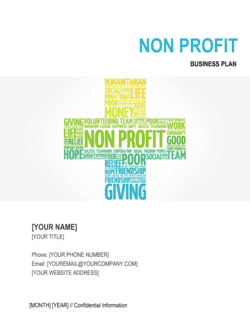
Applying for a federal or state community development block grantNonprofit Business Plan
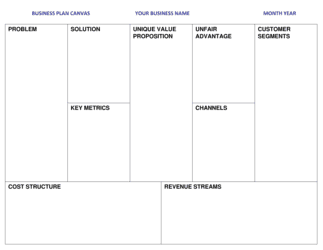
Quick internal planning or early-stage feasibility checkOne-Page Business Plan
Planning a youth-focused sports and recreation facilityRecreation Center Business Plan
Launching a senior services or adult day program centerSenior Services Program Plan
Opening a facility with a significant food service or cafΓ© componentRestaurant Business Plan
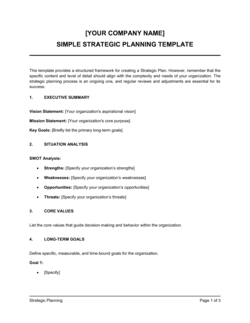
Presenting a 3–5 year strategic growth roadmap to an existing boardStrategic Plan
Applying for a bank loan or SBA financing for facility constructionBusiness Plan (General)

Common mistakes to avoid

❌ Projecting unconfirmed grant revenue as certain income

Why it matters: Grant applications are competitive β€” average acceptance rates at community foundations run 20–40%. A budget that depends on winning every targeted grant fails in Year 1.

Fix: Label each grant line as confirmed, submitted, or planned. Model a conservative scenario using only confirmed funding plus 50% of submitted applications.

❌ Underestimating facility operating costs

Why it matters: Utilities, insurance, janitorial, and maintenance for a community center routinely total 25–40% of the operating budget β€” leaving program budgets underfunded and requiring mid-year cuts.

Fix: Get actual utility history or estimates from the landlord or a comparable facility, and add a 15% contingency line to the facility cost budget.

❌ Launching too many programs in Year 1

Why it matters: Over-programming creates staffing stress, dilutes program quality, and makes the financial model dependent on full enrollment across every offering simultaneously.

Fix: Launch two to three anchor programs in Year 1, demonstrate quality and demand, then add programs in Years 2–3 with enrollment data to support the expansion.

❌ No operating reserve policy

Why it matters: Community centers with no cash reserve are one delayed grant payment away from a payroll crisis β€” a scenario that damages credibility with funders and partners.

Fix: Establish a written policy targeting three to six months of operating expenses in reserve and show the build schedule in your financial projections.

❌ Needs assessment based on national statistics only

Why it matters: Funders and municipal partners reject plans that cite national child poverty rates or national recreation participation data without linking the analysis to the specific neighborhood or zip code the center will serve.

Fix: Pull county or census-tract level data from the American Community Survey, local school district reports, or a city-commissioned needs study and cite them with publication dates.

❌ Staffing plan that omits a volunteer coordination role

Why it matters: Community centers that treat volunteer management as informal lose volunteers at high rates, eroding program capacity and the community relationships that sustain donor and funder trust.

Fix: Assign volunteer coordination as a named responsibility β€” either a dedicated staff role or a formal portion of a program coordinator's job description β€” and budget for volunteer training and recognition.

The 9 key sections, explained

Executive Summary

Organizational Overview and Mission

Community Needs Assessment

Programs and Services Plan

Facility and Operations Plan

Staffing and Governance Structure

Marketing and Community Outreach Strategy

Financial Plan and Projections

Funding Requirements and Use of Funds

How to fill it out

  1. 1

    Define the mission and legal structure

    Start with the center's legal entity type (nonprofit 501(c)(3), municipal department, or LLC), state of incorporation, and a one-sentence mission that names the specific population and intended outcome.

    πŸ’‘ Anchor the mission to a measurable outcome β€” 'reduce youth idle time by providing structured after-school programming to 300 children' β€” rather than a values statement.

  2. 2

    Conduct and document a community needs assessment

    Gather local census data, survey at least 50 community members, and interview two to three partner organizations to document the gap between current services and unmet need in your service area.

    πŸ’‘ Cite your data sources with publication dates β€” census data older than five years weakens a grant application significantly.

  3. 3

    Design the program and services portfolio

    List each program with target participants, session format, weekly schedule, capacity, staff-to-participant ratio, and fee structure. Tie every program directly to a need identified in your assessment.

    πŸ’‘ Start with two to three anchor programs in Year 1 rather than launching eight simultaneously β€” over-programming in the first year strains staff and dilutes quality.

  4. 4

    Map the facility requirements

    Estimate square footage by program type, list required equipment, confirm ADA compliance requirements, and build a monthly facility cost budget covering rent or mortgage, utilities, insurance, and maintenance.

    πŸ’‘ Get at least two contractor bids for any buildout work before entering capital cost estimates β€” single-quote estimates routinely understate actual costs by 20–35%.

  5. 5

    Build the staffing plan and org chart

    Draft an organizational chart, assign each role to a budget line, and research local nonprofit salary benchmarks (Candid, SHRM, or a local compensation survey) to set realistic ranges.

    πŸ’‘ Build a volunteer management section even if you plan to rely primarily on paid staff β€” grant reviewers view a strong volunteer model as evidence of community buy-in.

  6. 6

    Build the three-year financial model

    Model revenue by stream (grants, fees, donations, rentals) and expenses by category (staffing, facility, programs, G&A) for each year. Build Year 1 monthly and Years 2–3 annually. Tie revenue projections directly to program enrollment numbers from your services plan.

    πŸ’‘ Include a sensitivity column showing what happens at 75% of projected enrollment β€” funders consistently apply a discount to Year 1 earned revenue estimates.

  7. 7

    Identify funding sources and draft the ask

    List every confirmed or targeted funder with expected grant amounts, application deadlines, and relationship status. State the total capital needed, the deployment timeline, and the milestone each funding tranche enables.

    πŸ’‘ Separate confirmed funding (signed grant agreements or committed donations) from projected funding β€” showing a funding gap honestly is more credible than projecting 100% coverage from unconfirmed sources.

  8. 8

    Write the executive summary last

    Distill the key data points from each completed section into a 1–2 page summary: mission, population served, programs, annual capacity, funding model, and the specific ask.

    πŸ’‘ The executive summary is the only section most board members and city councilors read in full β€” every number in it must match the corresponding section exactly.

Frequently asked questions

What is a community center business plan?

A community center business plan is a structured document that defines the center's mission, target population, program offerings, facility requirements, staffing model, and multi-year financial projections. It serves as both an internal operating roadmap and an external document for securing grants, municipal partnerships, and capital financing. Most community center plans run 20–35 pages plus financial model appendices.

Who needs a community center business plan?

Nonprofit executive directors applying for foundation or government grants, municipal parks and recreation departments seeking council approval for a new facility, social entrepreneurs launching community hubs, and real estate developers fulfilling community benefit requirements all use community center business plans. The format and depth vary by audience β€” grant applications emphasize needs assessment and social impact, while lender-facing plans emphasize cash flow and debt service coverage.

What financial projections should a community center business plan include?

A complete financial section includes a monthly revenue and expense budget for Year 1, annual projections for Years 2–3, a cash flow statement showing monthly liquidity, a funding gap analysis, and a use-of-funds schedule tied to milestones. Projections should break revenue into grants, membership fees, program fees, facility rentals, and donations β€” and distinguish confirmed funding from projected funding.

How is a community center business plan different from a nonprofit business plan?

A nonprofit business plan covers any mission-driven organization β€” advocacy groups, social service agencies, food banks. A community center business plan is more specific: it focuses on physical facility management, program portfolio design, capacity utilization, and the earned-revenue streams (memberships, room rentals, program fees) that distinguish a center from a purely grant-funded nonprofit. The facility operations and revenue mix sections are significantly more detailed.

How long does it take to write a community center business plan?

First-time planners typically spend four to eight weeks completing a credible plan, with the community needs assessment and financial model taking the most time. Using a structured template cuts the structural work by roughly half, leaving your time for primary research, funder conversations, and financial modeling. A plan submitted for a major capital grant should have at least 30 days of review time built in before the submission deadline.

Can a community center be structured as a for-profit business?

Yes. Some community centers operate as LLCs or benefit corporations, combining membership revenue, facility rentals, fitness programs, and cafΓ© operations to generate a profit. For-profit structures allow equity investment but forfeit eligibility for most foundation grants and property tax exemptions. A hybrid model β€” a nonprofit anchor with a for-profit subsidiary managing earned revenue β€” is increasingly common for centers that need both grant eligibility and commercial flexibility.

What funding sources should a community center plan include?

A sustainable community center typically targets a diversified mix: 30–50% government or foundation grants, 20–35% earned revenue (program fees, memberships, facility rentals), 10–20% individual donations, and 5–15% corporate sponsorships. Over-reliance on any single source β€” especially a single government contract β€” creates fragility. The plan should name specific targeted funders with anticipated grant amounts and application timelines.

What is the difference between a community center business plan and a strategic plan?

A business plan is primarily an external document designed to secure funding, permits, or partnerships for a new or expanding center. A strategic plan is an internal roadmap for an existing organization, focusing on 3–5 year goals, KPIs, and resource allocation. Most community centers need a business plan at launch and a strategic plan every three to five years thereafter. The two documents share market analysis and financial projections but differ significantly in audience and purpose.

Do I need a consultant to write a community center business plan?

For straightforward grant applications and municipal presentations, a well-completed template is usually sufficient. Hire a nonprofit consultant ($2,000–$8,000) when the capital ask exceeds $1 million, when the application requires a formal feasibility study, or when the center involves complex partnerships with school districts, health systems, or housing developers. A grant writer focused specifically on the funder's priorities can improve success rates significantly for competitive federal or state grants.

How this compares to alternatives

vs Nonprofit Business Plan

A nonprofit business plan covers any mission-driven organization without focusing on a specific facility type. A community center business plan adds a detailed facility operations section, capacity utilization analysis, and earned-revenue streams from memberships and room rentals that are not typical in general nonprofit plans. Use the community center template when the physical facility is the core of your operational model.

vs Strategic Plan

A strategic plan is an internal roadmap for an existing organization, covering 3–5 year goals, KPIs, and resource priorities. A community center business plan is an external-facing document designed to secure funding and approvals for a new or expanding center. Existing centers typically need both β€” a business plan at launch and a strategic plan every three to five years thereafter.

vs One-Page Business Plan

A one-page plan is a rapid alignment and ideation tool insufficient for grant applications or municipal approvals. A full community center business plan provides the needs assessment evidence, program-level financials, and facility detail that funders and permitting bodies require. Use the one-page version internally to test your concept before committing to the full plan.

vs General Business Plan

A general business plan is structured around profit, investor returns, and competitive market positioning. A community center business plan centers on community impact, grant funding strategy, program equity, and social return on investment. The financial logic is fundamentally different β€” sustainability rather than growth, and diversified public funding rather than equity or debt alone.

Industry-specific considerations

Nonprofit and social services

Program outcome metrics, restricted fund management, SROI calculations, and 990 financial reporting alignment are central to plans targeting foundation and government funders.

Government and municipal services

Plans for publicly operated centers must demonstrate cost-per-resident served, compliance with ADA and local building codes, and alignment with the municipality's parks and recreation master plan.

Real estate and community development

Developers including a community center as a community benefit must quantify square footage, programming commitments, and long-term operating funding sources to satisfy planning approval conditions.

Education and youth services

Centers anchored by after-school or summer learning programs need student-to-staff ratios, school district partnership MOUs, and state childcare licensing compliance documented in the plan.

Template vs pro β€” what fits your needs?

PathBest forCostTime
Use the templateNonprofit leaders, municipal staff, and community developers seeking grants under $500K or presenting to a local boardFree4–8 weeks (40–80 hours)
Template + professional reviewCapital grants of $500K–$2M, first-time federal applications, or plans requiring a formal feasibility study component$1,500–$5,000 for a nonprofit consultant or grant writer review5–9 weeks
Custom draftedMulti-million-dollar capital campaigns, NMTC or CDFI financing, or complex public-private partnership structures$5,000–$15,000 for a specialized nonprofit business plan writer or feasibility consultant8–16 weeks

Glossary

Community Needs Assessment
A systematic process of gathering data β€” surveys, focus groups, demographic analysis β€” to identify the gaps in services a community center should address.
Revenue Mix
The combination of funding streams β€” membership fees, program fees, government grants, private donations, and earned revenue β€” that sustains the center's operations.
Cost Per Program Participant
Total program expenses divided by the number of participants served, used to measure efficiency and justify grant requests.
Earned Revenue
Income generated directly from services, facility rentals, or retail β€” as opposed to grants or donations β€” that reduces dependence on external funders.
Capacity Utilization
The percentage of available facility hours or program slots that are actively booked or filled, a key indicator of operational efficiency.
Anchor Program
A flagship offering β€” such as after-school care, a fitness center, or a food pantry β€” that drives consistent foot traffic and underpins the center's community identity.
Social Return on Investment (SROI)
A framework that quantifies the social, environmental, and economic value generated per dollar spent, used in grant applications and impact reports.
Operating Reserve
Unrestricted cash set aside to cover unexpected shortfalls or opportunities β€” typically 3–6 months of operating expenses for a community center.
Restricted Funds
Grant or donation money that must be spent on a specific program or purpose as defined by the funder, and cannot be redirected to general operations.
MOU (Memorandum of Understanding)
A non-binding agreement between the community center and a partner organization β€” a school district, city agency, or health system β€” formalizing a collaborative program.
Fee-for-Service
A revenue model where the center charges participants or government agencies per program session or service delivered, rather than relying on flat membership dues.

Part of your Business Operating System

This document is one of 3,000+ business & legal templates included in Business in a Box.

  • Fill-in-the-blanks β€” ready in minutes
  • 100% customizable Word document
  • Compatible with all office suites
  • Export to PDF and share electronically

Create your document in 3 simple steps.

From template to signed document β€” all inside one Business Operating System.
1
Download or open template

Access over 3,000+ business and legal templates for any business task, project or initiative.

2
Edit and fill in the blanks with AI

Customize your ready-made business document template and save it in the cloud.

3
Save, Share, Send, Sign

Share your files and folders with your team. Create a space of seamless collaboration.

Save time, save money, and create top-quality documents.

β˜…β˜…β˜…β˜…β˜…

"Fantastic value! I'm not sure how I'd do without it. It's worth its weight in gold and paid back for itself many times."

Managing Director Β· Mall Farm
Robert Whalley
Managing Director, Mall Farm Proprietary Limited
β˜…β˜…β˜…β˜…β˜…

"I have been using Business in a Box for years. It has been the most useful source of templates I have encountered. I recommend it to anyone."

Business Owner Β· 4+ years
Dr Michael John Freestone
Business Owner
β˜…β˜…β˜…β˜…β˜…

"It has been a life saver so many times I have lost count. Business in a Box has saved me so much time and as you know, time is money."

Owner Β· Upstate Web
David G. Moore Jr.
Owner, Upstate Web

Run your business with a system β€” not scattered tools

Stop downloading documents. Start operating with clarity. Business in a Box gives you the Business Operating System used by over 250,000 companies worldwide to structure, run, and grow their business.

Start freeΒ Β·Β No credit card required